Table of Contents
Working out how to get rid of roaches in car seats, footwells and trunks starts with one fact: those small tan roaches didn’t move in on their own. They were driven there, in a bag or a box from a building that already has them. That changes what works.
Orkin will tell you roaches rarely live long in cars. Tell that to the r/pestcontrol poster who picked up empty soda bottle trays from a loading dock at work and spent two months fogging a car that kept filling back up. Here’s how to get rid of roaches in a car properly: find the source, strip the car, bait it with something that survives a hot cabin, and prove they’re gone. No bug bomb.
Why roaches end up in a car
University of Kentucky entomologists note that German cockroaches usually arrive in infested grocery bags, beverage cartons or furniture. A car is one more stop on that route, and once inside they find crumbs under the seat rails, drinks soaked into the carpet and mats that stay damp for days.
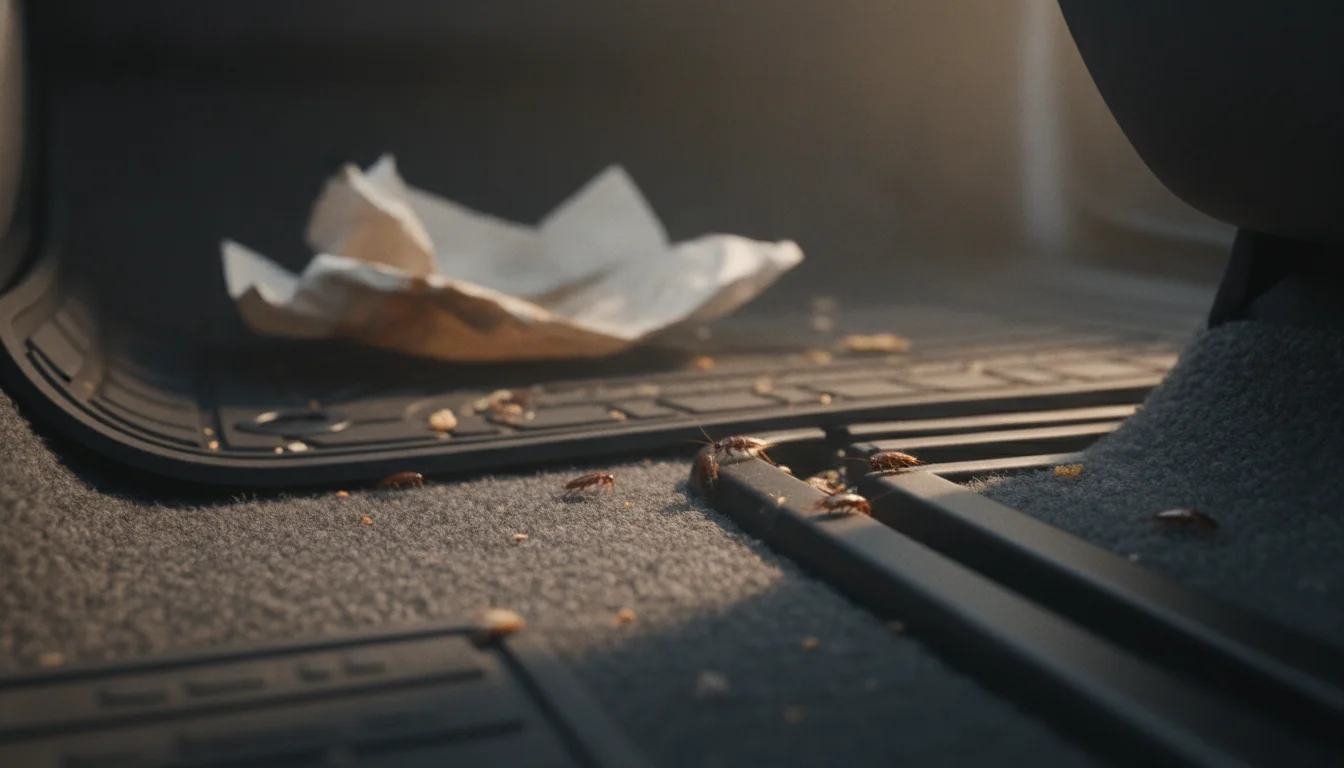
Size tells you a lot. One big roach is probably an outdoor species that walked in through an open door after you parked near a drain or mulch. Several small tan ones, babies or egg cases (small brown capsules) mean they’re breeding, according to Native Pest Management.
1. Find where they’re coming from
Do this first, or everything below gets undone. Put two or three sticky traps in your kitchen at home (under the sink, behind the fridge) and leave them for a few nights. If they catch the same small roaches you’re seeing in the car, treat the house the same week you treat the car. If you’ve got the roaches at home too, the car is just a symptom.
Then think about work. A stockroom, loading dock or break room can restock your car daily. Tell whoever handles pest control there, and stop carrying open boxes and bags from that site into the car until it’s sorted.
2. Empty the car completely
Take out everything that isn’t bolted down: wrappers, cups, bottles, paper, gym bags, clothes, the car-seat caddy and every cardboard box in the trunk. Empty the bags outside the car, because forgotten snacks hide in them.
Don’t carry any of it straight into your kitchen. Put anything you’re unsure of in a sealed plastic tub until you’ve checked it.
3. Vacuum every crevice, then bag it outside
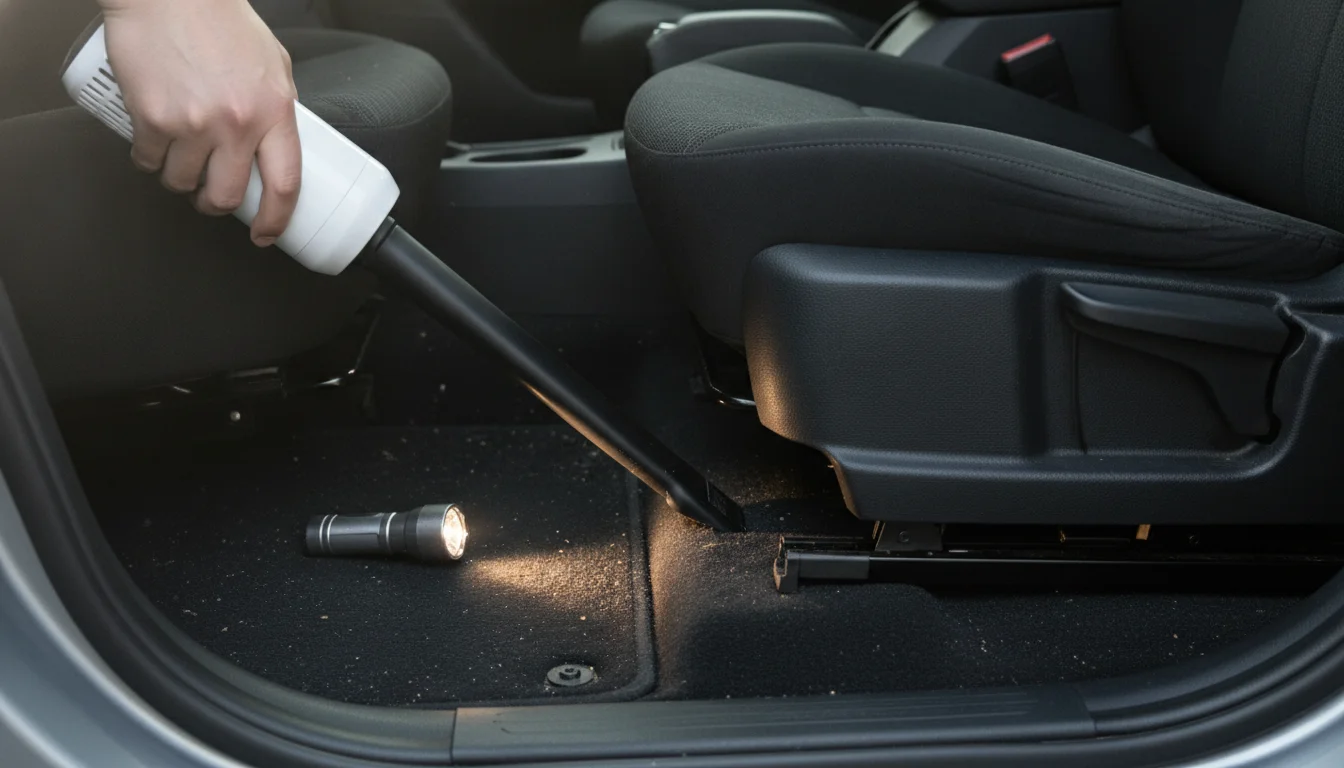
Slide each front seat all the way forward, vacuum the rails and carpet behind it, then slide it all the way back and do the front. Use a flashlight. Get the crevice tool into seat seams, around the console and the seat bolts, and under every mat. If there’s a child seat, take it out following its instructions and clean under its base, where crumbs pile up.
Then the trunk. Lift the floor panel and vacuum the spare-tire well and the jack compartment, which are dark, rarely disturbed and easy to miss. Leave fixed dashboard panels and wiring alone.
When you’re done, empty the vacuum outdoors straight into a trash bag, seal it and put it in the outside can. That gets the roaches, droppings, shed skins and egg cases off your property, not just out of the car.
4. Wash the mats and trunk liner
Pull the mats and any removable trunk liner. Hose rubber ones with warm, soapy water. Shampoo carpeted mats and any stained carpet, then let everything dry completely before it goes back in. Wet mats and soaked carpet are a water source, and roaches stick around for water. (If the car smells too, the same wash is step one of getting dog odor out of a car.)
5. Bait with stations, not just gel
This is what kills the ones you can’t reach. A roach eats the bait, goes back into hiding and dies, usually within 1 to 3 days, and Kentucky’s guide says you should see a real drop within a few weeks.
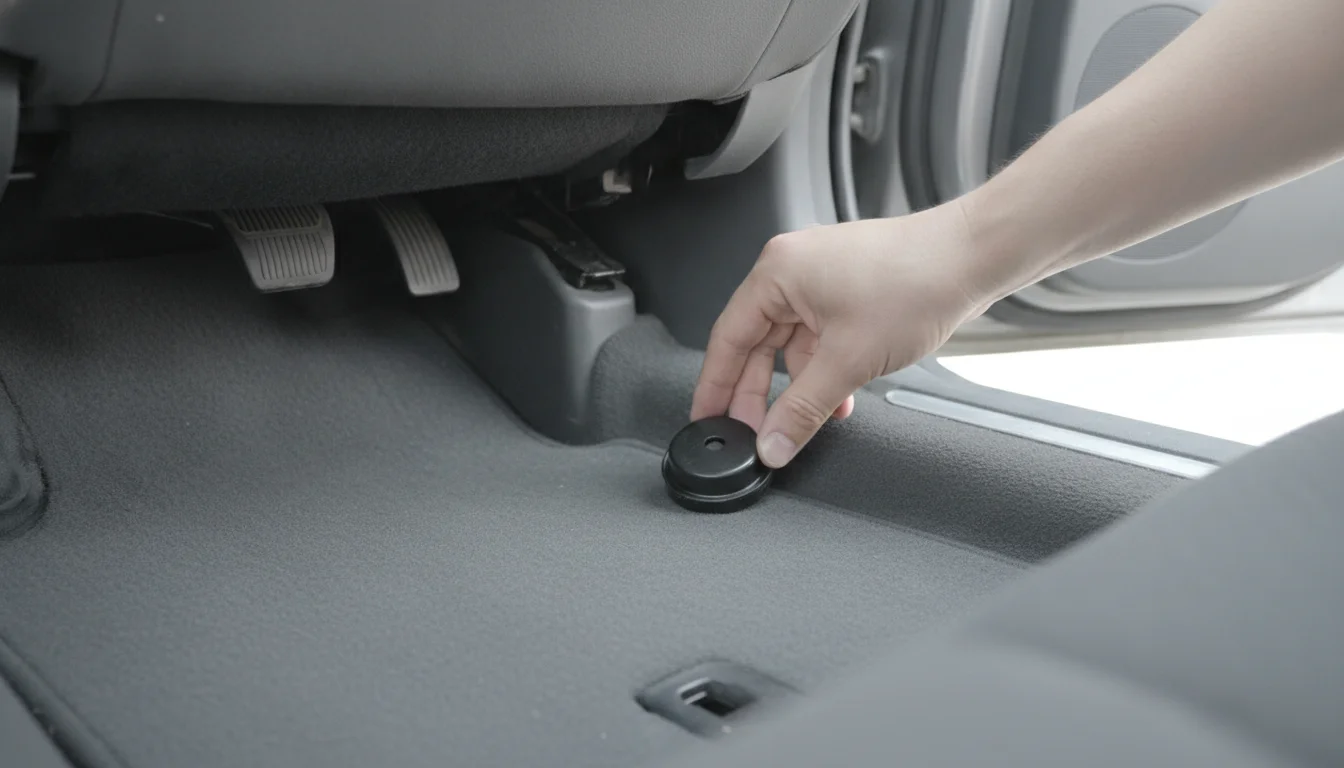
A car is a rough place for bait, though. Syngenta, which makes Advion, says its enclosed bait stations suit places where temperature extremes compromise gel baits. A parked car in summer is exactly that. Even the tube suffers: Killgerm, which sells Advion, says a tube that gets hot in a vehicle needs 30 minutes at room temperature to return to normal. So use stations as your main bait: under each front seat, in the trunk near the spare-tire well and in the glove box, wherever they can’t slide under the pedals. Stations also keep the bait away from small fingers and the dog. If you add gel, Purdue’s guide says a pea-sized spot is enough: seat-rail gaps and trunk corners, out of direct sun. Store the tube indoors.
The label decides where a product can go, so read it first. Advion’s bait station label, for example, lists transportation equipment such as buses, trains and boats.
Two things to keep out of the car. Boric acid dust: UC IPM says dusts belong only where people won’t come into contact with them, and in a car you touch everything while the fan blows air through the whole cabin. And foggers, which get their own section below.
6. Use sticky traps to prove they’re gone
Put sticky traps under the seats and in the trunk, somewhere they can’t interfere with the pedals, seat movement or seat belts. Check them over several nights, then keep checking. They tell you where the roaches are and whether the bait is working.
How long until it’s over? One Redditor whose car was fumigated at a dealer was told to watch the traps for 2 weeks: nothing caught, all clear.
7. Check every bag and box before it goes in
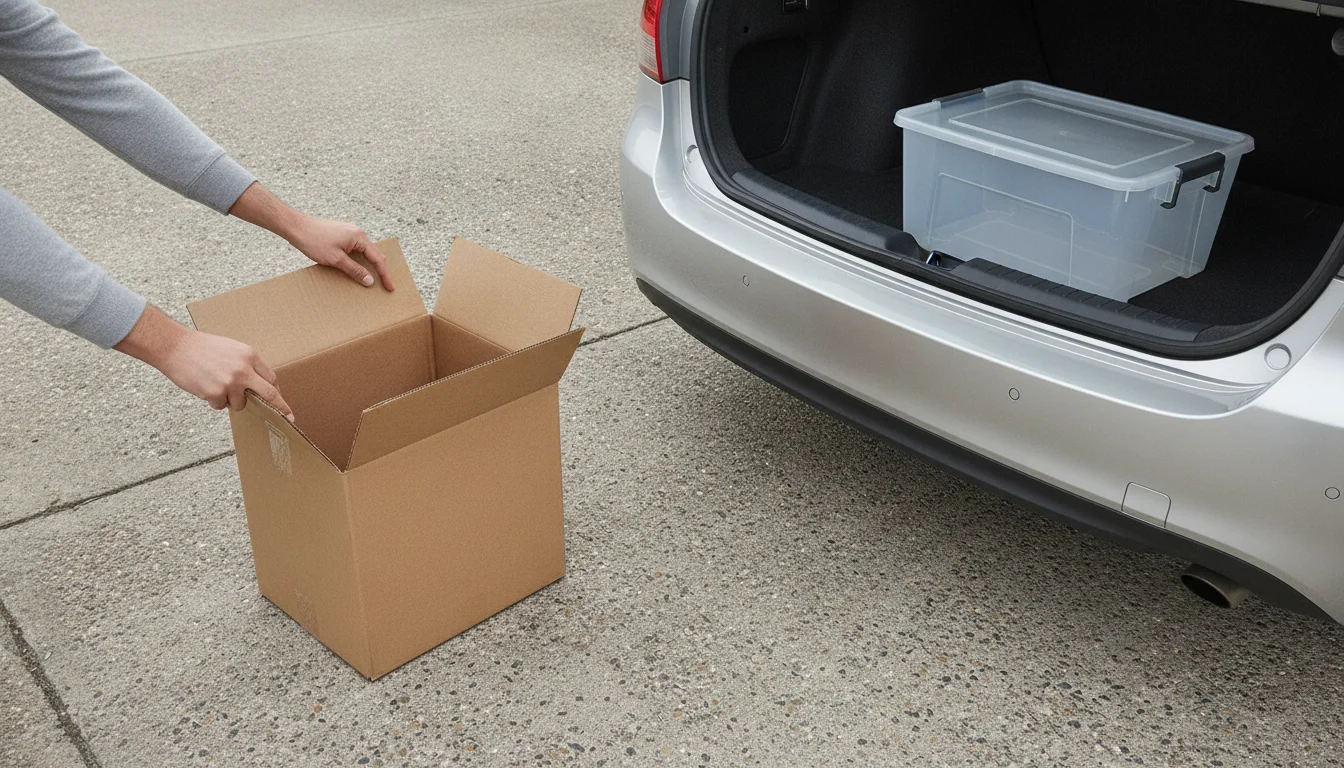
Small roaches spread through bags and boxes, and a clean car keeps getting restocked if you keep loading them. Open boxes outside the car, look in the folds and seams, and throw out cardboard you don’t need. Anything that has to live in the trunk goes in sealed plastic bins instead of cardboard, which roaches like to hide in.
This matters most if you drive for work. One Amazon delivery driver posted a video after seeing roaches crawling in a fellow Flex driver’s own car, in daylight, while she loaded packages into it. Roaches like boxes, she pointed out. If you haul packages or stock in your own car, keep the cargo area bare and swept, and don’t let boxes from a roachy warehouse sit in it overnight.
8. Call a pro when it won’t quit
If bait goes uneaten, switch brands first. The National Pesticide Information Center says some roaches resist certain baits or just don’t like them. Still catching roaches after a few weeks? Call a licensed pest control company and tell them about the car, the house and work.
When to call a professional
Call for an inspection when you find:
- Baby roaches, egg cases or fresh droppings (they look like black pepper or coffee grounds) after you’ve cleaned.
- Sticky traps that keep catching roaches week after week. That points to a source nobody has found.
- Roaches in the car and the house at the same time.
A good company starts by identifying the species, because a big outdoor roach needs a different plan from small indoor ones, and the inspection may need to cover your garage, home or workplace as well as the car.
FAQ
Should I set off a bug bomb in my car?
No. Total-release foggers use flammable propellant, and EPA warns that setting one off in a small enclosed space can make it explode, with sparks from electrical equipment among the ignition sources. Kentucky’s entomologists add that people have been hurt and homes burned when they forgot pilot lights and cigarettes. UC IPM says foggers don’t reach the crevices where roaches breed anyway. And the poster who bombed a Florida car found at least 40 roaches in the traps and around the car, then watched more crawl out when the AC came on.
Will parking in the sun kill roaches?
Not reliably. Temperatures vary between the dashboard, the floor, the trunk and the hollow spaces where roaches hide, and that much heat can damage electronics and batteries. One Florida poster had them running around the car in near 100°F (38°C) weather.
Can roaches get in my car from outside?
Yes, mostly the big outdoor species, through an open door or window near drains, mulch or dumpsters. The small ones that breed in cars usually ride in on bags and boxes.