Table of Contents
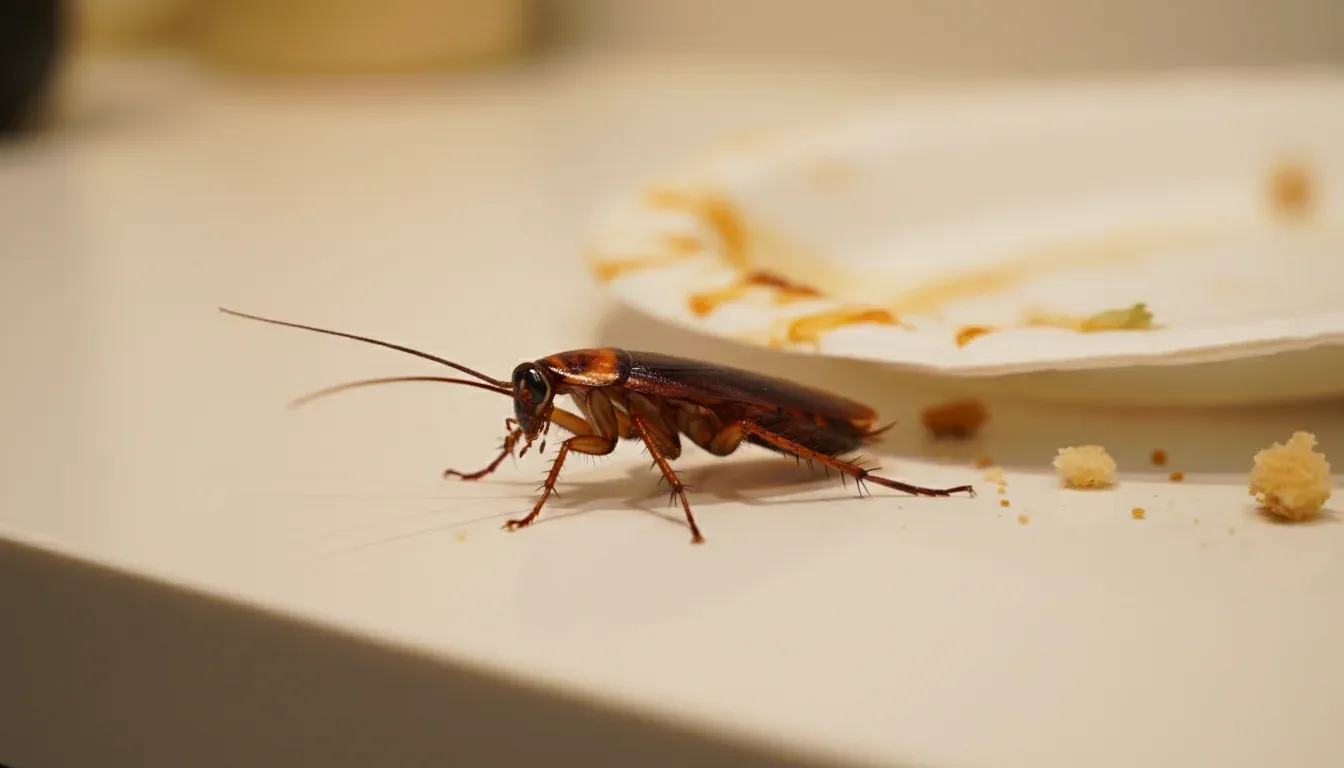
Roaches are nocturnal scavengers that will eat almost anything you leave out, and they track filth from drains and bins onto the surfaces you cook and eat on. Seeing them in daylight is a bad sign. Roaches prefer the dark, so increasing daytime sightings may point to a large, growing infestation. Spraying the ones you can see does nothing about the ones packed into the cracks and voids you can’t reach, and those hidden roaches are the whole problem.
So treat it as a system. Bait reaches the roaches sheltering in harborages you never see, boric acid dust gets into the cracks bait misses, a residual barrier holds the perimeter, and sealing cuts off the next wave.
1. Roach Bait
This is the real answer. Roaches feed on the bait, carry it back to their harborages, and the poison spreads to the ones that never come out: they pick it up from the droppings and dead bodies of the roaches that fed first. You’re not killing individuals one at a time. You’re reaching the whole hidden population through that secondary transfer, which is the same reason bait beats spray on ants too.
Put bait stations where roaches actually shelter: under the fridge, behind the oven, inside cabinets, under the sink, and in dark corners. Keep spray well away from it, because a repellent residue near the bait scares off the roaches you’re trying to feed. Then wait. An individual roach dies one to three days after feeding, but knocking the whole population down takes a few weeks. Bait disappearing and dead roaches out in the open both mean it’s working.
Gel bait is usually the more effective form because you can place it right at the cracks roaches travel and it’s more palatable than a station. Lay small (pea-sized) dots close to the hiding places you’ve found, and follow the product label for how much to use and how far apart to space it.
2. Boric Acid
Cheap, slow, and it reaches the dry voids a spray can’t. Boric acid is a stomach poison. Roaches pick the fine dust up on their legs and bodies, swallow it while grooming themselves clean, and it kills them from the inside over the following days. It is not a contact desiccant, so it does its work only once the roach eats it.
Use the dust, not a solution. It stays put in dry cracks instead of evaporating. Puff a thin film into cracks, wall voids, behind the kick plate under the dishwasher, and along the backs of cabinet runs. Thin is the whole trick: a visible ridge of white powder gets walked around, not through. If activity is still there after a few weeks, reapply as the product label directs.
Those same dry cracks behind cabinets and under appliances are where silverfish like to shelter too.
3. Insecticides
A contact aerosol drops the roach in front of you fast, which feels good but does nothing for the ones you can’t see. Its real job is a residual film along the routes roaches travel between their harborages and your food.
The product label is what tells you where a given spray is registered to go, how long the film lasts, and when to reapply, so read it and follow it. Don’t just run a bead along every baseboard: random skirting-board spraying wastes product and can scatter roaches deeper into the walls instead of killing them. This supports the bait rather than replacing it. On its own it’s a losing fight.
4. Cracks and Prevention
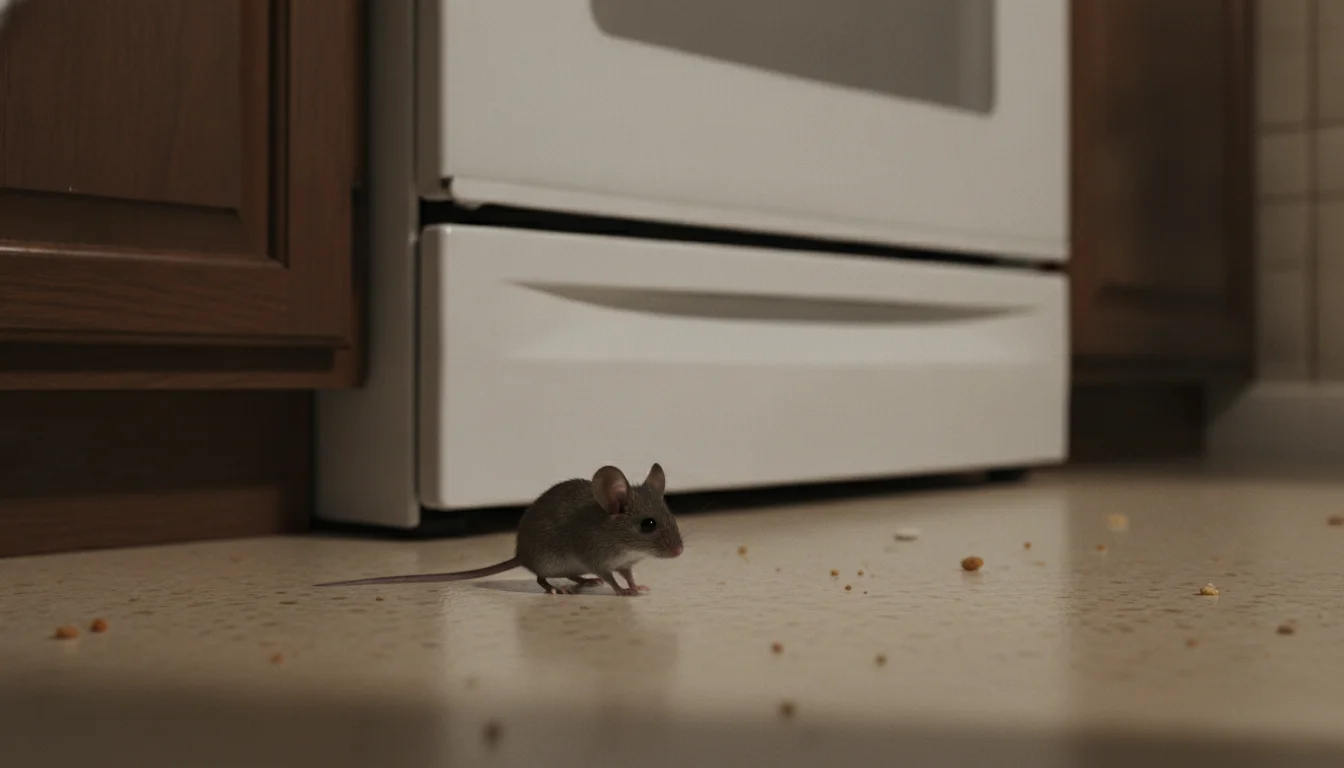
Roaches squeeze through gaps far smaller than you’d guess, so once you’ve cleared them, shut the door. Caulk cracks in walls and floors, foam around pipe penetrations, and close the gaps behind baseboards and around window frames. It’s the same exclusion work that keeps out mice.
Then starve them. Take the garbage out daily, store food sealed, and fix any dripping tap or leaking trap. A roach can last about a month without food but only a week or so without water, so a dry kitchen does more than most people expect.
What kills roaches overnight, and do smells keep them away?
Two things people always search for, so here is the honest answer to both.
Nothing reliably clears roaches overnight. A contact spray, or the dish-soap-and-water spray you’ll see recommended, will kill the individual roaches it actually lands on, so you can knock down what’s out in the open in a single night. The ones tucked in the cracks are untouched, and by the next evening the population is back. Bait is what clears an infestation, and it works over days and weeks, not hours. There’s no overnight version of that.
Smells don’t clear them either. Peppermint, bay leaves, cinnamon, coffee grounds and the rest may make roaches avoid one treated spot for a while, but a scent kills nothing and never reaches the harborage. At best it nudges them somewhere else in the same kitchen. Skip the repellents and put the effort into bait, dust and sealing.