Table of Contents
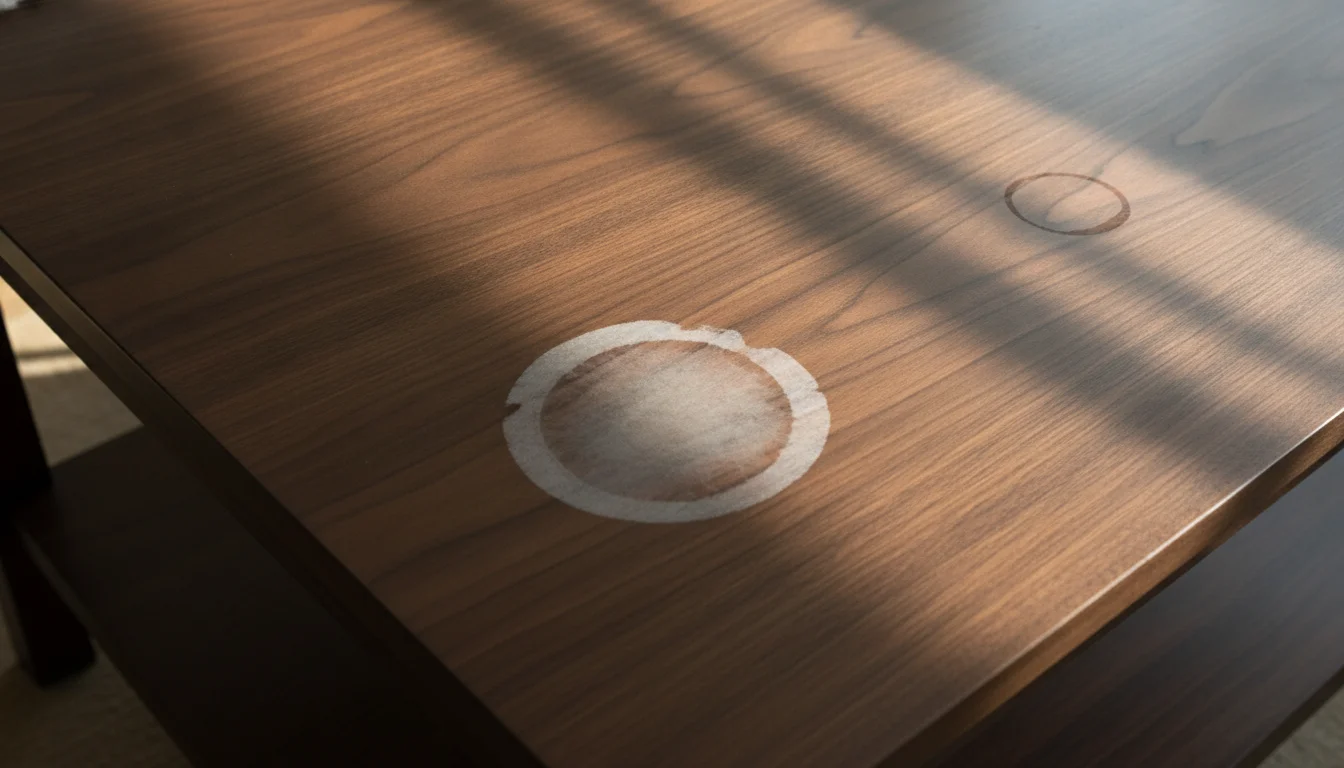
How to get rid of water stains on wood starts with the color. A white or cloudy ring means the water is trapped in the finish, not the wood, and it usually comes out with heat, a little oil or a gentle rub. A dark brown or black stain means the water got through the finish into the wood itself, and nothing you wipe on top will reach it.
Not sure which? Popular Woodworking’s Kevin Southwick dampens the spot with mineral spirits. A white mark that disappears while it’s wet is in the finish. A black ring that gets darker is in the wood. The fixes below run from least to most invasive: four for white marks, two for dark stains. Try each one on a hidden spot first.
1. Drive out trapped moisture with gentle heat
Start here. A hair dryer on its lowest setting, about 6 inches (15 cm) from the surface, kept moving over the ring. Furniture restorer Bob Flexner’s rule is the one that matters: never let the finish get hotter than is comfortable to touch, because overheating makes it blister.
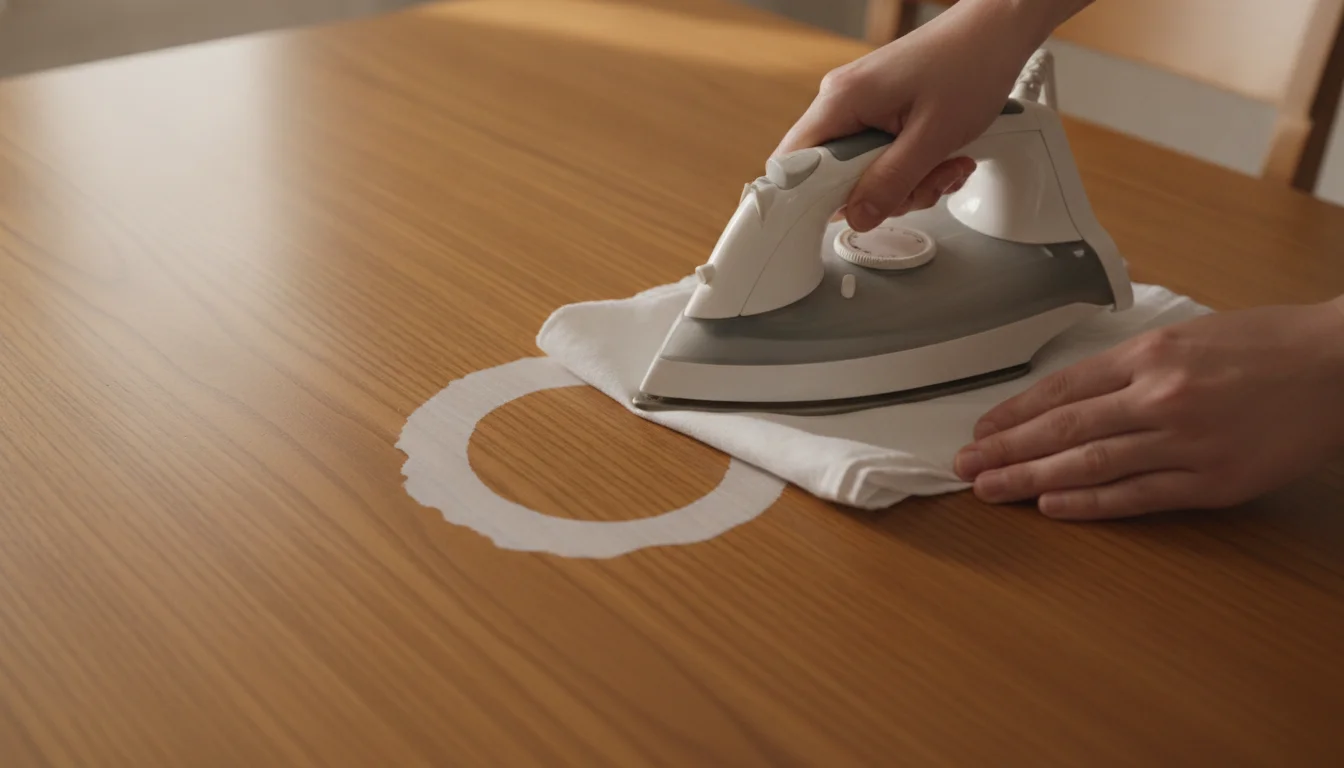
No luck? A clothes iron is stronger and riskier. Empty it, steam off, lowest setting, and lay a clean, dry cotton cloth flat over the mark. Press for a few seconds, lift, look. Never park the iron in one spot.
2. Leave an oily dressing on the mark overnight
The famous mayonnaise trick. Spread a thick layer of full-fat mayo, petroleum jelly or furniture polish over the ring, cover it with plastic wrap, and leave it overnight. Wipe off and buff in the morning.
Flexner says oily stuff seldom removes the whole mark. And never use it on bare or oil-finished wood: the grease soaks in and you swap a water stain for an oil one.
3. Wipe with a barely damp alcohol cloth
Dampen a soft cloth with denatured alcohol, then wring it until it’s almost dry. Swipe it once, quickly, across the mark. Flexner says it should leave a trail like a comet’s tail that flashes off at once. Repeat if it’s fading.
It’s best on shellac, the finish on a lot of older furniture, and also riskiest there, because alcohol dissolves shellac. A wet cloth leaves a dull, smeared patch worse than the ring. To check, woodworker Marc Spagnuolo dabs solvent under a table apron: alcohol softens shellac, lacquer thinner softens lacquer, and neither touches varnish.
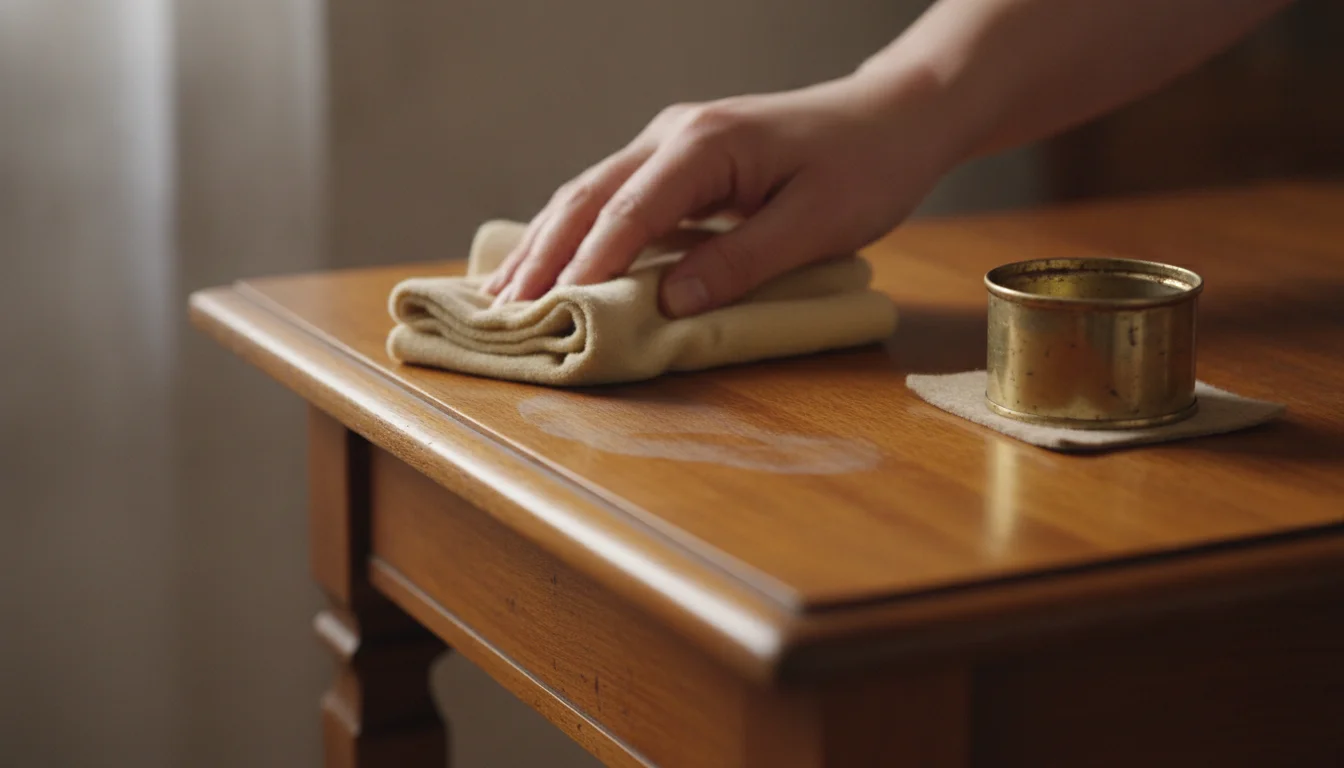
4. Rub out the mark with a mild abrasive
Non-gel white toothpaste on a soft cloth, or rottenstone mixed with a few drops of light oil. Rub gently with the grain and check often. Flexner says an abrasive almost always gets the mark out.
The catch is the sheen. Rub too hard and a small ring becomes a big dull patch, so stop the second it’s gone. Flexner’s last resort is #0000 steel wool with mineral oil, which works but leaves visible scratches. Skip salt; it can scratch.
5. Bleach dark stains with oxalic acid
This is the fix for black. Those stains are usually iron reacting with tannins in the wood, says the USDA Forest Products Laboratory (FPL), and oak, redwood, cypress and cedar are the worst for it. Oxalic acid, sold as wood bleach, turns the dark compound colorless.
Strip the finish first; the acid has to reach bare wood. Dissolve crystals in warm water in a plastic or glass container until no more will dissolve (Flexner gives about 1 oz per quart, roughly 30 g per liter). Never use metal. Wearing gloves and eye protection, brush a wet coat over the whole surface, not just the stain, so the color stays even. Southwick keeps it wet about five minutes, then wipes off the excess and lets it dry.
One coat usually does it. Then flood-rinse with clean water several times. The FPL warns that swallowing a few grams can be fatal, so lock it away from kids and pets, and don’t sand or brush off dry crystals until it’s rinsed. On oak, acid left on too long can leave a pink stain.
6. Sand and refinish the damaged area
The last resort: instead of coaxing the mark out, you take the damaged layer away. On an oil finish, a light mark is usually raised grain: level it with fine sandpaper (Spagnuolo uses 320 grit) and wipe on more oil. On varnish, lacquer or shellac, take the finish off the affected surface, sand lightly (Southwick uses 400 grit on a soft block), and refinish the whole surface so the sheen matches.
Floors work the same way: sand and refinish solid hardwood, and replace boards stained too deep. Go easy on veneer and engineered boards: the good wood is a thin layer and sandpaper goes through it fast.
What causes water stains on wood
White marks are moisture trapped in the finish film. Condensation from a cold glass or heat from a hot mug both leave them. The wood underneath is fine, which is why they’re so fixable.
Dark marks happen when water gets through cracks in the finish. Flexner blames water carrying metal residue; the FPL traces the blue-black color to iron meeting the wood’s tannins, from nails, steel wool, a rusty can, even plant fertilizer. Pet urine on floors speeds the reaction up. And if oxalic acid won’t lift a dark stain but household bleach does, the FPL says it was probably mildew, not iron.
How to prevent water stains on wood
Coasters. Wipe spills. Southwick’s repair job started with a watered houseplant, so put pots on a waterproof tray or move them off good wood altogether. Southwick suggests a water-resistant topcoat on any surface that’s going to keep getting wet. And keep steel wool and iron tools away from bare oak: the FPL lists both as sources of iron stain.
When to call a professional
Call a furniture restorer before experimenting on an antique, a valuable piece or loose veneer. For floors, get a flooring specialist to look at engineered boards, widespread staining, or wood that’s soft or buckled. That’s water damage, not a stain.
FAQ
Does water permanently stain wood?
Rarely the white kind: heat, an alcohol wipe or a mild abrasive gets most of it out. Dark stains are harder, but one coat of oxalic acid usually lifts them. Only a stain too deep to bleach or sand out is permanent; on a floor, those boards get replaced.
What do professionals use to remove water stains on wood?
For white rings, an abrasive. Restorer Bob Flexner rubs them out with rottenstone and a few drops of oil, and keeps #0000 steel wool with mineral oil as the last resort. For black stains, oxalic acid on bare wood. When neither works, they strip the finish, sand lightly (Southwick uses 400 grit) and refinish the whole surface.
Do water stains dry out of wood?
A fresh white mark sometimes clears as the moisture evaporates, so blot it and give it air first. Old rings and dark stains won’t.
Can you undo water damage on wood?
A stain, yes. Wood that’s gone soft, warped or buckled is structural damage: stop the water source and replace the affected wood.