Table of Contents
Here’s the first thing to know about how to get rid of mice in apartment buildings: a mouse in your apartment is rarely just your mouse. It came in along a pipe, a wall void or the gap under your door, and its relatives are probably next door or upstairs. That’s why so many renters set traps, catch two, and have new droppings a week later.
So getting rid of mice in an apartment is a split job. Your half: trap the ones inside, plug the gaps you can reach without altering the unit, and stop feeding them. The building’s half: treat the units around yours and properly seal the pipes and utility lines that run between apartments. You can start your half tonight. The building’s half starts with an email.
What causes mice in an apartment
Apartment buildings come with built-in mouse highways. Plumbing lines, gas lines, heating pipes and shared walls connect every unit, and mice move between them. Pest professionals in New York describe infested apartments clustering along a vertical line (the units stacked on one riser) or a horizontal one, and they stop the spread by sealing the pipe and heating chases those lines run through.
Mice also get displaced. Entomologist Gil Bloom, who runs a New York pest control firm, says a kitchen renovation elsewhere in the building often sends them looking for a new home. Others ride in, in bulk rice or in a fridge the super brings up from the basement.
Then they stay for the food. A mouse needs about 3 grams of food a day, according to Bloom. A quarter of a saltine covers it.
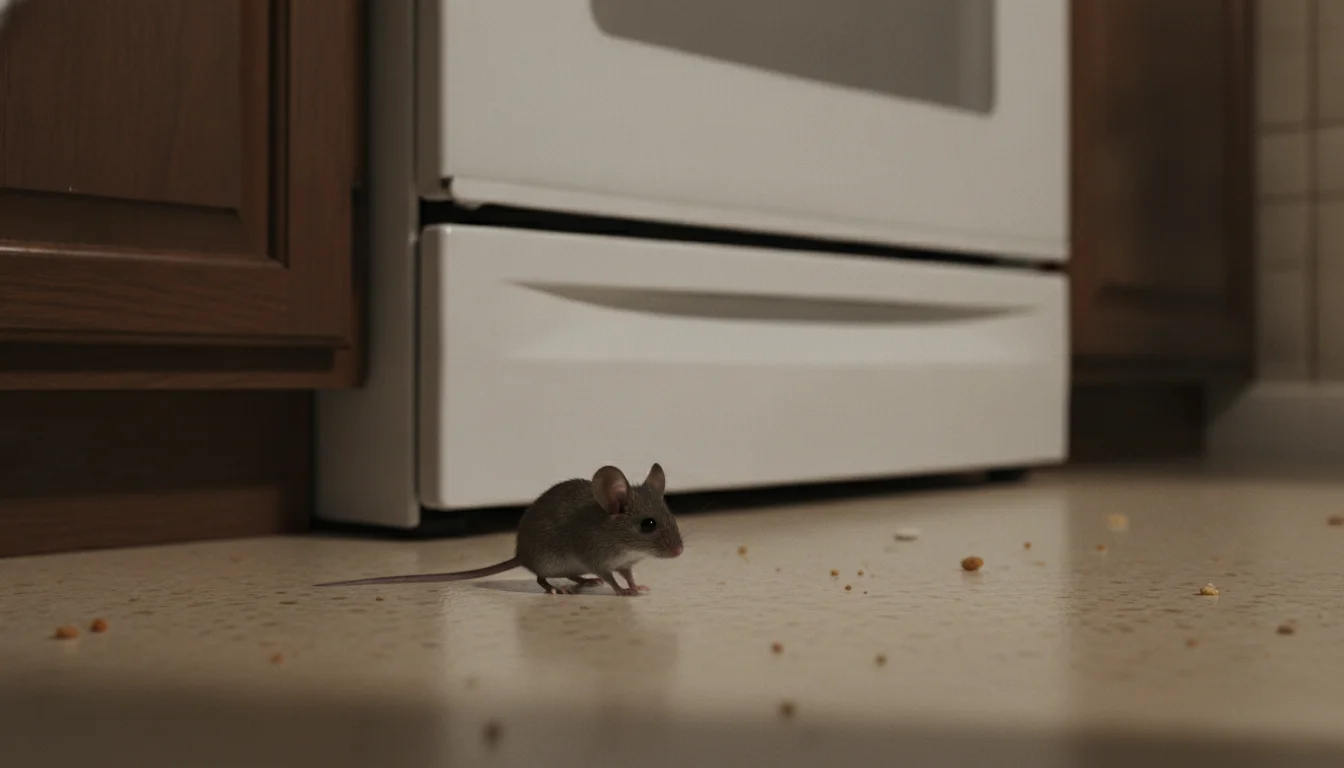
Mouse droppings are pointed and rice-sized. Blunt, raisin-sized droppings mean rats, a bigger job.
1. Report it to your landlord in writing
Do this first, even for one sighting. Pest control in a rental usually falls to the landlord, but that depends on your lease and on state and local law. Either way, the building controls the walls, the pipes and the apartments around yours. Rodent expert Bobby Corrigan’s tip sheet for tenants is blunt about it: don’t try to control mice alone.
Email the landlord or use the maintenance portal, and keep a copy. Say what you found, where and since when. Ask for three things:
- An inspection and treatment of your unit.
- A check of the units above, below and on each side of yours.
- Repair of the gaps around pipes and utility lines where they come through your walls and floor.
A New York co-op attorney’s advice is to give written notice and keep a record of it. A phone call to the super leaves no date. If nothing happens, follow up in writing, then call your local health or housing department (311 in New York City). Get advice from a tenants’ rights group before you hold back rent.
2. Plug the pipe gaps with copper mesh
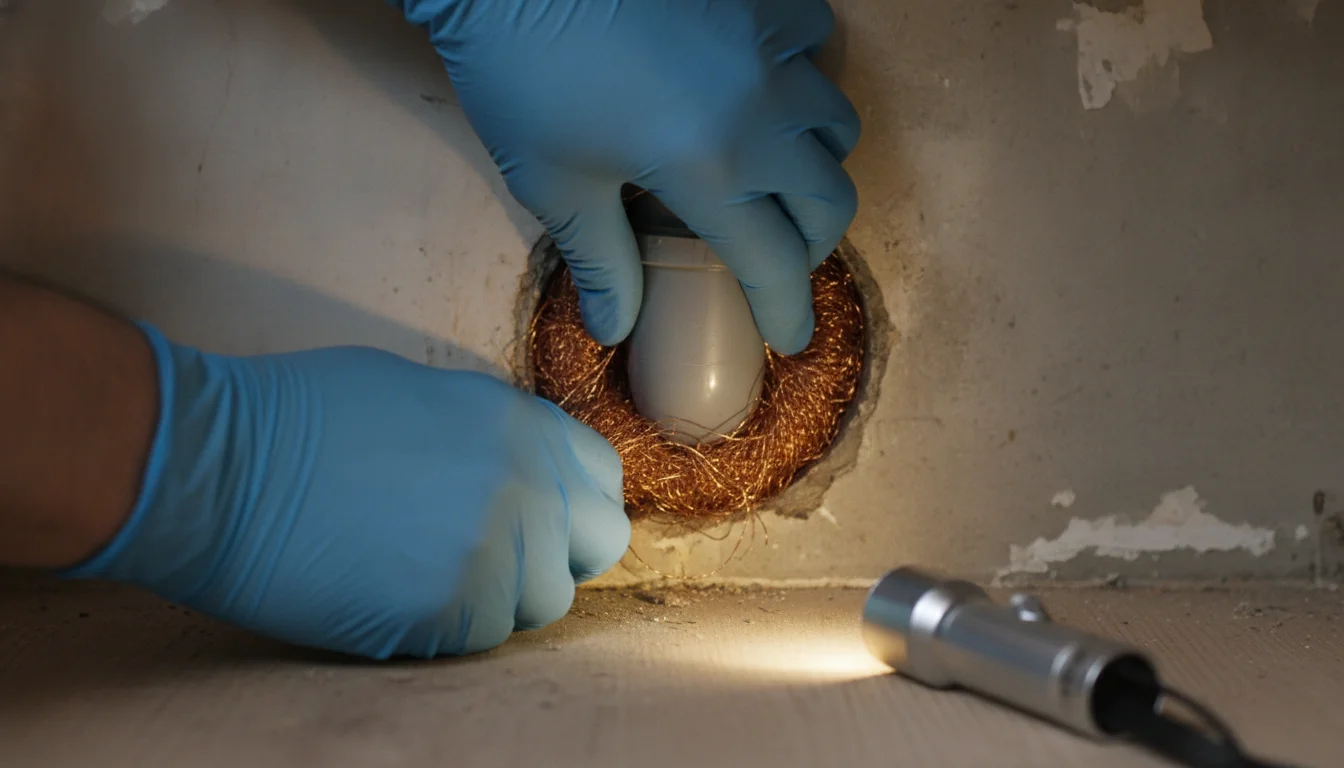
Pull the stove and fridge out, and empty the cabinets under the kitchen and bathroom sinks. Corrigan’s list of the lines to check is short: kitchen plumbing under the cabinet, bathroom plumbing under the cabinet, the stove gas line where it comes through the floor, and radiator pipes coming up from below. Mice get through any gap of 1/4 inch (6 mm) or more.
Pack those gaps tight with copper mesh (a knitted copper product such as Stuf-fit). Steel wool is weaker; Bloom calls it “for amateurs.” Skip expanding foam entirely. Corrigan says mice chew through it and use it for nesting. One Reddit renter foamed every gap on a hardware store clerk’s advice, then learned mice chew it.
Copper mesh pulls out again, so it doesn’t alter the unit. The proper fix is a sealant caulk around the pipe and a metal pipe collar (an escutcheon plate) over it. That’s the maintenance work you asked for in step 1.
3. Close the gap under your door
Mice come in the way you do. If the gap under your apartment door is wider than a No. 2 pencil lying flat, mice fit under it. Corrigan’s cheap fix is a rolled-up dish towel pushed against the door base. A door sweep is the tidier version.
4. Set snap traps along the walls
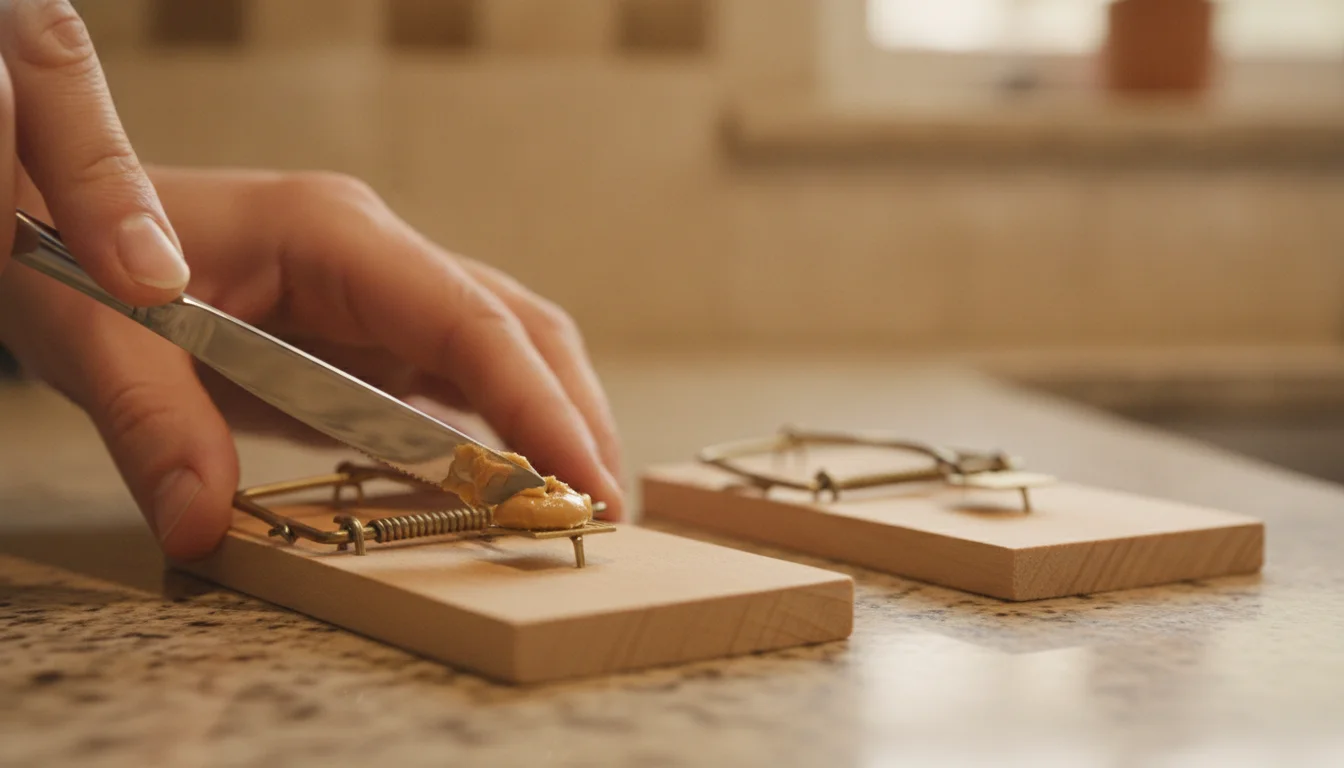
Snap traps, baited with peanut butter, set in pairs. Put them at right angles to the wall with the trigger end touching the baseboard, because mice run along walls rather than across open floor. Space them 6 to 10 feet (1.8 to 3 m) apart along the routes where you find droppings: under the sink, beside the stove, at the back of the pantry.
Check them every day. One renter put 4 traps by the oven and pantry and had nothing after 24 hours. That isn’t failure yet. If a pair catches nothing in a couple of days, move it.
Wearing gloves to keep your scent off the traps is a myth. The New York State Department of Health says mice aren’t bothered by the smell of people or of dead mice on traps.
Skip glue boards; Penn State Extension doesn’t recommend them, because they leave you with a live, distressed mouse. And don’t put poison down yourself. Poisoned mice die in the walls and smell, and in a rental that wall isn’t yours to open. Bait belongs in tamper-resistant stations placed by the building’s exterminator.
5. Clean under and behind the stove and fridge
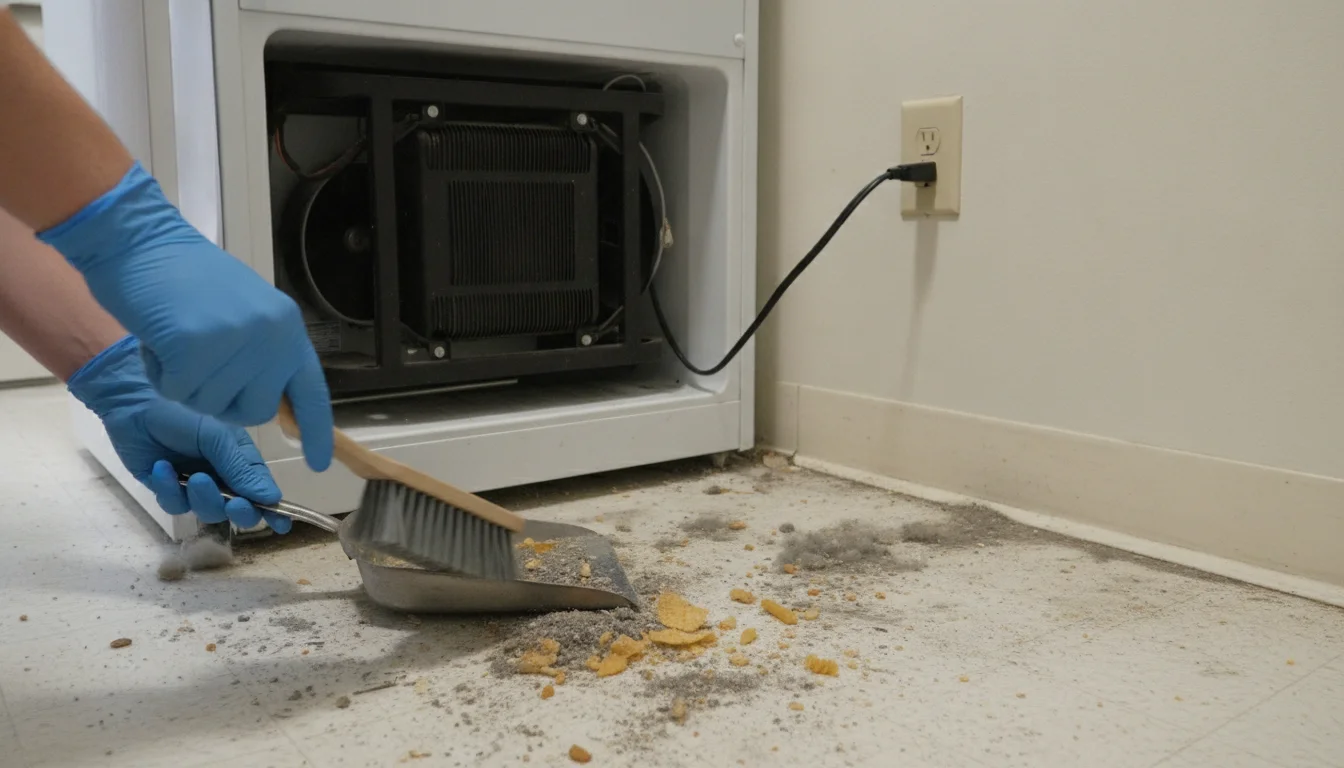
Apartment mice nest in boringly predictable places: the back corners of the lower kitchen cabinets, under the sink, the stove’s bottom drawer, and under the stove and fridge, where the motor keeps things warm.
Unplug the fridge, slide it out, and clear everything stored beside it, especially shopping bags. Lift the cooktop if your range hinges up and clean the spills underneath. Then wipe the stove and counters every night.
6. Put dry food in hard containers
Cereal, flour, rice, pasta and sugar go into glass, metal or heavy plastic containers with tight lids, or into the fridge. Throw out any package with chewed holes.
7. Pick up the pet food at night
No dog or cat food left out overnight. Corrigan singles out cat food.
8. Get rid of the cardboard and clutter
Mice raise their young in cluttered closets and in cardboard boxes nobody has opened in months, and an exterminator can’t do much in a closet stuffed with stuff. One renter found two mice living inside a roll of paper towels. Swap boxes for lidded plastic bins, and vacuum the couch crevices.
9. Clean up droppings wet, never dry
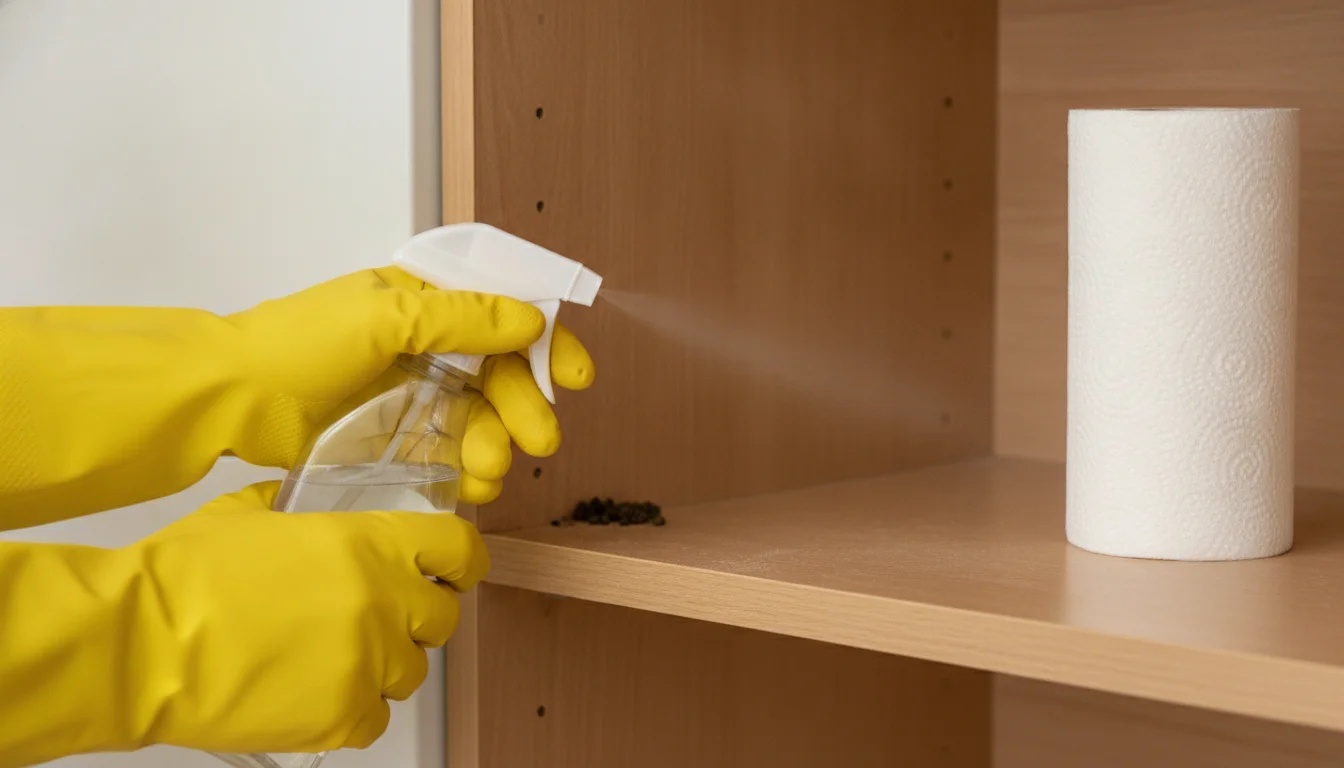
Never sweep or vacuum dry droppings. It puts contaminated dust in the air. Put on rubber gloves and spray the droppings and the area around them until they’re wet with a disinfectant, or with detergent and 1 1/2 cups of bleach per gallon of water (about 350 ml in 3.8 L). Let it soak for 5 minutes. Wipe it up with paper towels, seal everything in a plastic bag, put that bag in a second one, and throw it out. Trapped mice go out the same way.
10. Get the neighbors involved
UC IPM says house mice seldom venture more than about 30 feet (9 m) from their nest, and the apartment next door is well inside that. Tell the neighbors on each side, above and below. Penn State Extension’s advice is to share information with neighbors, because mice don’t stay in one place. Several tenants reporting in writing also make it harder for a landlord to treat one unit and call it done.
How to get rid of mice in apartment units and keep them out
Once the catches stop, check for fresh droppings and gnawing once a week, especially under the sink and behind the stove. Leave the copper mesh in place. Keep food in the containers, wipe the stove top every night and take the trash out every evening.
Don’t bother with plug-in repellers or mint-scented garbage bags. Bloom calls both a waste of money. And when the building’s exterminator comes, empty the floor-level kitchen cabinets first so they can reach the back corners and pipe openings.
When to call a professional
In a rental the professional is usually the building’s exterminator. Push for one, in writing, if:
- Fresh droppings keep turning up after you’ve sealed, cleaned and trapped.
- You see mice regularly on top of the stove or running under the couch.
- Neighbors are reporting mice too.
- Mice are nesting inside an appliance or a piece of furniture. Getting them out means taking the appliance apart, and that’s a job for the pro.
Corrigan’s advice to buildings: a few traps in the basement, or treating only the units that complained, does little against an established infestation. It takes traps and bait stations throughout the building.
FAQ
Where do mice hide in apartments?
Mostly in the kitchen: the back corners of the lower cabinets, under the sink, the stove’s bottom drawer, and under the stove and fridge. Also cluttered closets, couches, and the walls and pipe chases between units.
Is it safe to live in an apartment with mice?
Mice contaminate food with urine and droppings, and mice in the home have been linked to several human diseases, including asthma. Fix it now, throw out any food they’ve gotten into, and clean droppings wet.
What will kill mice immediately?
A snap trap. It kills quickly and you don’t have to touch the mouse to throw it out. Poison is slow. One renter’s mice kept eating fresh poison for days and were still active.
Is my landlord responsible for mice?
Often, but it depends on your lease and on state and local law. A landlord may be able to charge you if your own conditions caused the infestation. Report it in writing either way, so the date is on record.
Do ultrasonic repellers work on mice?
No. UC IPM says ultrasonic sound doesn’t get behind furniture or appliances and loses strength quickly with distance, and there’s little evidence that sound devices control mice.