Table of Contents
Most advice on how to get rid of rats starts with poison. The Norwegian Institute of Public Health reviewed the research on rat control and came to a blunt conclusion: poison doesn’t solve a rat problem in the long run. Kill the rats in one house and you mostly hand the problem to the neighbors, and as long as there’s food and somewhere to hide, more rats move in.
So this list runs in the order that actually works. Close the way in. Take away the food and the cover. Then trap whatever’s left, and keep trapping until the signs stop. Poison comes last, and you’ll see why.
1. Seal them off
This is the one that lasts. UC Statewide IPM calls exclusion the most successful and longest-lasting strategy for rat control, and it’s the step that makes every other method stick.
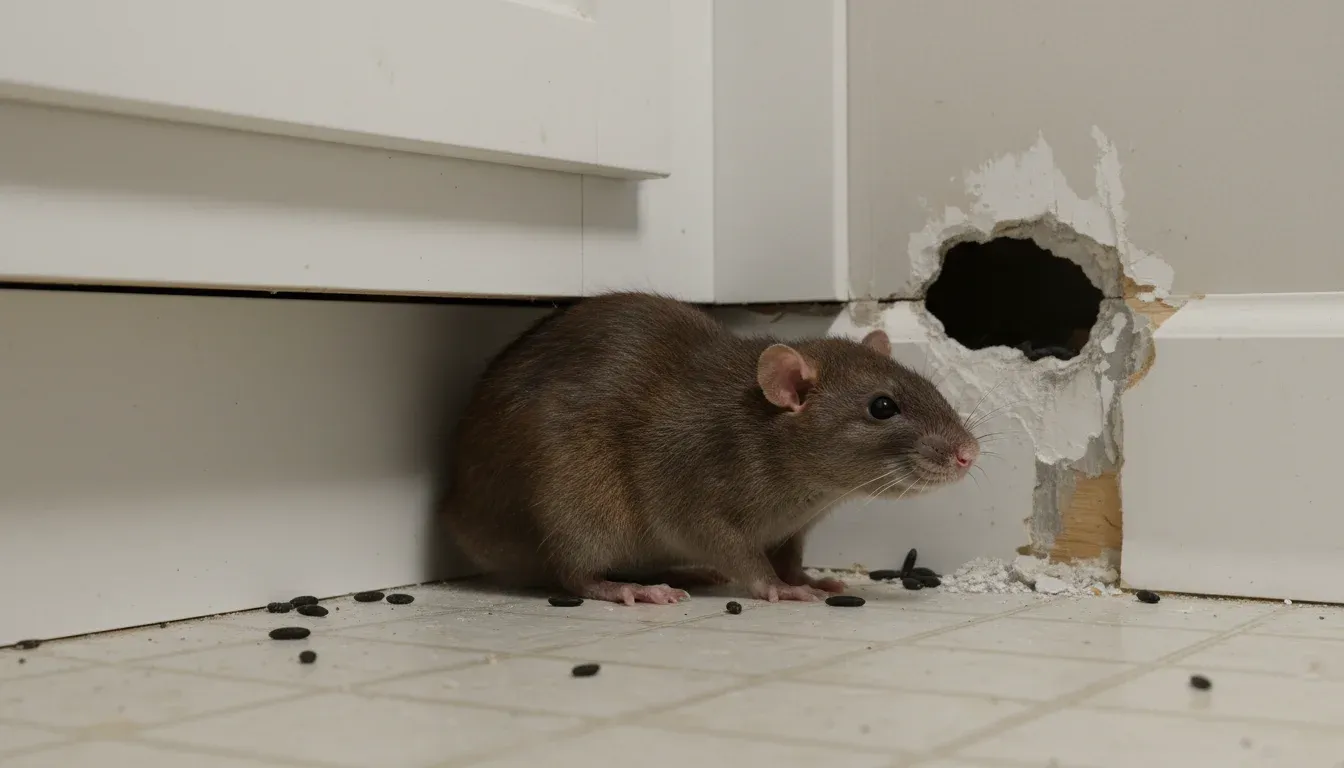
Seal every hole bigger than 1/4 inch (6 mm), which keeps out mice and other rodents as well. That sounds paranoid until you learn a young rat can squeeze under a door with a 1/2-inch (13 mm) gap. Check the foundation and everywhere pipes, wires, vents, drain spouts and sewer lines come through the walls. Look behind the fridge and under sinks too.
Stuff small gaps with steel wool or copper mesh, then caulk or foam over it. Bigger openings get 1/4-inch hardware cloth, sheet metal or cement. Never chicken wire (rats walk straight through it). If you’ve got roof rats, the climbers, the openings above ground level matter just as much as the ones at the bottom.
One Reddit trick for the attic: walk around with a feather. It flutters near tiny holes you’d never spot by eye.
2. Remove food sources outside
Your yard is probably feeding them. Keep garbage in a plastic or metal can with a tight lid. Use a sealed compost bin. Pick up fallen fruit and nuts, and don’t let birdseed pile up under the feeder.
Check the bottom of your wheeled trash can. Some have a drain plug for washing, and Norwegian researcher Heidi Sjursen Konestabo points out those plugs tend to disappear, leaving a hole straight into the food waste.
Pick up dog droppings daily, too. Rats eat feces. And there’s a bonus to all this: hungry rats take more risks and walk into traps more often.
3. Lock down food storage
Cardboard boxes and thin plastic bags aren’t barriers. Rats chew through them. Move flour, cereal, rice, pasta, sugar and crackers into hard containers with tight lids: glass jars for small amounts, gasket-sealed bins for bulk. If you find gnawed packages, throw them out.
4. Clean the kitchen (and keep it that way)
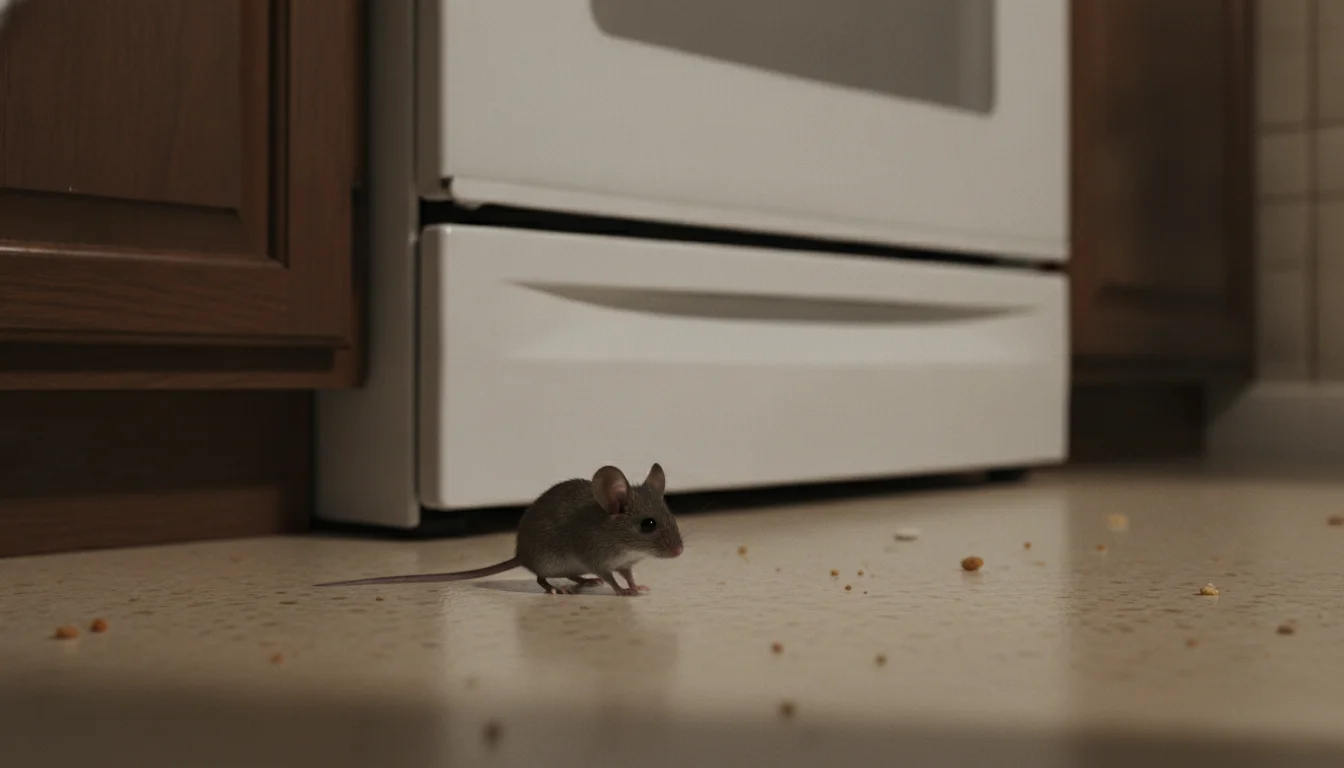
Don’t leave food out on the counters overnight. Wipe them down, sweep, and clean behind and under the stove and fridge where grease and crumbs collect. Take the kitchen trash out every night rather than letting a full bag sit until morning.
5. Remove pet food and birdseed
A bowl of kibble left down overnight is a buffet. Feed your pet only what it’ll eat at one sitting, then pick up the dish and wash it. Store pet food, chicken feed and birdseed in thick plastic or metal bins with tight lids, not the bags they came in.
6. Take away the cover
Rats want a hidden route from shelter to food. Take it away. Clear tall grass, brush and debris piles away from the walls, and don’t lean pallets, lumber or firewood against the house. Stack firewood off the ground (University of Georgia extension suggests at least a foot, or 30 cm) and away from the building.
Thin dense shrubs and ground cover near the foundation. Climbing ivy on fences and walls is roof rat heaven. Trim branches that reach the roof, since roof rats use them as a bridge.
7. Trap them, and treat it as a routine
The Norwegian review found traps work as well as poison, maybe better. They kill fast, they don’t poison the neighborhood cat, and nothing dies in your wall. The downside is that trapping is work.
Get rat-sized snap traps, not mouse traps. Use plenty: a dozen or more for a heavily infested house, about 10 to 20 feet (3 to 6 m) apart. Set each one at a right angle to the wall with the trigger end nearly touching it, on the runs where you see droppings and greasy smudge marks. Bait with a pea-sized dab of peanut butter, nuts, dried fruit or bacon. Tie dry bait to the trigger with thread so the rat has to tug at it.
Here’s the part most guides skip. Rats are wary of anything new, so for the first few days leave the traps baited but unset. Once the bait has been taken several times, set them all. A rat that springs a trap and escapes is very hard to catch again. If every bait vanishes during that unset period, you don’t have enough traps: double the number until some bait is left.
Then work the routine:
- Check every trap daily.
- Wear disposable gloves to handle traps and catches. Your scent on a trap makes rats avoid it.
- Bag each catch in a sealed plastic bag for the trash, then re-bait and reset.
- Keep trapping for a few weeks after the last catch.
Electric traps kill quickly too but cost a lot more, and they need the same pre-baiting. Skip glue boards: UC IPM doesn’t recommend them for home use, they catch birds and pets, and they probably won’t hold a big rat anyway.
8. Plug burrows and check if they reopen
Norway rats dig. Look for holes along the foundation, under sheds, woodpiles and doghouses, and near garbage cans and compost bins. Fill each one with soil and look again the next day. Reopened means active. Do it before you trap, to find the busy spots, and after, to find out if you’re done. Keep checking every few days until nothing reopens.
9. Get your neighbors involved
Almost every rat guide leaves this out, and it’s why rats keep coming back. Rats don’t care about property lines. Clean up your yard while the one next door stays a buffet, and you’re just a nicer room in the same hotel.
Talk to the neighbors on either side, or your landlord or building manager. Agree to clear yards, secure trash cans and trap at the same time, so the rats have nowhere close to fall back to. In an apartment building or a row of townhouses, sealing your own unit helps, but shared walls, crawl spaces and pipe runs mean the whole building needs inspecting.
If you hire a pest control company, tell the neighbors. Konestabo says she often sees several companies working the same area without knowing about each other, and their efforts don’t add up.
10. Rat poison (last resort)
Poison kills rats. It doesn’t get rid of them, because the food and shelter that drew them in are still there. And the costs land on everything else.
Not every rodenticide works the same way. Zinc phosphide can kill within hours, but anticoagulants are slow: a rat can take up to seven days to die from internal bleeding, and in that time it can carry several lethal doses. Anything that eats a poisoned rat can be poisoned too. The Norwegian Veterinary Institute found rat poison in every red fox it examined, and in 67% of the wolves, lynx, wolverines, mink and Arctic foxes it tested. Norway’s Poisons Information Centre gets an average of 172 calls a year about animals exposed to rat poison, mostly dogs that ate the bait. UC IPM is flat about it: all rodent baits are toxic to dogs and cats. There’s no such thing as pet-safe rat poison.
If you use it anyway, use it outside only, in the tamper-resistant bait stations it’s sold in, and follow the label exactly. Never indoors. Poisoned rats crawl into walls and behind appliances to die, and getting rid of that smell is a project of its own. One Reddit user in a humid area got swarms of black soldier flies about two weeks after a poisoned rat died in the crawl space.
In the US, retail rat poison has been restricted since 2011 to bait blocks, gels and pastes sold in bait stations, and California bans most uses of anticoagulant rodenticides. Check local rules before you buy.
When to call a professional
Call a licensed pest control operator for a large infestation, or when sealing and trapping haven’t stopped fresh signs. Professionals can use products you can’t buy, and fumigants and gas cartridges are for them only. If roof rats are running along overhead utility lines, call a pro or the utility company.
It isn’t cheap. In one Reddit thread, an exterminator quoted $1,200 minimum to seal attic gaps and run traps. Ask what’s included: the exclusion work is what you’re really paying for.
Frequently asked questions
What gets rid of rats fast?
Enough snap traps in the right places. Pre-baiting means the first catches can take a few days, and fast isn’t permanent. Without sealing and food removal, new rats replace the ones you catch.
What smell do rats hate the most?
None that lasts. UC IPM says no repellent has been found to solve a rat problem for more than a very short time, and UGA says homemade repellents generally don’t work. A pest control pro on Reddit put it simply: rats dislike a strong new smell, but a hungry rat ignores it. Ultrasonic plug-ins are no better. UGA calls them almost completely useless.
What keeps rats away permanently?
No food, no cover, no way in, on your property and the ones around it. Konestabo doesn’t think rat-free cities are possible. But a sealed house on a block where nobody leaves food out gives rats little reason to stay.
Will a cat get rid of rats?
Not reliably. Cats may catch individual rats, but UGA says they can’t be depended on to control a population, and they hit native wildlife hard.