Table of Contents
Knowing how to get rid of old gasoline starts with a rule worth keeping: do not pour it out. Gasoline is a Class I flammable liquid whose vapor ignites from a spark or a spot of static, and tipping it on the ground, down a drain or into the trash pollutes soil and water and can break your local rules, the same handling that covers used motor oil. How household gasoline is classified and where it may go is set by state and local agencies rather than one national law, so check what your area requires. The next question decides everything else: is the fuel merely stale, in which case you may be able to dilute it and burn it off, or is it contaminated, in which case it has to go to a disposal site? Handle the fuel safely first, then pick your route from there.
1. Check whether it is stale or contaminated
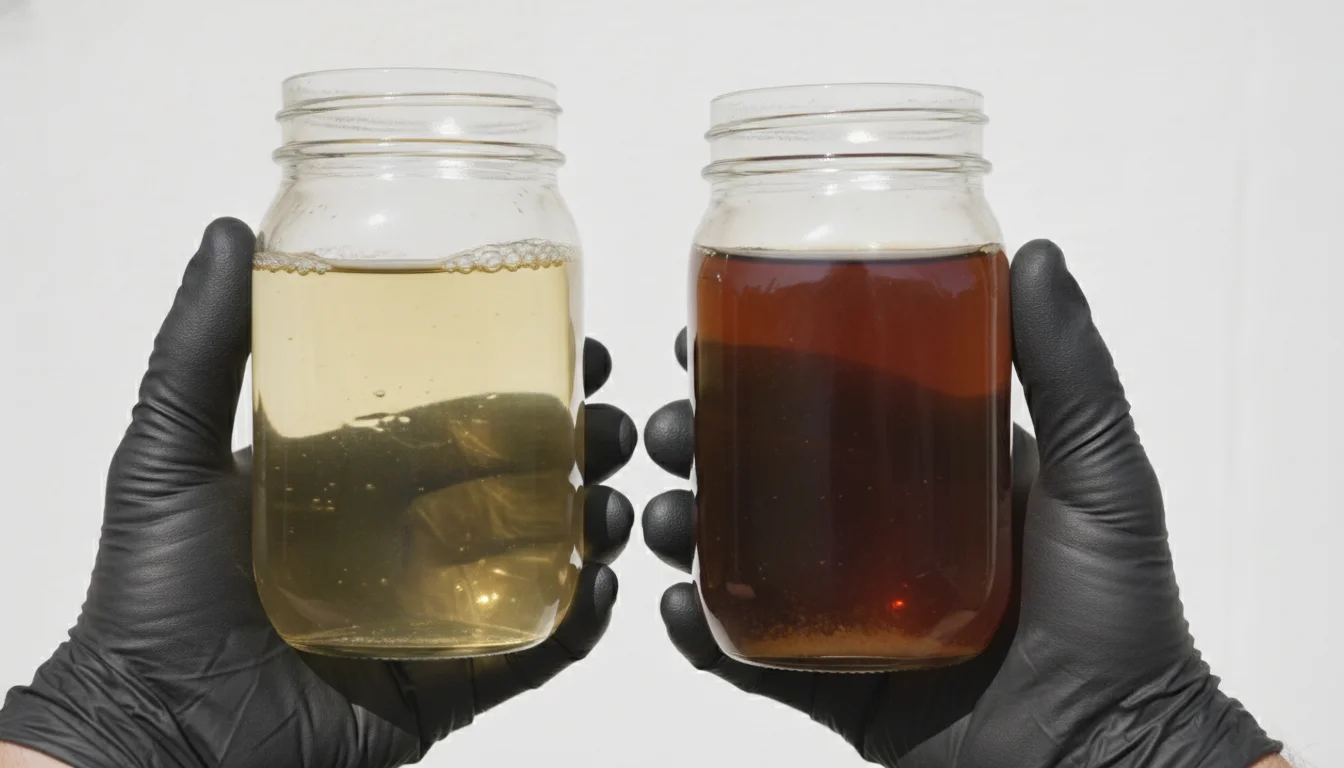
The answer to this decides the whole job, so start here. Pour a small sample into a clear glass jar and set it beside a jar of fresh fuel in daylight against a white background. Look for the signs of contamination: a separate watery layer at the bottom, floating grit or rust, a gummy film on the glass, or fuel that has split into two layers. Any of these means the fuel is spoiled and has to be disposed of. Fuel that stays clear and pale, with no water and no debris, may only be stale. Whether stale fuel is safe to burn off is the equipment maker’s call, not the jar’s: manufacturers such as Honda advise against running stale or contaminated gasoline at all, so when the engine matters, dispose of it. Do the test outdoors, well away from any flame, and when in doubt treat it as contaminated.
2. Dilute it with fresh fuel and burn it off
If the fuel is stale but clean, the cleanest way to be rid of it is to use it up, and the safe way is to dilute it so heavily the engine barely notices. The Ohio EPA’s guidance is to blend it at about five parts fresh fuel to one part old and burn it off in equipment the manufacturer clears for stale or blended fuel; for any fuel-injected engine, check the maker’s instructions first, and if the maker warns against stale fuel, skip this route. Filter the old fuel through a fine funnel screen or a coffee filter first to catch grit, pour the fresh fuel in, add the small measure of old on top, and rock the container gently to mix. Run the blend through an older machine you can afford to have stall, not the vehicle you depend on. Mix only what you will burn soon, because a diluted blend still ages. If the fuel will not filter clear, stop, because that is contamination, not staleness, and it belongs in disposal.
3. Transfer it to an approved fuel container
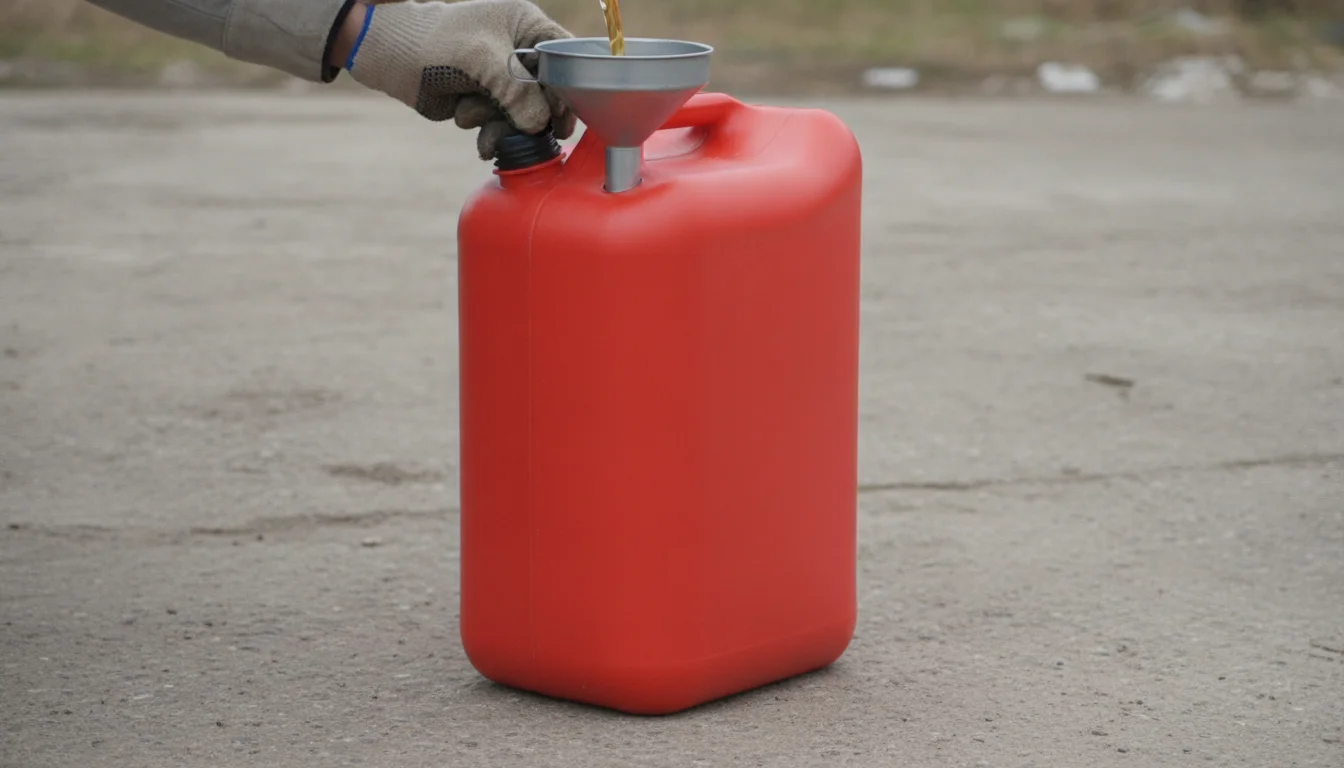
Every disposal route needs the fuel in a container the site will accept and that will not leak or spark on the way. Use a can approved for gasoline: metal or heavy-duty plastic marked for fuel and ideally UL-listed, with a tight cap and a working vent. Set it on the ground outdoors, never in a vehicle or on a plastic bed liner, and keep the pouring spout touching the can so any static charge drains off instead of jumping as a spark. Funnel the fuel in slowly, fill it no more than three-quarters full so the fuel has room to expand, as OSHA advises, then cap it hard and wipe the outside dry. Label it “old gasoline” so staff know what they are taking. Glass, drink bottles and ordinary plastic jugs are not safe for fuel, so do not use them. This is the same handling that other fuels and car fluids need, so do it once and do it right.
4. Take it to household hazardous waste
The most reliable route is the public hazardous waste system. Many household hazardous waste (HHW) facilities, permanent depots and periodic collection events accept old gasoline from residents, but availability, cost and quantity limits vary by area: some take it free, some charge a per-gallon fee, and many cap what you can bring at a few gallons a visit. Some areas have no permanent site or collection day at all, so confirm before you set off. Find the nearest site and its terms first: type the material and your ZIP code into Earth911’s directory, call 1-800-CLEANUP, or contact your local environmental, health or solid-waste agency, as the EPA advises. Bring the fuel in a sealed, approved container, labeled, and hand it over unmixed. This is often the same counter that takes old paint and aerosol cans, so one trip can clear several hazardous leftovers at once.
5. Ask an auto shop, a fire department or a collection event
When the HHW site is far or its next event is months away, local options can sometimes take old fuel sooner, but none is guaranteed, so phone ahead every time. Some auto repair and parts shops that already handle used oil and antifreeze will take a small amount of fuel, especially from a customer. Community collection days run through the year. And your local fire department’s non-emergency line can tell you how your area wants old gasoline handled and whether any nearby program takes it. Ask what they accept, how much, and when, and have the amount and rough age of the fuel ready so they can judge fast. Bring it in a sealed, approved container labeled “old gasoline”, and hand it to a person. Never leave fuel on a doorstep or in a drop box meant for something else. If every local option says no, the HHW site is the fallback.
Old Gasoline FAQ
Can you pour old gas on the ground?
No. It is dangerous and, in many areas, against local rules: even a small amount can foul soil and groundwater, and the vapor is a fire risk. The same goes for drains, storm drains and the trash. Where dumping is prohibited it can bring a fine, so follow your area’s disposal rules instead.
How long does gasoline last before it goes bad?
It varies with the fuel, the container and the storage temperature, so treat any figure as a rough guide. Honda notes gasoline can start to deteriorate in as little as 30 days and suggests buying only a month or two’s supply at a time. Ethanol blends, which is nearly all pump gas, degrade faster in a poorly sealed can because ethanol pulls in moisture. When in doubt, run the jar test rather than trust the date.
Can I mix old gas with new gas?
Only if the old fuel is stale but clean, with no water layer, debris or varnish smell, and only in equipment whose manufacturer allows it. The Ohio EPA suggests about five parts fresh to one part old; check the maker’s guidance, especially for a fuel-injected engine, and skip it if they warn against stale fuel. Do not do this with fuel that is contaminated or has separated into two layers.
Where can I dispose of old gasoline for free?
Some household hazardous waste facilities and collection events take it from residents at no charge, but others charge a fee or cap the amount, so this varies by area – confirm before you go. Find your nearest program through Earth911, the 1-800-CLEANUP line, or your local environmental or solid-waste agency.