Table of Contents
It’s not that they don’t wash. That’s the first thing to get straight if you want to know how to get rid of old person smell, whether it’s in a parent’s house, a place you’ve just inherited, or your own bedroom. The smell is real and has a chemical name, but most of it doesn’t sit on the person. It sits in the sheets, the favorite armchair and the air of a house that rarely gets opened up.
So there are two jobs: pull skin oil out of fabric, and dry out and air a stale house. Candles, plug-ins and essential oils do neither. They add a second smell on top of the first.
What causes old person smell
In 2001, researchers at Shiseido analyzed the body odor of people aged 26 to 75 and found a compound called 2-nonenal, which has an unpleasant greasy, grassy odor, only in people aged 40 or older ( Haze et al., Journal of Investigative Dermatology). It comes from skin-surface oils breaking down as they oxidize, so it soaks into fabric and doesn’t rinse out easily.
And it isn’t a hygiene verdict. When researchers had young adults rate body odor from three age groups, the samples from people aged 75 to 95 came out less intense and less unpleasant than those from young and middle-aged donors ( Mitro et al., PLoS ONE). Old person smell is distinctive. It isn’t worse.
The second source has nothing to do with age. Older houses and older furniture tend to hold damp, and the EPA’s rule of thumb is that a moldy smell means mold is growing somewhere and should be looked into ( EPA). One Reddit poster’s parents, only in their late 40s, had a house that smelled “old” for years. Older relatives didn’t smell like that. It was the house.
To tell which one you’ve got, do a sniff test. If it’s strongest on the bed, the chair and the clothes, it’s skin oil in fabric (methods 1 to 5). If it’s strongest in the basement, a closet, or the whole house on humid days, it’s damp (methods 6 to 10).
1. Wash bedding and clothes with an enzyme detergent
This is the big one. Sheets, pillowcases, nightclothes and the shirts worn closest to the skin soak up skin oil fastest, and ordinary detergent doesn’t reliably shift it. Use an enzyme laundry detergent (look for “enzymatic” or “bio” on the label), or add an enzyme booster to a normal wash. Use the warmest water the care label allows. Include the sofa throw and the bedroom curtains.
Smell each item before it goes in the dryer. Heat can set what’s left of the odor, so anything that still smells goes back in the wash. Never fold anything until it’s completely dry.
2. Strip the stubborn loads with vinegar, then baking soda
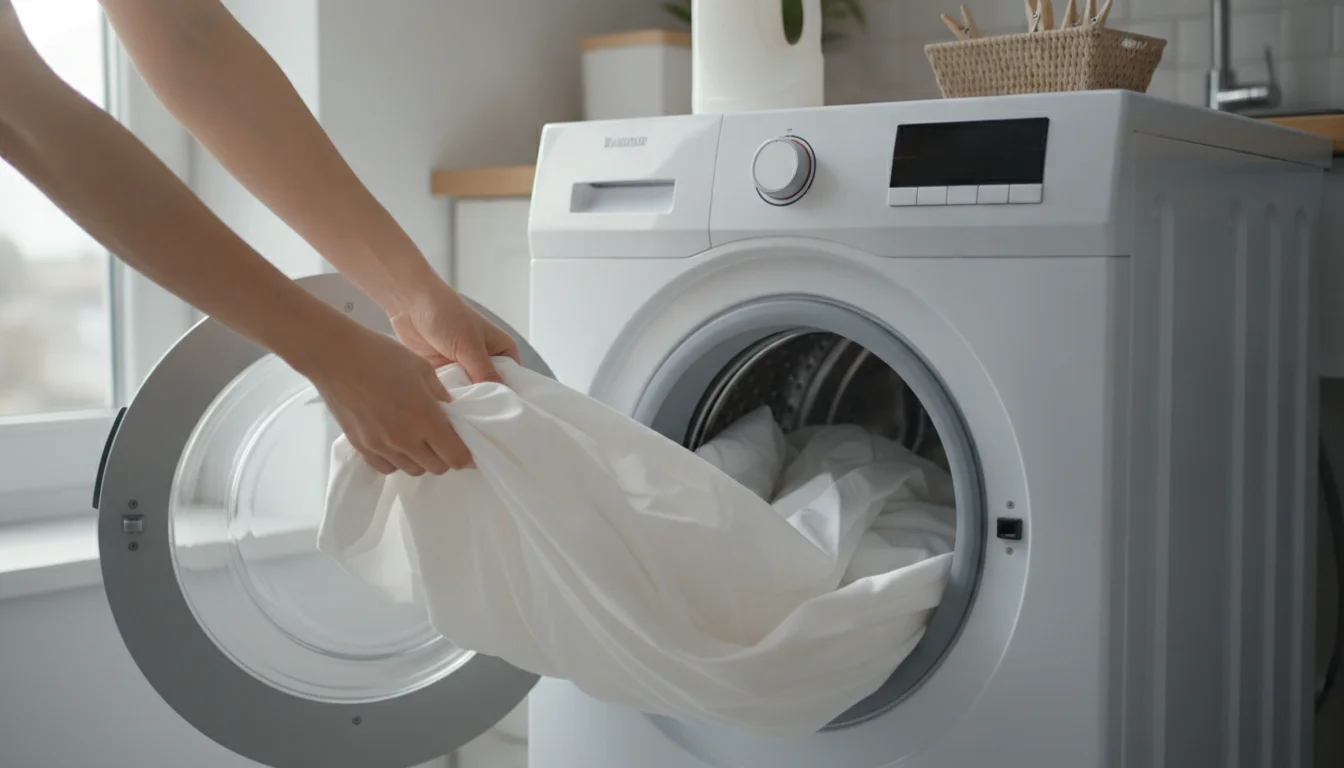
For sheets and towels that still smell after a proper wash, run two hot washes back to back with no detergent and no softener. The first gets 1 cup (240 ml) of distilled white vinegar poured into the drum. The second gets about half a cup (120 ml) of baking soda and nothing else. Keep them in separate cycles. Vinegar is an acid and baking soda is alkaline, so mixed in one load they cancel each other out.
The vinegar smell doesn’t stick. One Redditor says it’s faint out of the washer and gone once the load is dry. For a really bad load, pause the first cycle once the drum has filled, and let it soak an hour or more before you let it finish.
Never put vinegar and chlorine bleach in the same load, and check your washer’s manual first (some makers advise against vinegar).
3. Spot-clean the chair by its cleaning code
The favorite chair has years of skin oil in its headrest and armrests. Find the cleaning tag before you wet anything. It’s usually under a seat cushion or on the base.
- W: water-based cleaners are safe. Use an upholstery cleaner or a little mild detergent in water, dampen the worst spots lightly and work them with a cloth in firm circles.
- WS or S/W: either kind is safe. Test it on a hidden spot first.
- S: solvent cleaners only. Water can mark the fabric.
- X: vacuum only. No liquid at all.
On W fabric, wipe off the soap afterward with a cloth dipped in cool water and let it air dry.
4. Baking soda on the mattress and sofa
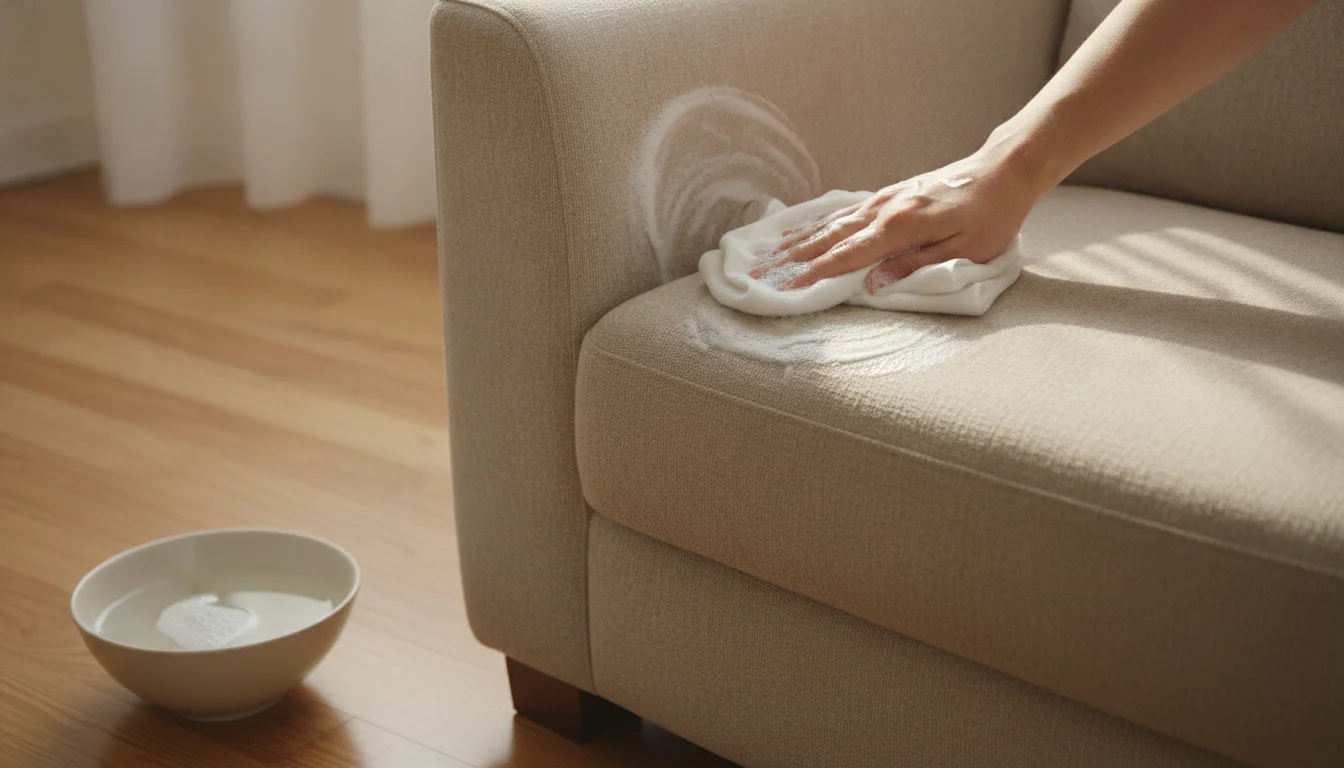
Sprinkle baking soda generously over the mattress, the sofa cushions and the seat of that chair, heaviest where someone’s head and back rest. Leave it at least 15 minutes, and much longer (a few hours, or overnight on a mattress nobody’s sleeping on) for a stronger smell. Then vacuum it up with the upholstery tool. Repeat every few weeks.
5. Enzyme cleaner where the smell has soaked in
If a cushion, rug or mattress still smells after baking soda and a wipe, the oil’s gone deeper than the surface. Use an enzyme cleaner made for fabric or upholstery, test it somewhere hidden, and apply enough to reach where the smell is, not a light spritz on top. Leave it for the contact time on the label, then blot or vacuum as the label says. Let it dry completely before anyone sits or sleeps on it.
6. Open the windows on opposite sides
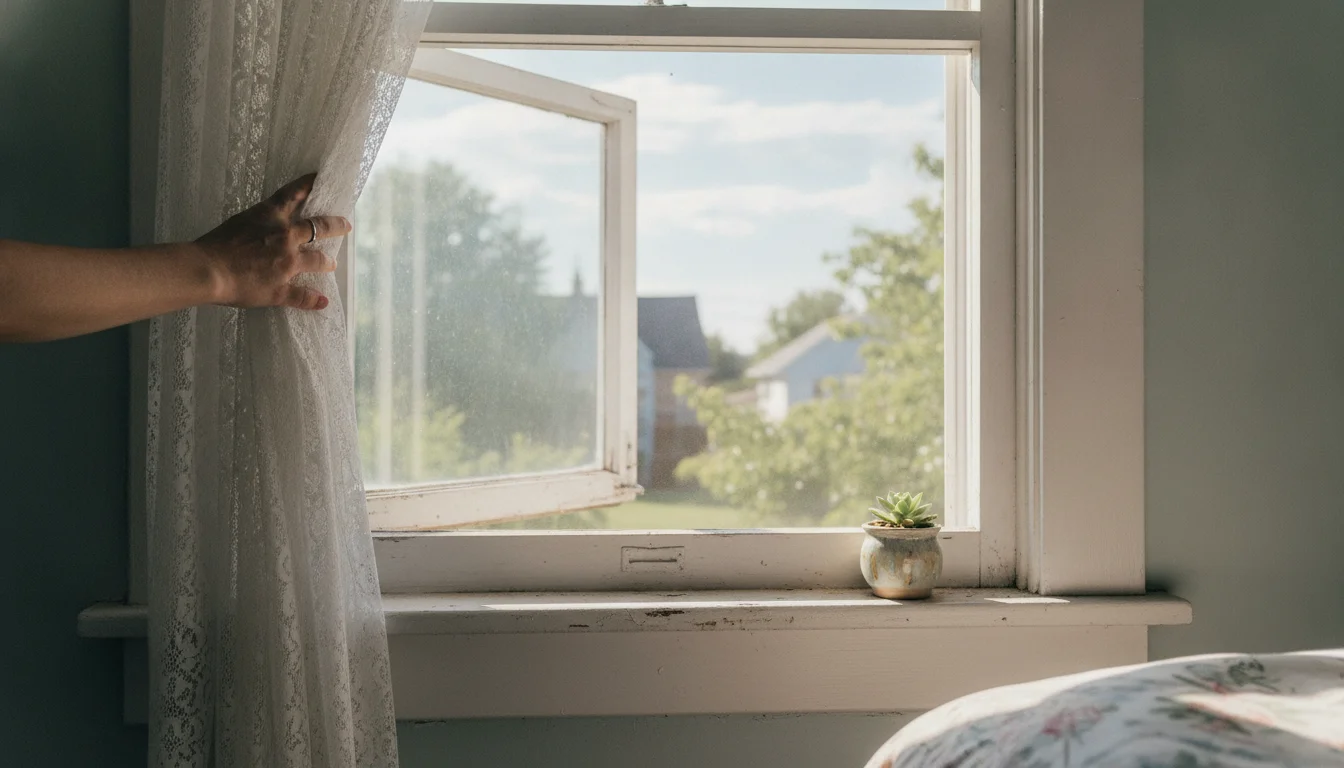
Now the air. A house kept shut and warm holds every smell it makes. Open windows on opposite sides so air moves straight through, and leave them for an hour or two. If it’s cold out, even an inch (2.5 cm) on each side helps. Do the bedroom first thing in the morning, when the air in there is stalest.
7. Find the water
If the smell is musty rather than greasy, something is wet. Check under the sinks, around the toilet bases, the water heater, and anything with a pipe running into it. Then the basement walls, window wells and crawl space after rain. The EPA’s line is to dry water-damaged areas and items within 24 to 48 hours, because that’s the window before mold takes hold.
Don’t stop at what you can see. One Reddit poster smelled stale air in a house for months before finding mold in the ducts. Cleaning didn’t fix flexible ductwork, so they replaced it. Check the attic and crawl space too.
For the full damp checklist, see our guide to getting rid of musty smell in a house.
8. Run a dehumidifier and leave it on
Once the leaks are fixed, keep the air dry. The EPA says to keep indoor humidity below 60%, ideally between 30% and 50%. A dehumidifier set in that range in the basement or the dampest room, left running, does the job. Empty the tank daily or run a hose to a floor drain. An undersized unit runs nonstop and barely keeps up.
9. Change the furnace filter
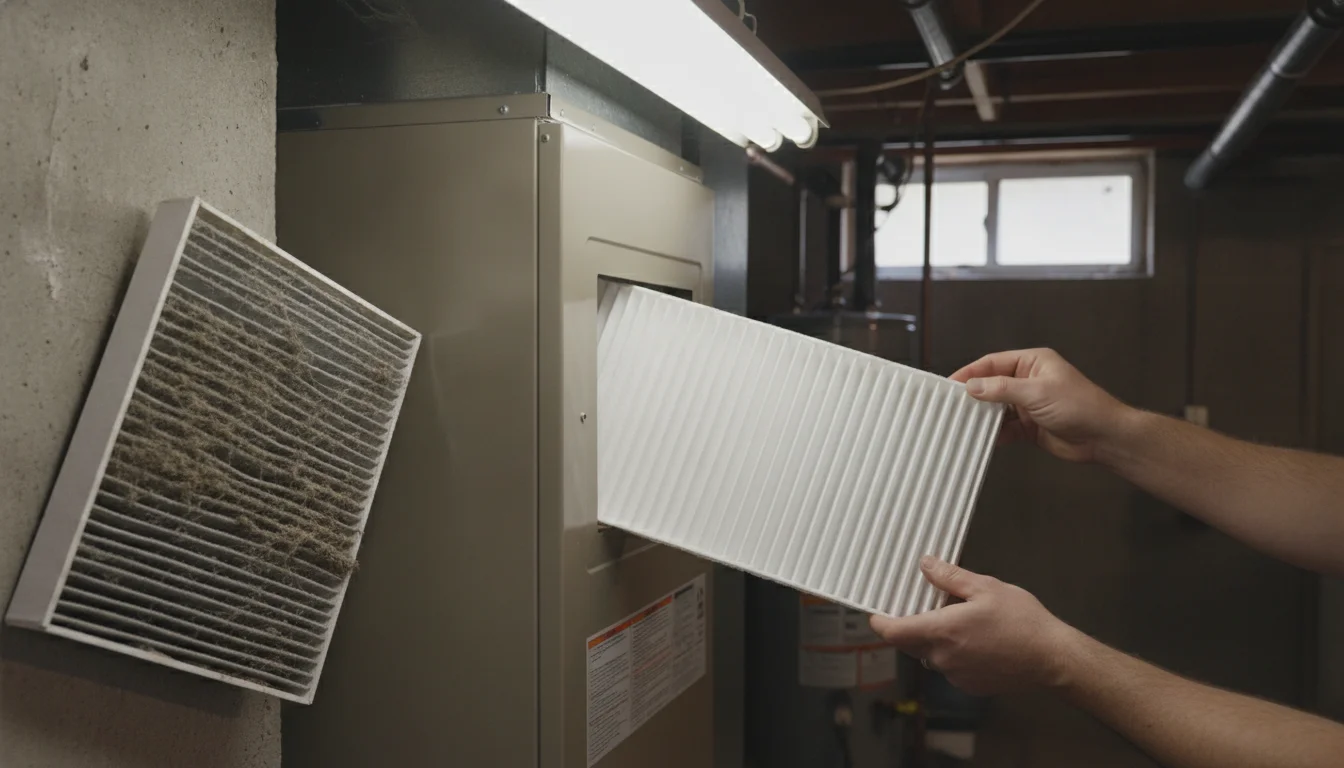
The heating and cooling system pulls air from every room and pushes it back out, so a clogged filter spreads the stale smell everywhere. Change it now, then check it monthly while you’re working on the smell. Use the highest-rated filter your system can take, and make sure it fits snugly with no gap around the edges.
10. Prime the walls (the last resort)
If a room still smells after everything above, it’s in the walls, the carpet and the closet. One Redditor primed and repainted the whole house and pulled up every old carpet. It smelled of fresh paint for two months, then the old smell was gone.
Never prime over a musty patch. Fix the damp and clean off any mold first (method 7). Then wash the walls and roll on a shellac-based primer such as Zinsser B-I-N. One coat does most walls; its label calls for a second only on very porous surfaces or stubborn stains. You can recoat after 45 minutes, but it takes 1 to 3 days to cure fully. Keep windows open while you work, wear a NIOSH-approved respirator if you spray, and follow the label. Cover the whole room, not just the stained bits.
How to keep old person smell from coming back
Wash sheets and pillowcases weekly, and clothes after each wear. Put a washable throw over the favorite chair and wash it with the bedding. Air the bedroom every morning, keep the dehumidifier on, and keep up a regular bath or shower routine.
If it’s a parent or grandparent’s house, start with the house, not the person. “Can I help with the laundry this week?” goes down far better than any comment about a smell. Offer to strip the bed or deal with the basement. If you do raise it, lead with the fact: it’s a skin chemistry change from about 40 on, not a sign they don’t wash.
When to call a professional
Call a mold remediation company if the mold covers more than about 10 square feet (a 3 ft by 3 ft patch, or about 1 square meter). The EPA says smaller patches are usually a DIY job, but bigger ones, or anything with serious water damage, aren’t. Call an HVAC technician if you suspect mold in the ducts.
And if a person’s body odor changes suddenly, or they start sweating much more than usual, that’s a reason to see a doctor, not to buy a new detergent.  Harvard Health says exactly that. A sudden change isn’t the slow, faint smell this article is about.
FAQ
Does showering get rid of it?
It helps, but 2-nonenal is oily and builds up in pillowcases, sheets and upholstery, which keep smelling after the person is clean. Wash the bedding and clean the chair too.
Why does my grandparents’ house smell old when they’re clean?
Because it’s usually the house: years of skin oil in soft furnishings, a house kept closed and warm, and damp in the basement or walls. Fix the fabric and the air.
Will air fresheners or essential oils cover it?
They’ll mask it for an hour. Then you’ve got old person smell with lavender. Wash the fabric and dry out the house instead.
If the smell is mostly on pillows, see how to get body odor smell out of pillows.