Table of Contents
Knowing how to get rid of aerosol cans comes down to one question the label never answers: is the can truly empty? An empty can, with no product and no propellant left, is ordinary scrap metal and recycles like a food tin. A can that still sprays or feels part-full may hold propellant under pressure and product that is flammable or toxic, so it takes the household hazardous waste route instead. Those two cans go to completely different places, so you sort them before you bin anything. The steps below tell you how to confirm which can you are holding, where each one goes, and the one thing you must never do to either.
1. Use it up, then confirm the can is empty
Everything downstream depends on this. A can counts as empty only when both the product and the propellant are gone and the pressure has dropped to the room’s, so finish the can through normal use rather than discharging the contents into the air to empty it faster. That only puts propellant where you breathe and near anything that could spark it.
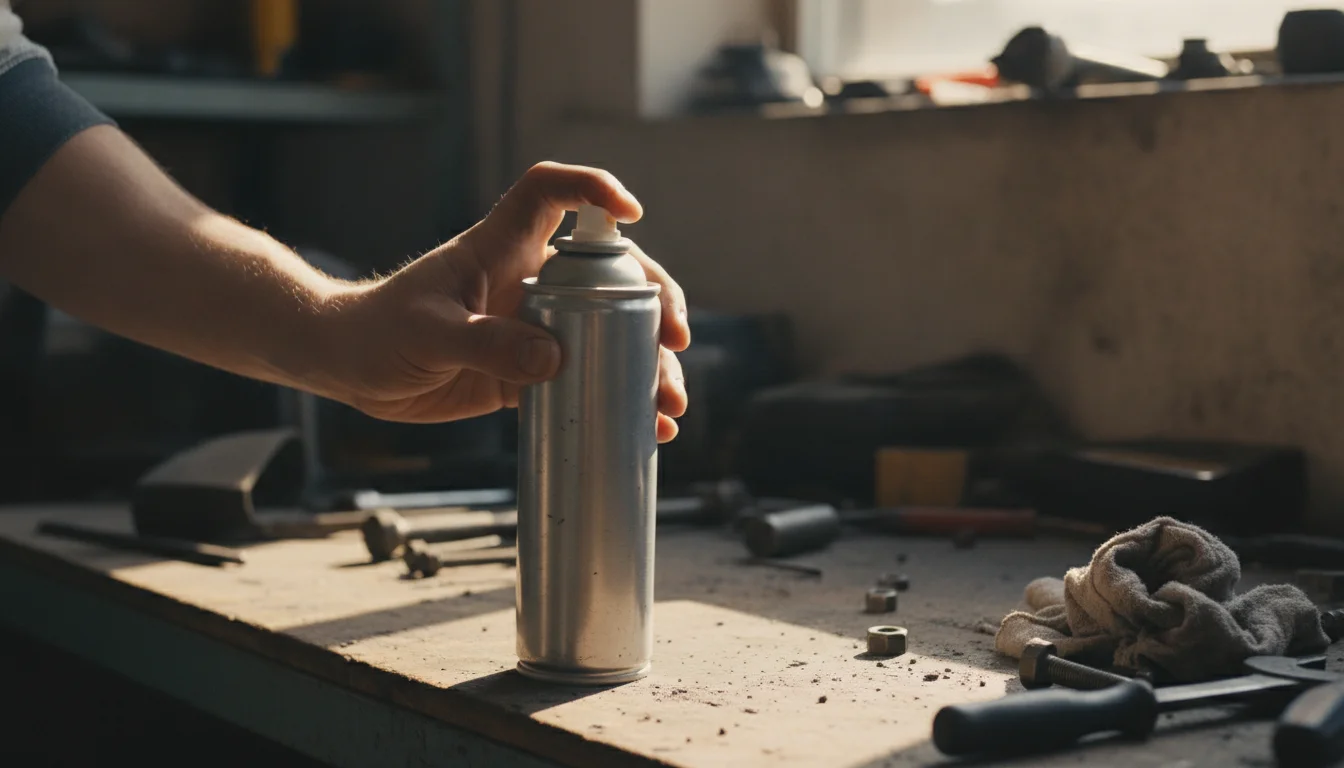
Then test the can rather than trusting the label. Hold the nozzle down for a few seconds: a working nozzle on a truly empty can gives no hiss and no mist. Shake it: an empty can is light and silent, while leftover liquid sloshes and trapped gas keeps it heavier than bare metal. One catch: silence proves empty only when the nozzle still sprays. A clogged or damaged nozzle can hold back product and pressure, so if the button is jammed or the can is dented, treat it as non-empty and take it to household hazardous waste. Pass both tests with a working nozzle and the can is recyclable metal. Fail either and it takes the hazardous route.
2. Recycle the empty can as scrap metal
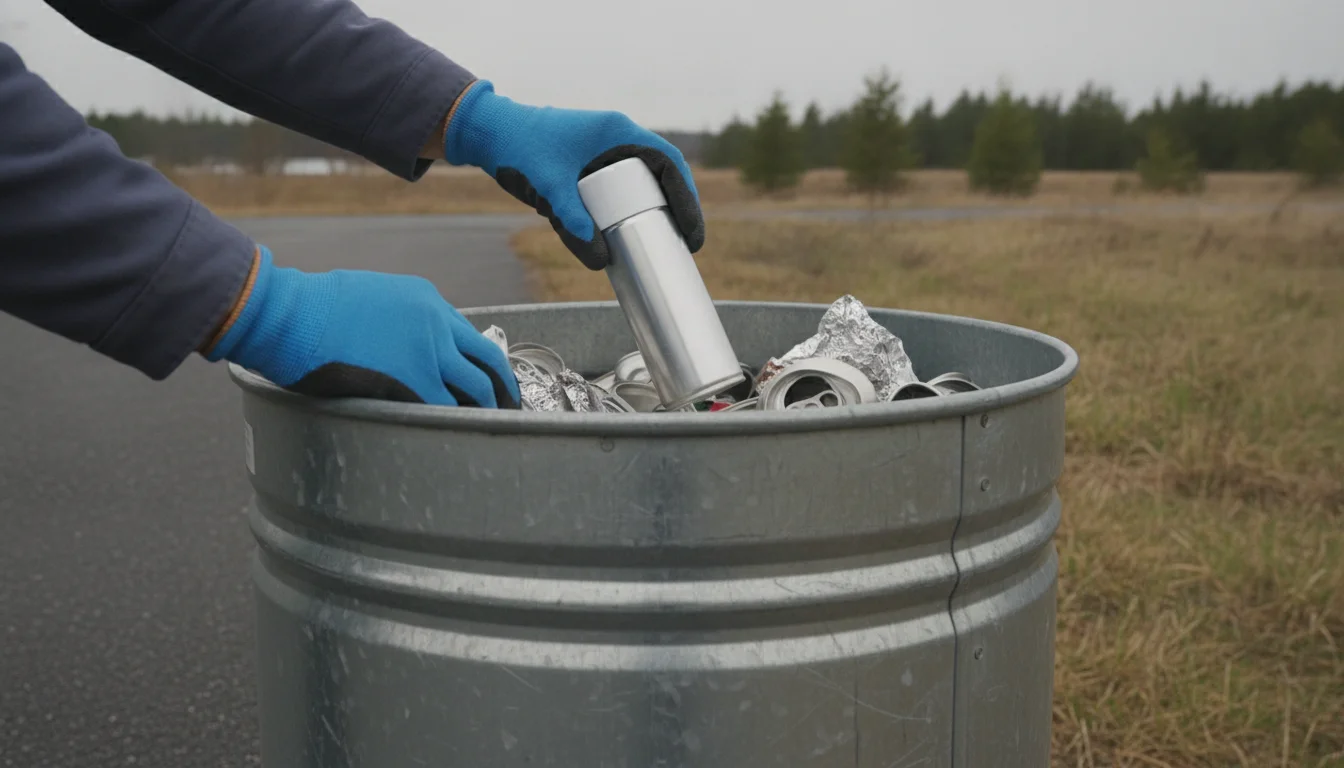
A confirmed-empty can is just steel or aluminum, both of which recycle well. Preparation is a local call, so follow the receiving program’s instructions: some want the plastic cap popped off and recycled on its own track, some want the cap and tip removed, and others take the can as is. Whatever the prep, leave the body whole: do not flatten, crush or pierce it, even now.
Where the metal goes is a local call: many curbside programs take empty cans in the recycling bin alongside tins, others want them at a scrap-metal recycler (step 5). When you are not sure your bin accepts them, confirm that a scrap-metal recycler or drop-off takes aerosol cans before you make the trip, since not every one does.
3. Take a non-empty can to household hazardous waste
A can that still holds product or propellant belongs on the household hazardous waste route, not in recycling and not in the trash. It may still be under pressure, and the product may be flammable, corrosive or toxic, which is exactly what that system handles, the same route as old paint, used motor oil and used batteries. Take the can to a household hazardous waste (HHW) facility or collection event; many transfer stations also keep a labeled container marked for used aerosol cans. For households it is often free; check your local program to be sure.
Carry the can whole and upright, cap on, and keep it out of the sun and away from heat, which raises the pressure inside. The rule that matters most: never put a part-full or pressurized can in the trash or the curbside recycling. The compactor blade in the collection truck can crush it, rupture it, and start a fire or injure the crew.
4. Never puncture, crush or burn the can
The tempting shortcut is to make a can “safe” yourself by piercing it, squashing it flat in the bin, or throwing it on a fire. Do none of these. An aerosol can is a pressure vessel, and its propellant is usually butane or propane, so a puncture, a crush or a flame can rupture the can and ignite the spray that escapes. Heat alone will do it, which is why a can should never go in a fire pit, a wood stove, a burn barrel or a hot car.
Puncturing does have a legitimate place, which is the source of the confusion: businesses and scrap recyclers use a purpose-built device that pierces the can inside a sealed fixture and captures the gas and liquid safely. That equipment exists because doing the same by hand is dangerous. At home there is no safe way to depressurize a can, and none is needed.
5. Check your local rule first
National guidance sets the safety facts, but your city or county sets the logistics, and the logistics are what you need. Whether empty cans belong in your curbside bin, at a scrap-metal yard, or in the trash is a local decision, and so is where a non-empty can goes: a permanent HHW depot, a collection event, or a marked container at the transfer station.
Finding out takes five minutes. Type the material and your ZIP code into a recycling locator such as Earth911, call a line like 1-800-CLEANUP, or open your city or county solid-waste page, and note the hours, since an HHW event may run one Saturday only. If a check leaves you unsure whether a can is empty, default to the hazardous route: a wasted trip with an empty can costs a little time, while binning a pressurized one risks a fire in the truck.
Aerosol can disposal FAQ
Can you put aerosol cans in the recycling bin?
Often yes for a confirmed-empty can, since it is scrap metal, but some areas keep them out of curbside and want a scrap-metal drop-off instead. Never put a part-full or pressurized can in the recycling.
How do you know when an aerosol can is empty?
Press the nozzle and listen for a hiss, then shake the can. Empty means no hiss, nothing sprays, and the can feels light with nothing sloshing. That test only holds if the nozzle still works: a clogged or damaged nozzle can hide product and pressure, so treat a jammed or dented can as non-empty. The product running low is not the same as the can being empty.
How do you dispose of an aerosol can that is not empty?
Take it to a household hazardous waste facility or collection event, or to a marked used-aerosol-can container at your transfer station. Keep it whole and upright, and never put it in the trash or recycling.
Is it safe to puncture an aerosol can before throwing it away?
No, not at home. The propellant is flammable and under pressure, so a puncture can start a fire. Only a commercial puncture-and-drain device, used by a business or recycler, does this safely.
Does Home Depot or Lowe’s take spray paint cans for disposal?
Not aerosols. Some Home Depot and Lowe’s stores take back architectural house paint through PaintCare, but that is a per-store arrangement, not a chain-wide service, so check that your specific store is a listed PaintCare drop-off before you go. Either way, PaintCare covers house paint only and does not accept aerosol or spray cans. Send empty spray cans to metal recycling where your area accepts them, and take part-full or full ones to your local household hazardous waste program instead.