Table of Contents
Knowing how to get rid of used motor oil comes down to two rules: the recycling route is usually free, and you must never tip it down a drain or pour it on the ground. Most auto-parts stores and service stations take it back for recycling at no charge, filter and all. (Used cooking oil is a different job.) That matters, because used oil is insoluble, does not break down, and carries lead, arsenic and benzene. The oil from a single oil change can foul a million gallons of fresh water if it reaches soil, a storm drain or the trash. Better still, oil never wears out: a recycler re-refines it endlessly, so every collector wants it. Here is how to contain it and where to take it.
1. Collect it in a sealed, leak-proof container
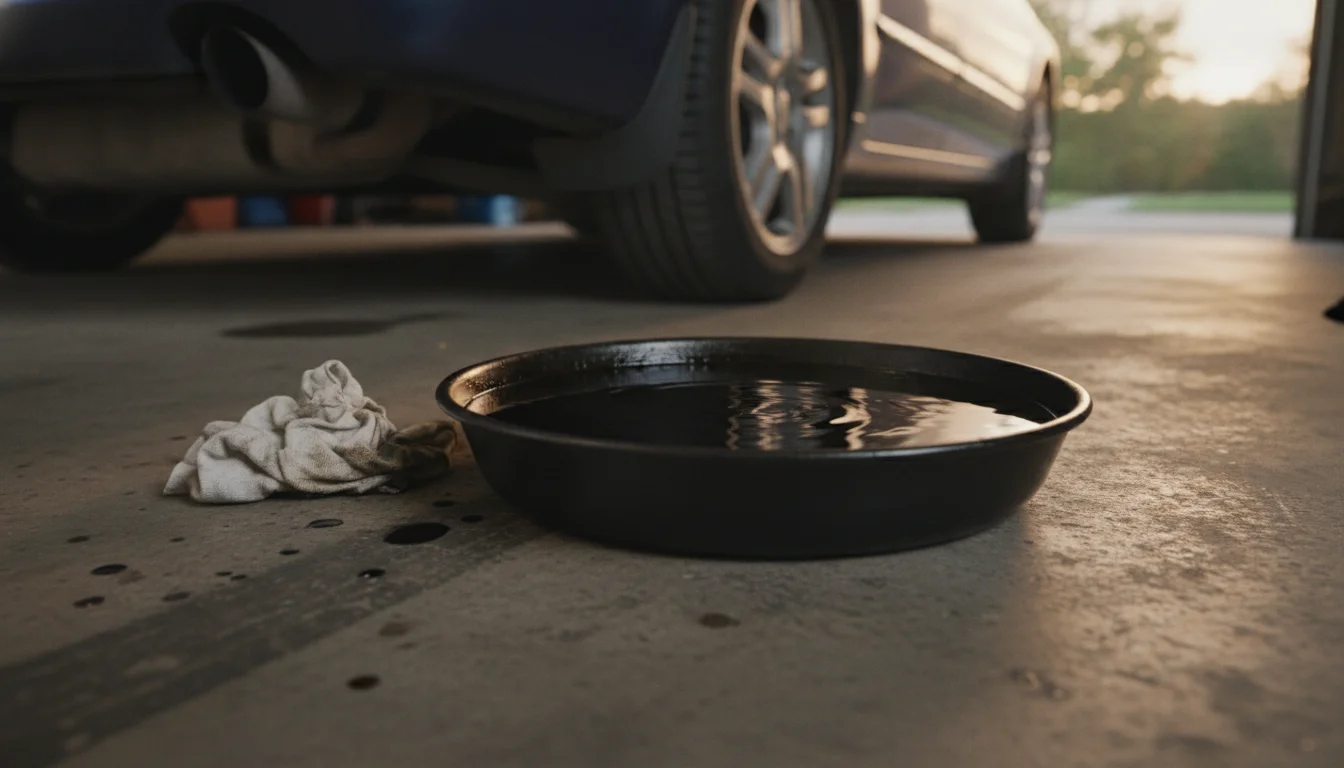
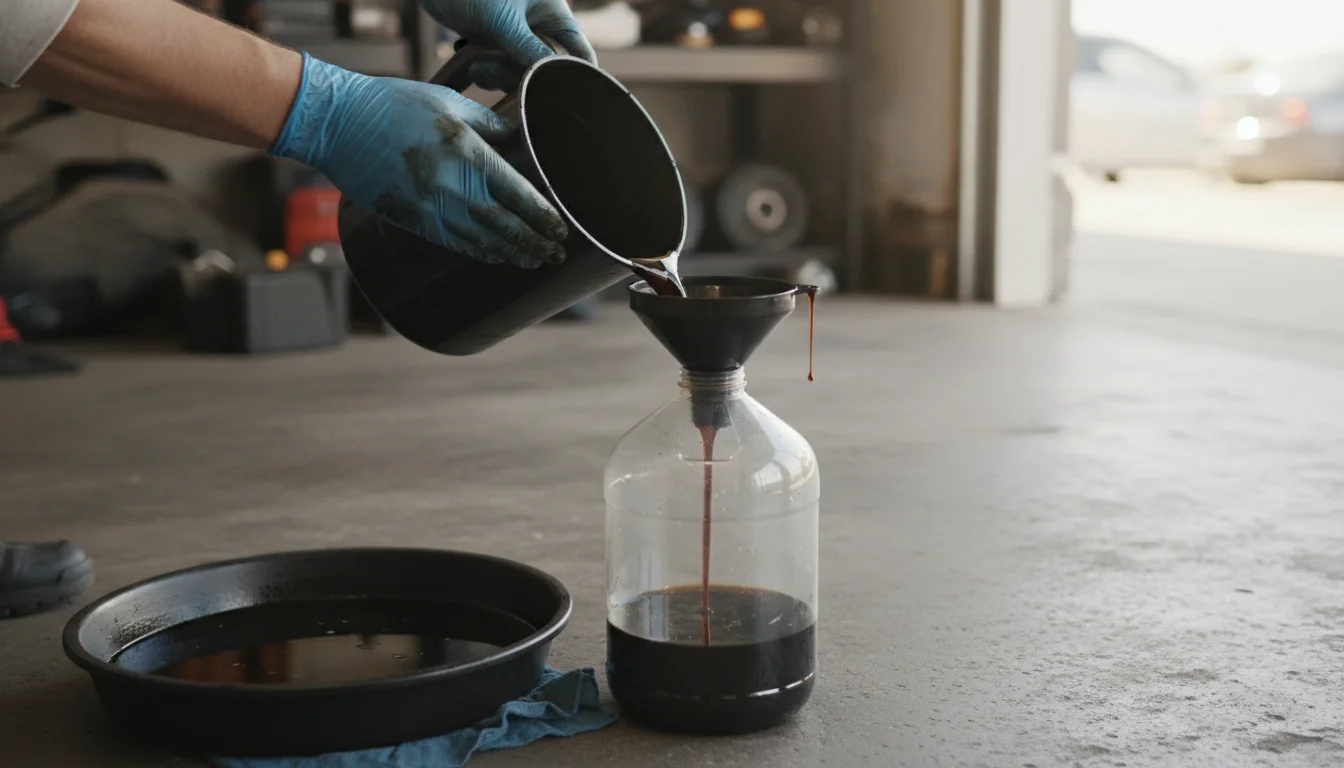
Every recycler wants the oil clean and contained, so this step makes the rest work. Drain it into a clean pan, then funnel it into a container that seals tight: the bottles the new oil came in are ideal, or any jug with a screw cap that has only ever held oil. Keep the used oil on its own. Do not tip antifreeze, brake fluid, solvent or water into it, because a mixed container is contaminated and most collection points will refuse it. Cap it and stand it upright, ready to move. Most sites take no more than five gallons at a time, so note the limit before you drive anywhere.
2. Take it to an auto-parts store, free
This is the free route most people never notice: the shops that sell oil usually take it back. The major chains, AutoZone, Advance Auto Parts, O’Reilly, NAPA and Firestone, along with Walmart’s Tire and Lube counters, run used-oil recycling and accept it from the public at no charge. Plenty of quick-lube and service stations do too. Bring it in your sealed container and hand it over at the counter or service desk. It must be clean and unmixed, or they will refuse it.
One catch: individual branches do not always follow the corporate policy, and some cap the amount at around three to five gallons. Phone the nearest store first to confirm it takes used oil, how much, and whether it will take your filter too. For a home oil change it is usually the easiest route.
3. Drain and recycle the oil filter
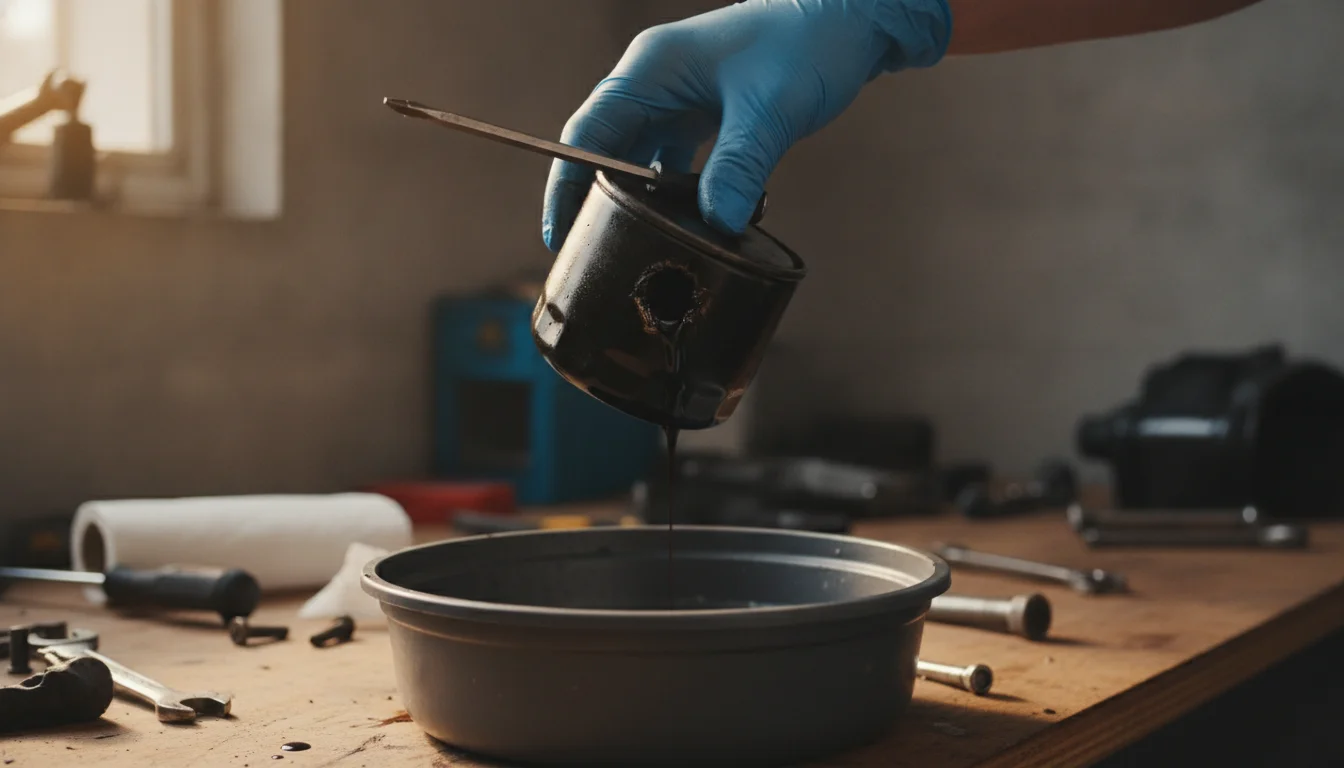
The filter is the half of the job people forget. It is mostly recyclable steel, but even a drained one still holds oil, roughly 2 to 8 ounces and as much as 10 after a thorough drain, so it has to be emptied first. Let the engine cool enough to handle it, then work in gloves and eye protection. Punch a hole in the domed end, turn the filter hole-side down over your oil container, and leave it to drain overnight so gravity pulls out as much as it can. If it has an anti-drain valve near the threaded center, pierce that too so the bottom empties as well. It keeps weeping a little even after a long drain, so once it stops dripping, seal it in a leak-proof bag and recycle it with the oil. Many parts stores and repair shops take a drained filter, and most hazardous-waste sites do too, but some local programs take no filters at all, so check before you drive over.
4. Take it to household hazardous waste
When no parts store is handy, or you have more oil than they will take, the public waste system takes it directly. Household hazardous waste (HHW) facilities, periodic collection events, and county maintenance yards often accept used motor oil from residents, and many charge nothing for it. Many also take filters and other car fluids on the same trip, which can clear related hazards like old paint and used batteries at once. Acceptance, fees, quantity limits and appointment rules are all set locally, though, so confirm what your nearest facility takes and on what terms before you go. Find the site and its hours first, because they vary more than a store’s: enter your ZIP code in Earth911’s recycling directory or call 1-800-CLEANUP. Bring the oil sealed and upright, and hand everything over unmixed.
5. Use a curbside collection service, where offered
Some communities collect used oil from your curb, so you never drive it anywhere. Where it is offered, mostly in California and a few other areas, you set the sealed oil out on a named day in a supplied jug or bag placed beside the cart, not inside it, and the hauler takes it separately. It never goes loose in the ordinary recycling cart, where it ruins the load and leaks in the truck. Check whether your city or county runs the service, and read its rules, before you rely on it. One aside: many programs send scraped-out plastic oil jugs to the regular trash rather than curbside recycling, because of the oily residue left inside, so check your local solid-waste program for its container rule.
Used motor oil FAQ
Does AutoZone take used oil for free?
Yes. AutoZone and the other big parts chains generally take used motor oil back for recycling at no charge, and many take drained filters too. Policies vary by branch, so call ahead before you drive over.
Can you throw used motor oil in the trash?
No. Used oil is hazardous, and the oil from one change can foul a million gallons of water. It must never go in the trash, on the ground, or down any drain. Take it to a recycler.
Do I have to recycle the oil filter too?
Yes. The filter is mostly recyclable steel but still holds oil, so drain it hole-side down overnight, bag it, and take it in with the oil. Some states restrict how used filters may be thrown out, so check your state and local rules.
Where can I take used motor oil near me?
Try a nearby auto-parts store or quick-lube first, then a household hazardous waste facility. To find one, enter the material and your ZIP in Earth911’s directory or call 1-800-CLEANUP.