Table of Contents
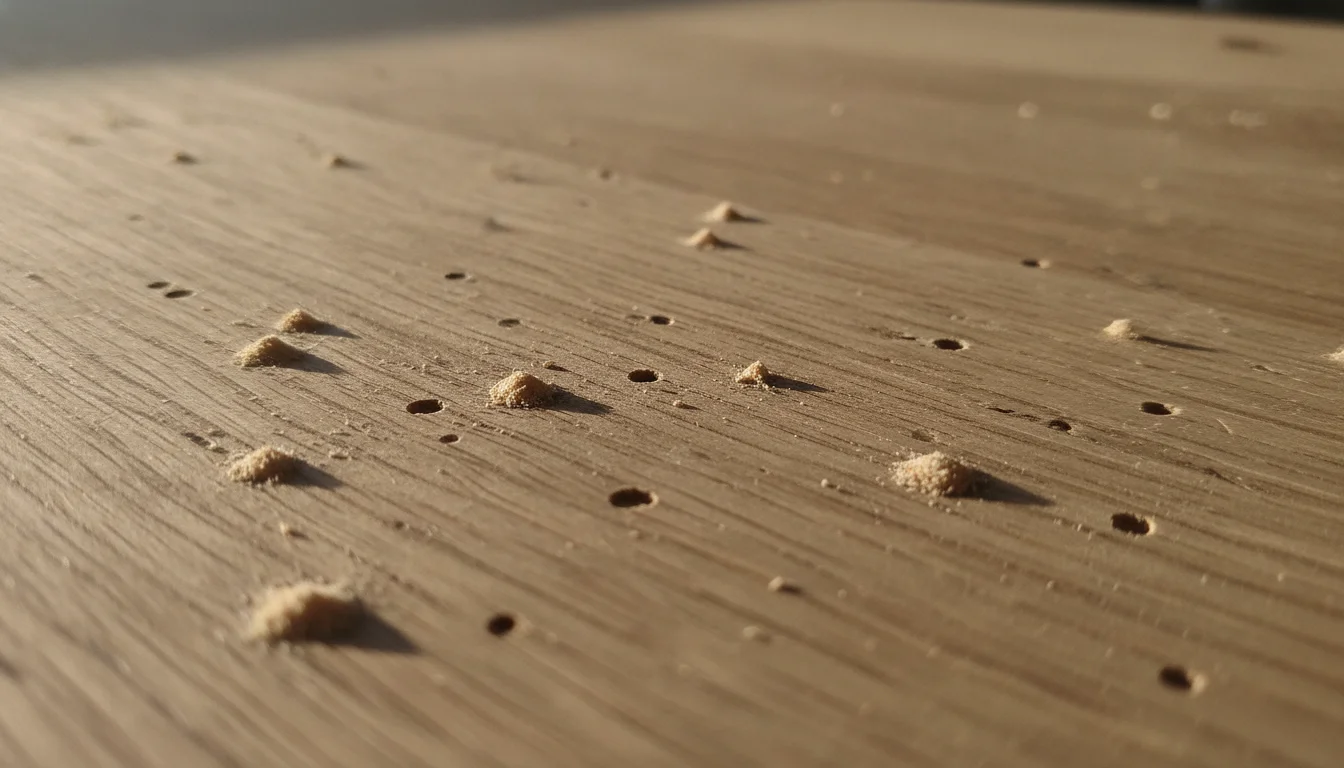
A floor peppered with tiny round holes looks like an emergency. It usually isn’t, and sometimes the beetles that made those holes left years ago. So how to get rid of powderpost beetles starts with a question most guides skip: are they still in there? Powderpost beetle infestations often die out on their own as the wood ages, and the larvae chew so slowly that extension entomologists say you can take weeks or even months to decide what to do.
Once you know they’re active, two things pick the fix: where the wood is, and whether it’s finished. That second one matters more than you’d think, because almost every treatment you can buy only works on bare wood.
What causes powderpost beetles
“Powderpost beetle” covers three groups, and they don’t behave the same way.
- True powderpost beetles (lyctids) go after hardwood: oak, ash, walnut, hickory, cherry. That means flooring, trim, paneling, cabinets and furniture. The holes are pinhead-sized and the powder feels like flour or talc.
- Deathwatch beetles (anobiids) take softwood and hardwood alike, like it damp, and are the ones that damage joists, beams and sills in crawl spaces, basements and outbuildings. Their powder feels gritty.
- False powderpost beetles (bostrichids) mostly arrive in new tropical hardwood and bamboo, and rarely come back after the first generation leaves.
The University of California’s ballpoint pen test sorts them in seconds: push the tip of a click pen into a hole. Only the tip fits a powderpost hole; the tip and part of the cone fit a deathwatch hole; the whole point usually slides into a false powderpost hole.
In almost every case the beetles arrived inside the wood: new flooring, a secondhand dresser, reclaimed barn boards. Females usually lay eggs in unfinished wood, but Texas A&M AgriLife says their most common egg-laying spot indoors is an old exit hole. That’s how they reinfest finished wood.
1. How to get rid of powderpost beetles: first prove they’re active
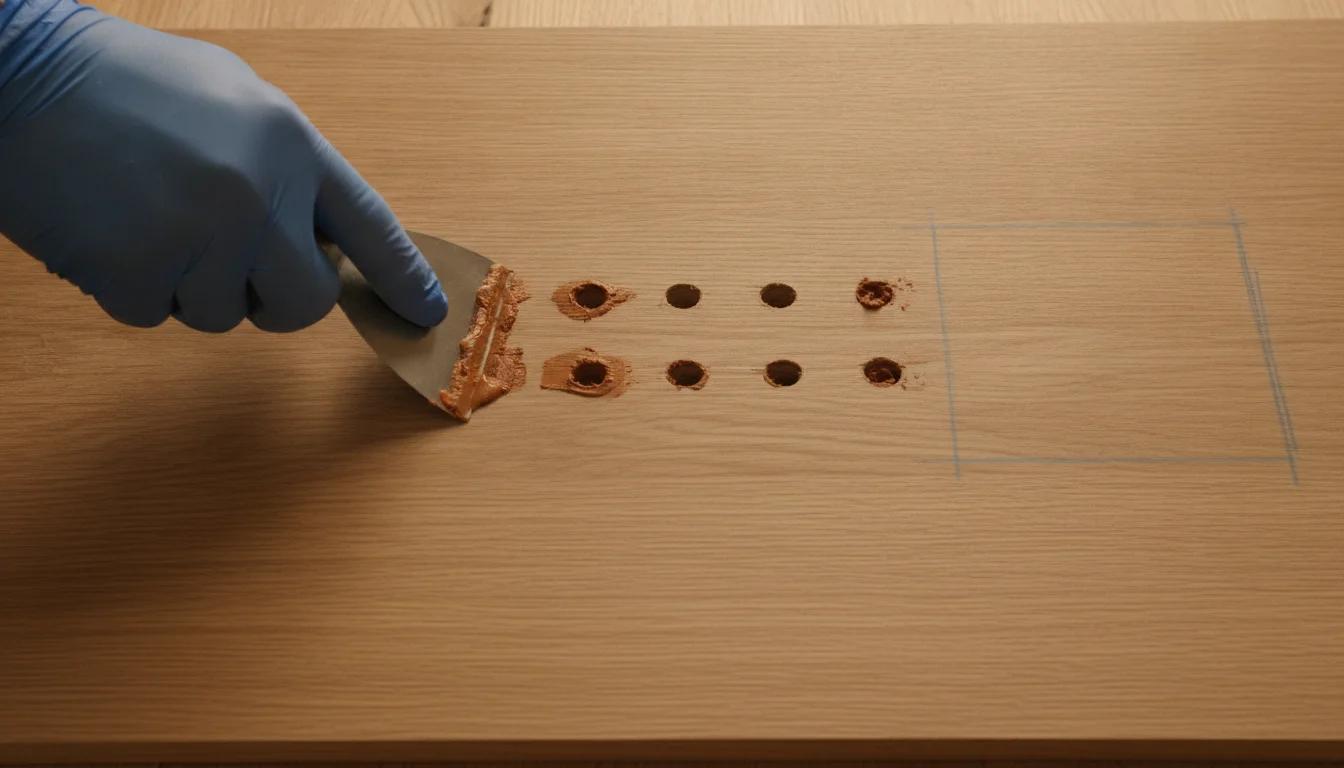
Do this before you spend a cent. Pick a patch of about 1 square foot (0.1 m²), plug or mark every hole in it, and vacuum up all the powder. Thick latex paint plugs holes in rough lumber; colored wood filler keeps finished pieces looking right. Then leave it alone. New open holes or fresh, pale powder in that patch later means beetles are still coming out. Nothing new means the damage is old.
The catch is timing. Most adults emerge in spring and summer, so Iowa State Extension suggests checking 6 to 12 months later. Meanwhile, read the holes you have. New ones have clean edges the color of fresh-cut wood; old ones have weathered to match the surface. On stained flooring, a new hole has no stain inside it. And don’t trust powder on its own: old galleries keep sifting dust whenever the wood gets bumped. The flour-fine texture also rules out termites: drywood termites leave coarser pellets with ridges on their sides. One homeowner on r/HomeImprovement put it simply: the new holes with fresh dust were smaller and much more defined than the old ones.
2. Cut out the damaged pieces and replace them
If the damage is in a few boards, a strip of flooring or some trim, this is usually the cheapest fix that lasts. Replace the boards next to the damaged ones too, because larvae tunnel from one piece into the next. Texas A&M AgriLife Extension suggests waiting a month or two after you first spot the damage, so the beetles still inside come out and show you how far it really goes.
Burn the old wood or take it to a landfill. Don’t stack it in the shed, and don’t keep it for firewood.
3. Treat bare wood with a borate
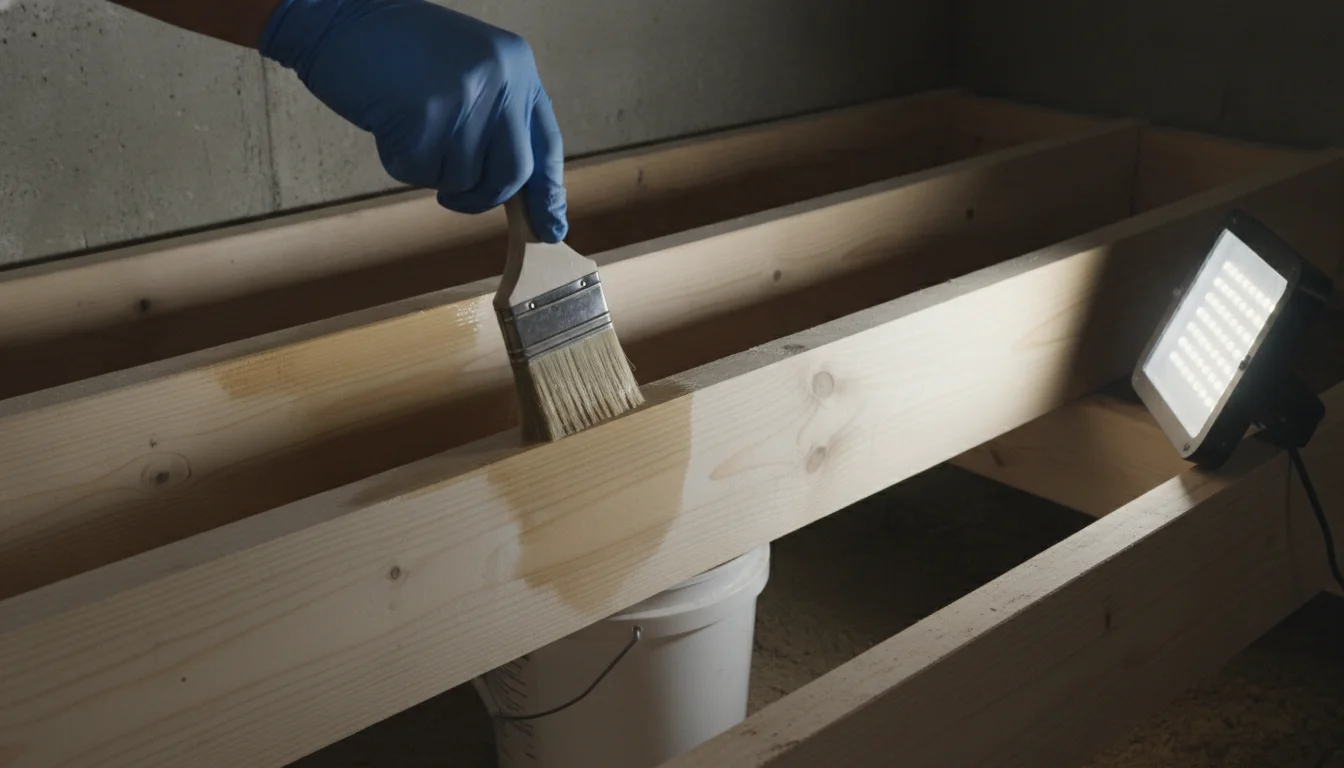
Sodium borate wood treatments (the extension guides name Bora-Care and Tim-Bor) are mixed with water and sprayed or brushed on. They soak in and kill larvae inside the wood, plus beetles chewing in or out.
Here’s the part that trips people up. Borate won’t soak through paint, varnish, polyurethane, wax or any sealer. Finished wood has to be stripped or sanded back first, or treated from an unfinished side like the underside of a table or the back of a cabinet.
That makes borate the right call for bare joists and beams in a basement, crawl space or barn, and a poor one for the living room. Kentucky’s extension guide adds that flooring in a heated house sits around 10 percent moisture, where borate barely penetrates. Some borate products are sold only to licensed applicators, depending on your state, so read the label before you buy.
4. Spray bare wood to kill adults as they come out
A pyrethroid insecticide (permethrin, cypermethrin or cyfluthrin, per Purdue University Extension) won’t reach larvae deep in the wood. What it does is kill adults as they chew their way out, before they can lay the next round of eggs on the same surface. Wet every surface, spray in spring, and plan on repeating it: fresh powder a week or so later means the residue has worn off. Bare wood only, same as borate.
5. Heat-treat furniture and small pieces
Heat kills every life stage, all the way through. For small wooden items without fabric, pelts or paint, the University of California suggests an oven at 120 to 140°F (49 to 60°C) for 6 hours, longer if the wood is thicker than 2 inches (5 cm). Bigger pieces go in a pest control company’s heat chamber: Iowa State gives 133 to 150°F (56 to 66°C) for 30 minutes to 4 hours, kept humid so the wood doesn’t crack.
6. Freeze it instead
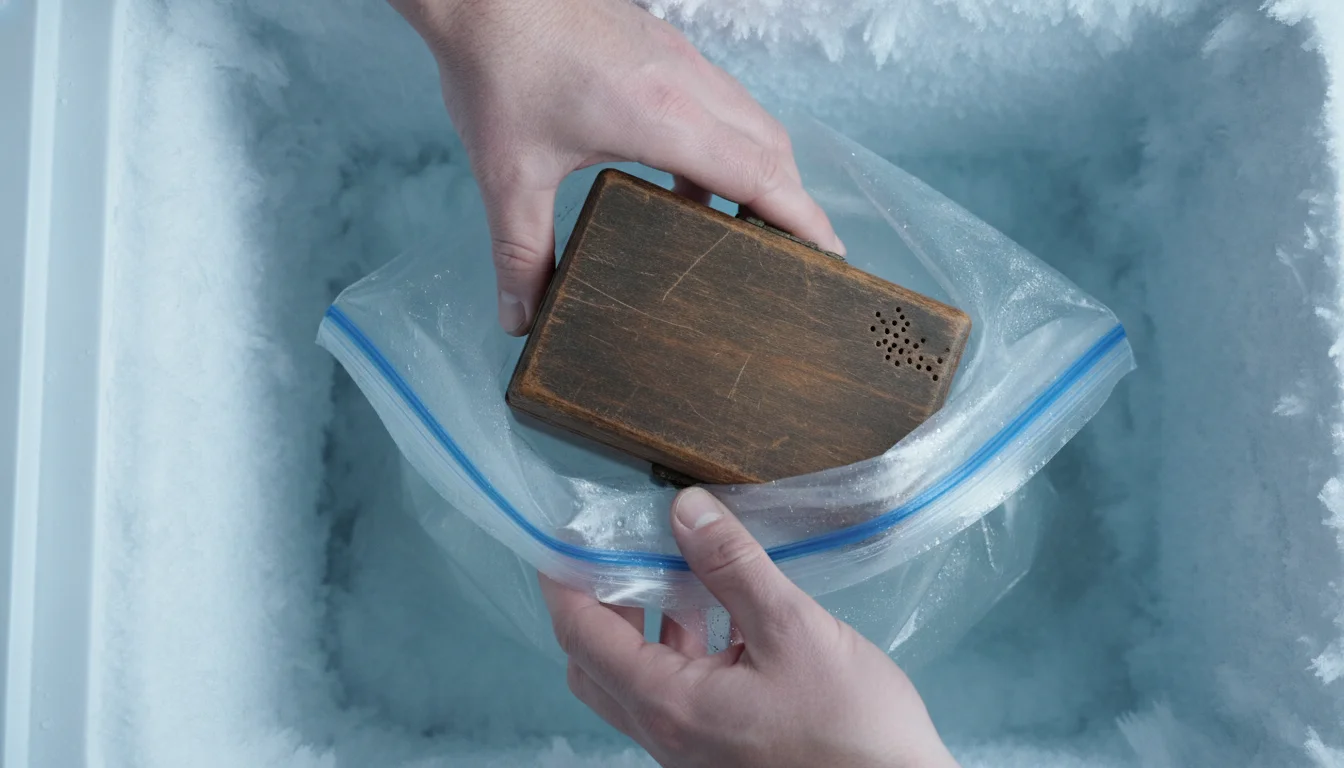
If heat worries you, a deep freezer at 0°F (-18°C) for 72 hours does the same job for small items, according to UC. Thicker wood needs longer. Seal the piece in a plastic bag first, and check your freezer actually gets that cold (many home freezers run warmer).
7. Fumigate, as the last resort
Fumigation is for infestations you can’t reach: through the walls, between floors, deep in structural timber. The house is tented and left empty for about three days. It’s expensive (Texas A&M puts a moderately sized home at ten thousand dollars or more), it may not get everything, and new beetles can move in as soon as the gas clears. For a single antique, vault fumigation by a pest control firm is far cheaper.
8. Dry out damp framing
This one depends entirely on which beetle you have. Kentucky’s extension guide says wood below 14 percent moisture through spring and summer is generally unsuitable for deathwatch beetles, the crawl-space and barn species. So a vapor barrier of polyethylene sheeting over the crawl space soil, a dehumidifier and better ventilation can starve an infestation in a basement, crawl space or barn. A moisture meter tells you where the wood stands.
But true powderpost beetles in hardwood floors and furniture can carry on in wood as dry as about 8 percent, according to UC and Kentucky. Drying won’t touch them. That’s the detail the single “keep it below 12 percent” figure leaves out.
9. Seal bare wood with a finish
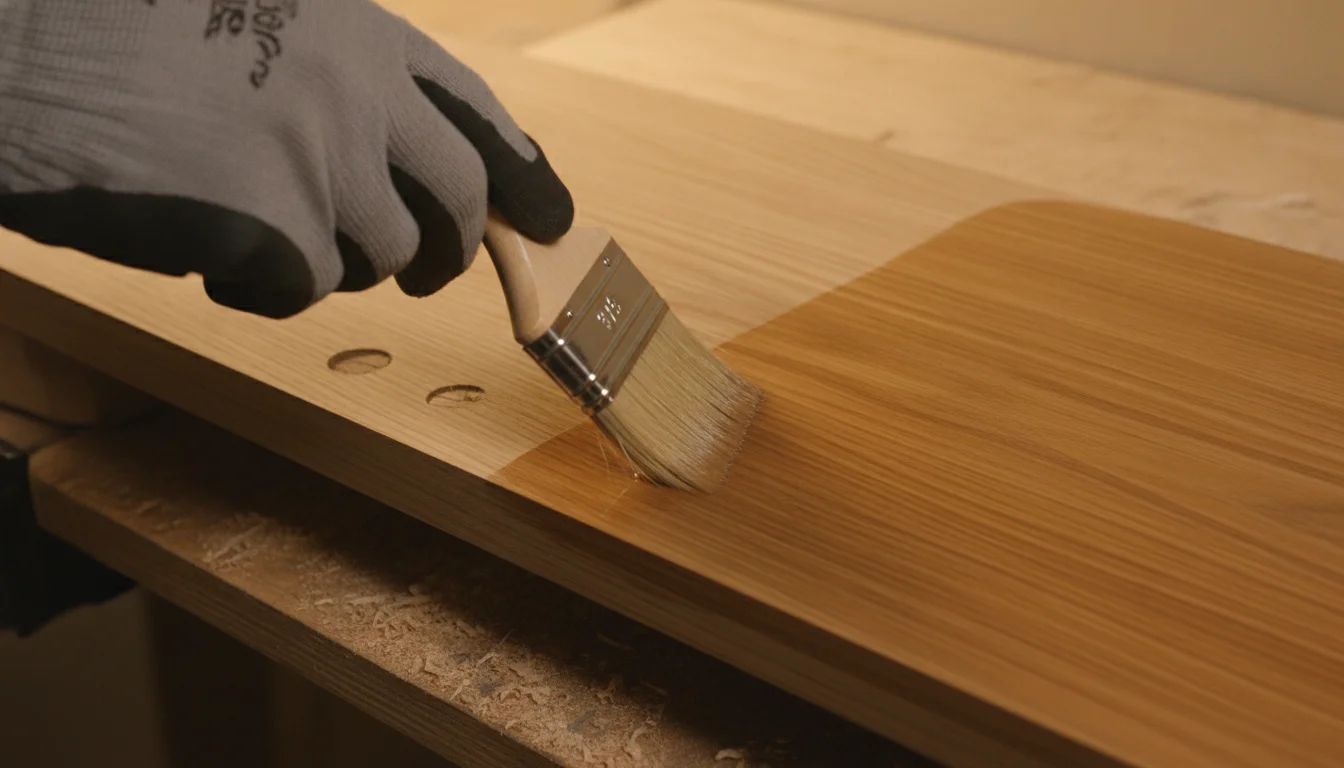
Paint, varnish, stain or shellac closes the pores, cracks and holes where females lay eggs. It doesn’t seal the wood on its own, though. Beetles already inside can still chew out through a new finish, and every exit hole they leave is an open route for the next round of eggs. After the holes stop appearing, fill or seal every one, then refinish.
10. Check wood before it comes inside
Look over secondhand furniture, antiques and lumber for small round holes and fine powder before they come in, especially on the back and underside. Don’t use old barn wood or anything stored outdoors for an indoor project unless it’s been kiln-dried, and bring in only the firewood you’ll burn that day. If holes show up in new flooring or cabinets, call the installer before you pay for anything. Kentucky notes the supplier is often responsible.
How to prevent powderpost beetles
Three habits: keep wood finished (method 9), check wood before it comes in (method 10), and keep basement, crawl space and barn framing dry (method 8). Kiln drying kills whatever is in the wood at the time, but it doesn’t stop new eggs later, so a “kiln-dried” sticker doesn’t let you skip the finish.
When to call a professional
Call when the damage has spread into walls, between floors or through structural timber you can’t get at, or when anything load-bearing feels soft or is visibly weakened. You’ll also need a pro for fumigation, and possibly for borate, depending on how your state licenses it. Get the beetle identified first by your county extension office or a pest professional. Plenty of small brown pantry beetles get mistaken for powderpost beetles.
Selling a house with old, inactive holes? A buyer may want paperwork. On r/pestcontrol, one commenter told a seller facing a $385 borate quote to have the company spot-treat a small area and issue the certificate, adding that a borate job shouldn’t smell.
FAQ
What gets rid of powder post beetles?
Replacement for a few pieces, borate for bare wood you’re keeping, heat or freezing for furniture, fumigation for infestations inside walls. But first make sure they’re still active.
What kind of damage do wood beetles cause?
Slow damage. Larvae tunnel through the wood and pack the tunnels with powder until, after many generations, a board can be little more than a shell of surface wood. True powderpost beetles rarely threaten a softwood-framed house, says Texas A&M, though they mark up floors and furniture. Deathwatch beetles in damp crawl spaces can seriously weaken joists and beams.
How long do powder post beetles live in wood?
Indoors, Texas A&M says development can take two to five years, which is why holes can show up years after a house is built. As wood ages and its starch runs out, development slows until the infestation stops.
What bug spray can I use to get rid of powderpost beetles?
A borate wood treatment is the one that reaches larvae inside bare wood. A pyrethroid spray such as permethrin kills adults as they emerge but doesn’t reach larvae. Neither works through paint, varnish or another finish.