Table of Contents
If it’s got a battery, don’t trash it. A dead battery isn’t really dead: it holds enough charge to throw a spark if its terminals touch metal or another cell, and a loose lithium battery crushed inside a garbage truck is exactly how recycling-plant fires start. The EPA tracked 245 of them at US waste facilities over seven years, and the wider waste industry counts thousands of recycling-plant fires a year from all causes. The good news is that a safe drop-off is usually closer than you think, and most routes are free, though a few sites charge and a mail-in kit costs more. Below is the one handling step that applies to every battery, then five places that will actually take them off your hands, wherever you are.
1. Tape or bag the terminals first
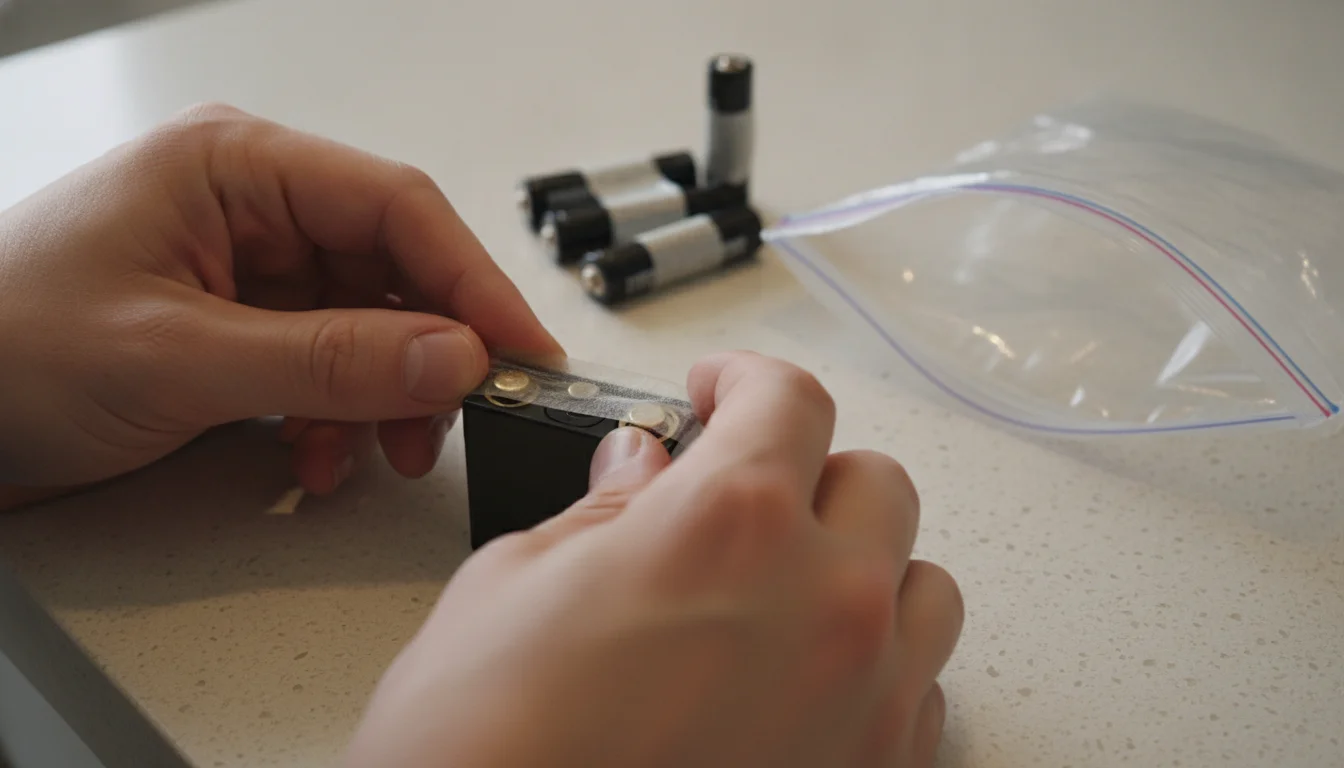
Before a single battery leaves the house, stop its terminals from touching anything. Two ways work, and either is enough on its own: run a strip of non-conductive tape (clear packing, electrical or duct, never foil) over the contacts, or drop each cell into its own clear plastic bag.
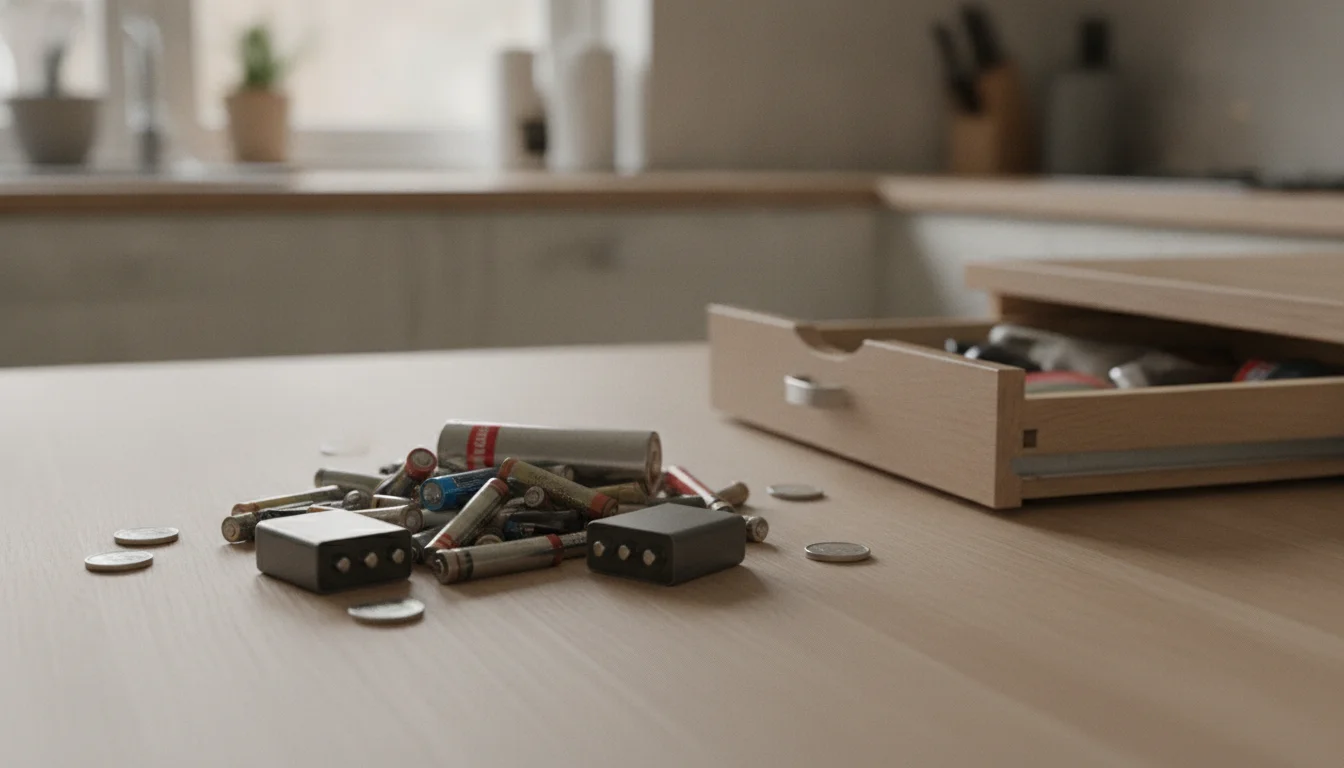
Do it for every lithium and lithium-ion cell, and for every 9V. The 9V is the sneaky one. Both terminals sit on the same end, close enough to short against a coin, a key, or the next 9V in the drawer. That short heats up fast, and the heat is the fire.
Standard alkaline AAs and AAAs are lower risk, so most programs don’t insist on taping them, but tape or individually bag each cell anyway so none can short against another. A swollen, hot, hissing or leaking battery is a different job: don’t tape it and don’t seal it airtight, keep it well away from anything that burns, and handle it as set out below.
2. Drop them in a store collection box
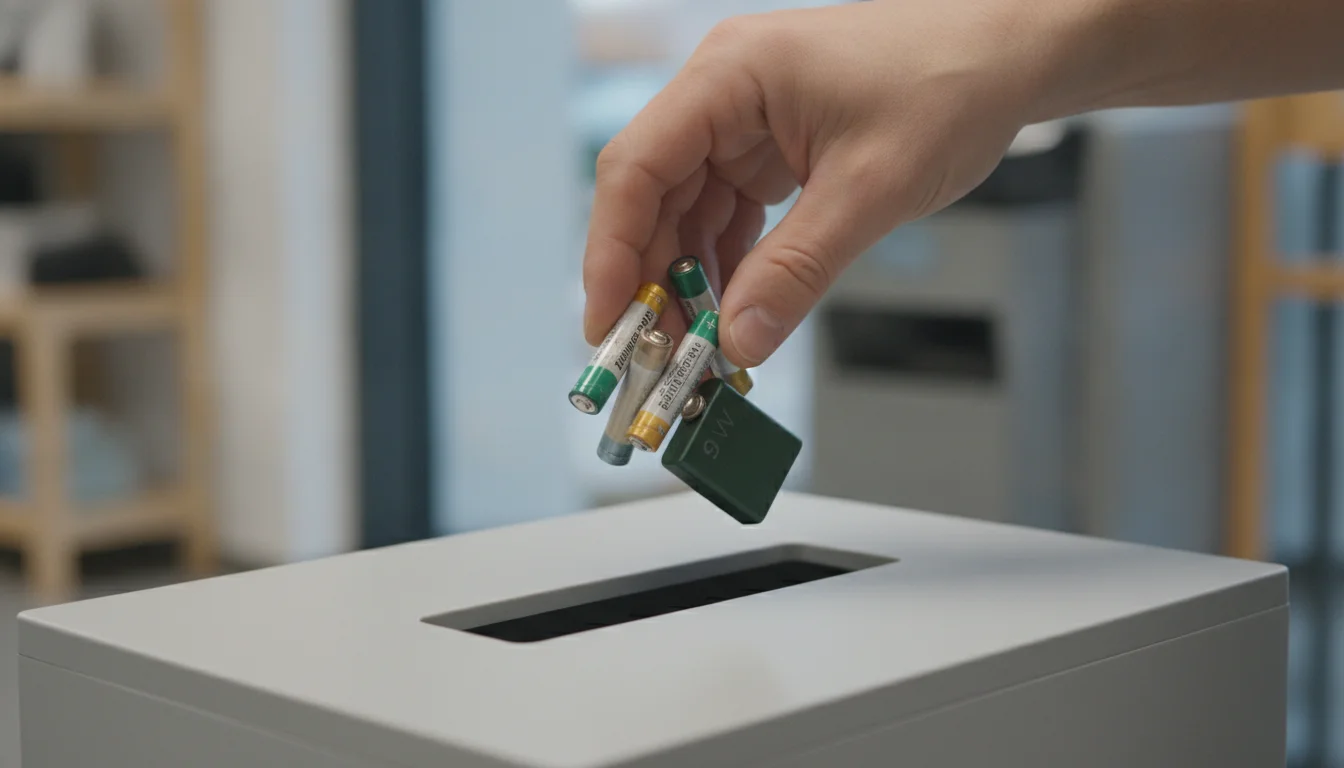
For everyday household cells this is the easiest route by a mile, because the boxes are already where you shop. Home improvement and electronics chains, phone shops and a lot of supermarkets keep a collection bin by the door or the customer service desk. No purchase, no receipt, just tip your bagged batteries in.
In the US and Canada these feed the Call2Recycle network (Best Buy, Home Depot, Lowe’s, Staples). In Australia, look for B-cycle boxes at Aldi, Coles, Woolworths and Bunnings. In the UK, any larger shop that sells batteries is legally obliged to take them back.
One catch: read the box. Every drop box takes rechargeables, that’s the whole point of the network. Single-use alkalines are hit and miss, and big e-bike or power-tool packs usually need a staffed counter instead. Find your nearest box with the network’s own locator rather than guessing.
3. Take them to a recycling center
For what a store box won’t take, a municipal recycling center or household hazardous waste (HHW) drop-off is usually the answer. In the UK that’s the Household Waste Recycling Centre with its battery and electricals bay; in the US and Canada it’s your county HHW facility or a periodic collection day. Because they’re staffed and sort on site, most take a wide range in one trip: mixed alkalines, lithium packs, car batteries, vapes, and cells that are swollen or leaking. Acceptance still varies by site, so check the facility’s own list for the chemistry, size, device and condition you’re bringing before you drive over, especially for vapes, big e-bike or power-tool packs, and any damaged battery.
Bag or tape terminals before you go, and hand any damaged battery straight to staff so it goes in the fire-safe container rather than the trash. Household quantities are normally free. Search Earth911 in the US or your city or county for “household hazardous waste”, or in the UK use Recycle Now by postcode, to find the nearest one and its opening days.
4. Mail them back with a mail-in kit
No drop box or recycling center within a sensible drive? Buy a prepaid mail-in kit. It’s a cardboard box with a return label (Call2Recycle and several recyclers sell them online); you fill it to a stated weight, seal it, and hand it to your carrier.
It costs more than a free store box, and that’s the point. You’re paying to skip the trip, which makes sense for a rural address, or for clearing out a whole drawer at once. Match the kit to your batteries: an alkaline-only box is cheaper but can’t lawfully carry lithium packs. Don’t mail a swollen or damaged battery in an ordinary kit, which won’t accept it. A few carrier-compliant recyclers sell a purpose-built damaged, defective and recalled (DDR) kit for exactly that, where you can find one; otherwise a damaged cell goes to a staffed recycling center.
5. Return a car battery to the retailer
A lead-acid starter battery from a car, motorcycle or mobility scooter never goes in any trash can or small drop box. It’s lead and liquid acid, it’s heavy, and it has its own well-worn channel. Lead-acid batteries are among the most recycled products going, so someone will happily take it. First check what you’ve actually got, though: many e-bikes, e-scooters, hybrids and EVs run on lithium or nickel-metal-hydride packs, and some vehicle batteries are sealed rather than flooded. If yours is lithium, NiMH, sealed or you simply aren’t sure, follow the battery or vehicle maker’s own take-back route rather than this one.
Easiest option: let the technician deal with it. Whoever swaps in the new battery takes the old one as part of the job. Changing it yourself? Most auto parts stores take a used lead-acid battery over the counter, often refunding a core charge (a small deposit added when you bought the battery). Scrap dealers buy them for the lead, and a recycling center’s hazardous bay takes them too.
Carry it upright by the case, not the terminals, wear gloves, and don’t tip it. Cracked or weeping? Stand it upright in a chemically resistant, leakproof container, and call the garage or recycling center to confirm they’ll take it before you set off.
6. Check for a curbside collection
Some cities and counties will collect batteries from your doorstep, but never loose in the ordinary recycling bin, where they get crushed and start the same fires. Where the program runs, the drill is usually to seal small household cells in a clear bag and sit it on top of the recycling bin on collection day, so the crew can lift it out before the load is tipped.
Don’t assume it exists, though. Plenty of authorities offer no curbside battery pickup at all. Check your city or county by name, Earth911 in the US, or Recycle Now by postcode in the UK, for whether it’s offered and exactly how they want the batteries presented. Treat it as a bonus for a handful of spent AAs, not a replacement for the routes above.
When a battery needs more than a drop box
Most batteries are a two-minute errand. A few aren’t. If a lithium battery is swollen, hissing, leaking or hot to the touch, treat it as a hazard: don’t tape it, don’t mail it, and don’t leave it charging. Put it in a non-flammable container away from anything that burns, and take it to a staffed recycling center that accepts damaged cells, or call your local hazardous waste line first. If one is smoking or on fire, that’s the fire department, not the trash. Big e-bike and e-scooter packs also belong at a recycling center, not a home-collection box.
Battery disposal FAQ
Can I throw alkaline batteries in the trash?
In some regions it’s technically legal, but recycling is still the better call, and every other chemistry (lithium, rechargeable, car) must not go in the trash at all. Like used cooking oil, a battery is one of those household leftovers with its own proper route, so use it. When in doubt, recycle.
How do I get rid of 9V batteries safely?
Tape over both terminals, since they sit side by side and short easily, then drop them at a battery collection box or a recycling center.
Where can I recycle batteries near me?
Use a take-back locator: Call2Recycle in the US and Canada, Recycle Now by postcode in the UK, or B-cycle in Australia. Most people are closer to a box than they think.
What about a phone or laptop battery?
If it’s built in, recycle the whole device through an electronics take-back or the shop that sold it (but wipe your personal data first). A loose pack that’s swollen or damaged is a fire risk: stand it in a fire-resistant, non-airtight container away from anything that burns, and take it only to a recycling center or program that confirms it accepts damaged cells.