Table of Contents
Mint shrugs off shade, drought and neglect, so finding it chewed, with the shoot tips tied up in fine silk, feels personal. It’s usually one of two things: mint moth caterpillars in those webbed tips, or green loopers chewing holes from the underside of older leaves. Both come off by hand, and mint answers a hard cut with fresh growth, so you won’t lose the plant. So how to get rid of caterpillars on mint comes down to what you’ll put on a herb you’re about to eat. Short version: fingers first, scissors second, Bt only if it gets out of hand, and skip the vinegar.
What causes caterpillars on mint
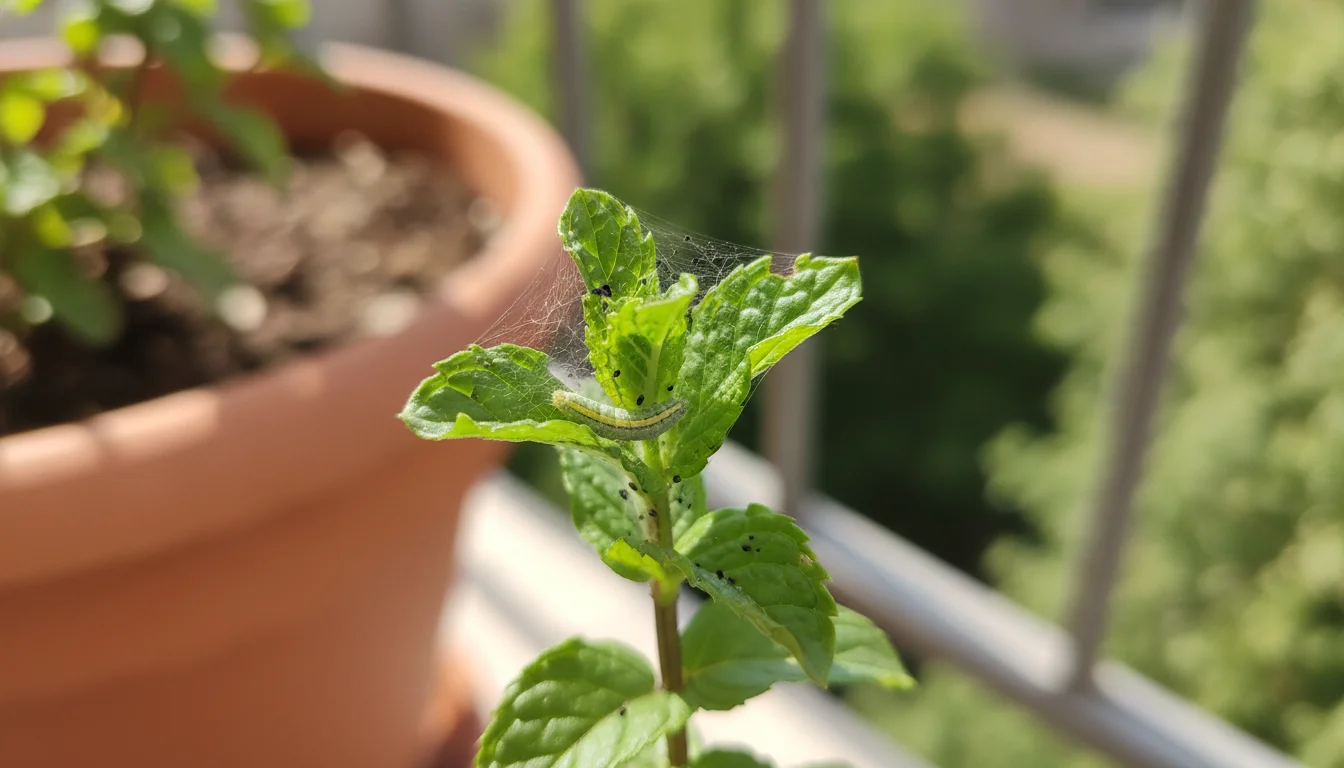
Mint moth caterpillars are behind the webbing. The RHS describes them as up to 1/2 in (13 mm) long, pale green to reddish or purplish brown, with two paler stripes down the back and small groups of black spots. The giveaway is at the shoot tips: damaged young growth, curled leaves, a little fine webbing and tiny black pellets of droppings. Young ones feed on the leaf undersides, then web shoots and flowerheads together and pupate right where they fed. There are two generations a year, spring and summer. In eastern North America a relative, the mint-loving pyrausta, eats mint too.
Loopers are the other suspect: green with white stripes, arching their backs as they crawl (the “inchworm” look). They feed under older leaves and leave irregular holes, not webbing. No caterpillar at all? Check for aphids, which also feed on mint.
1. Pick them off by hand
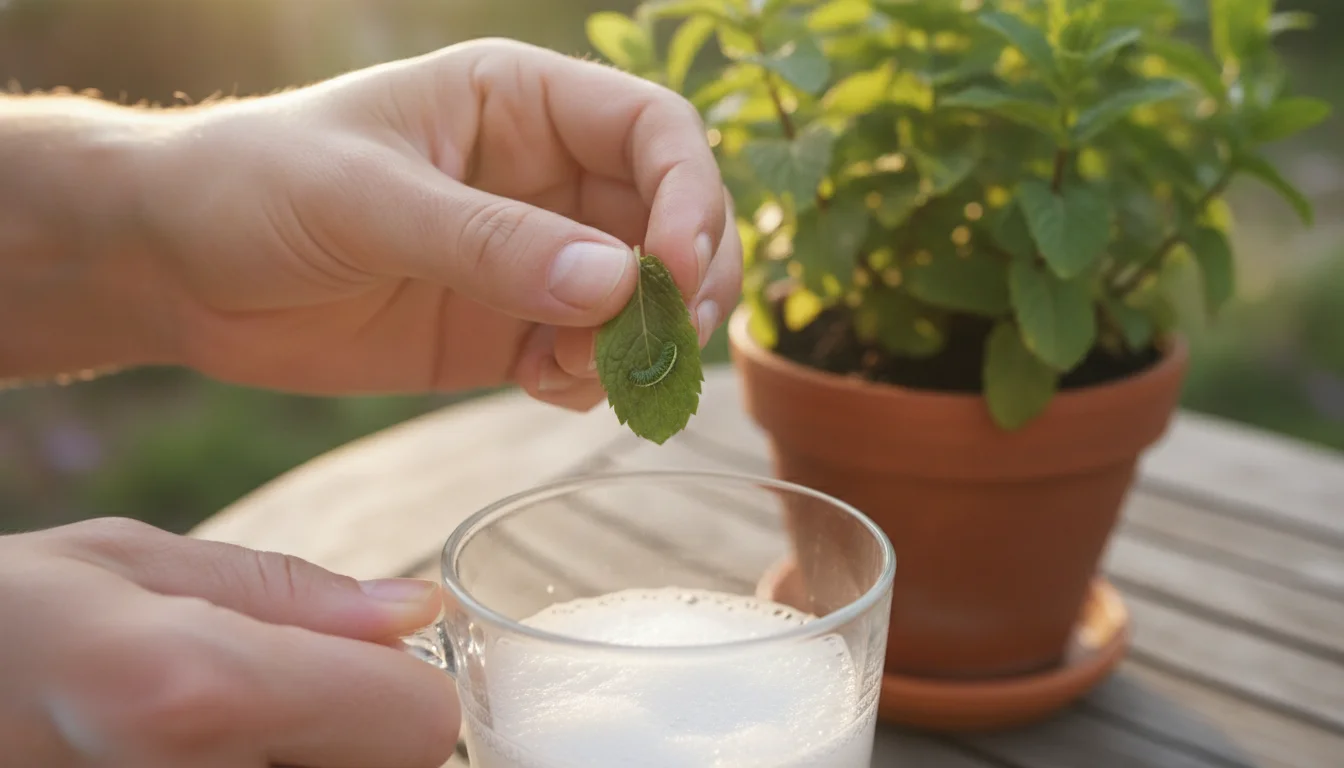
This is the fix for most mint plants. In the early morning or evening, turn the leaves over, unroll anything curled and pick at the webbed tips. Drop what you find into a cup of soapy water, or squish them.
The catch is seeing them. One gardener with mint and basil on a balcony found most of theirs were a few millimeters long and leaf-colored. A few minutes every few days beats one big search. Start in late April, when the RHS says to begin checking.
2. Shake the plant over a tray
This finds the ones your eyes miss. Hold a tray or sheet of paper under the stems (or tilt the pot over it) and shake hard. That’s how the balcony gardener finally found theirs: they tipped the pots and shook until the caterpillars fell. Empty the tray into soapy water and check the leaf undersides for stragglers.
3. Cut back the webbed shoots
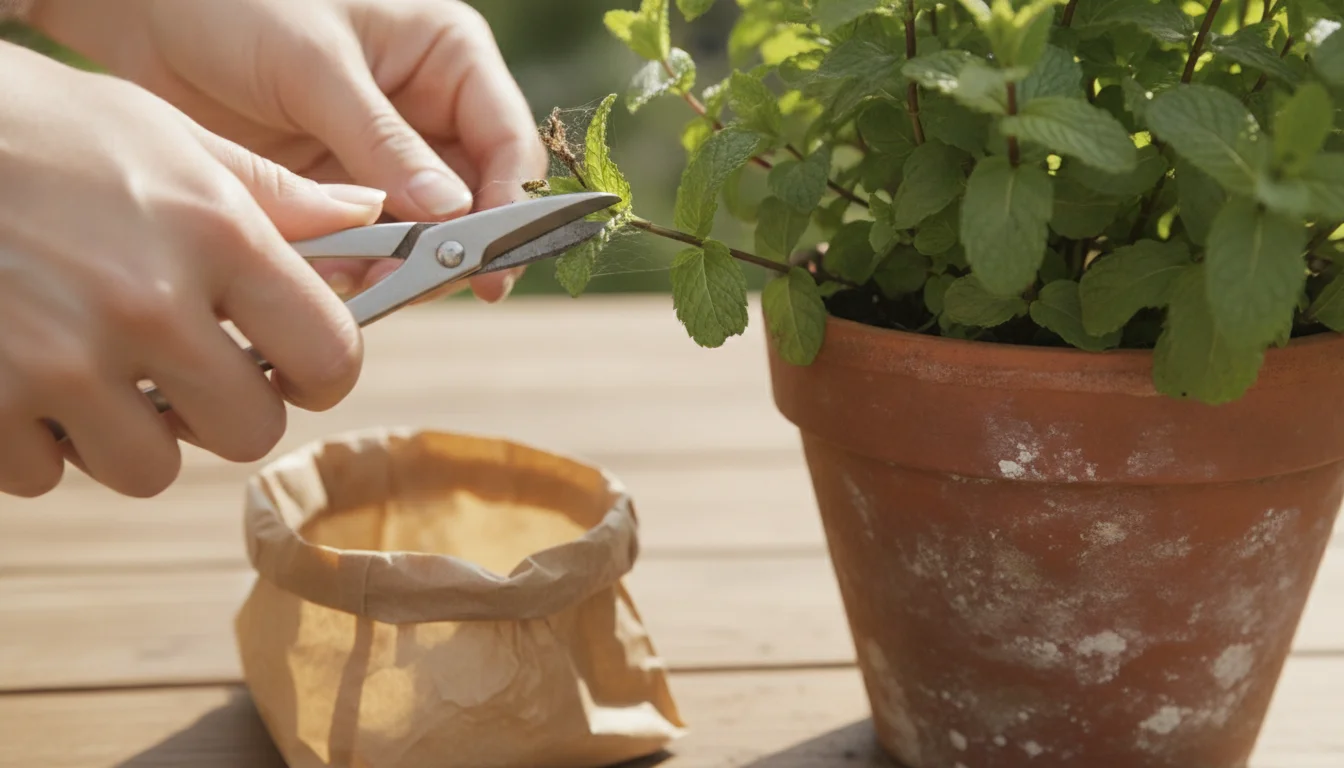
Webbed, chewed tips? Don’t fiddle. Cut them off, just above a leaf joint. The RHS says heavily affected shoots can be cut back and that the cut stimulates new growth, which is exactly what you want from a herb you harvest.
Mint moth caterpillars pupate where they fed, so those tips can hold the next generation. Bag the cuttings for the trash, not the compost. A healthy plant usually still has plenty of clean leaves to use.
4. Spray Bt if it’s a real infestation
Bt (Bacillus thuringiensis, the kurstaki strain) is the one spray worth buying for this. It’s a soil bacterium that only affects caterpillars (it’s also the go-to for tomato hornworms), and UC IPM rates it safe around bees, beneficial insects and wildlife. It works only when they eat treated leaves, and best on small, newly hatched ones, so spray at the first damage, not when the plant is stripped. Coat both sides of the leaves. It breaks down in sunlight within a few days, so spray in the evening and repeat about weekly while they’re active.
Now the bit nobody covers: eating it. Every label gives a pre-harvest interval (days between spraying and picking), and across garden insecticides those run from 0 to 21 days or more. Older EPA-filed Dipel labels allowed Bt right up to harvest and said treated vegetables could be eaten any time after spraying. Labels change, so check that yours lists herbs or edible crops and read its interval before you pick.
5. Cover the plant with insect mesh
A fine mesh or fabric row cover stops moths laying eggs on the plant at all. Leaf crops don’t need pollinating, so on mint a cover costs you nothing at harvest.
Put it on after you’ve cleared the plant, or you’re just fencing the caterpillars in. Pin or weigh the edges down so nothing crawls under.
6. Let the birds do some of it
Caterpillars are food. Birds, ground beetles, spiders and parasitic wasps all take them. Skip broad-spectrum insecticides, which kill these predators with the pest, and leave some leaf litter and bare soil about.
This won’t clear an active infestation. But the RHS is blunt that mint moth caterpillars rarely do significant damage and can usually be tolerated, and some gardeners just let a light infestation run its course.
How to get rid of caterpillars on mint and keep them off
Check from late April, and again in summer when the second generation turns up. Keep the mesh on through the season if moths keep finding the pot. And don’t grab a general bug spray at the first hole: it kills the beetles and wasps keeping numbers down for you.
Frequently asked questions
What caterpillar is eating my mint?
Webbing and black droppings at the shoot tips mean mint moth caterpillars. Green, white-striped ones that arch as they move and chew holes in older leaves are loopers.
What is a good homemade spray to kill caterpillars?
None worth recommending. Penn State Extension advises against home remedies built on dish soap, vinegar, salt, garlic or chile peppers: no precise directions, uncertain results, and they can harm the plant (dish detergent sprayed on a sunny day can burn leaves). Soapy water belongs in your picking cup. If you need a spray, use Bt.
Do coffee grounds stop caterpillars?
We found no research showing they do. The coffee-grounds claims we found are about slugs and ants, not caterpillars.
Will vinegar get rid of caterpillars?
No extension guidance we read recommends it, and Penn State lists vinegar among the home remedies that can harm the plants they’re sprayed on. On mint, the leaves are the crop.