Table of Contents
Faux leather is plastic. A thin film of polyurethane (PU) or vinyl (PVC) sits on a fabric backing, and most stains sit on top of that film. So the mark on your leatherette bag or vinyl sofa is usually the easy part, and how to get rid of stains on faux leather comes down to the cleaner. That’s where people wreck things. Acetone, a scouring pad or a hair dryer can dull, crack or peel the coating, and peeling doesn’t stop once it’s started.
Upholstery makers’ cleaning sheets work the same way: gentlest first, one step at a time, every cleaner rinsed off with plain water. Test each one on a hidden spot (inside a bag flap, under a cushion) and give it a few minutes before you judge.
| The mark | Start with | Then |
|---|---|---|
| Fresh spill | Method 1 | Method 2 |
| Dried food or drink | Method 2 | Method 3 |
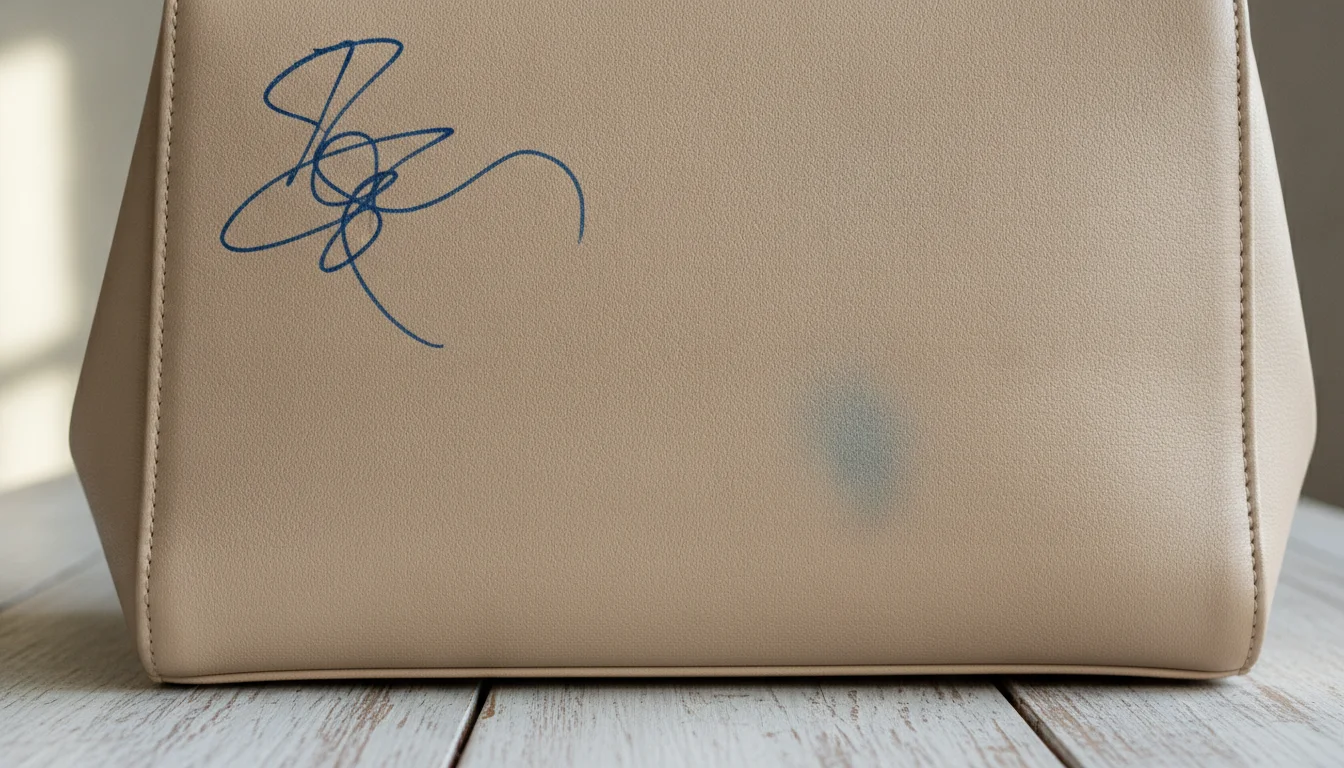
| Ink, marker, denim dye | A dry cloth, firm pressure | Method 4 |
| Lipstick, makeup, crayon, grease | Method 2 | Method 4 |
| Spotty discoloration, musty smell | Method 5 | |
| Flaking, cracking, sticky or bubbled | Not a stain | Method 6 |
What causes the damage: stain or coating?
Check the tag or listing for PU (polyurethane) or PVC (vinyl). Maxwell’s coated fabrics guide says PVC doesn’t break down with moisture and PU can: humidity, heat and harsh cleaners make a PU top layer separate from its backing, and a scratch lets moisture and cleaner underneath. Brentano, which makes PU upholstery, says its PU shouldn’t be treated like vinyl.
If the surface is flaking, cracked or tacky, no cleaner will fix it. Skip to method 6.
1. Blot it now
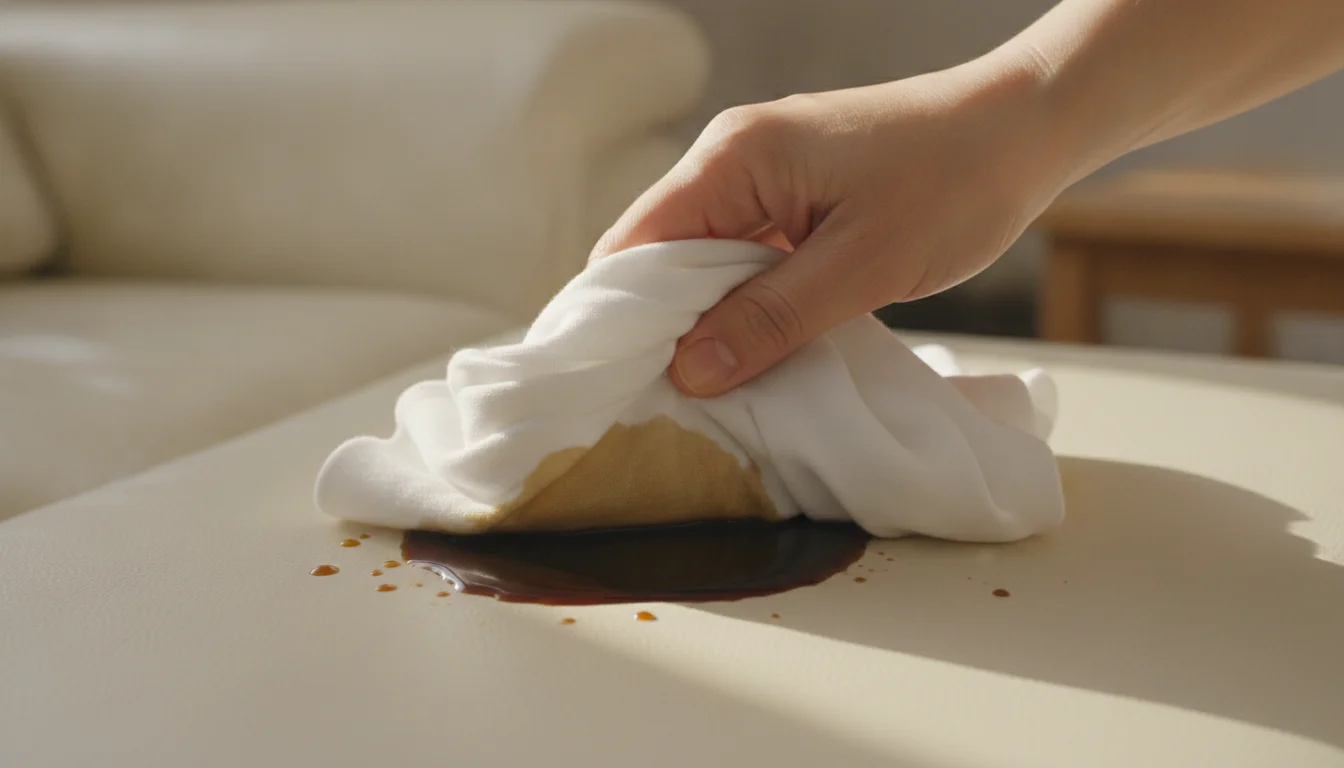
Press a clean, dry cloth straight down on the spill and lift. Don’t wipe; it spreads.
Speed beats any cleaner. Wolf Gordon, a vinyl upholstery maker, says the longer a stain sits, the harder it is to remove, and food or drink left on vinyl can leave lasting marks and even crack the surface.
2. Soap lather, then a clean-water rinse
This one does most of the work. Whip warm water and a little mild dish soap into a lather and put only the foam on the mark (Wolf Gordon says to avoid over-wetting). Wipe in soft circles with a microfiber cloth, go over it with a second cloth wrung out in clean water, then dry it. Nothing abrasive.
Don’t dunk a bag. OiOi, a bag maker, says never to submerge its faux leather.
Soap won’t move everything. One Reddit user with dry-erase marker on a PU desk mat found warm water and a rag did nothing. That’s a job for method 4.
3. A non-abrasive spray cleaner for food marks
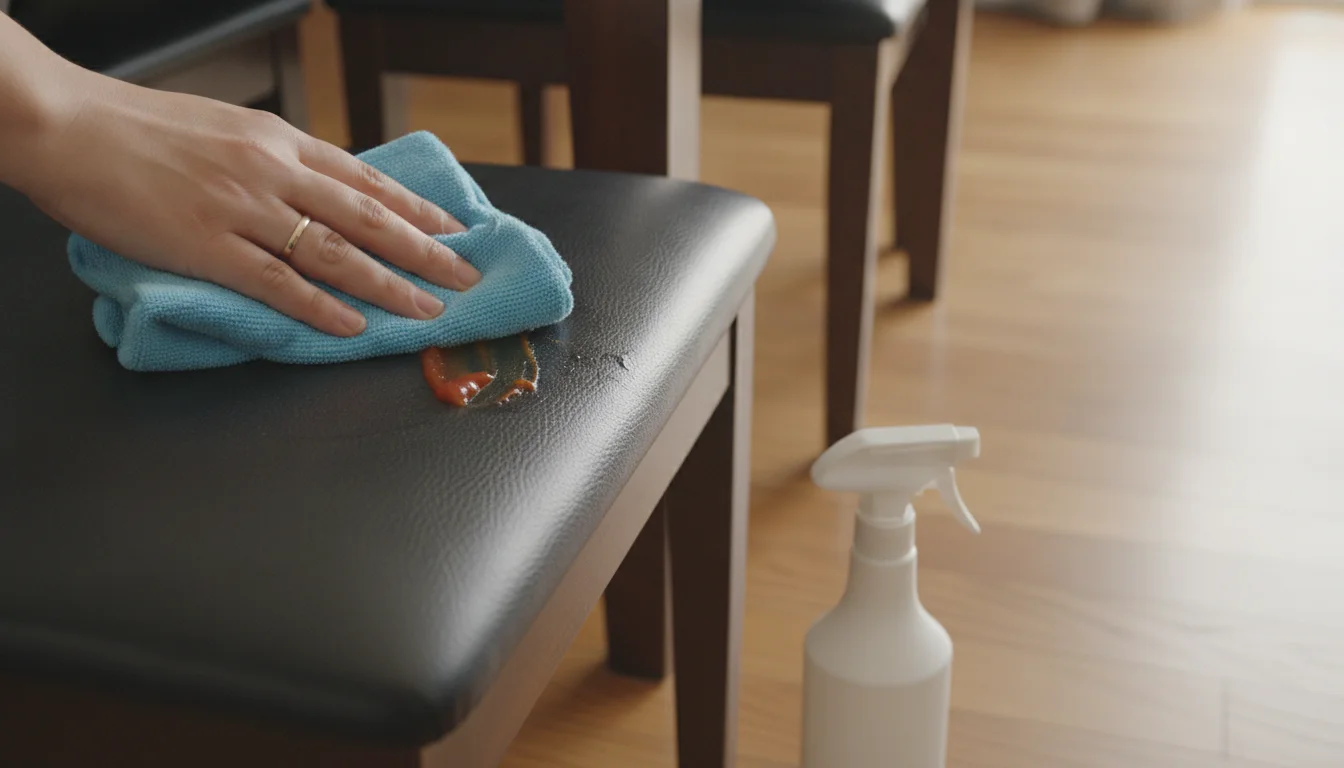
For ketchup, chocolate, coffee or juice that survives soap, Wolf Gordon lists a non-abrasive household spray (it names Formula 409 and Fantastik) on a soft-bristle brush or cloth, then a fresh-water rinse and a dry cloth.
Crestliner, a boat builder, warns that ammonia cleaners strip vinyl’s UV inhibitors, and rules out degreasers too. On PU, Brentano allows glass cleaner only on patterns with a solvent-resistant finish. A PU bag with no care information gets method 2 and nothing stronger.
4. Diluted rubbing alcohol for ink, dye and makeup
For ink, start dry. Arc-Com’s instructions for its PU upholstery: rub the mark with a dry soft cloth and firm pressure, and use alcohol only if some is left.
The makers don’t agree on strength. Arc-Com uses 70% isopropyl alcohol and water on ballpoint, permanent marker and faint denim dye transfer. Wolf Gordon uses 50% on vinyl for lipstick, crayon, grease and mustard. Start at half and half, and go stronger only if your test spot stays unchanged. Dab it on with a cotton swab from the edge inward, turning the swab as it picks up color, then wipe with a cloth wrung out in clean water and dry.
It isn’t a sure thing. Wolf Gordon says ink, permanent marker and denim dyes may be difficult or impossible to remove, especially on light colors. Arc-Com says ink gets harder the longer it sets, and dye from wet jeans is less predictable.
5. A mildew remover for spotty, musty patches
Mildew discolors vinyl and makes it smell. Crestliner traces it on boat seats to moisture trapped near piping and stitching. Its advice: a mildew remover made for marine vinyl, used as its maker says, and never bleach. Test it first, especially on PU, then dry the piece thoroughly rather than leaving it to air-dry.
6. A repair kit when it’s coating damage
Flaking, cracks and peeling are damage, not stains. Crestliner’s fix for small tears is a DIY kit with a color-matched compound: apply it to the clean, dry area, let it cure, then smooth it with fine sandpaper. For peeling, Sewguide suggests a patch, or paint after sanding the loose film away. Neither stops old PU peeling elsewhere. Once it starts, Sewguide says, it keeps going.
How to keep faux leather clean (and what never to use)
- Acetone and nail polish remover. Brentano says to avoid acetone at all times.
- Vinegar on PU. Brentano says never.
- Bleach, unless the care label says the material takes it.
- Ammonia cleaners and degreasers (Crestliner).
- Heat. Maxwell says a hair dryer or heat gun can damage or melt faux leather.
- Conditioners. Sewguide says leather conditioner, wax and oil damage PU’s coating. Maxwell doesn’t recommend vinyl conditioners or protectants either.
- Perfume, hand sanitizer and scented wipes. OiOi warns that all three can stain or damage faux leather.
- Dry cleaning. The solvents can destroy the coating.
Store it dry. Sewguide warns that a humid, closed wardrobe is asking for peeling.
Frequently asked questions
Can I put a faux leather jacket in the washing machine? Only if the care tag allows it. Tide Cleaners’ method: turn it inside out, use a mesh bag and a delicate cycle with cold water and the lowest spin, then hang it to dry. Never put it in the dryer.
Does rubbing alcohol damage faux leather? It can. Povison, a sofa seller, warns that alcohol-heavy wipes strip the finish over time. Makers use it diluted, as a spot treatment, rinsed off.
Why is my faux leather peeling? PU breaks down with humidity, heat and harsh cleaners. That’s damage to the coating, not a stain, and cleaning won’t reverse it.