Table of Contents
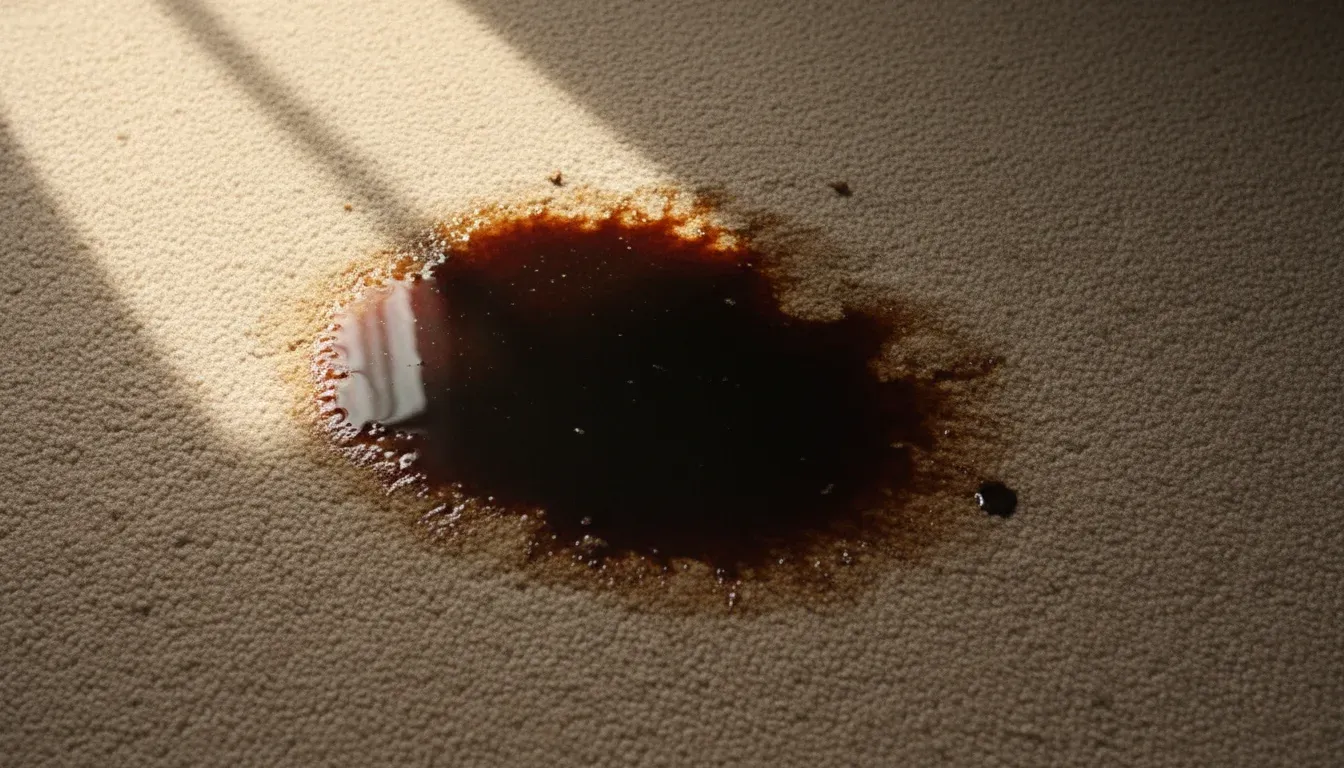
Coffee spills happen. You’re rushing out the door, juggling too many things, and suddenly there’s a dark puddle soaking into the carpet. The good news: coffee stains respond well to treatment if you move fast. The bad news: dried coffee stains turn into tan shadows that require more aggressive tactics.
Most carpet stains are solvable with what’s already under your sink. But timing matters.
We read this as · Tap to change
Treatment card
Coffee on carpet
Before you start
- Spoon off any jam, sauce or pulp before you blot. Pressing it in spreads it.
- Blot, never rub. Rubbing spreads the stain and frays the pile.
- Viscose (art silk) rugs: no water at all. The fiber browns and the pile flattens.
- Silk rugs: no wet cleaning at home. Blot, let it dry and call a cleaner.
- No steam cleaner, hot water or hair dryer until the stain is gone. Heat sets tannin.
Steps
Before this step: Spoon off any jam, sauce or pulp before you blot. Pressing it in spreads it.
Before this step: Blot, never rub. Rubbing spreads the stain and frays the pile.
1. If it's still wet: Blot immediately
Don't rub. Don't scrub. Blot.
Grab a clean white cloth or paper towels and press straight down on the spill. Work from the outside edges toward the center so you don't spread the stain wider. Keep blotting with fresh sections of cloth until nothing more transfers to it.
The sooner you blot, the more comes out: a fresh spill is still sitting near the surface, and an old one has soaked in and dried. If you've already rubbed it in, blot anyway; it still lifts what's sitting on top.
2. Find the care label or cleaning code
Before you put anything on the stain, find the label. Clothes: inside the side seam or the neck. Sofas and chairs: under a seat cushion or on the underside of the frame. Rugs: on the back. Leather goods: inside a pocket or flap.
On upholstery, look for a letter. W means water-based cleaners, S means solvent only, WS means either, X means vacuum only.
On clothes, look for "dry clean only", the washtub, and the bleach triangle. Whatever the label rules out, the card rules out too.
3. Stop here and get a specialist
For this stain on this material, there's nothing more that's safe to do at home. The next step is a specialist.
Leave it as it is. No heat, no more cleaner, no scrubbing. Let it dry on its own.
Take or call it in: a dry cleaner for clothes, a carpet and upholstery cleaner for rugs and furniture, a leather specialist for leather, a stone or flooring specialist for hard surfaces. Tell them what the stain is, what the material is, and everything that has touched it.
What you need 2 items
- White cloth
- Paper towels
If it's still there
Call a professional carpet or upholstery cleaner
When home steps stall, or the tag says X (vacuum only), call a carpet or upholstery cleaner rather than trying stronger chemicals.
Tell them the stain, the fiber or cleaning code if you know it, and what you've already used. For a pale patch where color has gone, ask whether they do color repair or spot dyeing; cleaning won't bring it back.
Stop treating it while you wait. Each extra round makes their job harder.
1. Blot immediately
Don’t rub. Don’t scrub. Blot.
Grab a clean white cloth or paper towels and press straight down on the spill. Work from the outside edges toward the center so you don’t spread the stain wider. Keep blotting with fresh sections of cloth until no more coffee transfers.
If the spill just happened, you can pull out 80% of the problem in the first 30 seconds. If you’ve already rubbed it in, skip to method 3.
2. Cold water flush
Pour a small amount of cold water directly onto the stain. Not hot water (sets protein stains), not warm (less effective than cold for coffee). Cold.
Blot again with a clean cloth. Repeat the pour-and-blot cycle three or four times. You’re diluting what’s left in the fibers and pulling it up to the surface where the cloth can grab it.
For light spills on synthetic carpet, this might be all you need.
3. Dish soap and white vinegar solution
Mix 1 tablespoon white vinegar, 1 tablespoon dish soap, and 2 cups warm water in a bowl. Stir it gently so you get suds but not a foam mountain.
Dip a clean white cloth into the solution, wring it out so it’s damp (not dripping), and blot the stain. Work in small circles from the edges inward. Coffee stains lighten fast with this combo because the vinegar breaks down the tannins and the soap lifts the oils.
Keep blotting with a fresh damp cloth (plain water this time) to rinse out the soap. If you leave soap residue, it attracts dirt and your “clean” spot turns into a dirt magnet.
This works on most fresh stains and a lot of older ones. If the stain’s still visible after two rounds, move on.
4. Baking soda paste for set-in stains
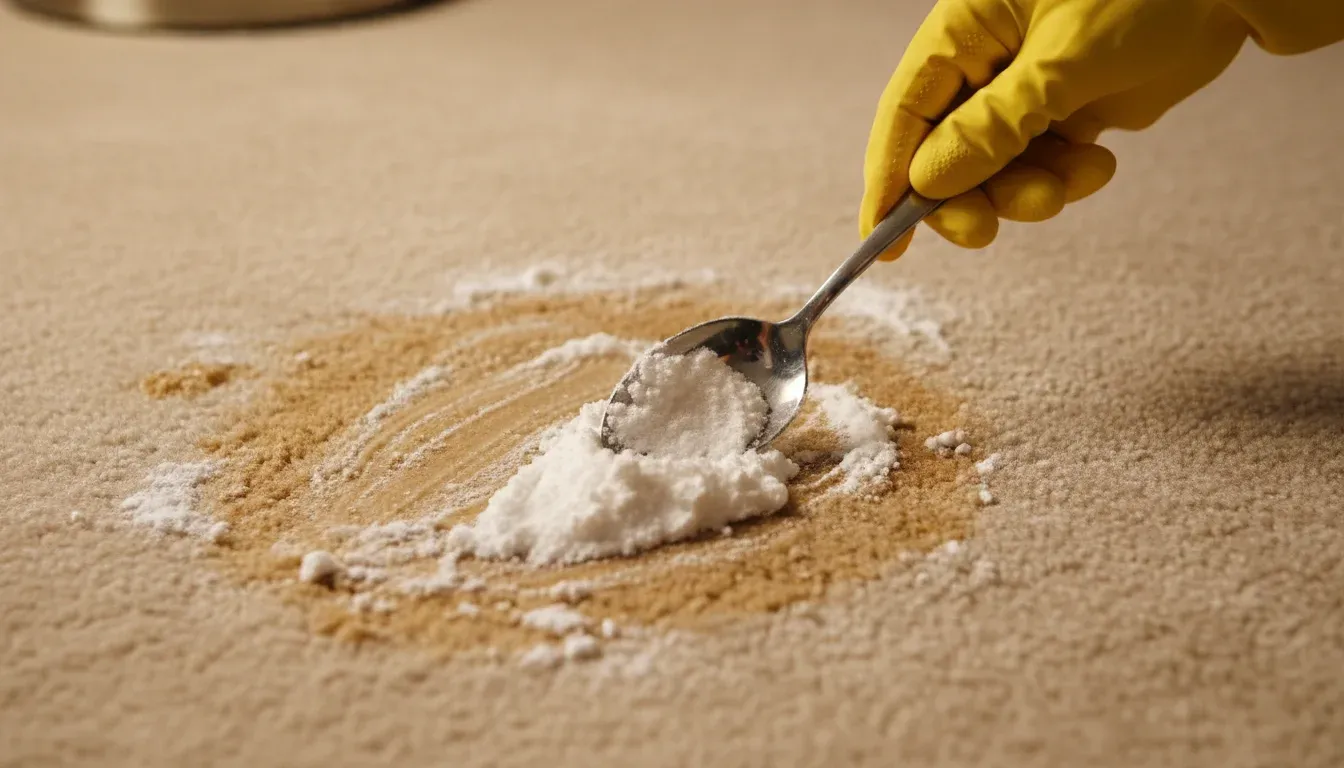
If the coffee has dried into a tan shadow, make a paste with 3 parts baking soda to 1 part water. It should be thick, like toothpaste.
Spread the paste over the stain with your fingers or a spoon. Let it sit for 15-20 minutes while the baking soda absorbs what’s left in the fibers. When it dries to a crumbly texture, vacuum it up.
Follow with the vinegar-and-soap solution from method 3 if there’s still discoloration. Baking soda alone won’t dissolve tannins, but it pulls out embedded residue so the liquid cleaners can finish the job.
5. Hydrogen peroxide (light-colored carpets only)
Mix 1 part 3% hydrogen peroxide with 2 parts water. Test this on an inconspicuous corner first because peroxide can bleach dark or patterned carpets.
Pour a small amount onto the stain, let it sit for 5 minutes, then blot. The peroxide oxidizes the tannins and breaks them down at a molecular level. It’s overkill for fresh spills but effective on old, stubborn stains that haven’t responded to soap and vinegar.
Rinse thoroughly with cold water after. Peroxide left in the carpet can continue bleaching over time.
6. Enzymatic carpet cleaner
Enzyme cleaners break down protein: milk, cream, blood, urine, vomit. That’s what they’re for, so reach for one when the coffee had milk or cream in it.
Spray the cleaner directly on the stain according to the bottle instructions. Most require 10-15 minutes of contact time. The enzymes need time to work, so don’t rush this step.
Blot with a clean towel. On coffee with cream or milk, the enzymes clear the milky part; the brown that’s left needs a detergent or oxygen cleaner.
If the first application doesn’t fully remove the stain, repeat. Enzymes work slowly but thoroughly.
7. Commercial carpet stain remover
Foaming carpet stain removers (Resolve, Woolite) are formulated for high-traffic household stains like coffee. They’re stronger than dish soap and more convenient than mixing your own solutions.
Spray the foam directly onto the stain, work it in gently with a soft brush or cloth, and wait the recommended time (usually 3-5 minutes). Blot with a damp cloth to remove the foam and the dissolved stain.
These products work fast and they’re idiot-proof, but they leave more residue than homemade solutions. Rinse the area with plain water after and blot dry.
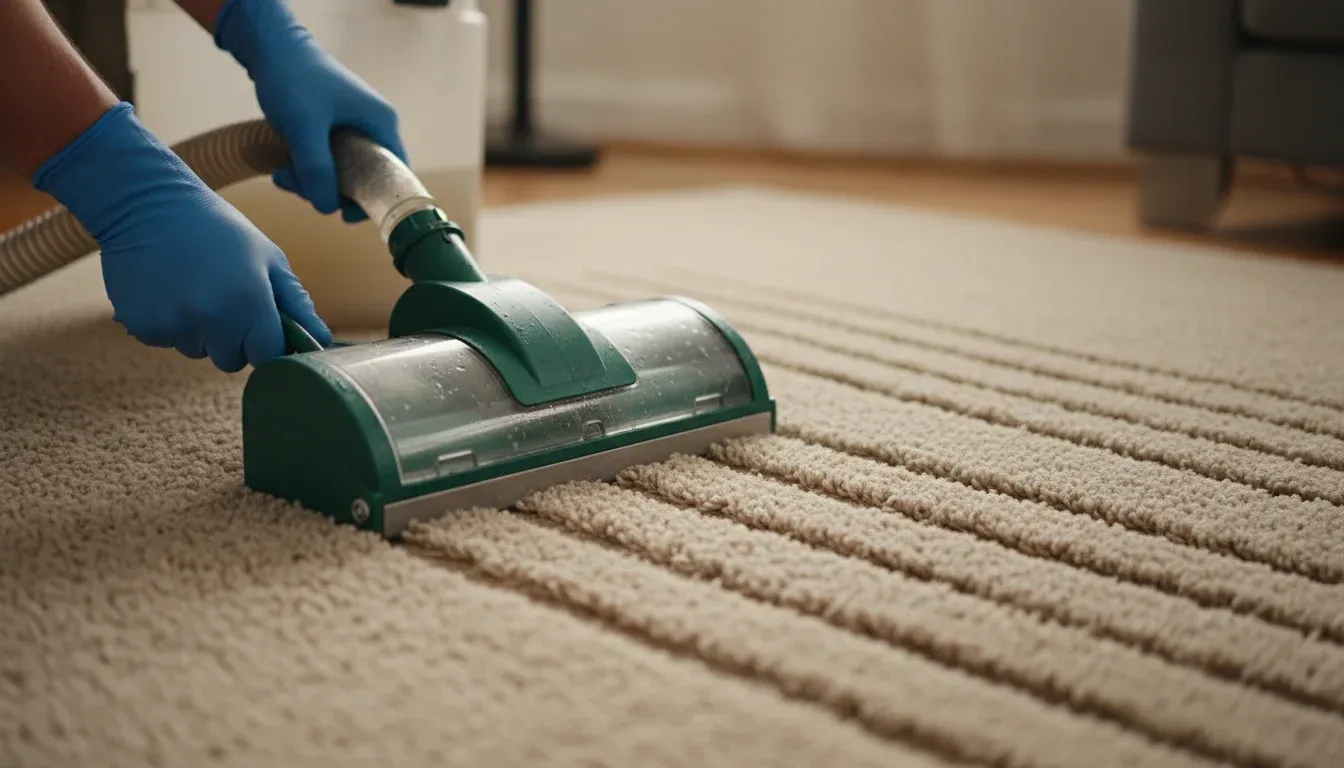
8. Carpet cleaning machine (deep extraction)
If the stain has soaked deep into the carpet pad or if you’ve tried everything else and there’s still a shadow, rent or buy a carpet cleaning machine. The machine injects hot water and cleaning solution deep into the fibers, then extracts it along with the dissolved stain.
Use a carpet-safe cleaning solution (not laundry detergent, which creates too many suds). Run the machine over the stained area multiple times, making slow passes so the vacuum has time to pull up the water.
This is the nuclear option. It works, but it’s slower and more effort than spot cleaning. Reserve it for old stains that have become part of the carpet’s personality.
9. Club soda (for fresh spills)
Pour club soda directly onto a fresh coffee spill and blot immediately. The carbonation helps lift the stain out of the fibers before it sets.
This method is fast and convenient if you have club soda on hand, but it’s not more effective than cold water. The bubbles give you a slight mechanical advantage, but the real work still happens during the blotting.
Use it as a first response, then follow up with soap and vinegar if needed.
Coffee stains don’t have to be permanent. The faster you treat them, the easier they are to remove. And if you’re dealing with an old stain that’s survived multiple cleaning attempts, a carpet machine or enzyme cleaner will usually finish what dish soap couldn’t.
Corrections
- 2026-11-06: An earlier version said enzyme cleaners break down coffee tannins. They don’t: enzyme cleaners work on protein stains such as milk (
 Cornell Cooperative Extension). They help only with the milk in a milky coffee spill. The brand names in that section are gone too.