Table of Contents
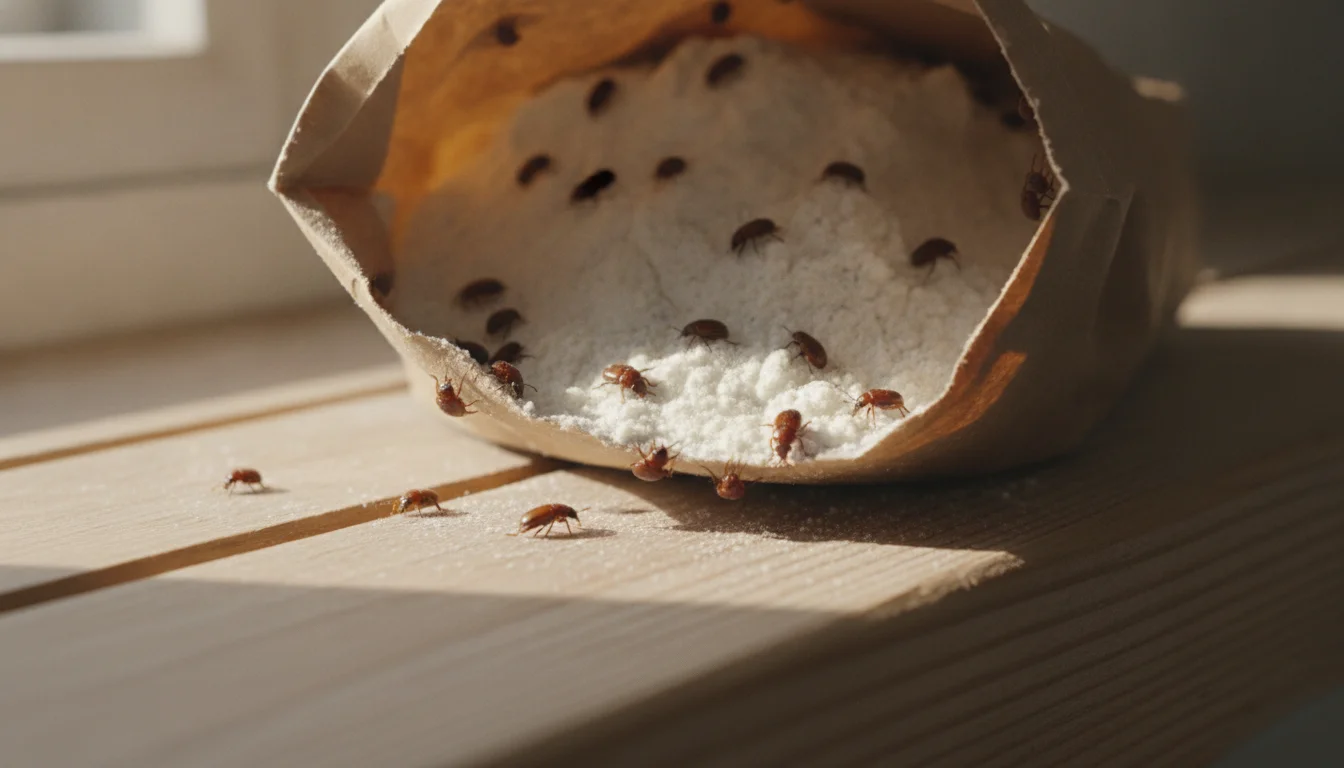
You open the flour and something moves. Or tiny reddish-brown beetles keep turning up on the counter and the windowsill, nowhere near food. Good news first: flour beetles don’t bite, don’t carry disease and aren’t eating your house. Bad news: they’re living in a package of food somewhere, possibly not in the kitchen, and their eggs are glued to the inside of every bag they’ve touched. That’s why spraying the shelves and vacuuming the walls every day gets you nowhere. One r/pestcontrol poster did exactly that for a week and still had beetles. Here’s how to get rid of flour beetles: treat it as a food hunt. Confirm what you’ve got, find every infested package, kill or bin it, then watch long enough to outlast their life cycle. (For the all-species version of the clean-out, see our pantry pests guide.)
1. Identify the pantry beetle species
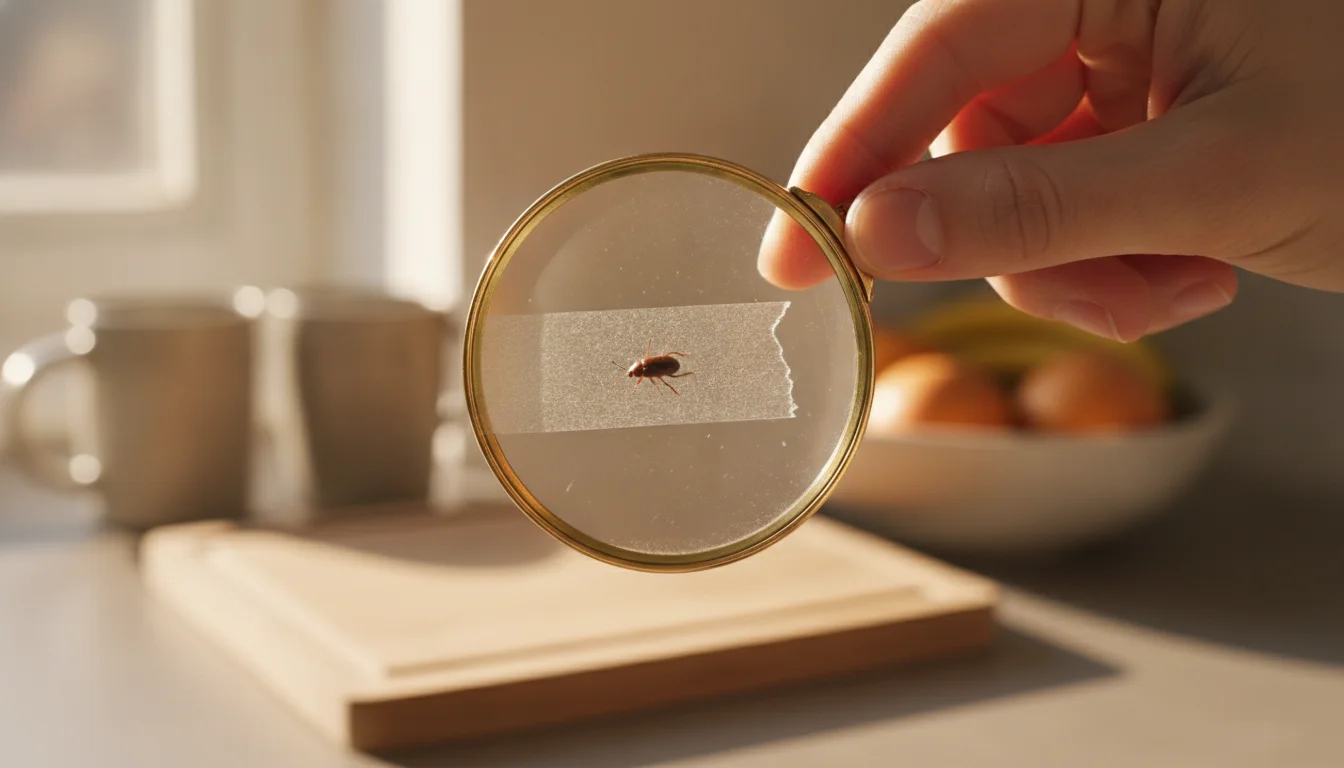
Catch one on clear tape and look with a hand lens or your phone’s zoom. Thirty seconds, and it tells you where to search.
- Flour beetle: shiny, flattened, reddish brown, about 1/7 inch (3-4 mm) long, smooth-sided. There are two species, red and confused. The red flour beetle’s antennae end in an abrupt three-segment club, the confused flour beetle’s thicken gradually. You don’t need to know which; they eat the same things and die the same way.
- Sawtoothed grain beetle: slimmer, about 1/10 inch (2-3 mm), with six tiny saw teeth along each side of the section behind the head. Same foods, same search.
- Weevil: about 1/8 inch (3 mm) with an obvious snout. Weevils grow inside whole kernels, so they send you to rice, popcorn, dried beans and seed, not the flour.
Flour beetles can’t chew into whole, undamaged grain. They live on flour, mixes, cereal, crackers, broken kernels and the grain dust in the bottom of a bag.
2. Inspect pantry and toss infested food
Pull everything out. Every bag, box and jar, opened or not, because flour beetles are flat enough to get into packaging that looks sealed. Grayish flour, a musty smell, clumps for no reason, leaking packaging or a beetle walking on the lid are all giveaways. Check the boring stuff too: cake mix, cornmeal, spices, chocolate, nuts. A heavily infested bag goes straight into a sealed bag and the outdoor trash. Anything you’d rather not lose but can’t vouch for goes to step 3 or 4.
3. Freeze infested items for 3+ days
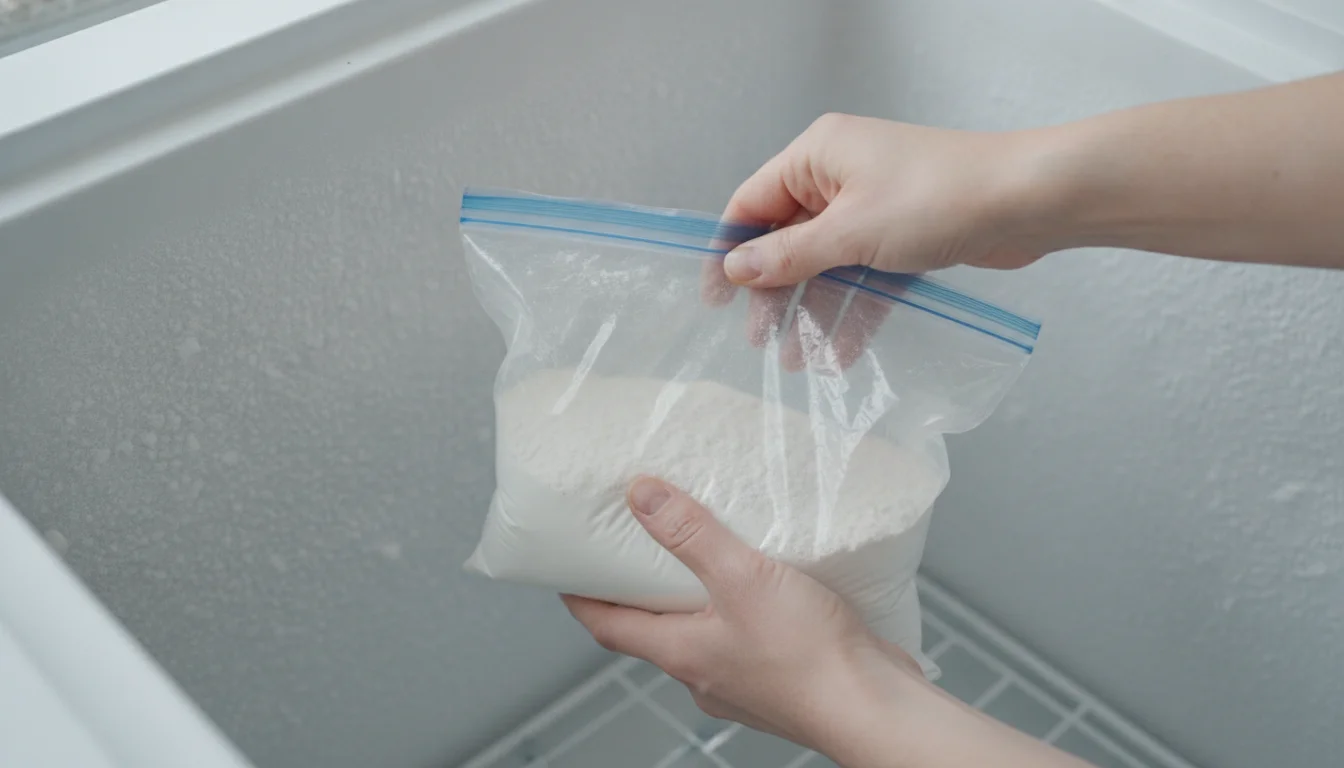
Cold is the easiest salvage. Seal the suspect food in a bag and leave it at 0°F (-18°C). Extension guidance ranges from four days (University of Kentucky, in a non-self-defrosting freezer) to five days (University of Maine) to a full week (Iowa State). Go with the week if you have the room; it covers all three. Freezing kills eggs, larvae, pupae and adults.
4. Heat-treat dry goods in the oven
Faster than freezing. Spread it in a thin layer on a baking tray and hold it at 125-140°F (52-60°C) for 30 to 45 minutes, per University of Maine; Iowa State’s version is 140°F (60°C) for 15 minutes. Trust an oven thermometer, not the dial. A deep pile insulates its own middle, which is how a “treated” batch keeps live eggs. This suits flour, grains, beans and nuts. For the non-food sources (ornamental corn, dried flower arrangements, birdseed), Kentucky suggests 155°F (68°C) for about 20 minutes with the oven door propped open.
5. Vacuum pantry cracks and crevices
Empty shelves, crevice tool, every corner, bracket hole and the seam where shelf meets wall. Vacuum before you wipe anything: a damp cloth turns flour dust into paste that sets in the cracks and feeds the next generation. And don’t bother with bleach, ammonia or disinfectant. Iowa State is blunt that washing shelves with them does nothing to the insects. When you’re done, empty the canister outdoors or seal and bin the bag straight away, or you’ve just moved the colony into your vacuum.
6. Find the overlooked source
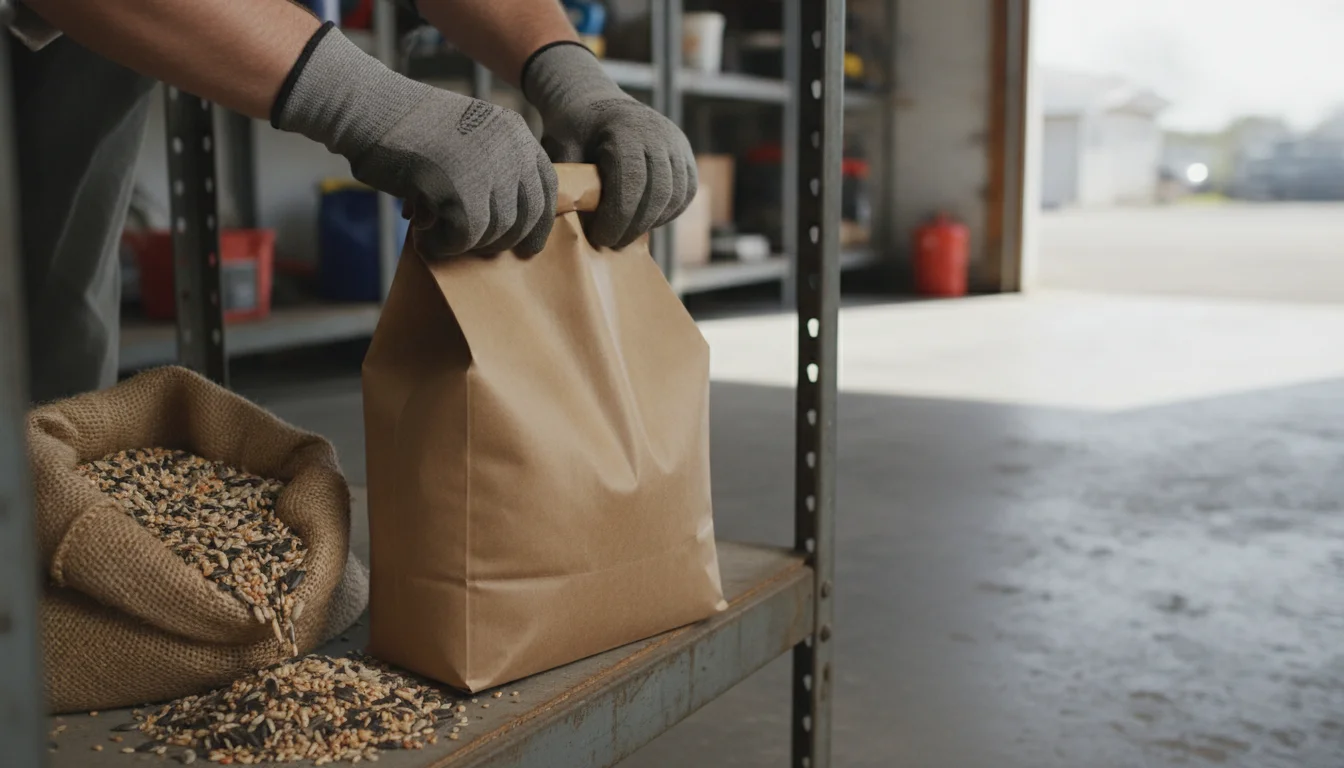
This is the step that ends repeat infestations. If you’ve cleaned the pantry and beetles keep showing up, something else is feeding them. Flour beetles also live in dry pet food, birdseed, garden seed, potpourri, dried flowers, ornamental corn and old grain-based rodent bait. The garage is the usual suspect: an open bag of dog food or birdseed out there can reseed a spotless kitchen for years. One Colonial Pest reader had beetles back two years running, exterminator and all.
Check the spare room, the laundry room and the basement too. No source anywhere and the trail leads into a wall or under cabinets? Rodents cache seed in wall voids, and that’s a job for a professional.
7. Lock down food storage
Everything you keep goes into glass, metal or heavy plastic containers with tight-fitting lids. Plastic bags don’t count. Wash any old container before you refill it, and never top up old flour with new: the eggs are sticky, get coated in flour and cling to the sides of the bag or canister, so an unwashed jar restarts the cycle. For the next few months, keep susceptible stuff (flour, mixes, cereal, spices) in the fridge or freezer if you have the space. Flour beetles can last weeks to a few months without food, so a hungry survivor needs to find nothing open.
8. Use pheromone traps
Traps don’t fix an infestation. They tell you whether you have. Buy ones labeled for flour beetles or a multi-species pantry trap, because traps made for pantry moths won’t attract beetles at all. Flour beetle lures are aggregation pheromones, so they pull in both males and females. Put one where the infestation was and one in the garage, check weekly, and replace at about three months. A fresh catch means a source is still out there: go back to step 2.
What causes flour beetles
They arrive in food. A bag of flour or birdseed picks up eggs somewhere along the supply chain, and you carry the colony home. Flour beetles infest mills, warehouses and grocery stores too, so this isn’t about a dirty kitchen. Old, half-used packages at the back of the shelf are where numbers build, and the adults then wander off looking for new food, which is why you find them in the bedroom.
They come back because of timing. In summer, egg to adult averages about six weeks, and the whole cycle runs one to four months depending on warmth. A female lays 300 to 400 eggs, and adults typically live around a year. So a clean-out that looks perfect can produce a fresh wave of beetles a month later from eggs you couldn’t see. In an apartment, beetles can also walk in from a neighbor’s unit, which fits the Reddit pattern of a few beetles a day by the front door and none in the pantry.
How to prevent flour beetles
Buy flour and mixes in amounts you’ll use, and skip torn or crushed packages. Decant everything into sealed containers when you get home. Keep rarely used flours, grains and spices in the freezer. Store pet food and birdseed in lidded bins, especially in the garage. Vacuum shelf crumbs regularly, and wash containers between refills.
When to call a professional
Call one if traps keep catching beetles after two careful clean-outs, if activity centers on a wall, cabinet void or under appliances with no reachable food, or if you’re in an apartment building and the beetles are coming from somewhere you can’t get into. Insist on a source hunt, not just a spray.
FAQ
Do flour beetles bite or make you sick?
No. They don’t bite, sting or spread disease, and they’re harmless if you swallow one by accident. The damage is to the food: infested flour turns grayish and smells off.
Can I still use flour that had beetles in it?
A heavily infested bag goes in the trash. Food that’s only suspect, or lightly hit, can be frozen or heated as in steps 3 and 4.
Should I spray the shelves?
UC IPM and Iowa State both say insecticides aren’t recommended for food cupboards. The source is in the food, not on the shelf. Maine lists labeled crack-and-crevice sprays, but only behind and under things, never on food surfaces.
How long until they’re gone?
Plan on watching for about three months after the clean-out, checking traps weekly. That covers more than one full life cycle.