Table of Contents
How you get rid of a broken light bulb depends entirely on which bulb broke, and most guides never tell you that. An incandescent or an LED is a glass mess: sweep it up, seal it, bin it. A compact fluorescent (CFL) or a fluorescent tube is something else, because it holds a small amount of mercury, so a break is a spill that needs a specific cleanup and cannot go in the loose trash. Get that split wrong and you either overreact to a harmless LED or, worse, vacuum a mercury bulb and spread it through the room. The frame that runs through all of it is the handler after you: the trash collector, the child, the pet. Nothing sharp or toxic gets left loose on the path. This is how to get rid of a broken light bulb safely, sorted by the bulb in your hand.
1. Free a broken bulb from the socket
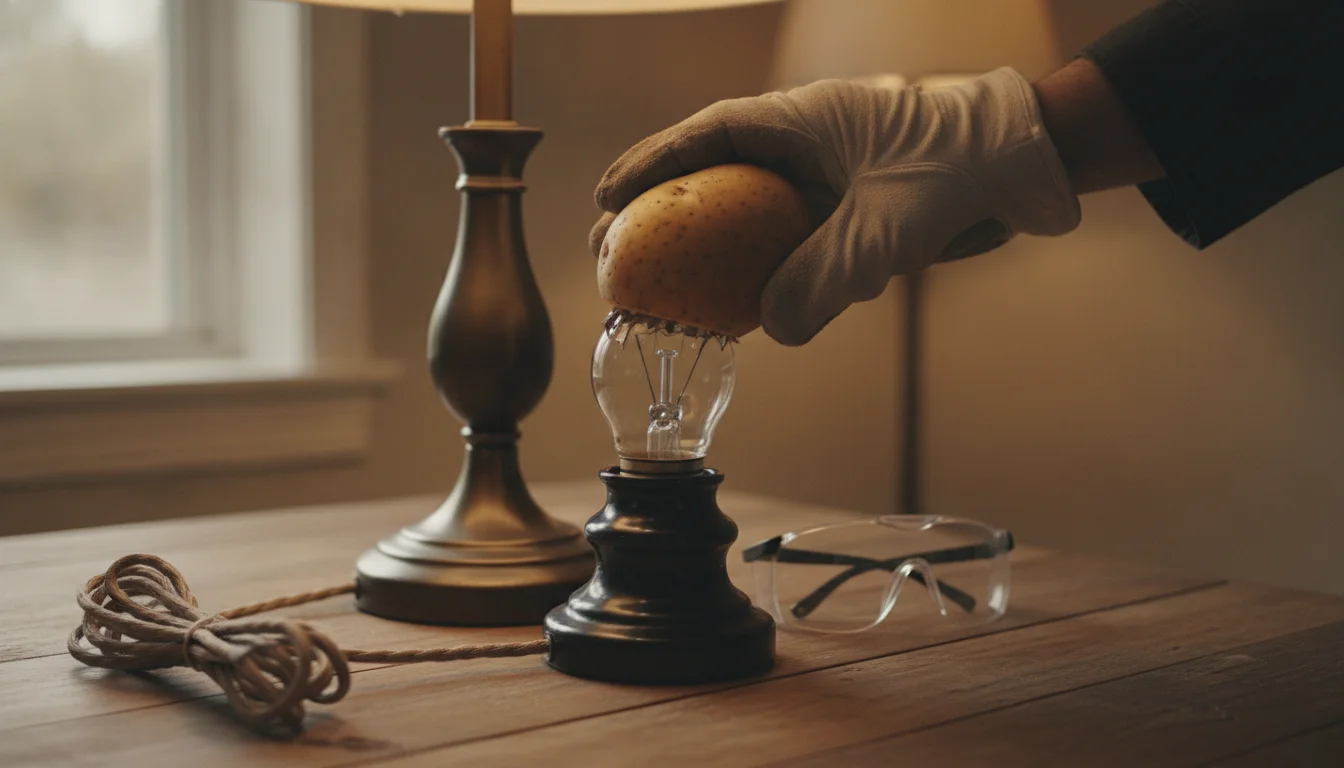
Sometimes the glass shatters but the metal base stays screwed into the fixture. Deal with that before you clean anything, and cut the power first. Unplug a lamp, or for a hard-wired fixture switch it off and trip its breaker at the panel. The wall switch alone is not enough: a miswired switch can leave the socket live even with the light off. Safety glasses on, because you are working overhead, and gloves.
Now free the base. The raw-potato trick genuinely works: cut a medium potato in half, press the flat cut face hard onto the jagged base so the glass bites into the flesh, and twist counterclockwise. Needle-nose pliers give more control on a corroded base, gripping the metal rim (bend it inward at one point for purchase) and turning steadily. Once it is out, treat the base as broken glass.
2. Find and lift the shards
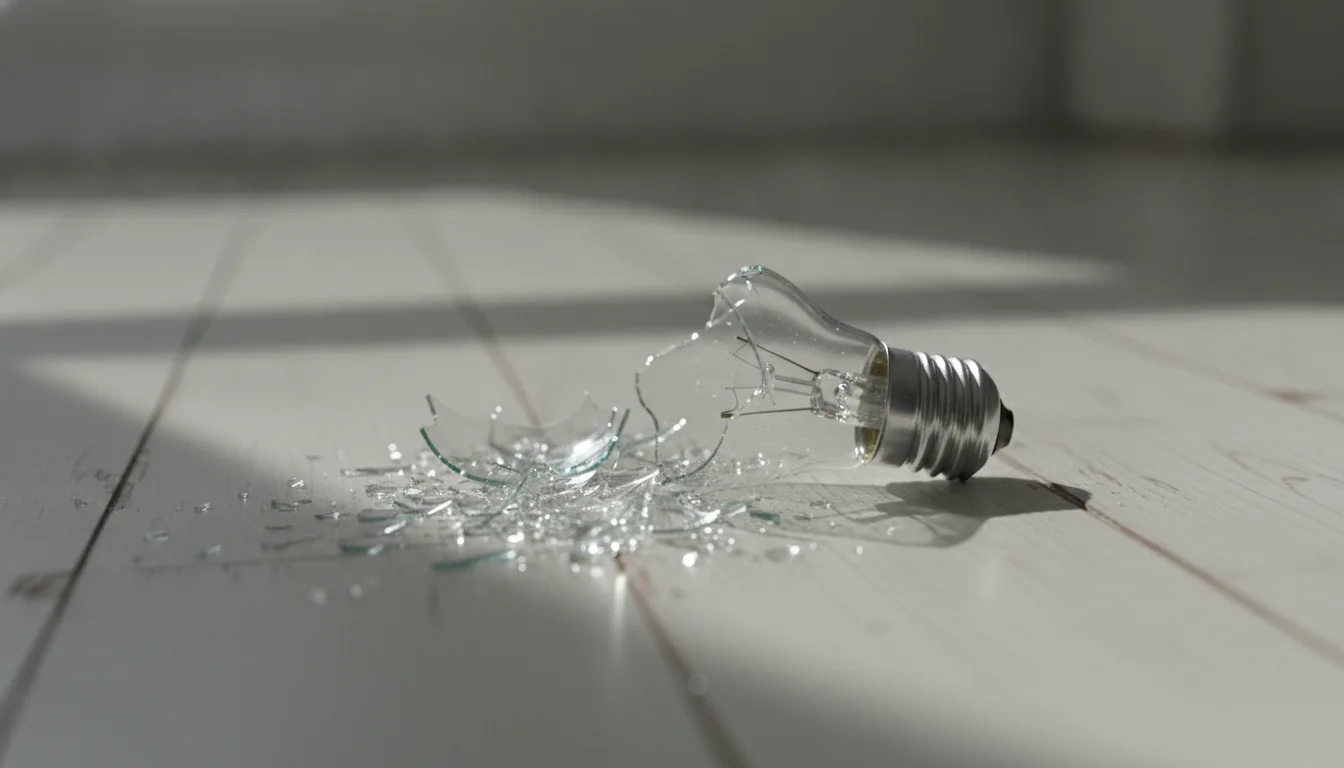
For an incandescent, halogen or LED break, this is the whole cleanup: it is a cut hazard, not a chemical one. Gloves first, thick work or puncture-proof, not kitchen rubber, and closed-toe shoes rather than socks.
Lift the big pieces by hand, held flat so they cannot fold and slice. The small stuff is what actually cuts people, because it scatters much further than you expect and hides against the floor. Kill the overhead light and lay a flashlight flat, so the beam skims sideways: every shard throws a shadow and glints. Press packing tape or a damp paper towel over the fragments to lift them, and skip the broom for the fine stuff, since bristles flick splinters around. Vacuum a hard floor only once every visible piece is up, and never for the next bulb type.
3. Clean up a broken mercury bulb the EPA way
A CFL or a straight or circular fluorescent tube holds mercury, and two ordinary reflexes are exactly wrong here: vacuuming and letting the air recirculate. The published cleanup that avoids both comes from the US EPA, and it is worth following to the letter.
Clear and ventilate first. People and pets leave the room, keeping clear of the breakage on the way out. Open a window or an outside door and stay out for five to ten minutes so the first vapor disperses. If you have central forced-air heating or air conditioning, switch it off so it cannot draw the vapor through the house.
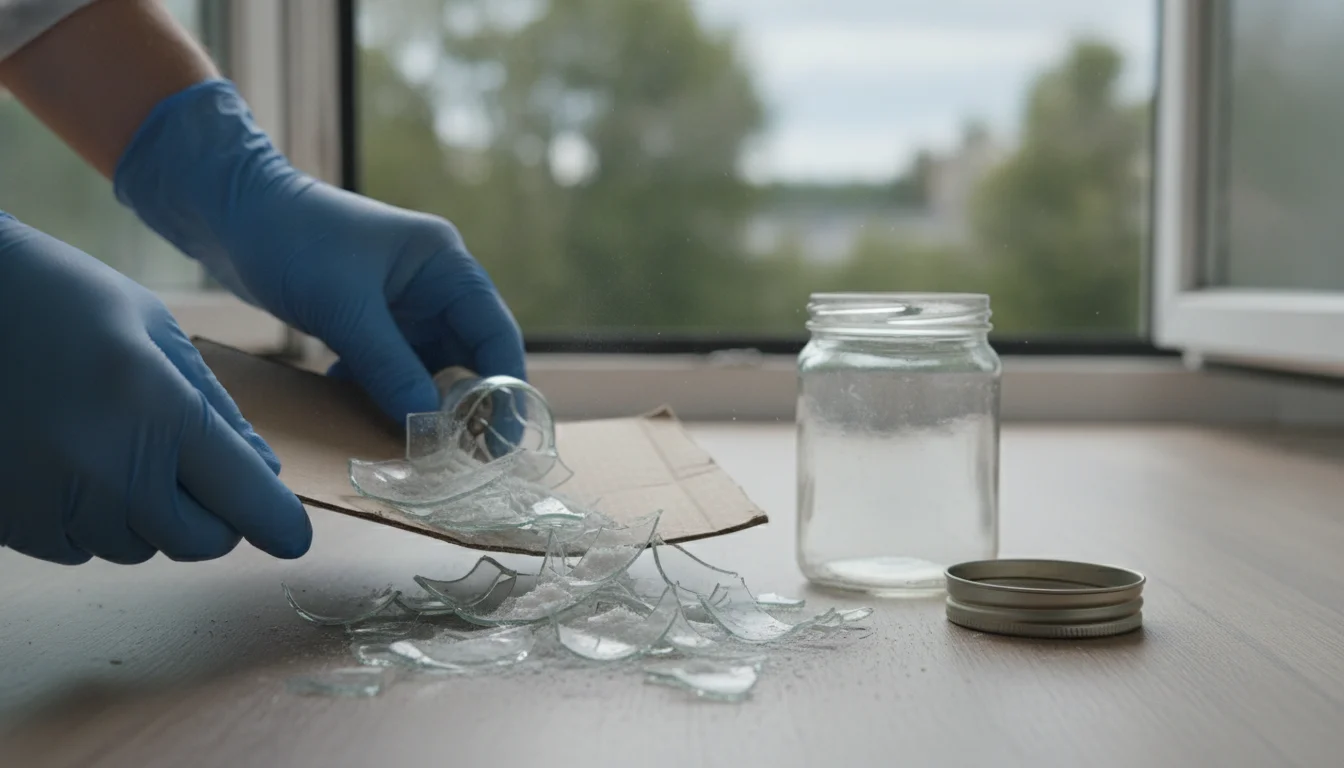
Then clean by hand, never with a vacuum, which aerosolizes the mercury and contaminates the machine. Scoop the glass and the fine powder onto stiff card, lift the last specks with the sticky side of tape, and wipe the spot with a damp paper towel. Seal all of it, card and tape and towel included, in a glass jar with a metal lid or another rigid, sealable container. Skip a bare plastic bag: it does not stop mercury vapor, so if a bag is all you have, double-bag it and get it out of the house straight away rather than leaving it indoors. Only vacuum if a shard is left after all of that, with the window still open, then seal the vacuum bag or canister debris afterward. Get the sealed container out of the living space promptly, wash your hands, and keep the room aired out with the air handler off for a few hours.
4. Seal the glass in a rigid container
This step is for the non-mercury glass, and it is the one most people get wrong. Do not tie broken glass into a bare bin bag. Plastic tears, shards sink to the bottom, and they slice through when someone grips or drops it.
Use a rigid, puncture-proof container instead: a sturdy cardboard box, a taped shoebox, an empty detergent bottle, a coffee tin. The carton the new bulb came in works well. Fill it most of the way, no more, fold the flaps, and run tape along every seam. Then label it “broken glass” on the top and sides, so it reads whichever way up it lands. That label is for the stranger who lifts it next.
5. Bin the glass, not the recycling
Broken bulbs surprise people at the curb: they are not accepted in curbside glass recycling. That stream is for whole container glass, bottles and jars, made to one melting recipe. Bulb glass is different, and the wire filaments in an incandescent and the electronics in an LED make them contaminants, not recyclables.
So in most places the sealed, labeled container of incandescent, halogen or LED debris goes in your general waste bin, handled the same way you would any broken glass around the house. Local rules are the final word, though, and they differ: some areas route LEDs to e-waste or hazardous-waste programs rather than the bin, so check your municipal waste guide before you bin them.
6. Recycle mercury bulbs at hazardous waste
Mercury bulbs are the exception: they do not belong in the loose trash even sealed, because they break in the truck, the compactor and the landfill and release mercury. Recycle them instead, the same route a dead household battery takes.
For the broken debris, confirm that a local household hazardous waste or lamp-recycling program accepts broken mercury-bulb debris and tubes before you take it there, since acceptance varies by area; Earth911 lists local drop-offs by zip code, and mail-back kits exist if nothing is close. The retailer take-backs you may have heard of are not this route: Home Depot and Lowe’s accept only used, unbroken CFLs, not fluorescent tubes and not broken debris, so keep them in mind for the next dud bulb, not for what you just swept up. A few states, California, Maine, Massachusetts, Minnesota, New Hampshire, Vermont and Washington, require mercury bulbs to be recycled by law. Only where your state or local agency specifically permits used or broken mercury bulbs in the trash should you seal one and put it in the outside bin.
Identify the bulb, then match the route: cut power before you touch a stuck base, contain plain glass and bin it, and run the EPA cleanup and recycling for anything with mercury. The same care applies to anything you are clearing out: leave nothing behind that the next person meets the hard way.
Broken light bulb FAQ
Can you throw away a broken light bulb?
An incandescent, halogen or LED bulb, yes: seal the glass in a rigid container and put it in the general trash. A CFL or fluorescent tube, no. It contains mercury and should be recycled at a drop-off or household hazardous waste, unless your local rules specifically allow a sealed mercury bulb in the bin.
Can you vacuum a broken light bulb?
Not a CFL or fluorescent tube. A vacuum blows the mercury dust and vapor into the air and contaminates the machine. Scoop and tape it up by hand instead, and vacuum only if a shard is left after everything else, with a window open. Plain glass from an LED or incandescent can be vacuumed once the visible pieces are lifted.
How do you get a broken light bulb out of the socket?
Cut the power at the breaker or unplug the fixture first, then check the socket is dead. Press the cut half of a raw potato onto the broken base and twist counterclockwise, or grip the metal rim with needle-nose pliers and turn. If the wiring is damaged or you are unsure, stop and call an electrician.