Table of Contents
A dropped glass is two problems, not one. The first is the cut risk to you, right now, on the floor. The second is the one every guide skips: the person who handles it after you. Broken glass tied loose in a trash bag works its way to the bottom and slices the collector who grabs it and the sorter who pulls it off a moving belt. So the job here isn’t just cleanup. It’s packaging the glass so it can’t hurt anyone down the line, and putting it where it belongs, which for broken glass is almost never the recycling. This is how to get rid of broken glass safely, from the first shard to the sealed box at the curb.
1. Find and lift the shards safely
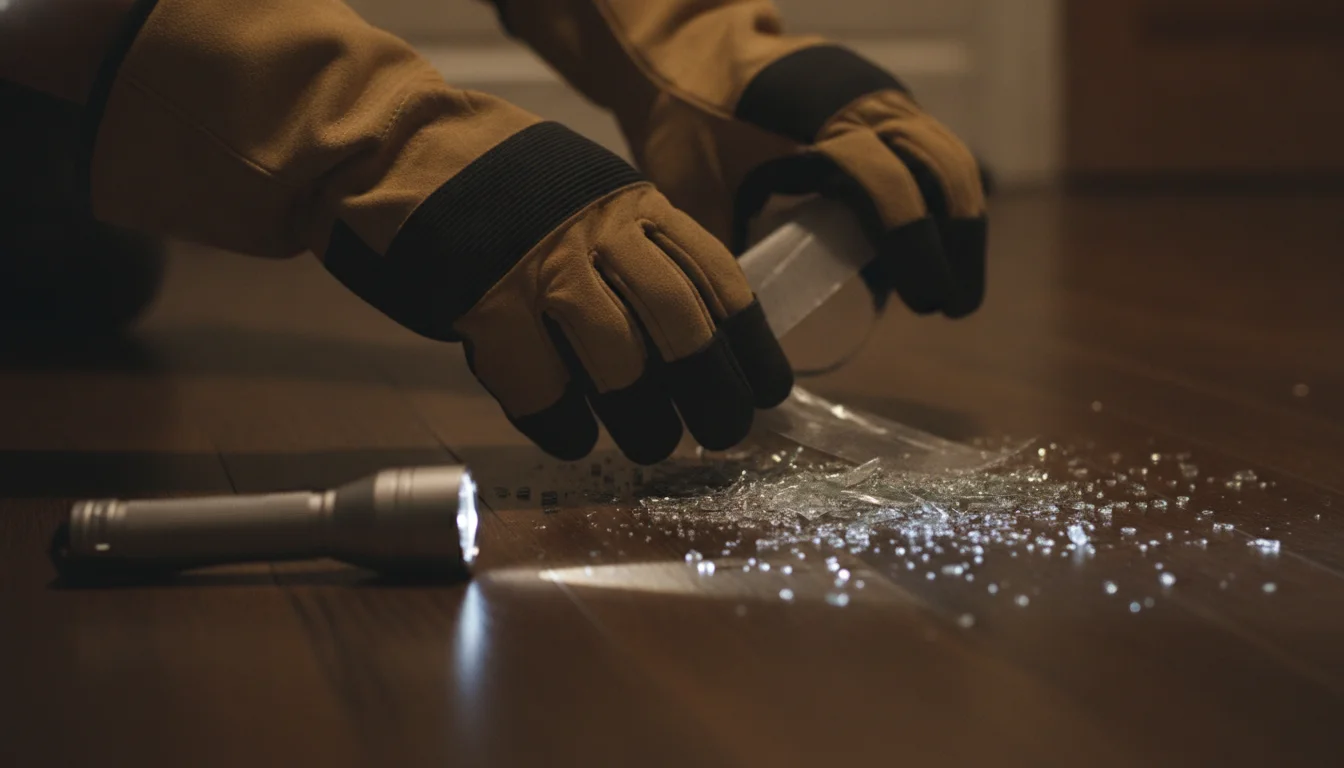
Gloves first. Thick work or puncture-proof gloves, not kitchen rubber, and closed-toe shoes rather than socks or sandals. Lift the big pieces by hand, held flat so they can’t fold and slice, and lower them into a rigid box.
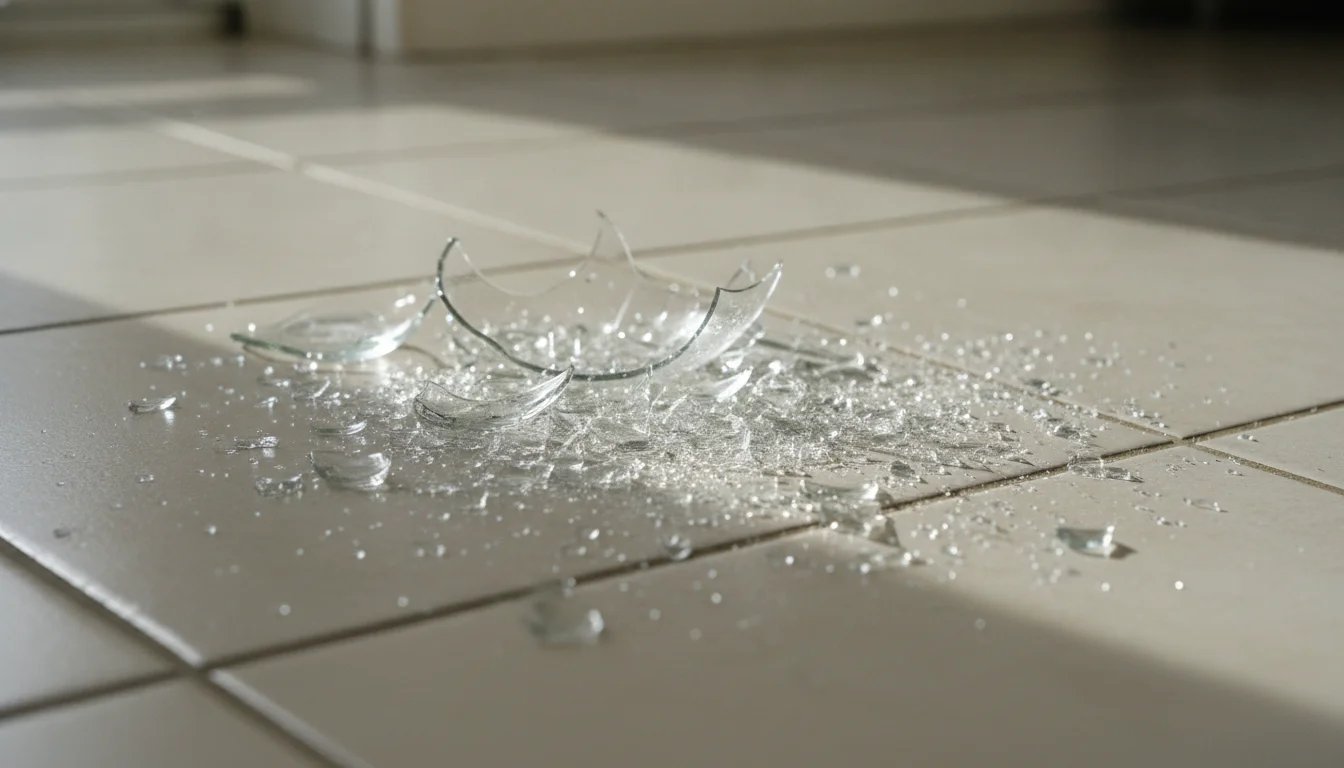
The small stuff is what actually cuts people, because it scatters much further than you’d think. Here’s the trick a grocery worker swore by: kill the overhead light and lay a flashlight flat on the floor so the beam skims sideways. Every shard throws a shadow and glints, and now you can see them. Press packing tape or a damp paper towel over the fragments to lift them, no water needed. Skip the broom for the fine stuff, and vacuum hard floors only once the visible pieces are gone.
2. Seal it in a rigid container and label it
This is the one that matters, and the step most people get wrong.
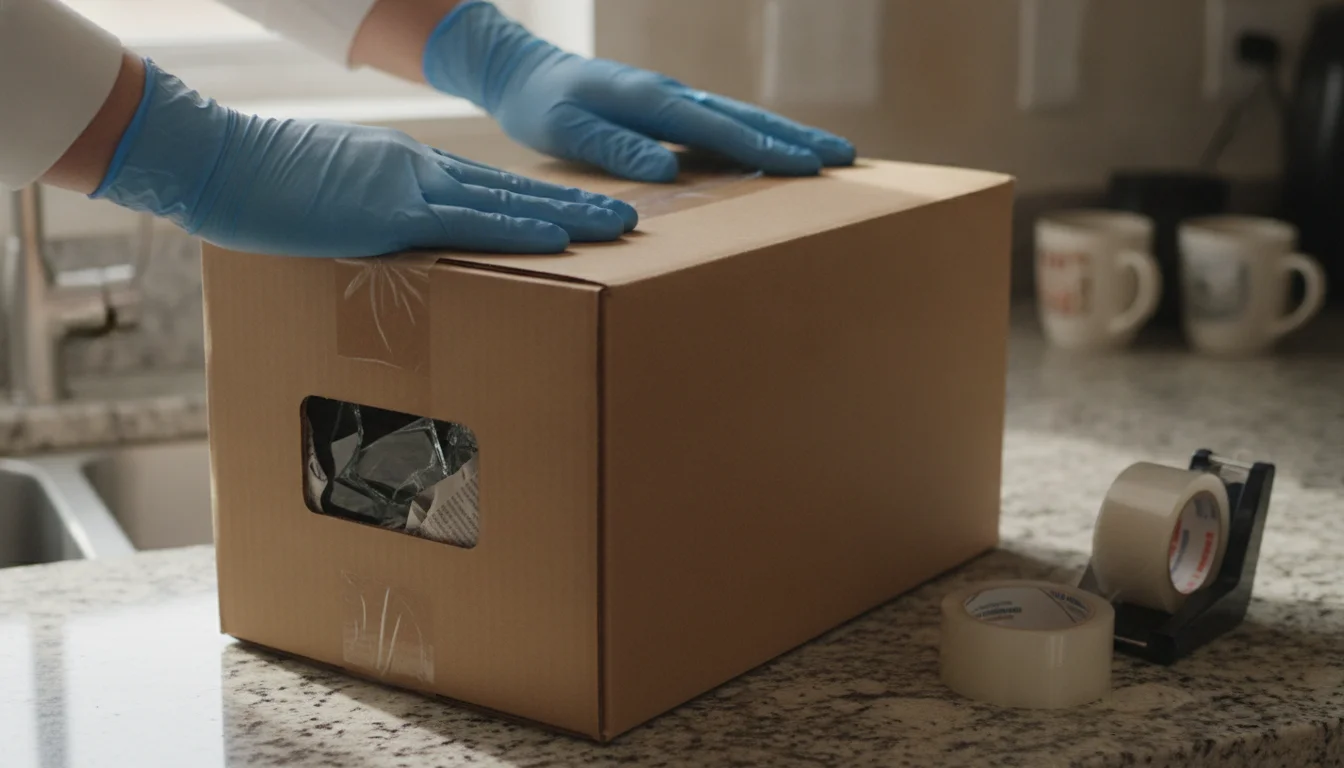
Don’t tie broken glass into a bare trash bag. Plastic tears, shards sink to the bottom, and they slice through when someone grips or drops it. Use a rigid, puncture-proof container instead: a sturdy cardboard box, a taped shoebox, an empty detergent bottle, a coffee tin. Anything a shard can’t push through. Fill it most of the way, no more, then fold the flaps and run packing tape along every seam so nothing spills if it’s knocked over in a truck.
Then label it. A thick marker, the words “broken glass”, on the top and the sides so it reads whichever way up it lands. That label is for the stranger who lifts it next. It tells them to handle it with care instead of grabbing it blind.
3. Put it in the trash, not the recycling
Here’s the part that surprises people: most curbside glass recycling is built around whole bottles and jars, and non-container glass is generally excluded. Curbside “glass” means container glass, made to one melting recipe, and anything made differently is treated as a contaminant. A single broken tumbler or a shard of Pyrex can ruin a whole batch of recycled bottle glass, so it sorts by type, not by whether it’s broken. Drinking glasses and stemware, Pyrex and other heatproof ovenware, ceramics and porcelain, and window, picture-frame and mirror glass all belong in the trash rather than curbside glass recycling: they melt at different temperatures, or aren’t glass at all.
Broken bottles and jars are the gray area. Some programs take them if they’re contained, many don’t, so the acceptance varies by local program. Check your municipality’s waste guide before you choose between the trash and the recycling, and when it doesn’t clearly say yes, treat broken glass as general waste. Either way, the sealed, labeled container goes in the trash, not loose in the recycling.
4. Haul large loads to a transfer station
Too much glass for a bin, or one pane too big to contain? Take it to the waste rather than waiting for the waste to come to you. A whole windowpane, mirror or oven door that won’t fit a box goes here too: don’t try to break it down, wrap it flat in an old blanket, tape the bundle closed and move it in one piece. A municipal transfer station or landfill takes contained broken glass and large intact pieces, sometimes for a small tipping fee. Load it so it can’t shift (boxes wedged upright, panes flat and blanketed, nothing loose near your seat) and wear gloves at both ends.
Don’t want to haul it? A junk-removal service prices by volume, averaging around 250 dollars a load, and does the lifting. It’s the same call you’d make clearing any bulky mess, from a full basement of clutter to a smashed patio door. And glass driven into carpet or a wall cavity, the kind of thing a burglary leaves, is a job for a specialist cleaning service, not one to improvise by hand.
5. Clean up a broken mercury bulb the EPA way
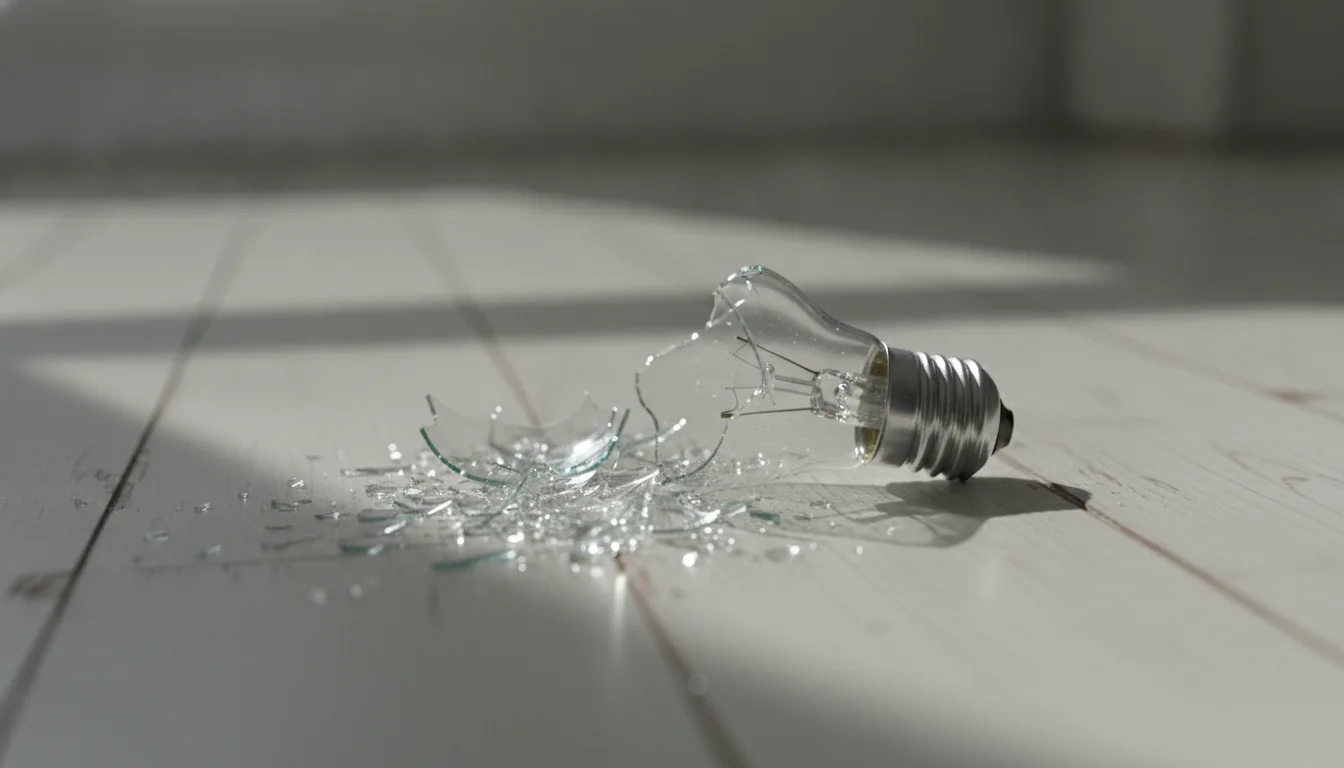
One kind of broken bulb needs more than containment. A shattered compact fluorescent (CFL) or fluorescent tube holds a little mercury, and the EPA sets out a specific cleanup, much like a dead household battery has its own route. Plain incandescent, halogen and LED bulbs hold no mercury: their glass is still sharp, so contain and bin those like any other broken glass.
For a broken CFL or tube, get people and pets out of the room first. Open a window or an exterior door and air the room for five to ten minutes, and shut off any forced-air heating or air-conditioning so it can’t blow the vapor around. Then scoop the glass and powder onto stiff card and lift the residue with the sticky side of tape. Don’t vacuum or sweep it, because both spread mercury as dust. On a hard floor, finish by wiping the area with a damp paper towel; on carpet, use tape only. Seal everything, card and tape included, in a screw-top glass jar or rigid container (not a plastic bag, which lets vapor through), and move the sealed debris outdoors promptly rather than leaving it in living space. For disposal, follow your local rules: many areas send these bulbs to a household hazardous waste drop-off or a retailer take-back, while others allow the sealed bulb in the household trash.
Get the packaging right and the rest is easy: a rigid box, a strip of tape, the word “broken glass” on the side, and the general trash. That’s the difference between a job you’ve finished and a cut you’ve handed to a stranger. The same care goes for anything you’re clearing out: contain it so the next person isn’t the one who gets hurt.
Broken glass FAQ
Can broken glass go in the recycling bin?
Usually not. Non-container glass is generally excluded, and broken glass cuts the workers who hand-sort recycling. Broken bottles and jars are the exception some programs accept if they’re contained, so check your local guide first; where it isn’t a clear yes, seal the glass up and put it in the general trash.
Are drinking glasses, Pyrex and mirrors recyclable with bottles?
No. Drinking glasses, Pyrex and other heatproof glass, ceramics, window glass and mirrors are all made differently from bottles. They go in the trash, not curbside glass recycling.
Where do I get rid of a large amount of broken glass?
A transfer station or landfill drop-off will take it, sometimes for a small fee, or a junk-removal service will haul it for around 250 dollars a load. Contain it well and call ahead to confirm they accept glass.