Table of Contents
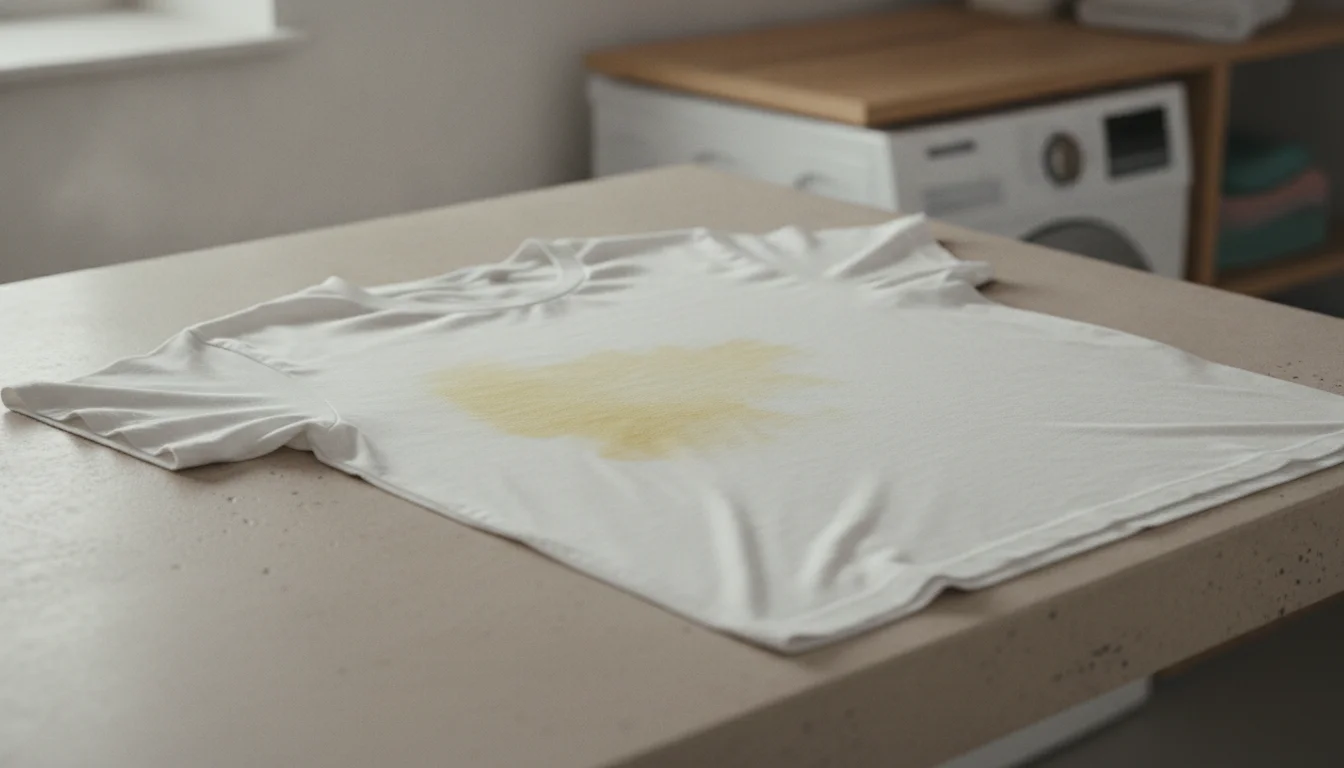
Yellow bleach stains from white clothes split into two completely different problems that look identical. Your white cotton shirt went into a bleach wash to brighten it and came out yellow, and whether that yellow comes back out depends entirely on what caused it.
If the bleach itself altered the fiber – too much, undiluted, too hot, or left too long – the yellow is permanent. Clorox says so plainly, and they are right: bleach misuse changes the fiber, and no soak brings the white back. Drying the item only locks it in harder. No amount of hydrogen peroxide, oxygen bleach or sodium thiosulfate reverses that damage. Anyone selling you a soak that “removes bleach yellowing” is selling the wrong job.
What genuinely lifts is yellow that is not fiber damage at all. There are three of those, and each has its own fix:
- Chlorine that never rinsed out. Trace bleach left in the fabric keeps working. Neutralize it and you stop further damage, but any yellow it has already set stays.
- Chlorine locked into a special finish. Resin and durable-press finishes on white cotton can hold chlorine and yellow because of it. A packaged color remover clears the retained chlorine (UGA and NC State Extension).
- Ordinary age and oxidation. Whites dull to yellow in storage as the fiber oxidizes. Oxygen bleach and sunlight bring those back.
So the first job is to work out which yellow you have. If you just bleached the item and it yellowed on the spot, treat it as retained chlorine first (methods 1 and 2) before you assume damage. If the yellow crept up over months in the closet, it is age-dinginess (method 3). If neither shifts it after a fair try, it is fiber damage, and the honest routes are masking (methods 5 and 6) or dyeing the garment a color that hides it.
One safety line before you start. Never put vinegar, lemon juice or any acid on a garment that might still hold chlorine. Acid on chlorine bleach makes chlorine gas. That is why no method below uses an acid soak. If you have read that trick elsewhere, skip it.
For the head guide covering hard surfaces and colored items too, see yellow bleach stains. For the by-surface overview of bleach marks in general, see permanent bleach stains.
What Causes Yellow on Bleached White Clothes
Too much bleach, undiluted bleach, water that is too hot, or a long soak all push chlorine past whitening and into damaging the fiber. That damage is the permanent case. Bleaching a fabric that cannot take it does the same: Clorox lists cotton, polyester, nylon and acrylic as bleach-safe, and wool, silk, mohair, leather and spandex as not.
The removable cases are separate. Chlorine that never fully rinsed keeps reacting, which is why fresh yellowing can deepen after the wash finishes. A resin or durable-press finish can trap chlorine and yellow from it. And plain age oxidizes the fiber to a dull yellow over time, with no bleach involved at all.
1. Hydrogen peroxide rinse
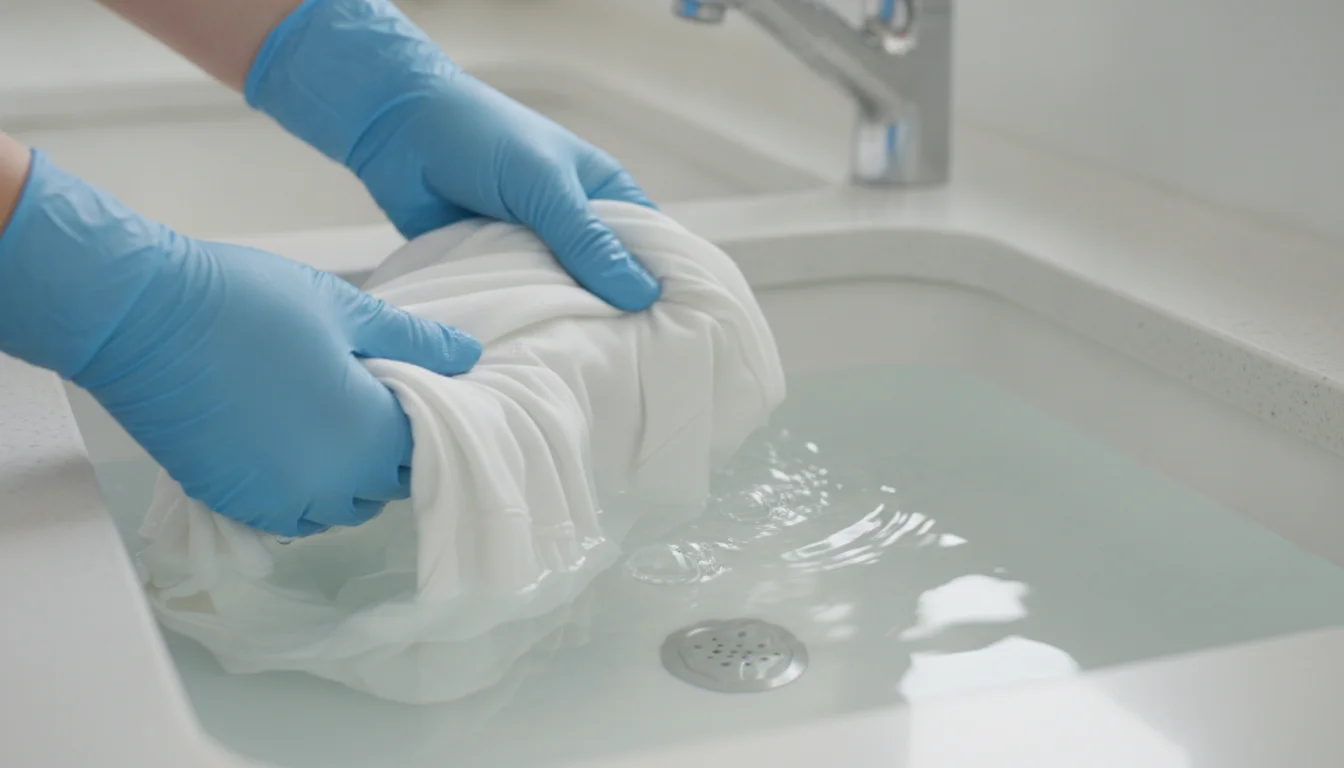
The move the moment a white item yellows during or straight after a bleach wash. It will not undo damage already done, but it stops leftover chlorine from doing more. Mix 1 part 3% hydrogen peroxide – the brown drugstore bottle – with 10 parts water and soak the garment in it, then wash normally. That halts the bleaching action of any hypochlorite still in the fabric. Dollar-store peroxide works exactly like the pharmacy version, so do not pay for “premium”.
2. Sodium thiosulfate or a packaged color remover
The dedicated route for chlorine the fabric is holding – either trace bleach that never rinsed, or chlorine locked into a resin or durable-press finish. Sodium thiosulfate (sold as Bleach Stop, and used in darkrooms and aquariums) neutralizes residual chlorine outright rather than masking it: dissolve 1 ounce (28 g) in a gallon (3.8 L) of warm water, work the fabric in it for about 15 minutes, then rinse and wash. For finish-related yellowing, NC State Extension points to a packaged color remover instead; follow the box, as concentrations vary by brand. Neither reverses fiber damage; both clear retained chlorine so it stops causing more.
3. Oxygen bleach soak
The one that actually lifts removable yellowing: the age, oxidation and storage dinginess that build on whites over time. Oxygen bleach (OxiClean and similar) is sodium percarbonate, which releases hydrogen peroxide in water. Dissolve it at the label’s dilution in warm water and soak washable white cotton and linen 1 to 6 hours, then wash normally. Drying whites in direct sun after helps the same oxidation-yellowing case. This is the honest fix for closet-yellowed whites, not for bleach damage.
4. Baking soda and hydrogen peroxide paste
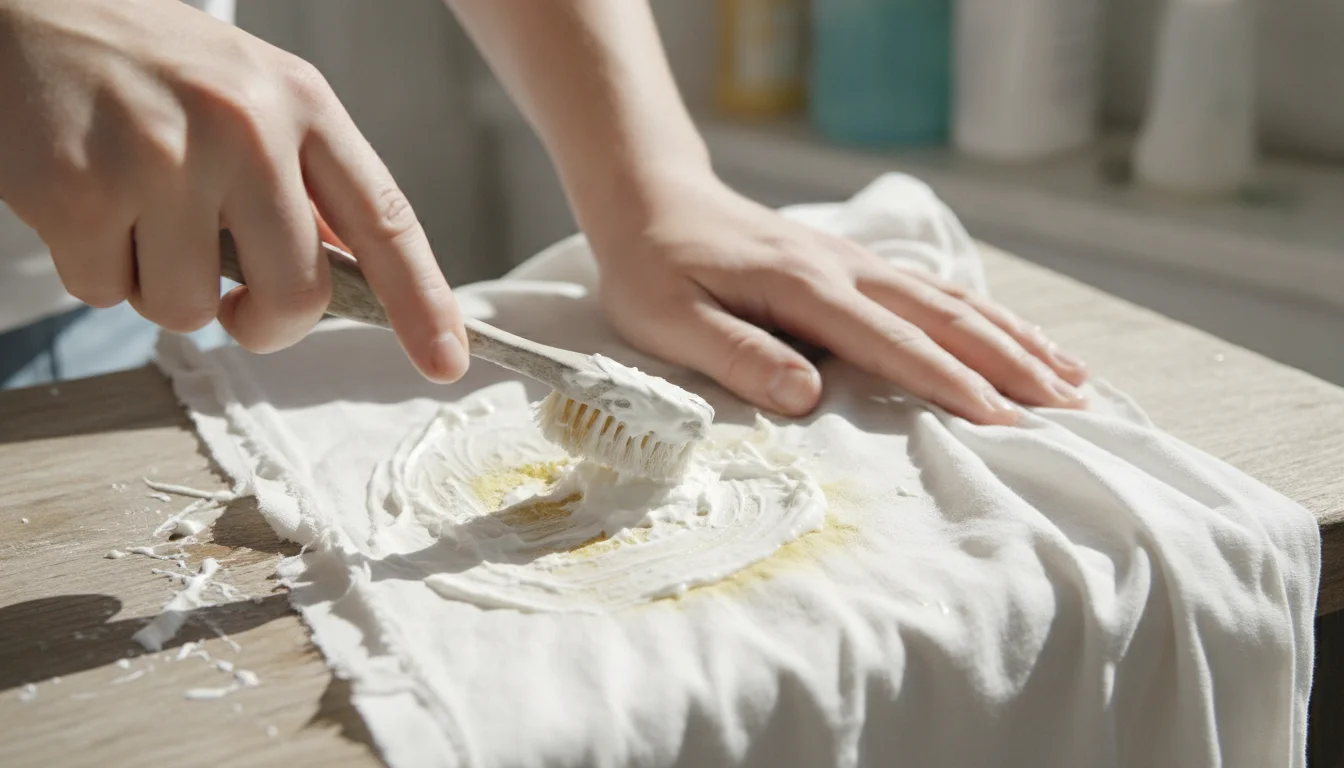
The spot treatment for a concentrated patch of removable yellowing a full soak has not shifted, using the same peroxide chemistry as method 1 in a form that stays put. Mix 2 tablespoons (30 g) of baking soda with enough 3% hydrogen peroxide to make a thick paste. Spread it on the yellow, leave it 30 minutes, then scrub lightly with an old toothbrush. Rinse cold and wash normally. It will not touch fiber damage. If two tries do nothing, the yellow is in the fiber, not on it.
5. Bluing in the rinse
Not a fix, a visual trick, and the honest fallback when the yellow will not lift because it is bleach damage. Bluing deposits a microscopic amount of blue dye that optically cancels yellow tones. Mrs. Stewart’s Bluing is the standard brand. For the rinse in a top-loading washer, its directions call for less than 1/8 teaspoon diluted in a 2-quart to 1-gallon (about 2 to 4 L) container of cold water, poured into the rinse. Never pour it straight onto the fabric, or you trade yellow for blue. The yellow is still there; it just stops reading as yellow.
6. Optical brightener detergent
Same category as bluing: masking, not repair. Brightener-heavy detergents leave fluorescent compounds on the fabric that absorb UV and re-emit blue-white, so a damaged white looks whiter under daylight. Wash with a brightener-heavy detergent, then dry out of strong sunlight, which breaks down the fluorescent dye and yellows it further. It works best on mild yellowing where there is not much to overcome, and like bluing it hides the yellow rather than removing it.
For fiber damage that none of this shifts, the last honest option is to dye the garment a color that hides the patch; see bleach stains from colored clothes for how.
Frequently Asked Questions
Can you reverse yellow bleach stains on white cotton?
Only when the yellow is not fiber damage. Retained chlorine, chlorine trapped in a special finish, and age-oxidation all lift with the right treatment. Yellow from bleach that altered the fiber does not: Clorox is correct that bleach-misuse yellowing is permanent, and dryer heat sets it for good. No peroxide, oxygen bleach or thiosulfate reverses that.
Why did my white shirt turn yellow after bleaching?
Usually too much or undiluted bleach, water too hot, or a long soak, all of which damage the fiber instead of whitening it. Bleaching a fabric that is not bleach-safe does the same. If the yellow appeared on an item you did not just bleach, it is more likely age-dinginess or a finish holding chlorine, both of which lift.
Is it safe to use vinegar on a bleach-yellowed shirt?
No, not while any chlorine could still be in the fabric. Acid on chlorine bleach releases chlorine gas. Use the hydrogen peroxide rinse or sodium thiosulfate to clear retained chlorine instead; neither is an acid.