Table of Contents
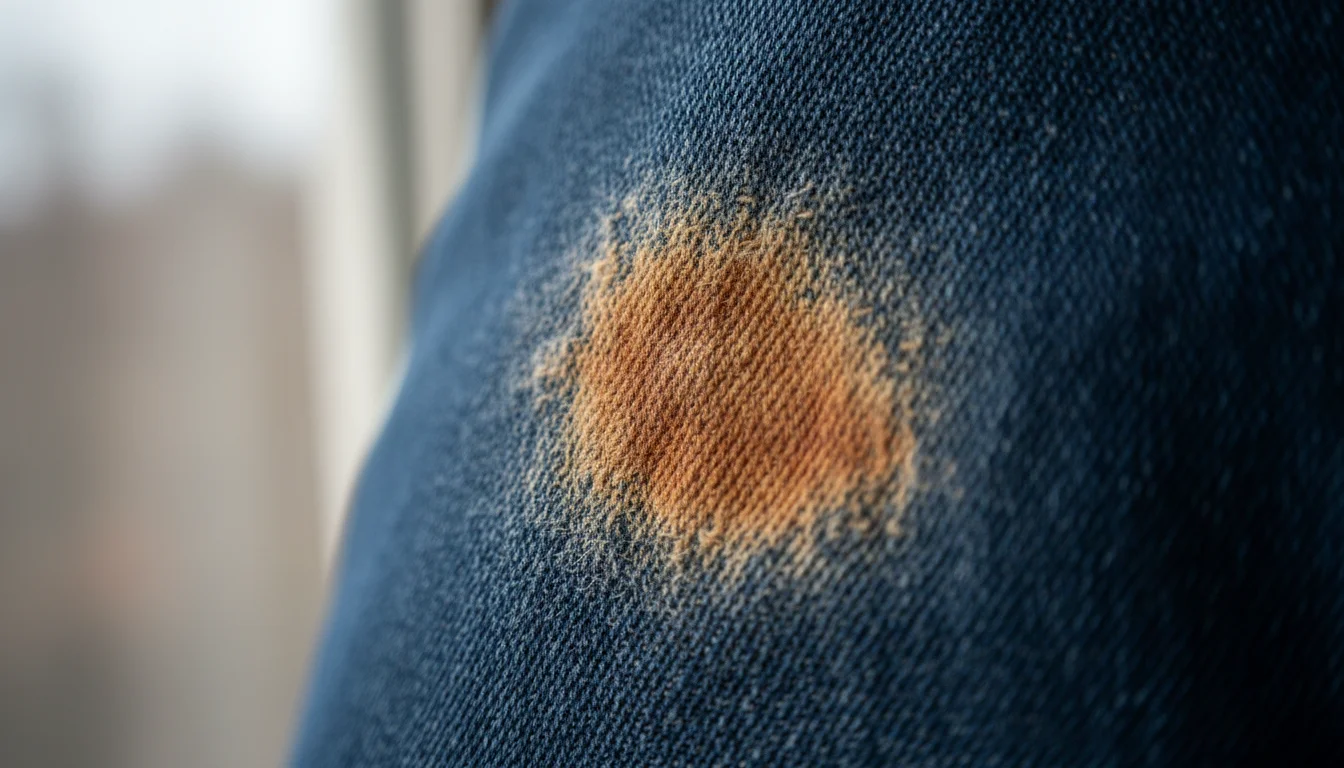
Bleach does not stain. What people call bleach stains is dye loss: bleach strips the color out of whatever it touches and leaves a lighter patch behind. Nothing sits on the surface to wash out, so scrubbing and re-washing get you nowhere. The color is gone for good.
One kind of yellow looks like an exception, but mostly it is not. White cotton or linen can yellow after bleaching, and where bleach has altered the fiber that yellow is permanent – drying the item only sets it. The yellow that genuinely lifts is not bleach damage at all: chlorine that was never rinsed out, or plain age-dinginess. Sorting the two, and treating the one that moves, is the white-clothes guide’s job. Everything else is lost dye, and the fix is to put color back or hide the gap, never to remove a stain.
Act fast either way. Rinse a fresh splash in cold water straight away – wet bleach keeps eating the fiber and can burn a hole clean through it. Then find your surface below.
1. Carpet
Bleached carpet is permanent, but you can hide it. A carpet dye kit gives the closest color match. Color-matched crayons or permanent markers cover small spots. Large patches need professional re-dyeing, or a rug thrown over the spot and a shrug.
Full guide: How to Get Rid of Bleach Stains from Carpet
2. Colored clothes
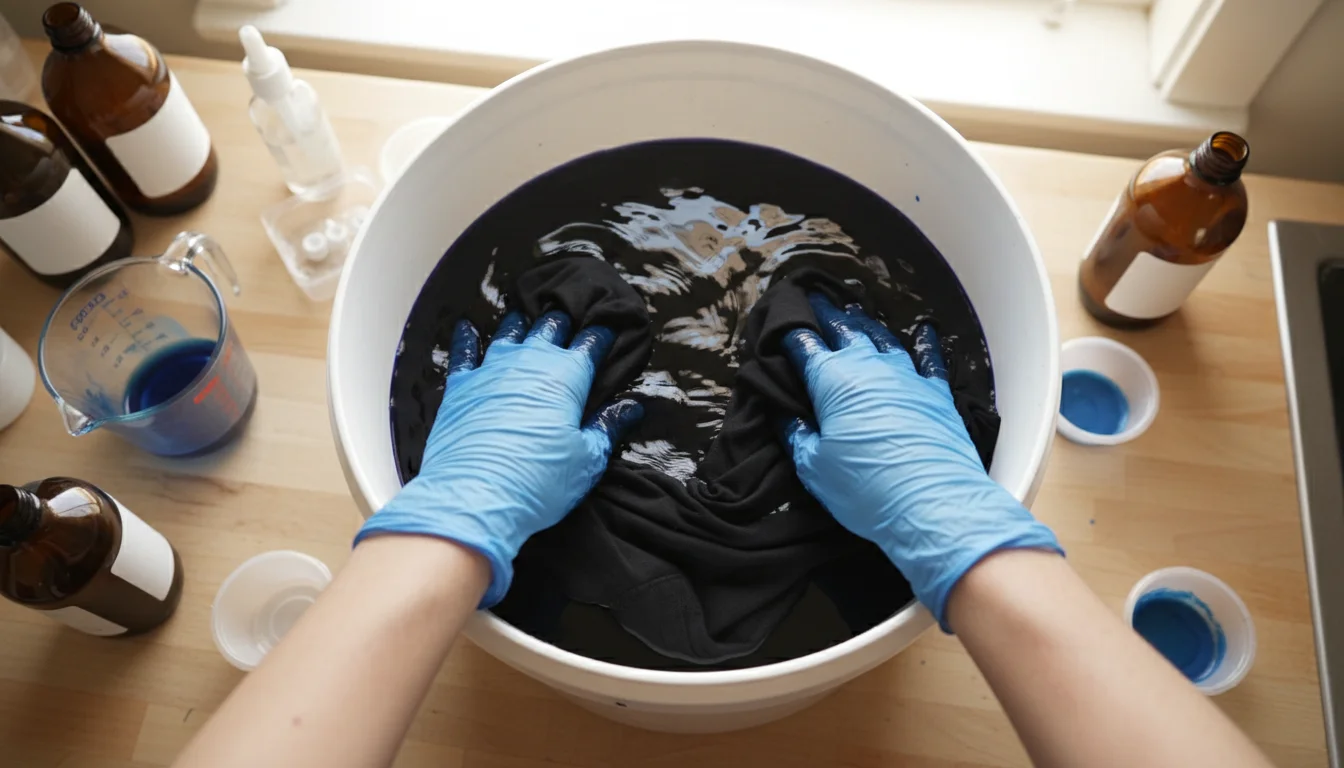
The dye is stripped, so the job is putting color back, not lifting anything. For a small spot on dark fabric, rubbing alcohol is the trick worth knowing: dab it on and the dye around the patch bleeds inward to fill it. Work from the outside of the mark toward the middle. Larger damage means re-dyeing the whole garment, or taking it darker in a full dye bath. Skip the dye bath on wool, silk or spandex – chlorine bleach damages those fibers rather than coloring them.
Full guide: How to Get Rid of Bleach Stains from Colored Clothes
3. White clothes turning yellow
On white cotton or linen, yellowing after bleaching is usually bleach damage, and bleach damage is permanent – drying the item only sets it, so do not expect a soak to bring the white back. The yellow that does lift is a different problem: chlorine that was never rinsed out, or ordinary age-dinginess, not bleach that altered the fiber. The full guide sorts out which yellow you have and treats the kind that moves. If it is bleach damage, dye the item a color that hides the patch.
Full guide: How to Get Rid of Yellow Bleach Stains from White Clothes
4. Upholstery
Same lost-dye problem as clothes, harder because you cannot drop a couch in a dye bath. Upholstery spray dye and fabric markers handle most spots. Removable cushion covers come off and can be re-dyed properly. Leather is a different material and needs a leather repair kit, not dye.
Full guide: How to Get Rid of Bleach Stains from Upholstery
5. Toilet seats
A yellowed toilet seat is almost always age and sunlight working on the plastic, not a bleach stain – and that yellowing has soaked into the material, so scrubbing and bleaching do not shift it. There is no reliable home fix for plastic that has yellowed all the way through. A replacement seat runs under $30 and saves the fight.
6. White shoes
If bleach lightened white shoes, there is nothing to lift – the color is gone, same as on clothes. If the shoe yellowed instead, and it is not just surface grime a normal clean removes, bleach has altered the material and the yellow is there to stay. The dependable fix is to mask it: white shoe polish on leather, white fabric paint on canvas.
7. Fabric marker touch-up
A fabric marker in a matching shade is the fastest fix for a small spot on dark carpet, clothes or upholstery. Color in the bleached fibers with short strokes, let it dry for about 15 minutes, then dab with a damp cloth to blend the edges. The ink is made to bond with textile fibers, so it outlasts crayons and ordinary markers. Test on a hidden patch first to check the match.
8. Embrace the bleach stain aesthetic
Bleach splatters read as intentional if you commit. Hit the garment with more bleach in a deliberate pattern – tie-dye, splatter, an ombre fade – and now it is on purpose. This works on casual clothes: t-shirts, sweatpants, denim. Keep chlorine bleach off wool, silk and spandex, which it eats rather than lightens. And do not try to pass a bleach-spotted button-down off as distressed workwear. You will know. They will know.
Every fix here is a disguise, a color swap or a creative reframe. The sooner you act after the spill, the more of them stay open to you.