Table of Contents
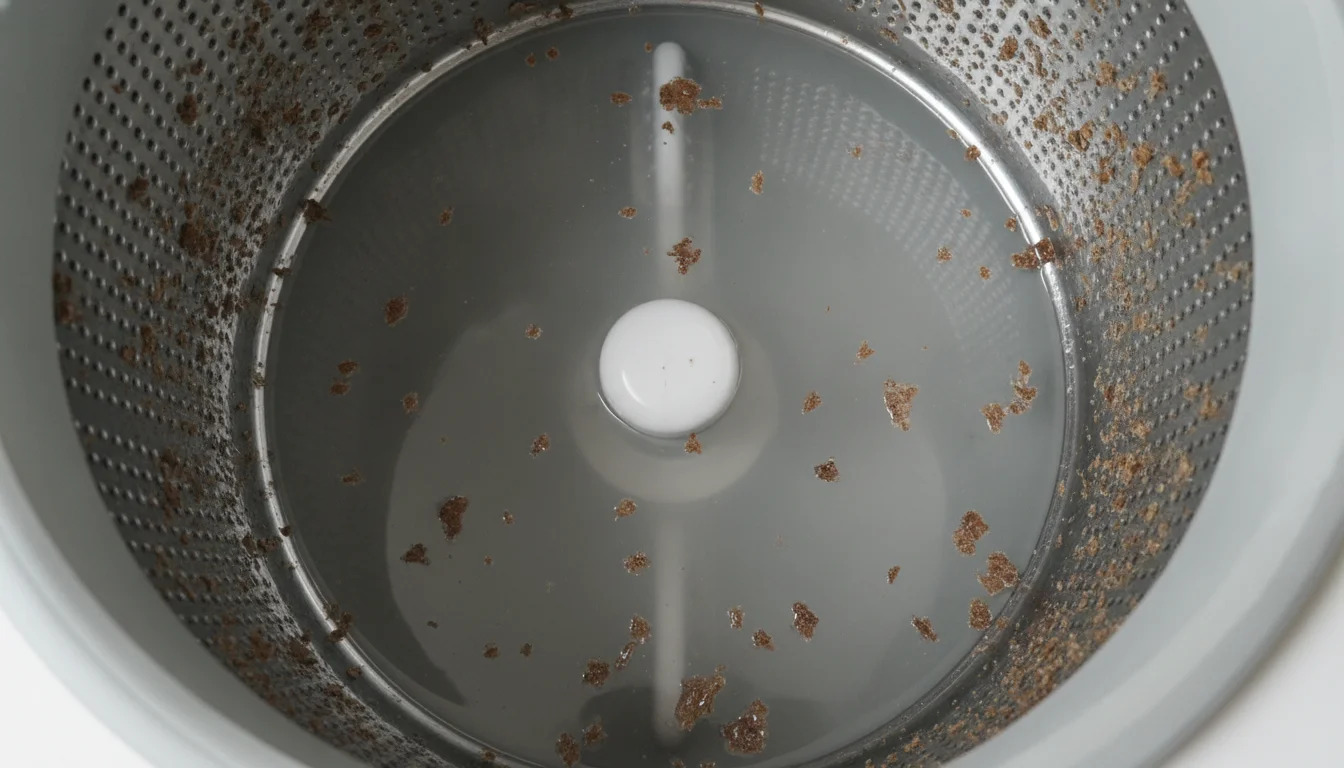
Here’s how to get rid of brown flakes in washing machine loads, starting with the bit most people get wrong: the flakes aren’t coming from your clothes. They’re coming off the inside of the machine: old detergent, fabric softener, lint and minerals that built up where you can’t see, hardened, and are now breaking loose a piece at a time. Repair people call it scrud.
Here’s the part nobody warns you about. The first proper clean usually makes it look worse. People run a cleaner pod or the tub clean cycle and get a flood of brown flakes they never saw before. That’s the buildup leaving, which is the point.
Before you start, make sure it really is scrud and not rust or mold, because those need different fixes. Then work through the cleaning methods, top to bottom, and change the two habits that put it there.
What the flakes are and what causes them
Pick one up and rub it between your fingers.
- Scrud: soft or waxy, smears when rubbed, brown to gray, and the machine often smells musty. This is the common one, and everything below is aimed at it.
- Rust: hard and gritty, with reddish-brown marks on clothes and rust spots under the lid or rim. In a top loader the outer tub is often metal, and on older machines it can corrode and shed flakes. Cleaning won’t fix that (see the last section).
- Mold: dark and slimy, and usually living in the rubber door seal of a front loader. Method 4 deals with it.
Scrud builds from a handful of habits: too much detergent (liquid especially), liquid fabric softener, washing only in cold water, and hard water. Pod casings and dissolving laundry strips that don’t fully break down in cold washes add to it.
1. Run a hot cleaning cycle
Empty drum, hottest and longest cycle, and something that actually dissolves residue. Two options that hold up:
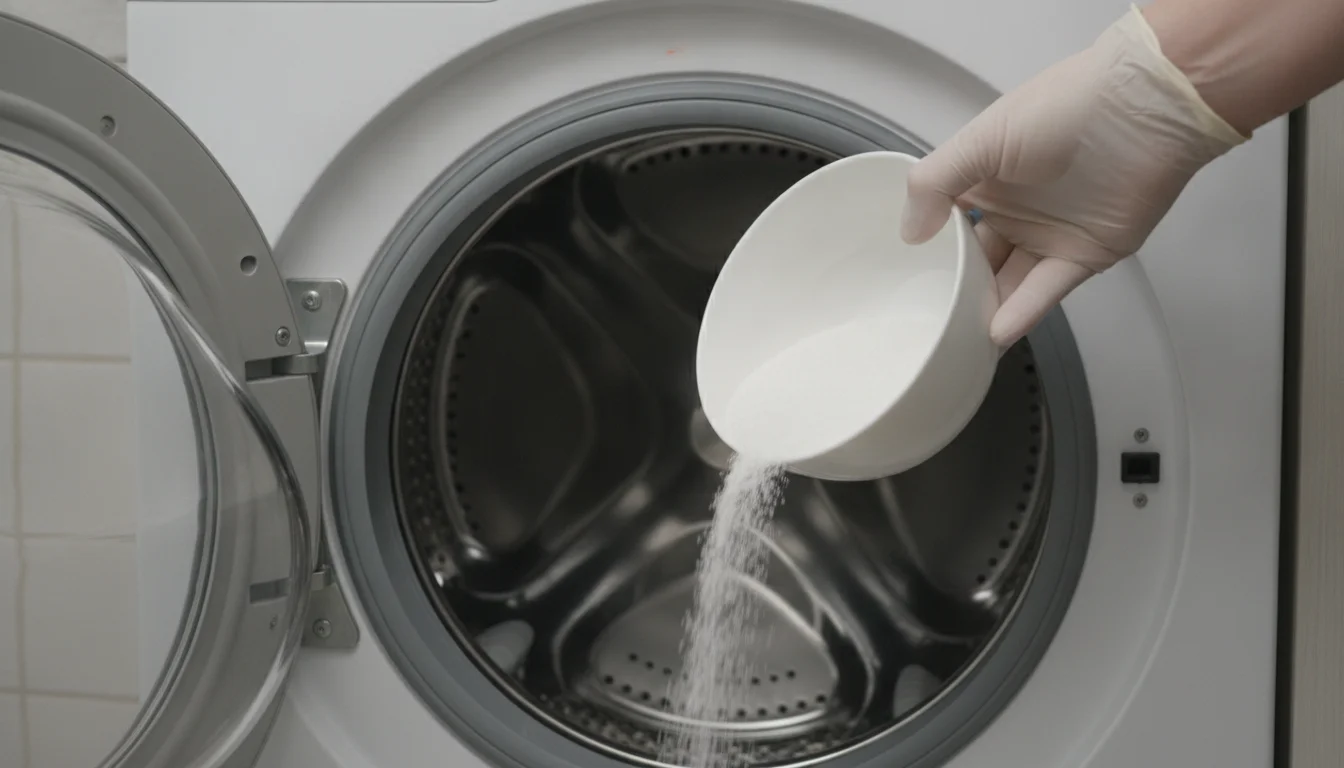
- Citric acid: pour 1 cup (240 ml) of citric acid crystals straight into the drum and run the hottest full cycle. Follow it with an extra rinse cycle before you wash clothes.
- The machine’s own tub clean cycle: Samsung, for one, tells owners with visible residue to add 1 cup (240 ml) of liquid chlorine bleach to the bleach compartment, run Self Clean with nothing else in it, then run Rinse+Spin. Don’t leave bleach sitting in the tub afterward; Samsung warns it can cause rust. Check your own manual before you put bleach through your machine.
Never run citric acid, vinegar or any other cleaner in the same cycle as chlorine bleach.
What about plain vinegar? People with heavy scrud report running vinegar and baking soda cycles day after day for weeks and still finding flakes. It’s fine for upkeep. It’s not enough for years of buildup.
2. Soak the tub in oxygen bleach
This is the one for heavy buildup, and the pause is what makes it work. Put oxygen bleach powder (sodium percarbonate) directly in the empty drum at the dose on the tub, start the hottest, longest cycle, and let it agitate for 5 to 10 minutes. Then pause it and leave the hot water to soak for 30 minutes to an hour. Resume and let it finish.
Hot water is not optional here. Cool water won’t break scrud down.
Afterward, wipe the drum, agitator, lid and dispensers with a damp cloth. Expect to repeat it. One owner, two weeks in, described the result as “objectively a lot better, but with bits still clearly floating around.” Keep going until the drum wipes clean.
3. Clean under the agitator or pulsator
Top loaders only, and this is the step most guides skip. A cleaning cycle sloshes water under the agitator but nothing scrubs there, so sludge sits for years.
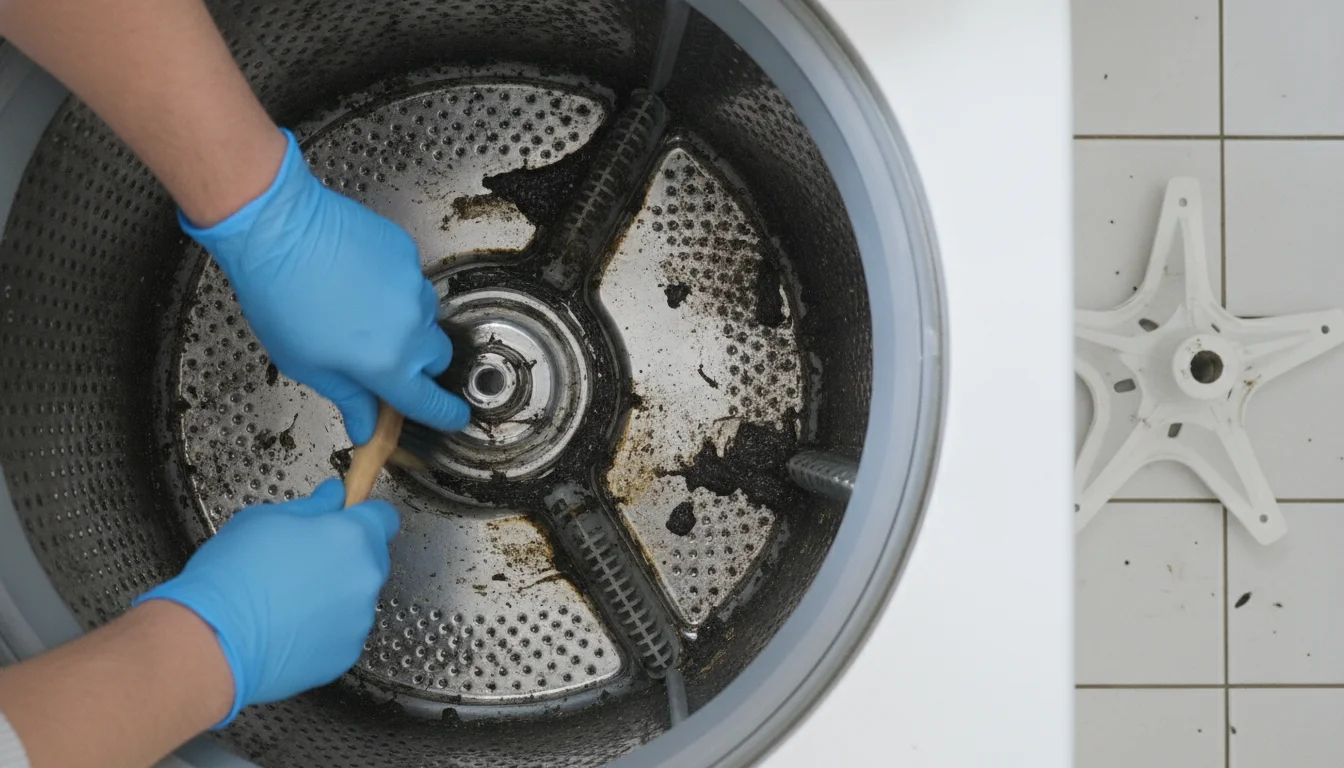
Unplug the machine. Pop the cap off the agitator, undo the bolt inside with a socket wrench and lift it straight up. On a machine with a low wash plate (a pulsator), take the plate off instead. Scrub underneath and inside with warm water and a soft brush. A toilet brush gets down the hollow agitator column, and a fish tank net is handy for scooping out what floats up. Wipe the ring at the top of the tub too, under the rim. Refit, then run a hot rinse.
If the bolt won’t move, don’t force it. Some use a reverse thread.
4. Clean the door seal
Front loaders. Pull back the rubber seal and wipe out the folds, where lint, soap and mold collect. An old toothbrush gets into the crease where seal meets drum. Dry it afterward.
5. Clean the detergent drawer
Pull the drawer out and scrub every compartment in warm soapy water with an old toothbrush. The fabric softener compartment is usually the worst. On a top loader with a softener cup on the agitator, clean that too; owners who do often find the same buildup underneath it.
6. Use the right amount of detergent
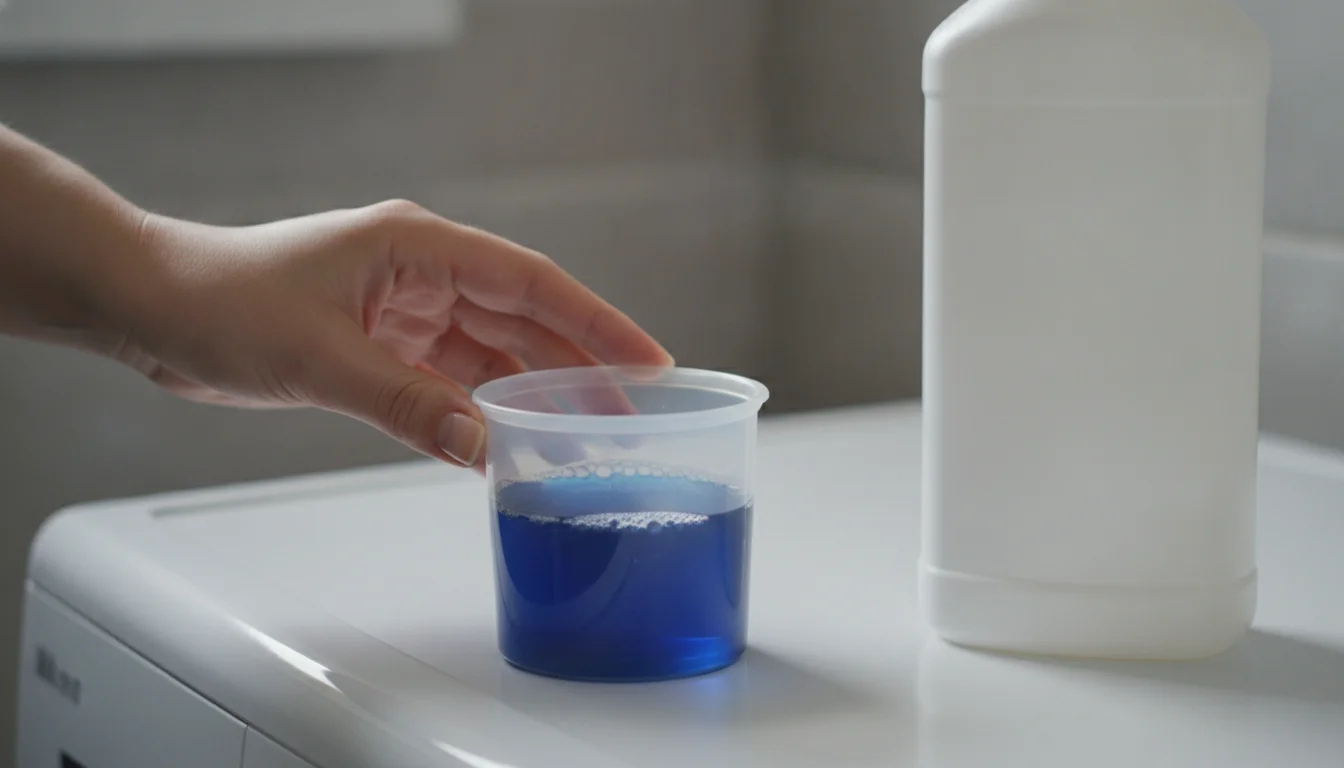
Too much liquid detergent is one of the most common reasons flakes come back after a deep clean. Measure it. Use the dose on the label for your load size, not a glug from the bottle.
7. Skip liquid fabric softener
Softener is the other main ingredient in scrud. It’s made to stay behind, and in cold washes it stays behind in the machine too, binding with leftover detergent into the waxy layer you’ve been scrubbing off. Stop using it while you clear the buildup. If you add it back later, use the smallest dose, keep it in its own compartment and watch for flakes.
8. Leave the door or lid open between washes
Two seconds, no cost. Letting the drum dry out between loads stops new buildup before it hardens.
How to keep it from coming back
Run your machine’s tub clean cycle about once a month (Samsung says monthly or every 20 cycles), or an empty hot cycle if it doesn’t have one. Do a hot wash now and then if you mostly wash cold. Keep detergent at the label dose, drop or cut back softener, and leave the door open. For a washer that smells rather than sheds, see how to get rid of washing machine smell; it’s a different problem with different fixes.
When to call a technician
A top loader has an outer tub around the drum you can see, and buildup on its walls can’t be reached from inside. Members of one appliance forum say most of the crud sits on the upper third of that outer tub. If flakes keep coming after several hot cleans and a clean under the agitator, that’s where they’re from. Getting at it means lifting out the inner tub, which usually means undoing a large tub nut and knowing which way its thread runs. On many LG top loaders that nut is about 1.4 to 1.5 in (36 to 38 mm), but the size varies. Cleaning chemicals alone often won’t shift scrud that’s set there.
Call a technician if:
- Flakes come back right after a full clean.
- You can see rust inside the tub.
- The washer leaks or grinds.
- You’re not comfortable stripping the tub yourself.
Frequently asked questions
Why do my clothes have brown bits on them after washing?
Almost always scrud breaking off the inside of the machine. It isn’t damage to the clothes. Clean the machine first, then rewash anything with flakes stuck to it, because they can mark whites.
Why is my washing machine leaving black flakes on my clothes?
Dark, slimy bits are usually mold from the door seal or the dispenser. Dark buildup also collects in the open base of some top loader agitators. Clean the seal, the drawer and under the agitator, then run the hot clean.
Why did flakes appear right after I cleaned the washer?
Because the cleaner loosened buildup it couldn’t fully flush out. It’s common after a first cleaner pod or tub clean cycle. Keep cleaning and the flakes should taper off. If they don’t after several rounds, the source is the outer tub.
How do I remove mold flakes from my washing machine?
Wipe the door seal folds and the detergent drawer by hand, then run a hot cleaning cycle. Dry the seal and leave the door open so it doesn’t come back.