Table of Contents
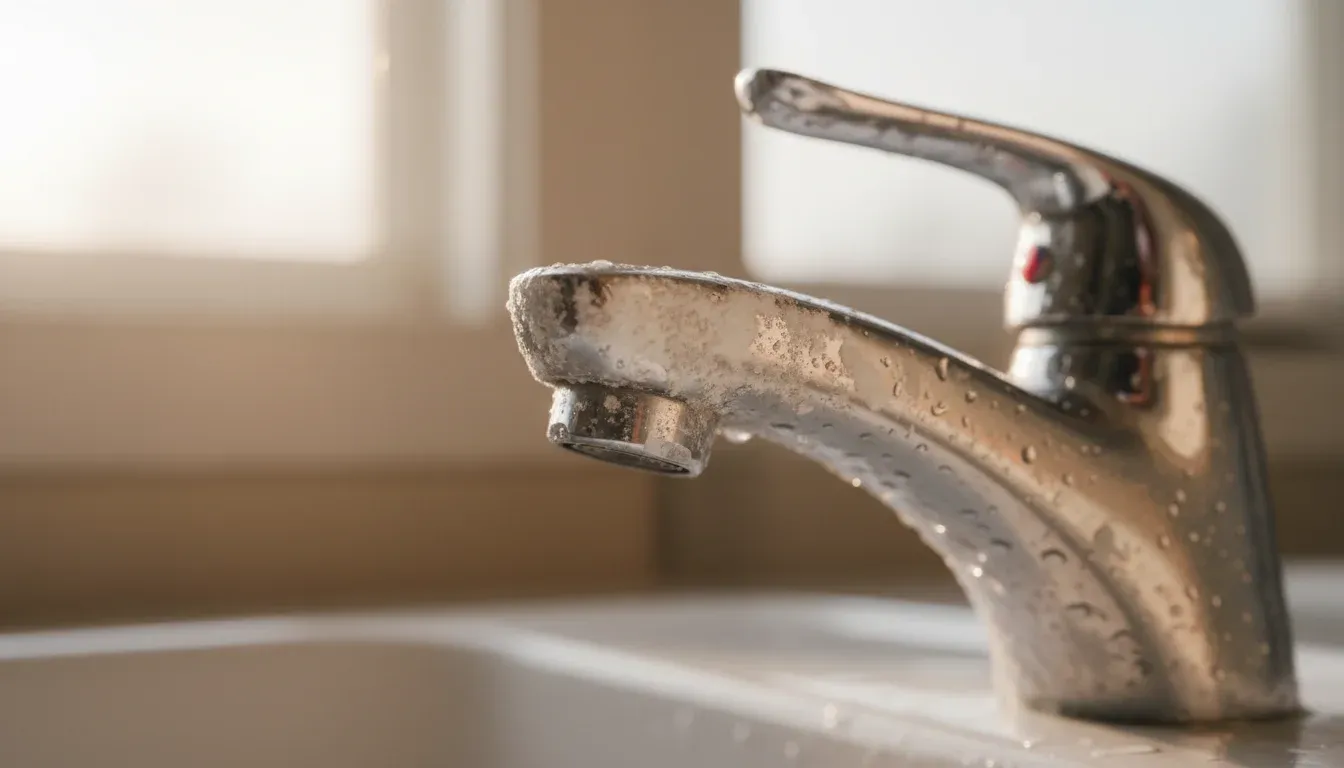
Chalky faucets, spotty glassware and a showerhead that dribbles are the visible face of hard water issues, all tracing to one cause: dissolved calcium and magnesium left behind when hard water dries. The deposit is limescale, and it does more than look grubby. Left alone it narrows pipes, coats heating elements and shortens the life of every water-using appliance you own. Most guides either hand you one vinegar trick or steer you straight to a water softener sale. This one does both ends and the middle: dosed pantry fixes for what you can see today, appliance-specific maintenance, the permanent softener option, and the free habit that stops scale coming back. Start cheap and escalate only if the buildup demands it.
What Causes Hard Water Issues
Hard water is simply tap water carrying a high load of dissolved minerals, mainly calcium and magnesium, picked up as groundwater moves through rock and soil. Hardness is graded in milligrams per litre: under 60 mg/L is soft, over 180 mg/L is very hard. The harder your water, the faster the spots return.
The deposit itself is mostly calcium carbonate, which barely dissolves in water. That is why plain water and general sprays do so little, and why an acid or an abrasive is the only thing that shifts it. Scale forms fastest where water is heated or left to evaporate, so kettles, water heaters, dishwasher heating elements and shower glass suffer first.
1. White Vinegar Soak for Fixtures
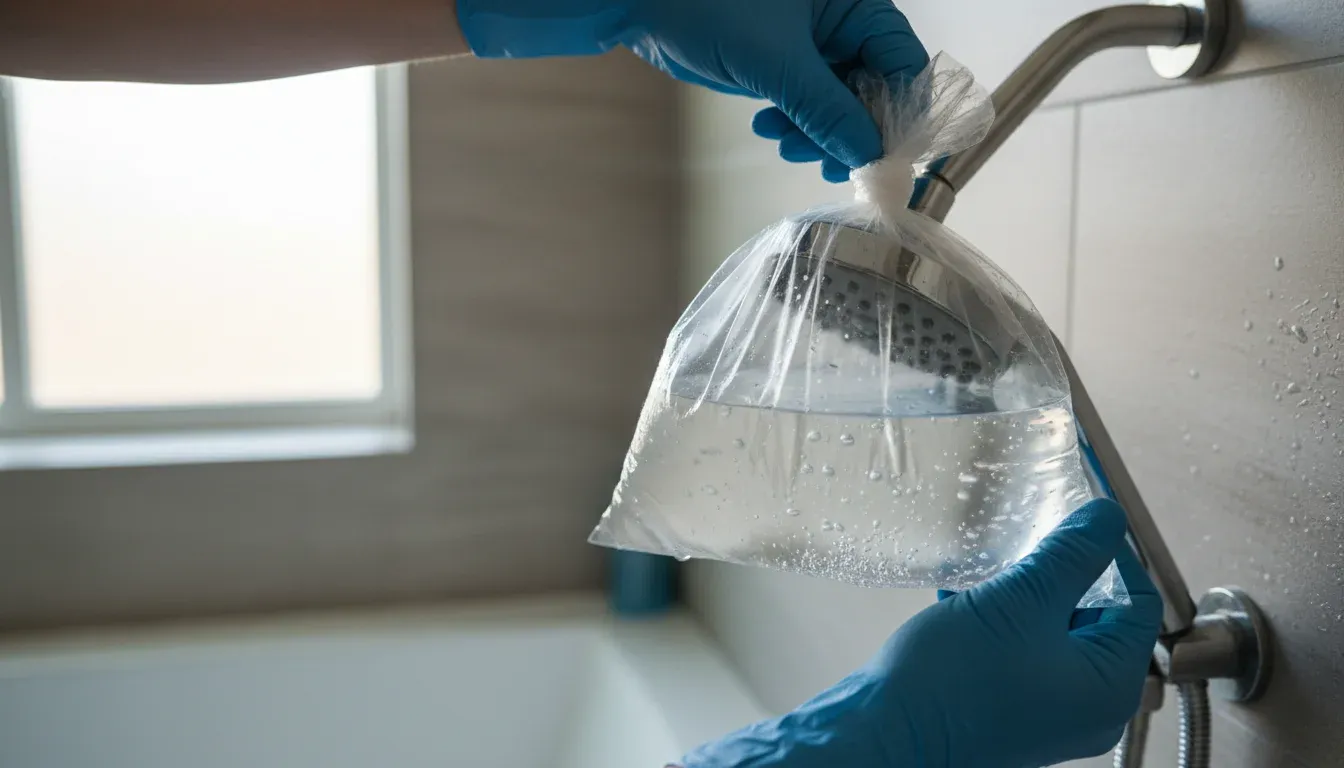
White distilled vinegar is the first thing to reach for, and often the only thing you need. Its acetic acid dissolves calcium deposits cheaply and without scratching chrome, stainless steel or porcelain. For a showerhead or faucet aerator, half-fill a plastic bag with equal parts vinegar and warm water, secure it over the fixture with a rubber band so the affected part is submerged, and leave it 30 minutes to 2 hours depending on how thick the crust is. Remove the bag, scrub with an old toothbrush, and run the water to flush loosened grit. For tap bases and handles you cannot bag, wrap them in vinegar-soaked paper towels for an hour before scrubbing. On glass shower doors, spray it neat, wait 10 minutes, then wipe.
2. Baking Soda Paste for Scrubbing
When you want abrasion rather than acid, baking soda scours off mineral deposits without marking the surface. Mix 3 parts baking soda to 1 part water into a thick paste, spread it on sink basins, toilet bowls or tile grout, and leave it 15 minutes before scrubbing with a non-scratch sponge or nylon brush. It pairs well with vinegar for stubborn glass: spray the vinegar first, then sprinkle baking soda onto the damp surface and let the fizz lift the scale before you wipe. Rinse well and dry the surface so fresh spots do not form as the water evaporates.
3. Citric Acid Solution for Heavy Buildup
For limescale that shrugs off vinegar, citric acid hits harder. Buy it as a powder from the grocery store or online and dissolve 2 tablespoons in 1 cup of hot water to soak loose, removable parts like aerators and kettle filters. Inside appliances such as kettles, coffee makers, humidifiers and dishwashers, use citric acid only where the manual permits it: some makers forbid it and require their own descaler (Bosch coffee makers, for one), so read the manual first and follow its descaling dose and cycle exactly. Citric acid breaks the mineral bonds more aggressively than vinegar and leaves a clean citrus smell instead of a sour one.
4. Denture Tablets for Small Parts and Nooks
This is the trick most articles skip. Effervescent denture tablets reach the tiny channels a brush cannot. Drop 2 to 3 into a bowl of warm water and submerge small removable parts: sink aerators, shower hose connectors, or the mesh inlet filter from a washing machine hose. The bubbling lifts deposits out of the threads and internal passages. Soak 30 minutes, rinse, reinstall. The same tablets clear a cloudy mineral film from glassware: fill the glass with the solution and let the fizz lift the film. This works only on a removable film; if hard water has truly etched the glass, that damage is permanent and no soak will reverse it.
5. Commercial Descaling Products
When DIY runs out of road, a targeted product saves time. For severe appliance limescale, look for descalers built on sulfamic or hydrochloric acid. General removers like CLR or Lime-A-Way handle toilets, tiles and glass, but test a small area first and wear gloves. For washing machines and dishwashers, use an appliance-specific cleaner such as Affresh once a month; the surfactants cling to vertical surfaces and clear biofilm along with the minerals. Follow the label exactly, because overuse can perish rubber seals or etch some metals.
6. Install a Water Softener System
The only permanent fix is to strip the minerals out before they reach your plumbing. An ion-exchange softener passes hard water through resin beads that swap the calcium and magnesium for sodium. A 32,000-grain unit suits a household of four. Fitting one needs plumbing work: a confident DIYer can manage it, otherwise professional installation runs roughly $1,000 to $2,500. If you are watching sodium, a salt-free conditioner is the alternative; it crystallises the minerals so they cannot stick, though it does not truly soften the water, and runs $300 to $1,000. One caveat: softeners discharge a salty brine, and some areas restrict them for that reason, so check local rules before you buy.
7. Dishwasher Rinse Aid and Filter Maintenance
To kill spots on dishes straight away, fill the rinse-aid reservoir with a proper dishwasher rinse aid like Jet-Dry. Do not pour white vinegar into the reservoir as a stand-in: its acidity can damage the hoses, gaskets and other internal parts over time. Rinse aid changes how droplets bead and run off so minerals never crystallise on the glass. At the same time, clean the filter monthly: scale traps food particles into a gritty sludge that redeposits on clean dishes. Pull the bottom rack, twist out the cylindrical filter, and scrub the mesh with hot soapy water and a bottle brush until every hole is clear.
8. Wipe Surfaces Dry After Use
The cheapest fix is to deny the water time to dry. Spots form only when hard water sits and evaporates, so remove it first and nothing can build. Keep a squeegee in the shower and pull it down the glass and tiled walls after every wash; 30 seconds clears most of the water. Wipe taps and the sink with a microfiber cloth, and dry glassware by hand rather than leaving it to drain. It does not touch existing scale, but it stops new spots and stretches the gap between deep cleans further than any spray.
Frequently Asked Questions (FAQ)
What causes hard water stains?
Dissolved calcium and magnesium. When hard water lands on a surface and evaporates, those minerals stay behind as a chalky, mostly calcium-carbonate deposit. The higher your water’s hardness, the faster and thicker the stains return.
Does vinegar really remove hard water buildup?
Yes, for most everyday deposits. The acetic acid dissolves calcium carbonate, so a soak or a neat spray clears faucets, glass and showerheads cheaply. Its limit is thick, old scale inside appliances, where citric acid or a commercial descaler works faster.
Is hard water bad for your health?
No. Hard water is safe to drink; the calcium and magnesium are the same minerals found in food. It is a maintenance nuisance, not a health problem. Its damage is to fixtures, appliances and your cleaning time, not to you.
What is the permanent solution to hard water?
A water softener. It removes the minerals at the point they enter your home, so scale and spots stop forming everywhere at once. Everything else on this list treats the symptom; the softener treats the source.
How do I stop hard water spots on glass?
Dry the glass before the water can evaporate. Squeegee shower doors after each use and hand-dry glassware. A rinse aid in the dishwasher stops spots on dishes, and a monthly vinegar wipe keeps shower glass clear.