Table of Contents
A washing machine smell defeats the entire point of doing laundry. Instead of fresh, clean clothes, you pull out garments that smell musty or like stagnant water. The irony is painful: the appliance that is supposed to do the cleaning is itself filthy.
Odors come from a buildup of detergent residue, fabric softener, dirt and moisture that gives bacteria and mold somewhere to grow. Front-loaders are especially affected: the rubber door seal traps water and detergent residue, and the tight door keeps moisture in. But top-loaders are not immune, and any machine that is not cleaned now and then will eventually start to stink. If that buildup is coming off as brown flakes on your laundry, that is a separate problem with its own fix.
Here’s how to clear the smell and keep it from coming back.
1. Clean the detergent drawer
Pull the detergent drawer right out of the machine. Most slide out with a firm tug, or after you press a small release catch. Inside you will usually find a sludge of old detergent and softener residue, often with black mold in the corners.
Wash the drawer in warm, soapy water and use an old toothbrush to get into the narrow compartments and the underside where gunk collects. The softener compartment is usually the worst, so give it the most attention.
While the drawer is out, look into the cavity it sits in and wipe any visible surfaces with a damp cloth. Let everything dry before you put it back, and consider leaving the drawer slightly open between washes so air can reach it.
2. Clean the door seal
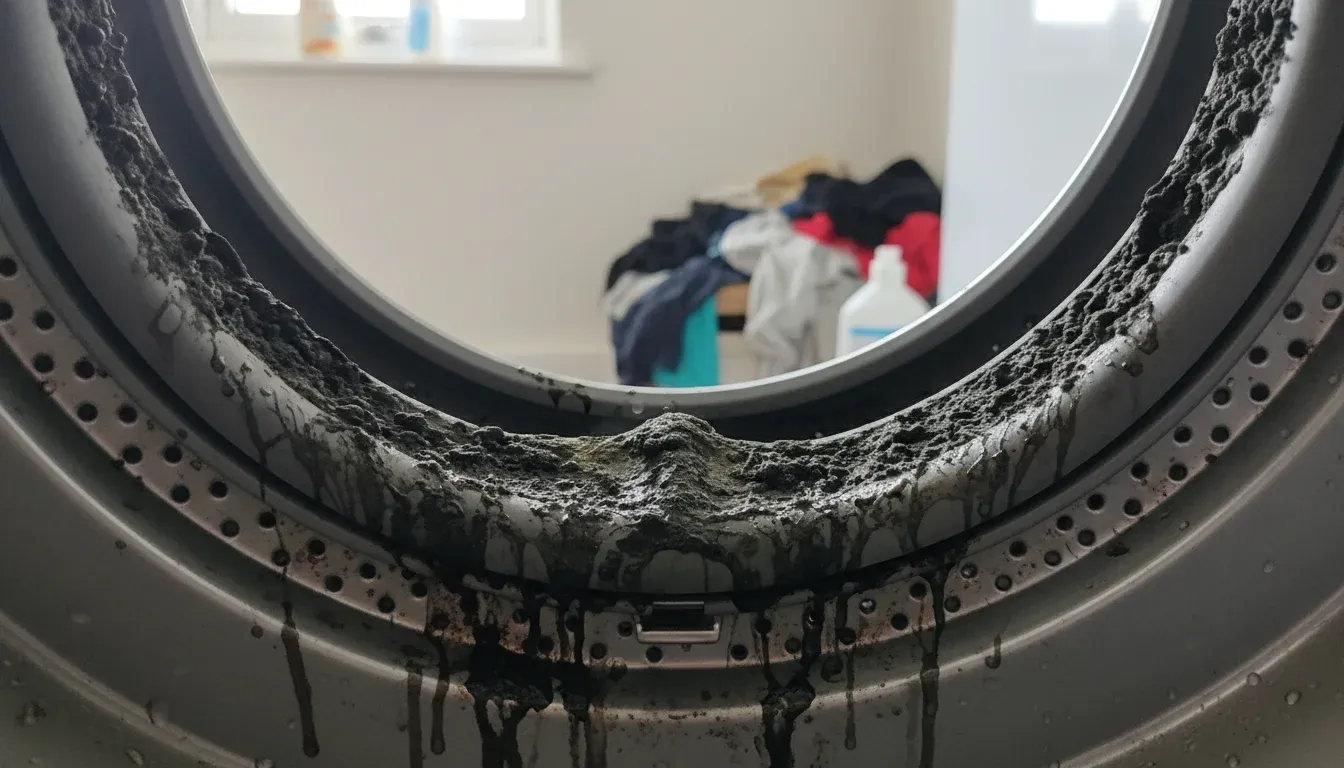
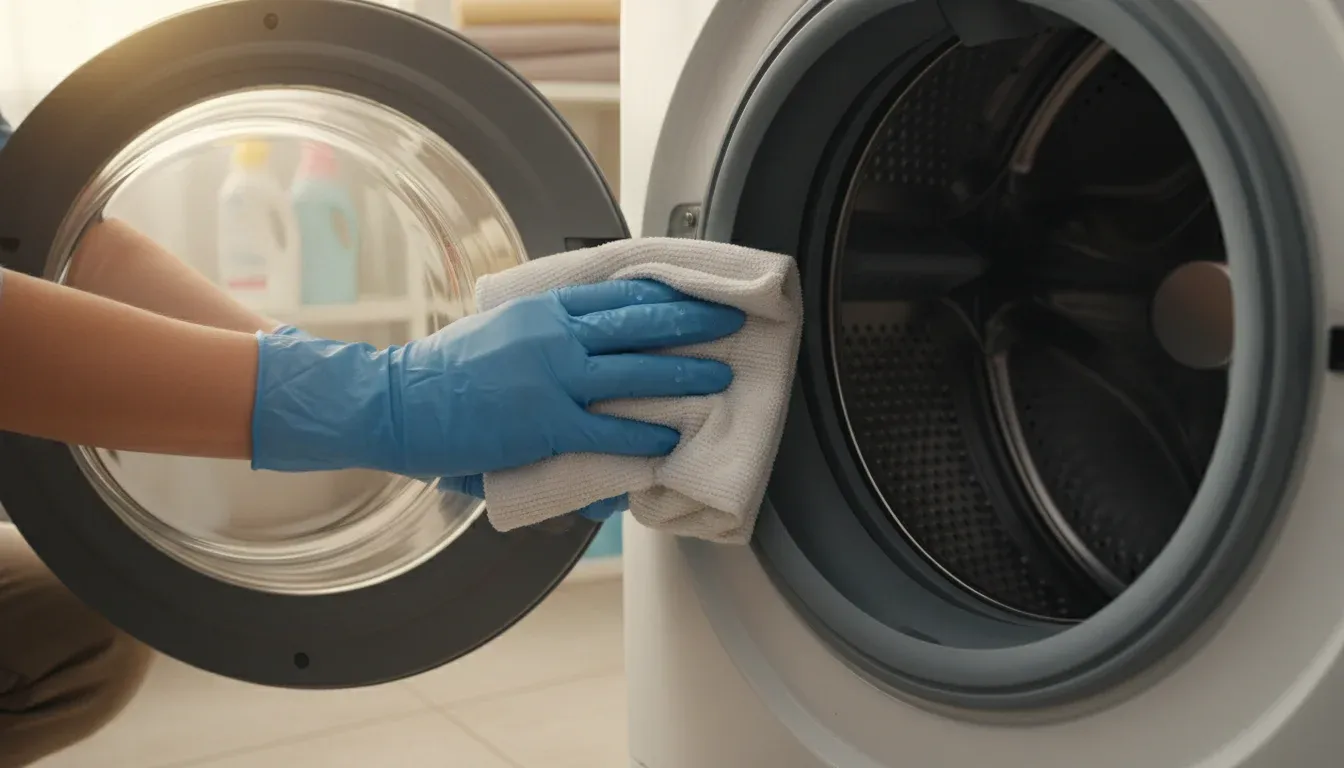
The rubber door seal, or gasket, is the number one place odors start on a front-loading machine. Water and detergent residue collect in the folds, along with the lint that comes off your laundry, and that damp mixture is where mold and mildew take hold.
Pull the seal back to expose the inner surfaces. You will probably find hair and slime worked into the folds, often with black mold. Manufacturers such as Samsung recommend warm water with a mild soap, and Whirlpool suggests a damp cloth or a cleaner approved for your model, so check your manual before you reach for anything stronger. Vinegar is acidic, though, so Whirlpool steers owners to warm water and a mild soap for the rubber and warns that vinegar can wear on the seal over time.
For stubborn spots, work an old toothbrush into the folds, and get right down to where the seal meets the drum, because that is where the worst buildup hides. Dry the seal with a towel when you are done.
Make this a weekly habit: after your last wash, wipe the seal dry and leave the door open for a few hours. Samsung recommends exactly this, a weekly gasket wipe with thorough drying and an open door, to keep mold and musty smells from taking hold.
3. Clean the drum
With the seal and drawer done, run a cycle to clean the drum itself. The simplest option is a washing-machine cleaner, a tablet or liquid made for the job, used exactly as the packet says and on the cycle it tells you to run. Many machines also have a dedicated tub-clean or self-clean cycle; use it if yours has one.
Chlorine bleach will also sanitize the drum, but only where your manufacturer approves it, and never mixed with any other cleaner. Whirlpool warns against running white vinegar through the machine at all, because the acid can wear on the rubber seals and hoses inside, so reach for a cleaner made for washers rather than a vinegar cycle. When in doubt, check your manual before you use anything but a product made for the job.
When the cleaning cycle finishes, run a short rinse or spin if you can still see any residue.
4. Clean the filter
Most front-loading machines have a drain-pump filter behind a small flap or panel near the bottom front. It catches hair and lint, along with the odd coin that works its way out of a pocket, before any of it reaches the pump, and it holds the organic gunk that rots and smells. Top-loaders often have no filter you can reach, so check your manual to see what your machine has and where.
Before you open it, put a towel on the floor and a shallow container underneath, because water will run out. Samsung’s own instructions say the same. Unscrew the filter cap slowly and let the water drain, then pull the filter out and rinse it under warm water.
You will usually find a wad of hair and lint bound up with sludge. Clean it off, check the housing for anything left behind, and screw the cap back on firmly without overtightening.
Clean the filter about once a month; Samsung suggests roughly every 40 washes. If you have pets or long hair in the house, check it more often. A clogged filter holds rotting gunk that smells, and it can stop the machine draining as it should.
5. Leave the door open between washes
Prevention is easier than a cure. The simplest way to stop odors coming back is to leave the door open when the machine is not running, so air can move through and dry out the moisture that bacteria need. Whirlpool makes the same point: fresh air evaporates the water left behind that would otherwise start to smell.
If children or pets mean you can’t leave the door wide open, prop it open a few inches with a folded towel. Even that much of a gap lets the drum dry out.
Do the same with the detergent drawer and leave it pulled out a little, so air reaches the drawer and the tube behind it instead of stagnant moisture sitting there.
Corrections
- 2026-09-17: Removed a step that told readers to pour boiling water into the detergent drawer. It was an unsupported instruction, and manufacturers direct owners to warm rather than boiling water, so the safe drawer-cleaning steps now sit under “Clean the Detergent Drawer”.
- 2026-09-17: Rewrote the drum step. The old version told everyone to run two cups of white vinegar through the machine; Whirlpool warns that vinegar can damage internal parts, so the step now points to a washing-machine cleaner or, where the maker approves it, bleach. Removed the claim that this treatment kills odor-causing bacteria and the baking-soda “foaming scrub” claim, neither of which a manufacturer supports.
- 2026-09-17: Clarified that the drain-pump filter is a front-load feature and that top-loaders may not have one you can reach, with a pointer to your manual.
- 2026-09-17: Removed unsourced figures: a claim that the gasket routine “prevents 90% of odor problems”, a two-week filter schedule for homes with pets or long hair, and a warning that a clogged filter can burn out the pump.
- 2026-09-17: Reworked the vinegar guidance for the door seal. An earlier line told readers to keep vinegar for wiping the seal; Whirlpool warns vinegar is acidic and can wear on the rubber over time, so the seal step now recommends warm water and a mild soap and treats vinegar as an occasional owner option.