Table of Contents
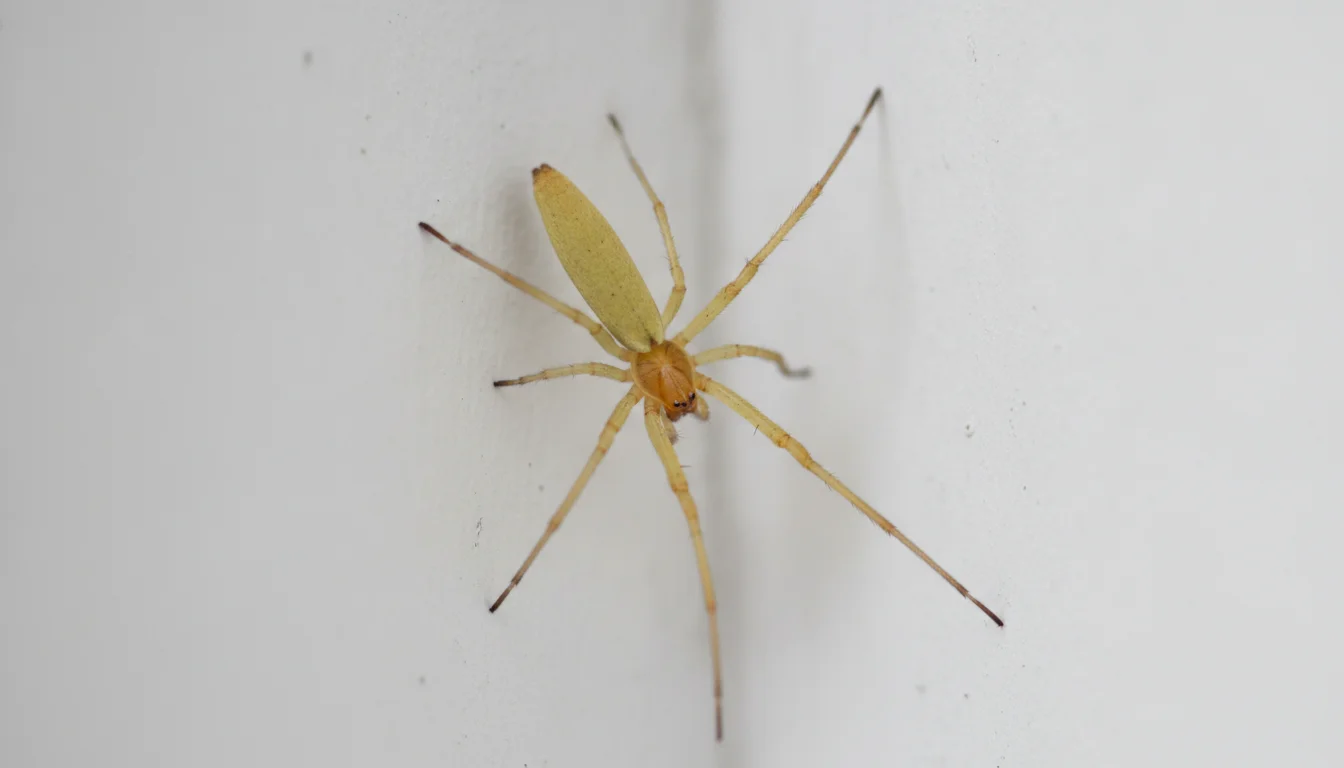
Pale spider on the ceiling at 11 p.m., gone by morning. Odds are good that’s a yellow sac spider, and the reason you can’t find it in daylight is that it doesn’t live in a web. It hunts at night and spends the day zipped into a small silk pouch where a wall meets the ceiling, or behind a picture or a shelf. That pouch is the key to how to get rid of yellow sac spiders.
Most of what ranks for this topic is pest-company copy that ends in a booking form. The useful version is shorter: make sure it isn’t a brown recluse, pull the retreats in daylight, catch the night wanderers on sticky traps, and do your sealing in August and September, before they move in for the winter. Sprays come last, and there’s a good reason for that.
Why yellow sac spiders come indoors
Two species do most of the trespassing in the US. Cheiracanthium inclusum is a native garden spider that hides under rocks and bark by day. Cheiracanthium mildei was most likely brought over from Europe in the 1940s and is the one more likely to set up inside homes, according to the Bohart Museum of Entomology at UC Davis.
The timing is the big clue. In late summer and early fall, both species move into buildings (and cars) to spin cocoon-like silk shelters and overwinter. The ones you find in October are mostly immature spiders that will molt once more and reach adulthood in spring. That’s why Colorado State’s extension service calls them the most common spider found wandering in homes in fall, usually at night.
They follow food, too. Sac spiders wander where flies are plentiful, so a bright porch light that pulls in insects is an invitation. And they hitchhike: in produce such as grapes, in boxes and machinery, and as egg sacs tucked under vehicles.
1. Make sure it’s a yellow sac spider
Do this first, because it changes how worried you need to be. Most pale house spiders are harmless, and this one is close to it. A yellow sac spider’s body is 1/5 to 2/5 inch (5 to 10 mm) long, not counting the legs. The abdomen is pale yellow, white or greenish, and the front body and legs are darker. The legs end in dark brown to black tips that look like little socks, and the front pair is noticeably long. It has eight eyes in two horizontal rows. Disturb one on the ceiling and it will often drop to the floor on a silk thread.
A brown recluse is cream to dark brown, has a dark violin shape on the top of its front body, and has six eyes arranged in three pairs. Different color, different eyes, different spider.
Not sure? Trap it in a clear jar and take it (or a sharp photo) to your county extension office.
2. Vacuum the daytime silk retreats
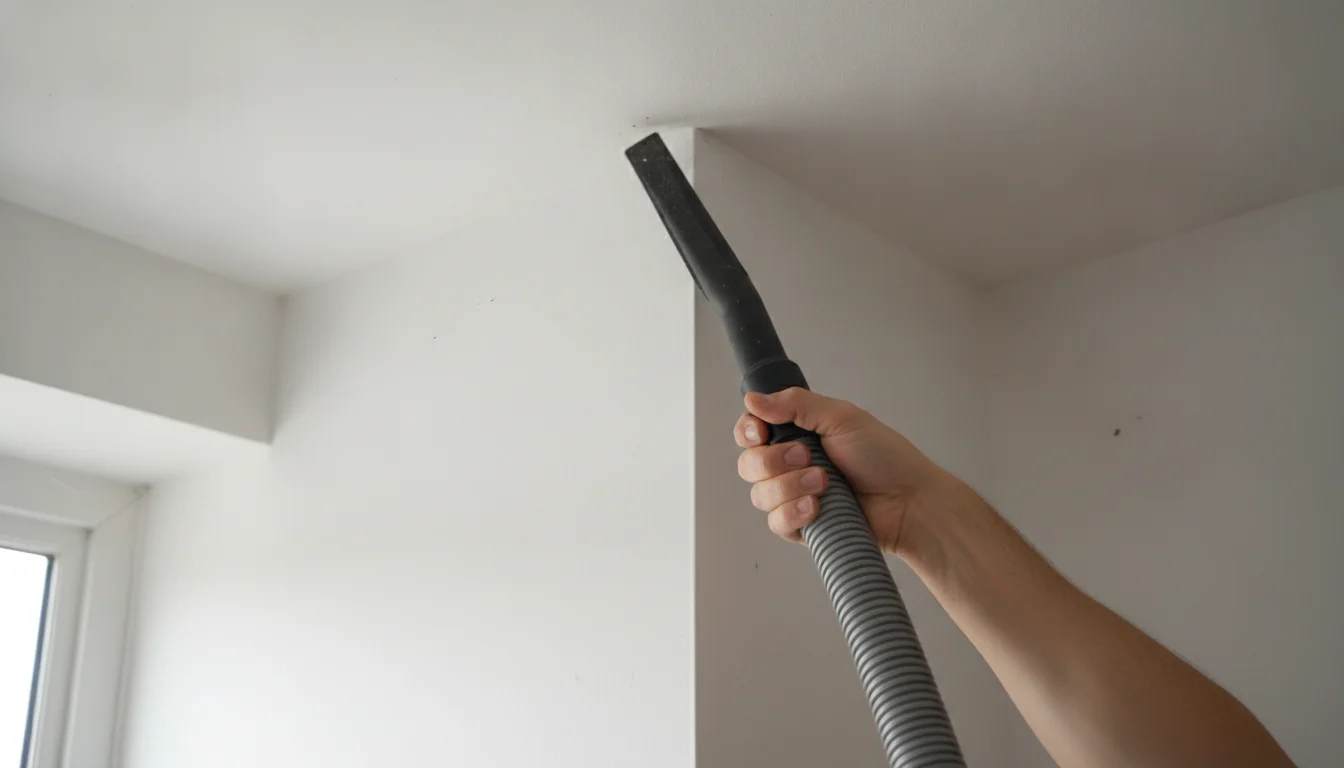
This is the method that actually empties a house. The spider spends the day inside a flat silk sac or tube, so a daytime vacuum run takes the spider and its shelter in one pass.
Grab a flashlight and check the places these spiders favor: the upper corners of rooms, the seam where walls meet the ceiling, cracks in walls, window frames, and behind pictures and shelves. Lift pictures off the wall and look at the back.
Use the hose attachment and take the silk with it. Soft-bodied spiders usually don’t survive the trip through the hose, but empty the canister or bag outdoors into a sealed trash bag anyway. Silk coated in dust is old and empty; clean silk means someone’s home. Go weekly from late summer through fall.
3. Catch the odd one in a jar
For the single spider crossing the kitchen floor at midnight, a clear glass jar and a stiff card are enough. Put the jar over it, slide the card underneath, lift the two together and tip the spider out well away from your doors. Utah State’s extension service lists this alongside simply stepping on it. Either works; the jar also gives you a specimen if you still need to confirm what it is. It removes one spider, though, not the ones asleep in the corners.
4. Put sticky traps where they walk
Glue boards catch what walks across them, which is exactly what a sprayed surface fails to do against a hunter that never sits in a web. Place them flush against the bottom of walls, in room corners, under the bed and furniture, and in closets. Keep them where pets and kids can’t reach.
Check them every few days. The room with the most catches is the room to search hardest for retreats, and a trap that stays empty for weeks tells you that corner is clear.
5. Seal entry points before September
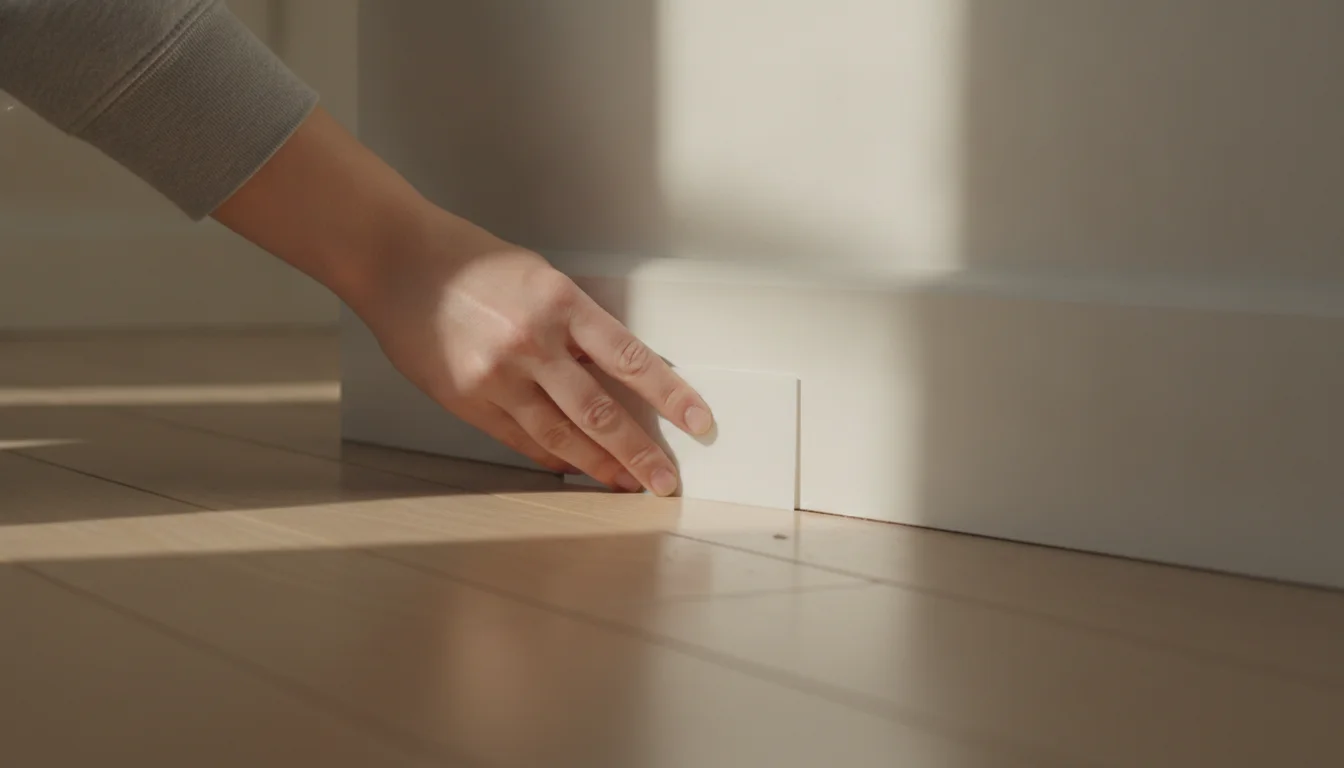
Sealing works best before the fall move indoors, not after. Walk the outside of the house and look for foundation cracks, gaps where utility lines and pipes go through the wall, openings around vents, and anywhere siding meets trim. Caulk the small gaps. For larger holes, fix hardware cloth or metal mesh over them first, then caulk the edges. If your brick has weep holes, stuff them with copper mesh so air moves but spiders don’t.
One Reddit user resealed their windows and cracks and replaced the door seal, and the spiders kept coming. That isn’t sealing failing. Sealing stops new arrivals; it does nothing about the ones already living in the ceiling corners. You need method 2 for those.
6. Fit door sweeps and weatherstripping
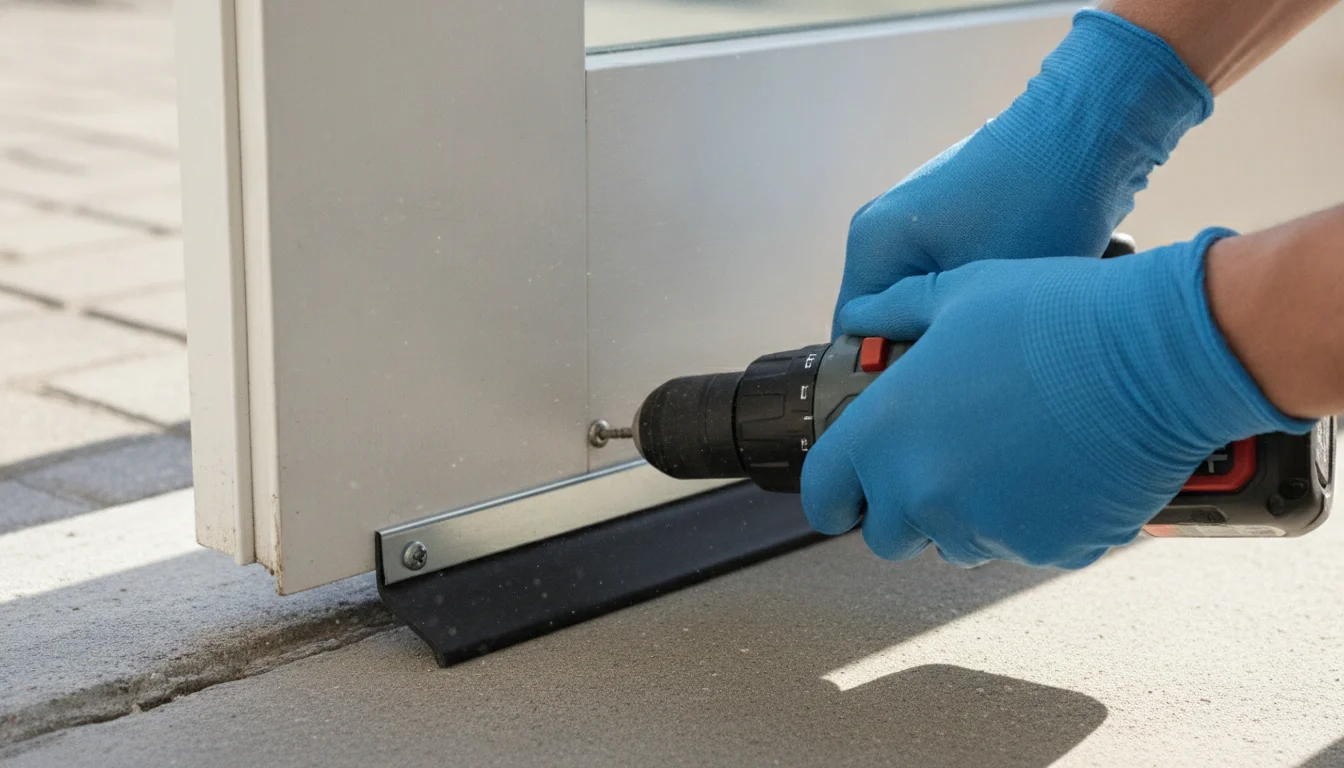
Stand inside at night with the room lit and look at the bottom of each exterior door. If you can see light from outside under the door, a spider can walk under it. Fit a rubber-blade door sweep to every exterior door so it touches the threshold all the way across. Replace weatherstripping that’s cracked or squashed flat. The door from the garage into the house is often the worst-sealed one in the place.
7. Fix screens and keep windows shut at night
Check every screen for tears and for frames that don’t sit tight in the track. Patch small holes with screen repair tape, or replace the screen. And because these spiders are out hunting after dark, an open, unscreened window on a fall night is an open door.
8. Change the porch lights
Spiders don’t come for the light; they come for the moths and flies the light pulls in. Swap white exterior bulbs for yellow bug lights or sodium vapor bulbs, which attract fewer insects. Put lights on motion sensors where you can, and keep fixtures away from doors and windows.
9. Clear cover away from the foundation
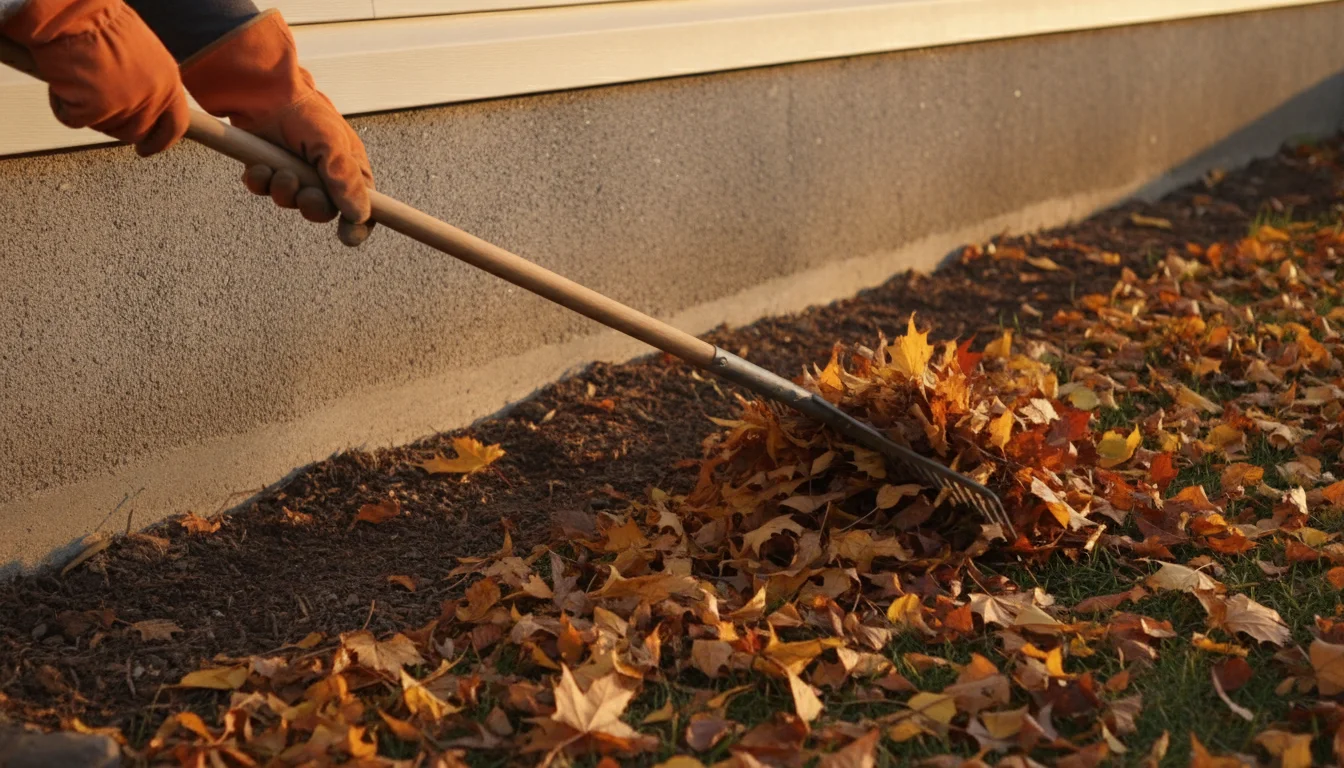
Outdoors, sac spiders hide under bark, rocks, leaf litter and in rolled-up leaves. Rake leaf litter and debris away from the base of the house, cut shrubs back so they don’t touch the walls, and pull climbing vines off the siding. A bare strip along the foundation means fewer spiders waiting next to your gaps when the nights turn cold.
10. Get storage off the floor and into bins
Clutter and stored boxes give them daytime shelter indoors. Move storage into plastic bins with tight lids, or tape the seams on cardboard boxes. Lift boxes off the floor and away from the walls. Firewood stays outside until you’re about to burn it; brought into a warm house, it wakes up whatever was overwintering in the bark.
11. Wear gloves and shake things out
Bites happen when a spider gets pressed against skin in clothing or bedding. So wear gloves when you clear clutter or move boxes, and shake out clothes, shoes and towels that have been left on the floor before you put them on. If you’ve been finding them on the bed, shake out the sheets before you get in.
12. Use insecticide last, and know its limits
Here’s the honest version. UC’s Integrated Pest Management program says pesticides rarely control spiders unless you actually see the spider and spray it, and that spraying is only temporary without the housekeeping above. Penn State’s extension service says most sprays, inside or out, do little to control spiders or keep them out. One Reddit user who tried several retail sprays reported no visible effect.
If you still want a barrier, the University of Kentucky lists bifenthrin, cyfluthrin, deltamethrin and lambda-cyhalothrin as effective perimeter ingredients. Treat door thresholds, garage and crawl space entrances, foundation vents and the bottom edge of the siding, and expect to reapply monthly or every other month in warm weather. Skip the bug bombs; they seldom work on spiders. Follow the label exactly, and keep pyrethroids away from ponds and fish tanks.
Prevention
Think of this as a calendar. In August and September, do the outside work: seal gaps, fit sweeps, fix screens, change the bulbs and clear the foundation strip. That’s the window before the fall move indoors.
From October on, do a weekly daytime sweep of ceiling corners and the backs of pictures, and keep a few sticky traps down to tell you whether any are still getting in. Keep firewood outside, keep storage in lidded bins, and look over produce such as grapes before it goes in the fridge.
When to call a professional
Call a pest control company if you’re still catching spiders week after week once you’ve removed the retreats, set traps and sealed the gaps. Also call one for gaps you can’t reach safely, such as second-story soffits, and for treating wall voids: UC IPM lists the silica dusts used in voids as products for professional applicators.
See a doctor about a bite if the pain keeps increasing, the swelling is extreme, or a sore keeps spreading or getting worse instead of healing, and get emergency help for any trouble breathing. If you can, catch or keep the spider so it can be identified.
Frequently asked questions
Are yellow sac spiders poisonous?
They’re venomous, but the bite is far milder than its reputation. A bite usually starts with an immediate sting, then redness and mild swelling. In 2006, spider researcher Rick Vetter’s team tracked bites where the spider was caught and identified; of 40 such bites, only one, in Europe, caused a small dead-skin wound about a quarter inch across. Their jaws are small enough that they can’t pierce everyone’s skin.
Should I kill a yellow sac spider?
Outdoors, leave them; they eat insects. Indoors, remove them. Colorado State’s extension service suspects they’re the most common source of spider bites inside homes, and those bites happen when one gets trapped against skin.
How do I get rid of yellow sac spiders in my car?
Sac spiders move into cars in fall, the same as houses, and their egg sacs often turn up underneath vehicles. Mazda recalled about 52,000 2009 and 2010 Mazda6 cars in 2011 because the spiders were spinning webs in the evaporative canister vent line. A blocked line can build up negative pressure, crack the fuel tank and leak fuel. A second recall covered about 42,000 2010 to 2012 Mazda6 cars with the 2.5L engine. Look up your VIN on NHTSA’s recall site, and get any fuel smell checked by a dealer or mechanic.
Why are there so many in the fall?
That’s when they move indoors to spend the winter. Most are immature spiders that will molt one last time and become adults in spring.