Table of Contents
The mouse that moves into your shed, garage or car in October usually isn’t a house mouse, and that’s the first thing to know about how to get rid of field mice. “Field mouse” is a loose name for any small wild rodent, but the one that comes indoors in North America is usually a deer mouse or a white-footed mouse: wild mice that live in fields, woods and brush and move in when the weather turns. (In the UK and Ireland the name means the wood mouse, a different animal. The disease and poison rules below are North American.)
That changes the plan in three ways. Deer mice carry hantavirus. Most mouse poison is labeled for house mice and rats, not for them. And you won’t clear them from the yard, because one deer mouse ranges over a third of an acre to 4 acres (1.6 ha) or more. So the job is keeping them out, trapping the ones inside, and cleaning up safely.
Field mouse, house mouse or vole?
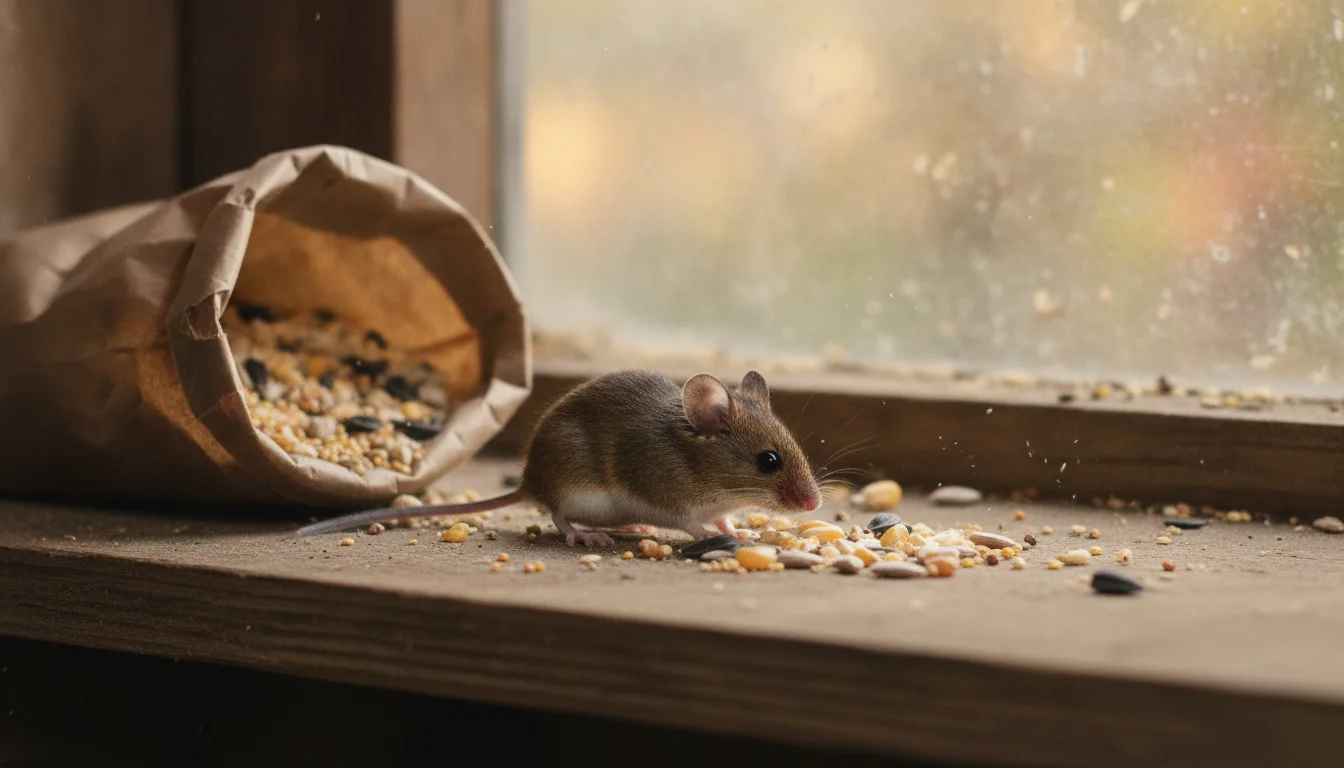
- Deer and white-footed mice have a brown to gray back, a white belly, white feet and big eyes and ears. The giveaway is the tail: two-tone, dark on top and white underneath. No musky smell, and they cache seeds, acorns and nuts, which house mice rarely do.
- House mice are gray-brown all over with an almost hairless tail, and an infestation has a musky smell. That’s a different article: how to get rid of mice.
- Voles are stocky, with small beady eyes, ears nearly hidden in fur and a short tail. They make surface runways through the lawn. See how to get rid of voles.
Why field mice come inside
They nest outdoors in stumps, hollow logs, woodpiles and brush. They don’t hibernate. They winter as a family group in one nest and cache food, most of it in autumn. A dry shed full of grass seed, or a garage where the dog food lives, is exactly what they want.
They also move into buildings that sit empty, like cabins and barns, and into cars that rarely move. One homeowner on Reddit traced a garage full of mice to kibble the kids kept spilling. Another found the nest under the garage stairs, cleaned it out, and saw no mice for 2 months.
1. Seal every gap bigger than 1/4 inch
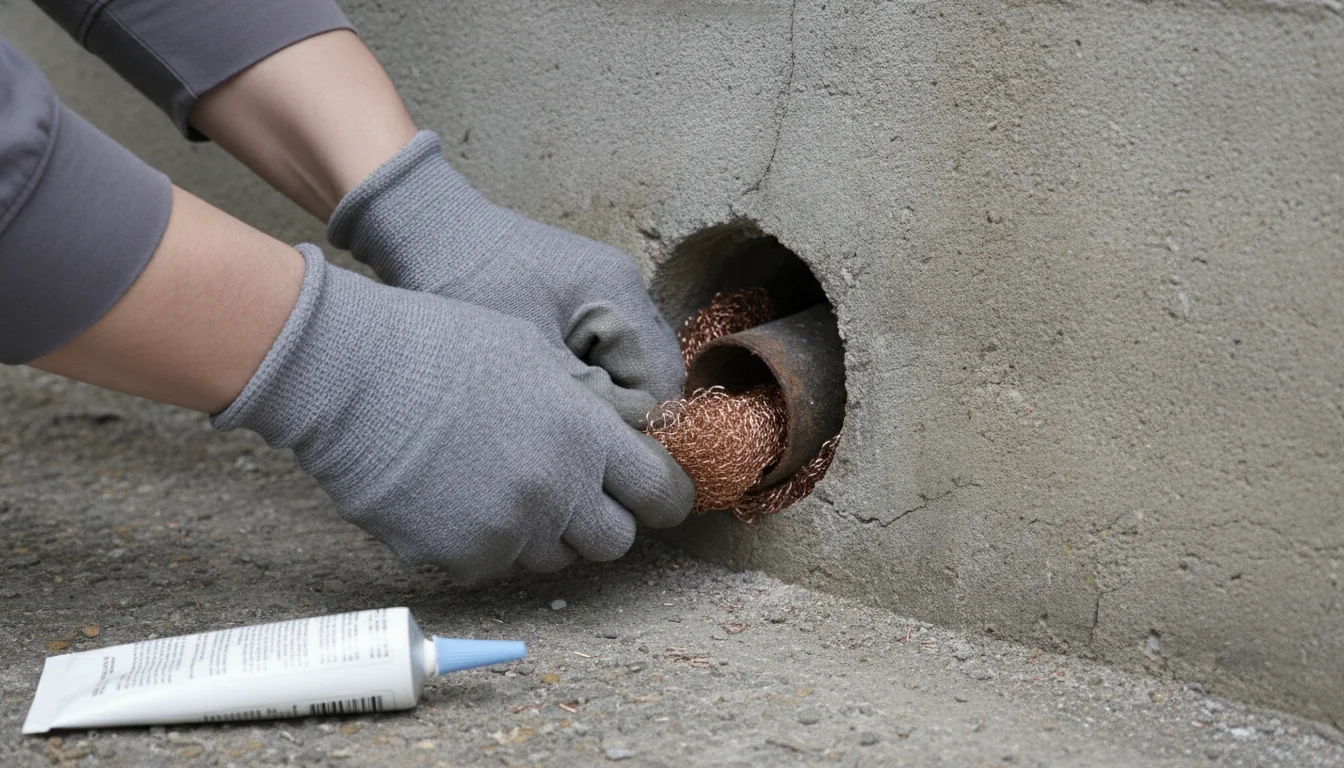
The one fix that lasts. Mice gnaw small openings bigger, so seal anything over 1/4 inch (6 mm). Walk the house, shed and garage and check foundation cracks and the gaps around pipes, vents and cables.
Use metal or concrete. Copper mesh, hardware cloth and silicone sealant all hold up. Steel wool is fine as a temporary plug. Plastic, rubber, spray foam and wood get chewed through.
Put a spark arrester on the chimney, and fit a self-closing flap on the dryer vent. Don’t screen the dryer vent, because trapped lint is a fire risk.
2. Fit door sweeps and keep the garage shut
Plenty of mice walk in the way you do. If you can see daylight under an exterior door, a mouse fits. Fit a sweep that touches the threshold all the way across, make sure garage, shed and crawl space doors close tight, and keep the garage side door shut at night, when they’re active.
3. Set snap traps along the walls
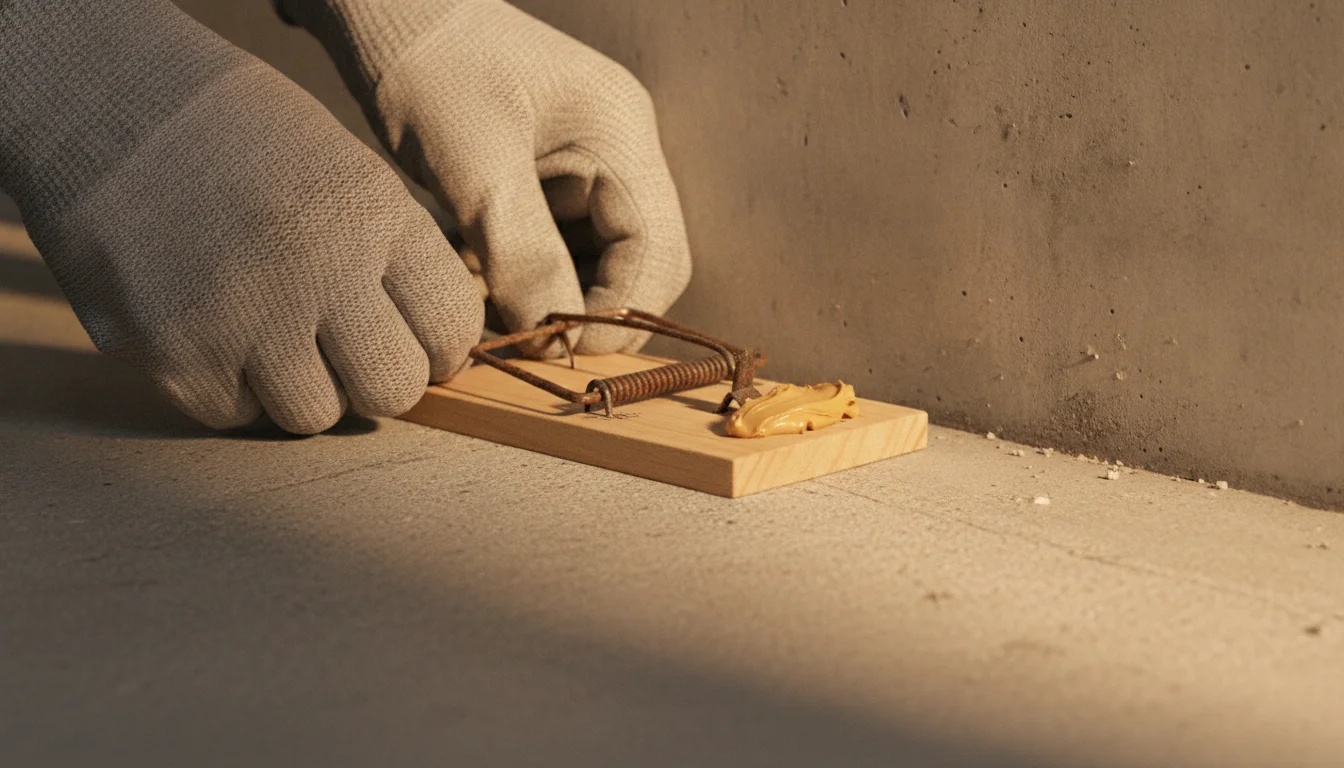
Mice already inside need trapping. Snap traps or electric traps, baited with peanut butter or peanut butter mixed with rolled oats. Set them along the wall, trigger end facing the wall, where you’ve found droppings. Space them no more than about 10 feet (3 m) apart, and for a real infestation set a dozen or more. Leaving baited traps unset in their runs for a few days first gets the mice used to them. Keep a few set after the catches stop, in case new mice show up.
What to skip, and why:
- Glue boards. Trapped mice urinate and defecate as they struggle, which raises your hantavirus exposure.
- Live traps and multi-catch traps. Same problem, plus a live mouse to deal with. Released mice come back unless the gaps are sealed.
- Poison bait. Most store baits are labeled for house mice and rats only, and using one on deer mice breaks the label (in California no bait is registered for deer mice in homes at all). Even where a label lists them, poisoned mice die inside walls and smell.
- Ultrasonic plug-ins and repellent sprays. Ultrasonic devices don’t repel deer mice, and repellents aren’t effective enough to be worth the money.
4. Clean up droppings wet, never dry
Deer mice carry Sin Nombre hantavirus in their saliva, urine and droppings. Infection is rare but serious: hantavirus pulmonary syndrome kills about 36% of the people who get it. You catch it by breathing dust from stirred-up droppings, so a broom or vacuum is the worst tool you could pick.
The CDC method:
- If the shed, cabin or garage has been closed up, open every door and window and leave it to air for 30 minutes. Stay out while it does.
- Put on rubber or plastic gloves.
- Spray the droppings, urine and nest until very wet, with a household disinfectant or fresh bleach solution: 1.5 cups of bleach in 1 gallon (3.8 L) of water.
- Let it soak for 5 minutes.
- Wipe it up with paper towels and put them in a covered garbage can. Mop or sponge the area with disinfectant.
- Wash your gloved hands, take the gloves off, then wash your hands with soap and warm water.
Dead mice get the same spray and 5-minute soak, then go in a knotted plastic bag inside a second knotted bag.
For a car or camper that’s sat idle, open the hood, doors and trunk for 20 minutes first. Disconnect the battery before reaching into the engine bay, and check the air intake before starting it. A nest there means a new air filter. No vacuum or pressure washer until it’s disinfected.
5. Take away the food
Spilled bird seed, pet food left out, fallen fruit and open garbage all feed mice. Bring pet bowls in at night and keep garbage lidded. In the shed and garage, move seed and pet food out of sacks into metal or thick plastic bins with tight lids.
6. Move woodpiles and brush away from buildings
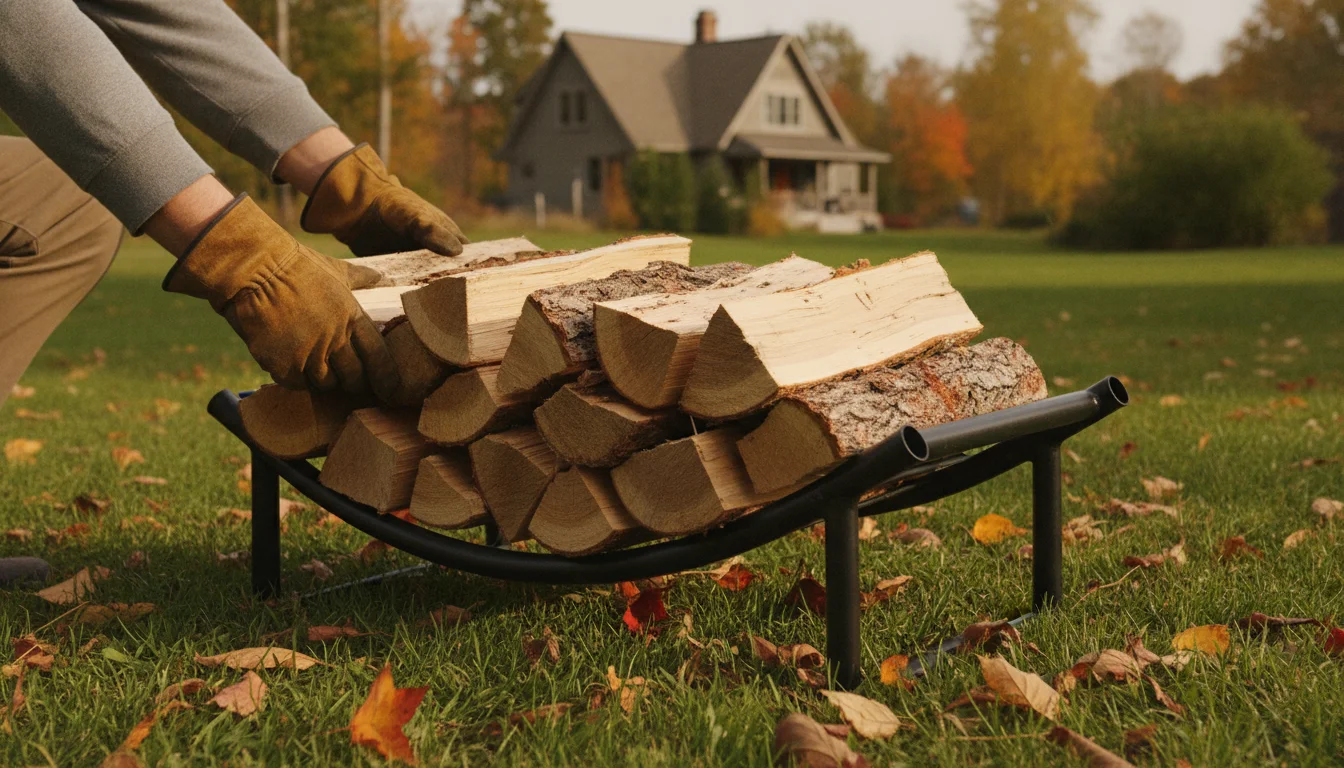
A woodpile against the wall is a nest site next to your gaps. Stack firewood at least 30 feet (9 m) from the house, on a rack or pallets, and treat brush piles and lumber the same way.
7. Cut back the cover around the house
Overgrown shrubs, weeds and long grass give mice cover right up to the foundation. Mow, and cut planting back from the walls. It won’t clear the yard, and it doesn’t need to.
8. Cage seedbeds and bulbs
In the vegetable patch they dig up seed and bite low-hanging fruit. Cover seedbeds and seed trays with 1/4 inch (6 mm) wire mesh cages, edges buried several inches into the soil. Plant bulbs in wire mesh baskets. Stake or cage peas and tomatoes so the fruit stays off the ground.
How to get rid of field mice for good
They move in during the fall, so check your seals before the weather turns, and keep a couple of traps set in the garage and shed through winter. A barn cat can help stop mice coming back once you’ve cleared them, but it won’t clear an infested building.
When to call a pro
Bring in a licensed pest control operator if the infestation is large or the job looks like more than you can take on. A heavy infestation also calls for more protection than gloves during cleanup. If mice have got into the heating or cooling ducts, call a rodent or duct-cleaning professional instead of cleaning them yourself.
FAQ
Are field mice dangerous?
In the yard they’re wildlife and rarely do lasting damage. Indoors, deer mice are the main carrier of Sin Nombre hantavirus in North America. It doesn’t spread from person to person. Clean their mess wet, never dry.
Will field mice leave if there’s no food?
Not on their own. Cutting off food and cover makes your property less attractive, but mice already inside have to be trapped.
Does peppermint oil keep field mice away?
Not on its own. Mice dislike some smells, but no repellent has been found that solves a mouse problem completely. Seal the gaps instead.