Table of Contents
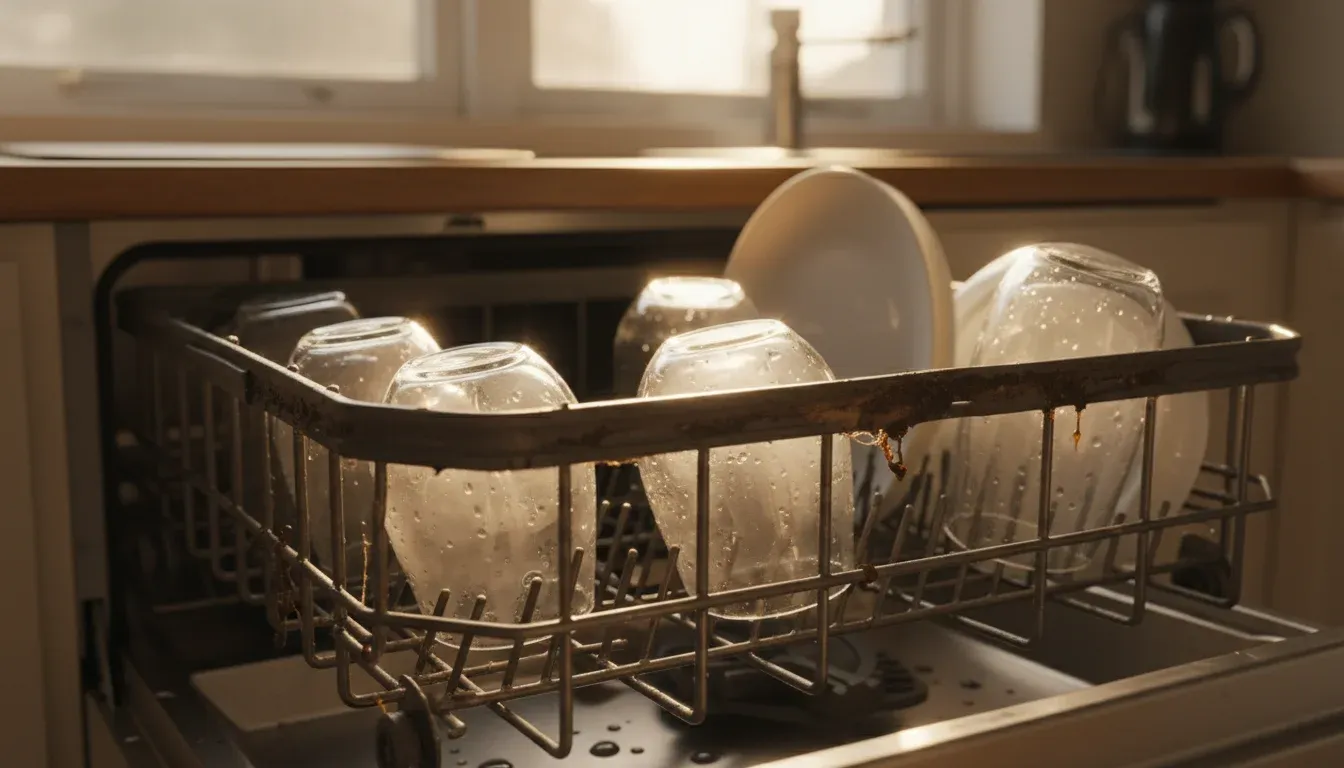
You open the door expecting clean dishes and get a wave of sour, musty air instead. A dishwasher smell like that means the machine that’s supposed to clean everything else has turned into the smelliest thing in the kitchen, and your “clean” plates now carry the funk.
Here’s the part most guides skip: the smell tells you where the problem is. A sour, rotting-food stink usually means the filter. A musty edge points to the rubber door seal. A sewage or rotten-egg smell usually points to the drain, not the tub. Match the smell to its source and you fix it in one pass instead of running blind vinegar cycles for a week. Start with the filter; that’s the culprit most of the time.
What causes a dishwasher smell
Dishwasher odor comes from three places, and knowing which one saves you the guesswork.
Trapped food and grease is the big one. Particles that don’t drain away settle in the filter and rot, and it smells sour or like old food. This is the most common cause by far.
Mold and mildew is next. The tub is warm and damp after every cycle, and mold gets into the folds of the rubber door seal where no cleaning cycle reaches. That’s the musty edge. The EPA’s line is worth remembering: you can scrub mold off, but if you don’t fix the moisture, it comes back.
A clogged drain is the third. If the smell is more sewage than sour, dirty water is sitting in the drain hose. That’s plumbing, not a dirty tub.
1. Clear and Clean the Filter
The filter is ground zero. It sits at the bottom of the tub, usually under the lower spray arm, and it catches every bit of food that doesn’t drain away. When it clogs, that food rots in place and the whole machine smells of it.
Twist it out (most lift or unlock with a quarter turn) and rinse it under hot running water. Scrub both sides with a soft brush or an old toothbrush, and wash it in warm soapy water if there’s stuck-on grease. Rinse until the water runs clear through the mesh, then seat it back firmly. A loose filter lets food bypass into the pump, which is a bigger job later.
Do this monthly, or every couple of weeks if you cook a lot. It’s the single habit that heads off most dishwasher smells.
2. Wipe the Door Gasket and Seal
Cleaning cycles flush the tub but never touch the rubber door seal, and that’s exactly where mold hides. Pull the door open and look into the folds of the gasket and along the bottom lip. Black or pink residue there is your musty smell.
Mix equal parts white vinegar and warm water (or just warm soapy water) and wipe the seal, the door, and the interior walls with a cloth. Work a soft brush into the crevices, and rinse the cloth often so you’re lifting the grime out, not smearing it around. Dry the seal afterward so moisture doesn’t settle back in.
Once a month keeps it clear. Any time the smell lingers after a cleaning cycle, check here first.
3. Run a Hot Vinegar Cycle
Vinegar is the boring answer that works. The acid cuts grease and dissolves the mineral scale that traps odor, and it does the job without a commercial cleaner.
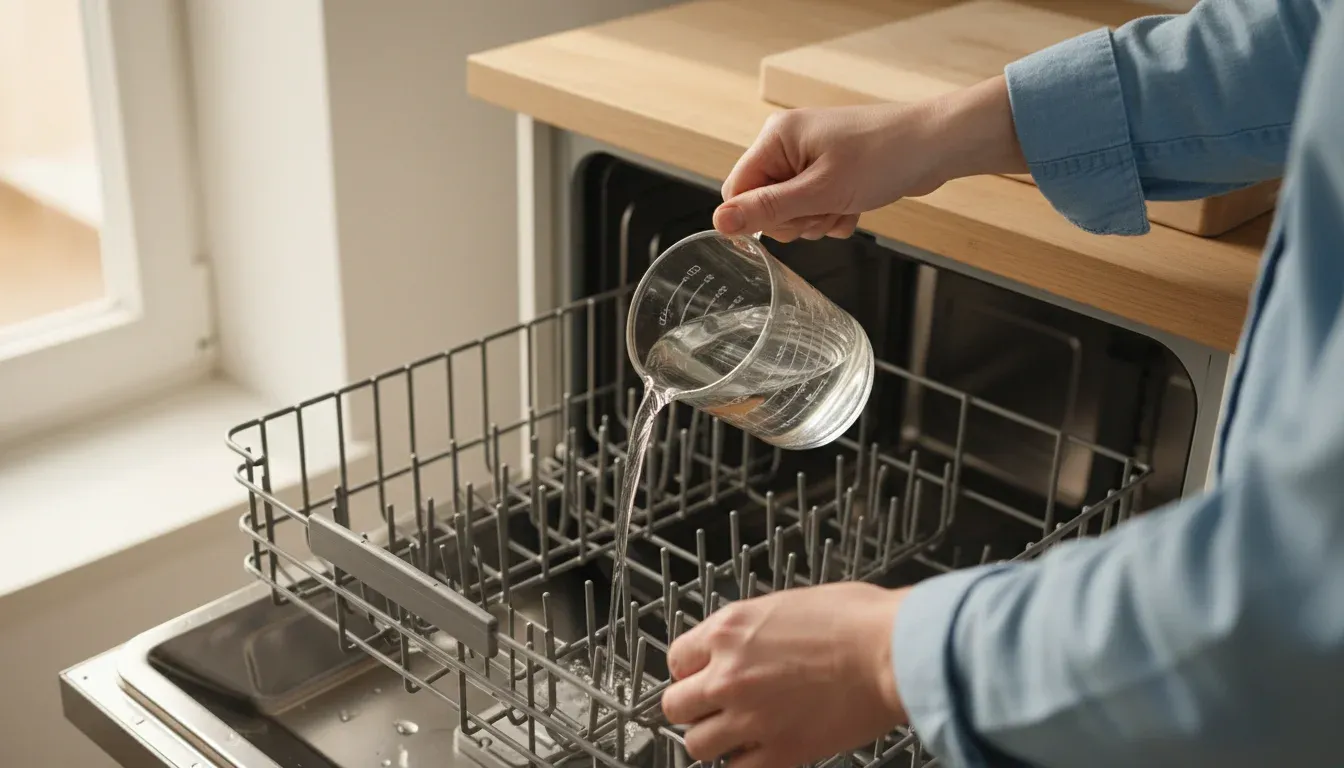
Empty the machine. Put one cup (240 ml) of white vinegar in a dishwasher-safe bowl on the top rack and run the hottest cycle, skipping the heated dry. The steam carries the vinegar into every corner. Leave the door open afterward so the vinegar smell airs out, taking the other odors with it.
Skip the detergent during a vinegar cycle. And never put bleach anywhere near it: bleach and vinegar together make chlorine gas, which is genuinely dangerous. Run a vinegar cycle only as often as your dishwasher’s manual allows. Frequent vinegar use can damage seals and internal parts, so most manufacturers treat it as an occasional clean, not a routine one.
4. Follow Up with Baking Soda
Baking soda finishes what the vinegar started. It neutralizes odor instead of masking it and gives a light scrub to whatever’s left.
After the vinegar cycle (never both at once, they cancel each other out), sprinkle one cup of baking soda across the bottom of the empty tub and run a short hot cycle. For a smell that won’t quit, leave the baking soda in overnight before you run it, so it has more time to work on the deep-set odor.
5. Bleach, Only for Stubborn Mold
If mold keeps coming back after the vinegar and the gasket wipe, bleach is the last resort, not the first move. The EPA is clear that bleach isn’t necessary for routine mold cleanup, so save it for visible, stubborn growth.
There’s no one bleach procedure that fits every machine. Whether bleach is safe at all, and how to use it, depends on your model, so follow your dishwasher’s manual and the bleach label rather than a generic cycle. Many manufacturers say to wipe the affected surfaces with a diluted solution and rinse rather than run bleach through the machine, and some prohibit bleach outright.
Two hard rules. Never use bleach in a stainless steel tub or on stainless parts, because it pits and corrodes the metal. And never mix bleach with vinegar or any other cleaner: vinegar’s acidity releases chlorine gas from bleach, and the safe rule is to keep bleach away from every other product. If your machine is stainless inside, stick to the vinegar and baking soda route.
6. Clear the Drain Hose
If the smell is sewage rather than sour, and it survives everything above, the problem is usually past the tub in the drain line. A cup or two of water left in the bottom after a cycle is normal. What you’re looking for is a pool of dirty water that sits and stagnates, and that can trace to the filter, the sump, the way the drain hose is routed, an obstruction inside the hose, or the pump. The corrugated drain hose is a common place for grease and food to collect.
Look under the sink at the hose running from the machine to the drain pipe or garbage disposal. Make sure it isn’t kinked or crushed, since a pinched hose traps water. If sink water backs up into the dishwasher, lift the hose into a high loop and bracket it to the cabinet wall. To clear the hose itself, cut the power and water to the dishwasher, detach the hose, and flush it through with warm water from the tap. If it still smells and water still pools after that, the hose needs a deeper clean or the machine needs a repair.
7. Keep It From Coming Back
Cleaning fixes today’s smell; habits stop the next one.
Scrape plates into the bin before loading, but don’t pre-rinse them spotless. Modern machines have sensors that read how dirty the load is, and squeaky-clean dishes trick them into a weaker cycle that leaves the interior grubby. Scrape, don’t rinse.
Run the machine regularly. Leaving damp dishes to sit for days is how mold starts, so don’t go more than a couple of days between loads. And crack the door open when the cycle finishes, even an inch, so the inside dries instead of stewing in its own moisture. It’s the same habit that keeps a washing machine from smelling, and it does more than it sounds like it should.
When to call a professional
Most dishwasher smells are a filter or a seal, and you can handle those. Call someone when the machine is telling you it’s plumbing or hardware: a sewage smell that survives a cleared drain hose, water that won’t drain, or gurgling and backups from the sink all point to the drain line or the pump. And if mold has spread across more than about 10 sq ft (1 sq m) of the surrounding cabinetry, that’s the EPA’s threshold for bringing in a pro.
Dishwasher smell FAQ
Why does my dishwasher smell like sewage or rotten eggs?
That smell is the drain, not the tub. Dirty water is sitting in the drain hose or backing up from the sink. Clear and re-loop the hose before you touch anything inside.
Can I use vinegar and baking soda at the same time?
No. They neutralize each other and you get a fizzy mess that does little. Run the vinegar cycle first, then a separate baking soda cycle.
How often should I clean the filter?
Once a month for most people, every couple of weeks if you cook a lot or skip scraping.
Is bleach safe in my dishwasher?
Only in a plastic tub, never a stainless one, and never mixed with vinegar. For routine mold, soap and water are enough.