Table of Contents
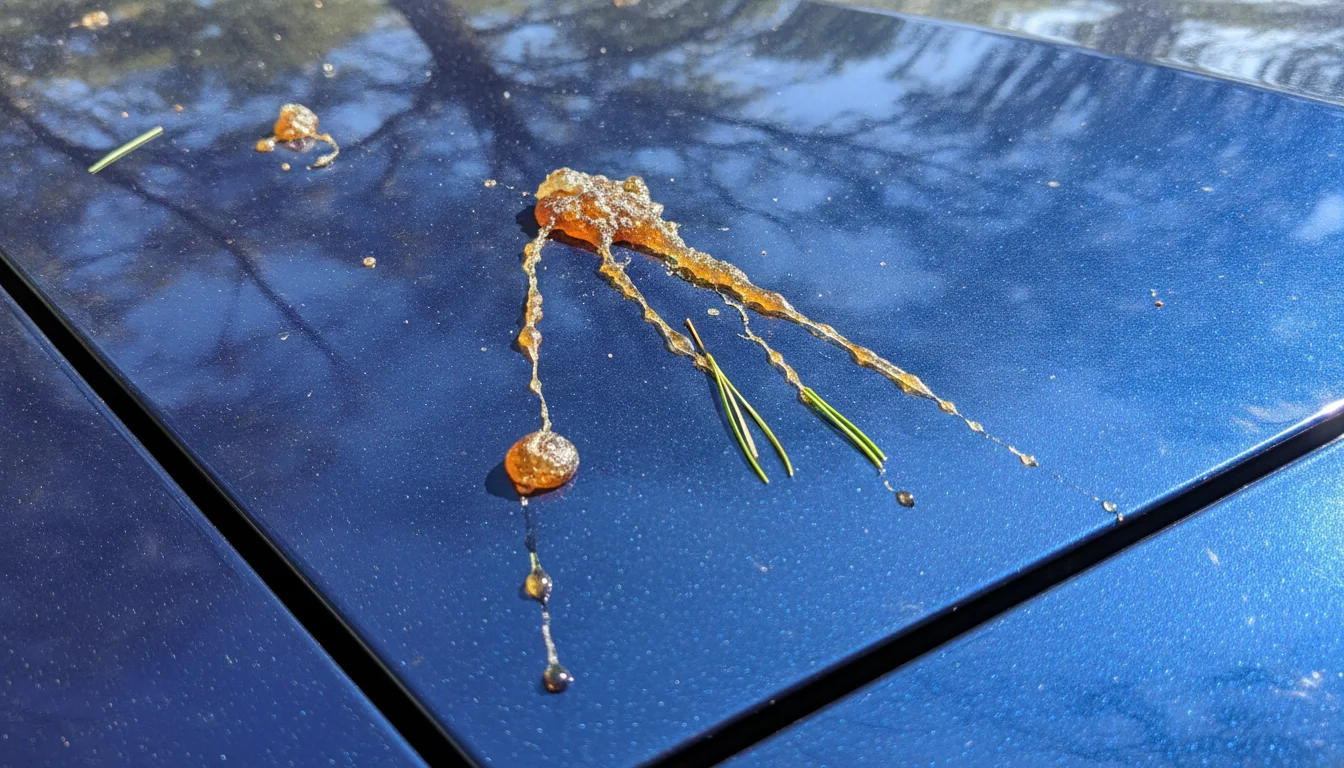
Sap lands as a sticky drip. Leave it through a few hot days and it sets like glue, and as it dries it shrinks and pulls on the clear coat underneath it. So how to get rid of tree sap on car paint depends on one question: how long has it been there?
Fresh and tacky? A warm wash or rubbing alcohol does it. Hard and raised? Soften, dissolve, then clay off the rest. Sap gone but a dull ring left behind? That’s etching, and it needs polish, not more scrubbing. Work down the list and stop at the step that finishes the job.
Wash the car first, because grit dragged around with the sap is what scratches paint. And on matte paint or a vinyl wrap, skip the clay and polish entirely (see the section below).
1. How to get rid of tree sap on car paint while it’s fresh: a warm wash
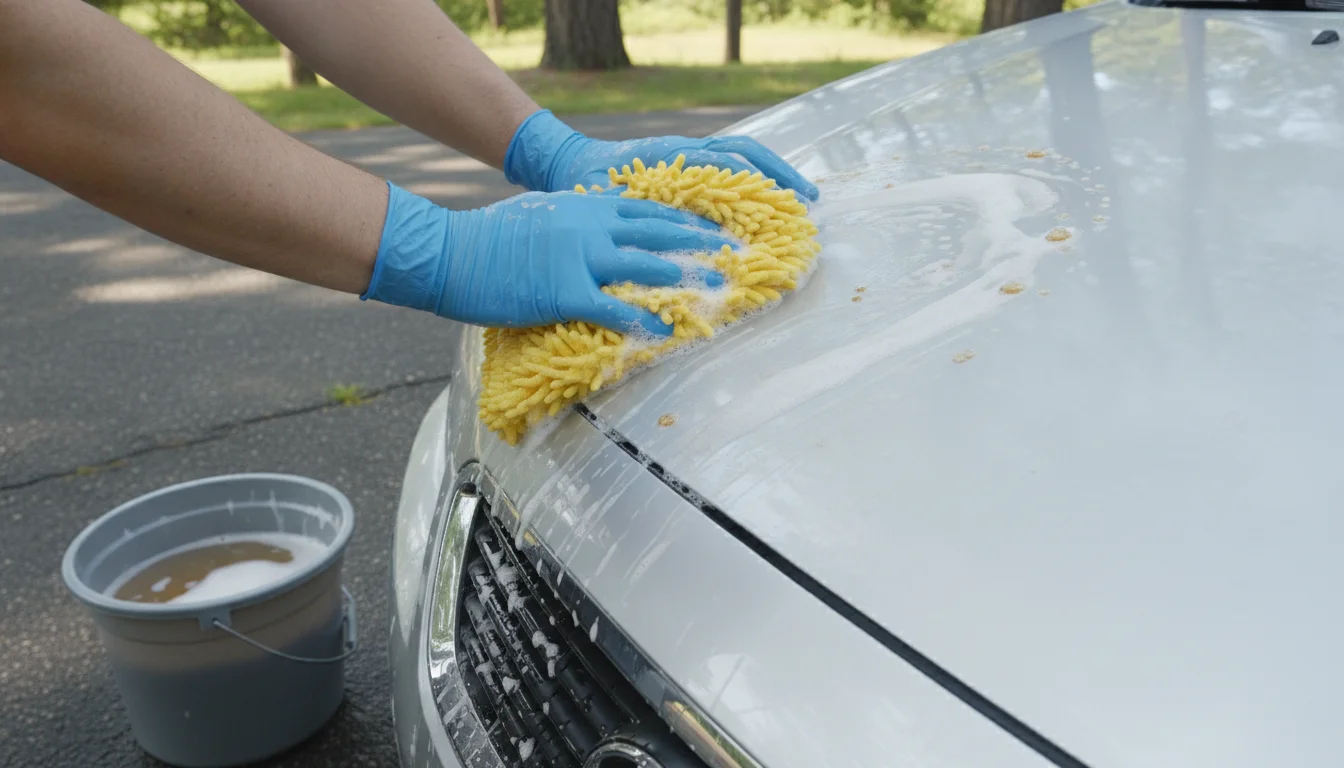
If the sap fell in the last day or two, start here. Fill a bucket with water as hot as your hand can stand and proper car wash soap, not dish soap. Wash the whole car, which clears the grit and shows you drips you hadn’t noticed.
Fresh sap often comes off with the wash alone. One trick from the Australian detailing brand Bowden’s Own: leave the car in the sun for about 10 minutes before washing so the residue softens, then wash it in the shade.
An automatic car wash won’t do it. It can smear sap across the paint and glass instead.
2. Rubbing alcohol for sap that’s still sticky
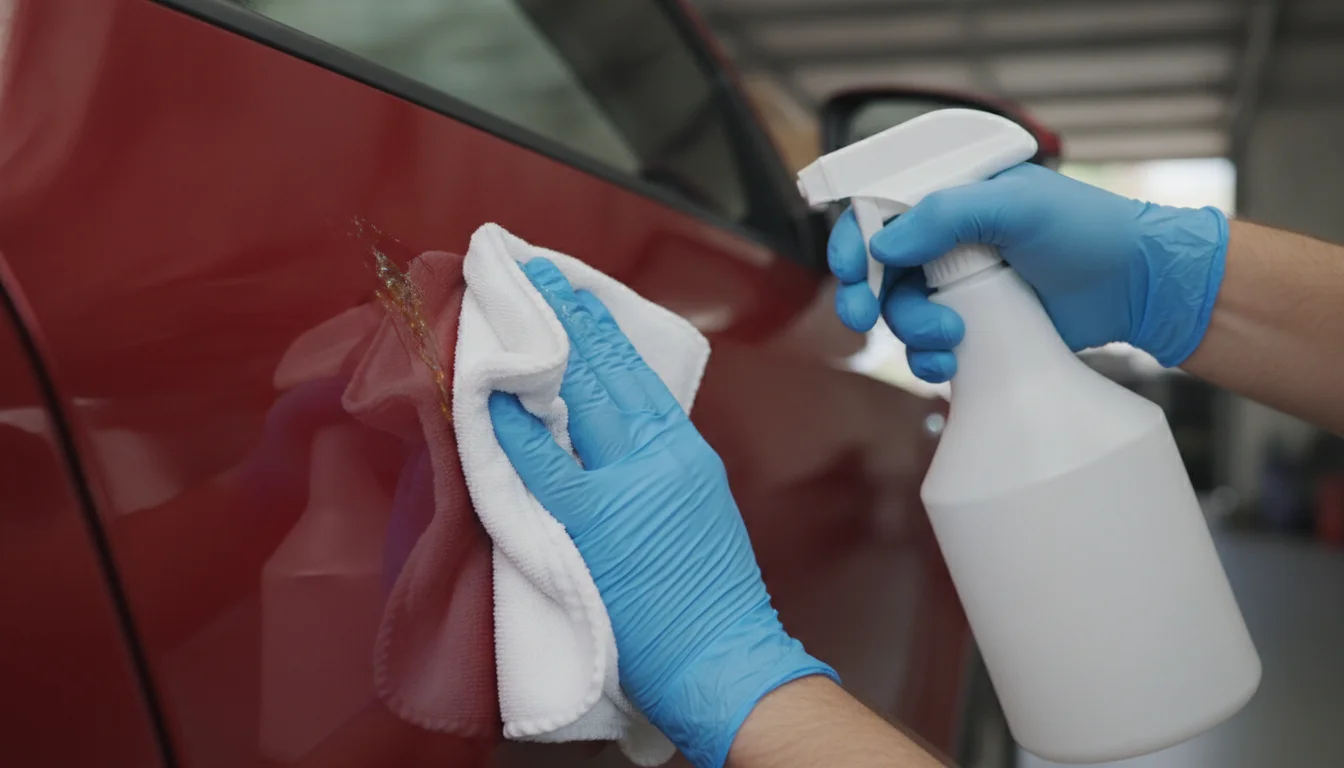
The cheap, reliable one, and the first thing the pros at detailing retailer Detailed Image reach for. Mix isopropyl alcohol 50/50 with water in a spray bottle. Spray the sap, give it up to a minute to soak in, then wipe gently with a microfiber towel, turning the towel often so you’re not smearing it around.
Older sap needs longer, so repeat rather than pressing harder. Don’t let alcohol sit on the paint indefinitely, though. Rinse the spot with soapy water when you’re done, because alcohol strips wax as well as sap.
On plastic trim, test on a hidden spot first. Some cleaners discolor trim.
3. Bug and tar remover for the stubborn stuff
When alcohol won’t shift it, get a bug and tar remover or a sap remover from an auto parts store. These solvents, cousins of what lifts tape residue, are made to break down sap without hurting the clear coat.
Spray it on, or lay a soaked cloth on the spot, and give it time: about five minutes for most bug and tar removers. Then wipe gently and wash the area, since the remover leaves an oily film. Read the label before using one on glass, as some are too harsh for windshield coatings, and at least one sap remover is labeled not for plastic.
4. Warm hardened sap before you work on it
Warm sap gives where cold sap won’t. A hair dryer on low, kept moving, softens a hardened spot on a cold day. Never a heat gun on paint. In summer, let the sun warm the panel, then move into the shade and put the remover on while the paint’s still warm but not hot.
5. Clay off the hard remnant
Once the solvent has taken most of a blob off and a hard, raised bit is still stuck, use a clay bar. Clay grabs anything that sits above the clear coat without abrading it.
Spray the area generously with clay lubricant (or car shampoo mixed with water). Flatten the clay and glide it over the spot in straight, overlapping passes with light pressure. Never circles. Fold the clay to a clean face every few passes, and throw it away if you drop it, because grit will scratch. Done when the paint feels glass-smooth through a thin sandwich bag.
Clay is safe on glass too. It is not safe on matte paint.
6. Ice and a plastic scraper for blobs on glass
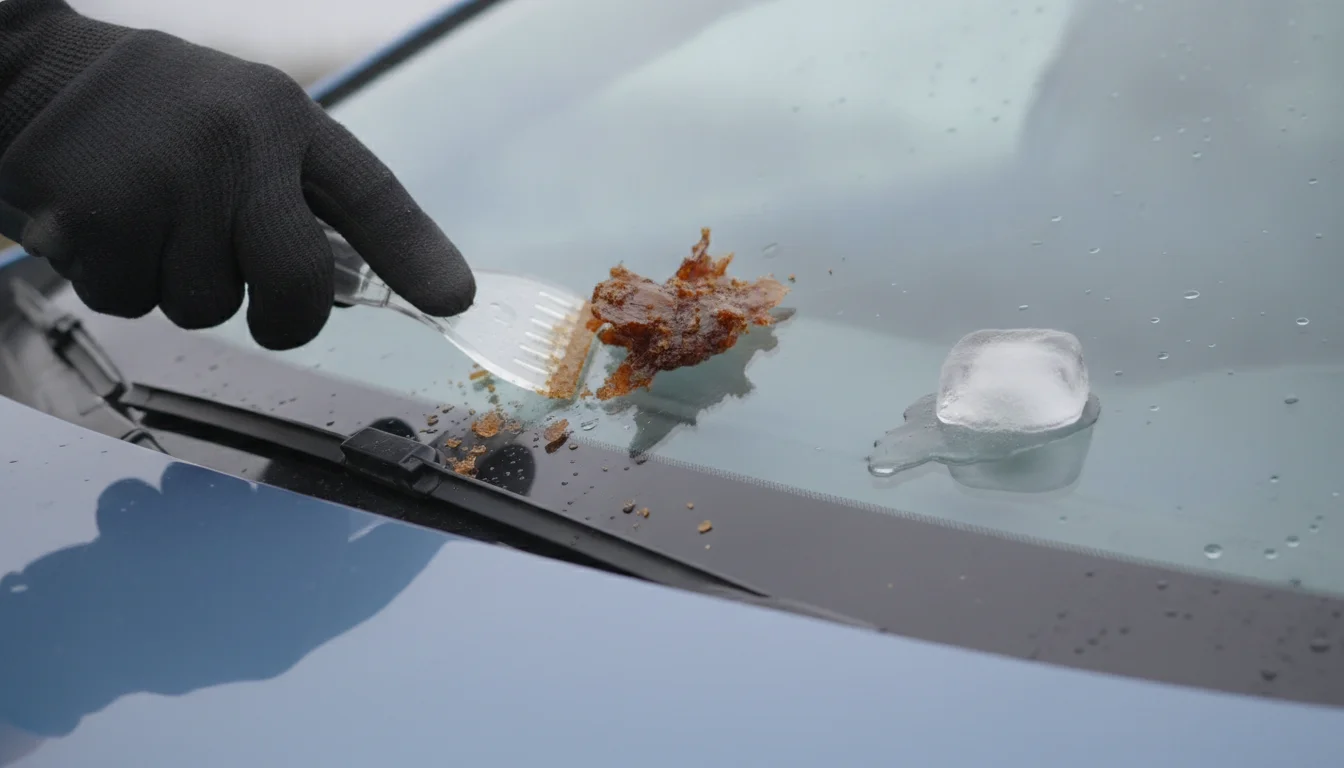
Windshield washer fluid won’t dissolve sap, and the wipers just smear it. For a thick blob that hasn’t fully hardened, soften a few ice cubes in water, hold one on the sap for a few minutes, then peel the brittle sap off with a plastic ice scraper or plastic putty knife. Glass Doctor, the auto glass chain, says not to use razor blades or other metal tools on a windshield, so we’d skip the razor too.
For thinner sap, lay an alcohol-soaked microfiber cloth on it for a few minutes, rub gently, then use glass cleaner.
7. Polish out a dull ring the sap left behind
Sap gone, but a dull ring stays in the paint? The sap has etched the clear coat, and nothing you wipe on will fix that.
A shallow mark can come out with a light polish or compound. If one gentle pass by hand doesn’t improve it, stop. Polishing removes clear coat, and it doesn’t grow back, so a detailer with a machine polisher is the better bet for anything more than a faint mark. Deep etching may need wet sanding, and the worst cases need a repaint.
8. Wax the spot, then keep it waxed
Alcohol, removers, clay and polish all strip protection off the paint. Re-wax or seal the treated area the same day. Sap grips waxed paint far less, so the next drip washes off (the same reason drivers wax ahead of lovebug season).
Matte paint and vinyl wraps: what changes
None of the ranking guides we read mentions these, and the usual advice (wax, clay, rub in circles) is wrong for them.
Matte paint gets no wax, no polish, no compound and no clay. Polishing makes it glossy for good, and clay can’t glide over the textured surface. PPG’s matte finish care guide gives the routine: spray the spot with a 50/50 mix of alcohol and deionized water (or an alcohol-based window cleaner, not vinegar or ammonia). For sap that won’t budge, lay a microfiber cloth soaked in tar remover on it for about five minutes. Then wipe lightly forward and back, never in circles, and rinse. Rub hard and you burnish a shiny spot for good. If a mark stays, call the dealer or paint maker before anyone polishes it.
On a vinyl wrap, act fast. Wrap installer Wrapmate calls sap the most damaging everyday contaminant a wrap faces, and says to treat it with bug and tar remover right away. Keep a pressure washer under 2,000 psi, at least 3 ft (0.9 m) away, and never aimed into a seam, where it can lift the film.
How to prevent tree sap on your car
Park away from trees, or use a garage or car cover. Spring is the worst: freezing nights and sunny days above 32°F (0°C) start sap flowing, though pines ooze year-round. And some of that sticky film isn’t sap at all but honeydew from insects such as aphids feeding in the tree overhead. Keep a coat of wax or sealant on the paint, and wash the car regularly so sap never gets days to bake on.
FAQ
Does tree sap damage car paint?
Yes, if you leave it. As drops dry they shrink, and a PPG paint manager told Consumer Reports that stress can crack a car’s finish. Left long enough, sap eats into the clear coat and leaves stains or dull marks.
Can I use WD-40 or hand sanitizer?
Hand sanitizer works like rubbing alcohol if it’s at least 70% alcohol. But purpose-made removers are safer on paint and usually work better. Test anything on a hidden spot first.
Is vinegar safe on car paint?
Not recommended. It will shift sap but can damage paintwork.
Will an automatic car wash remove tree sap?
Rarely. It tends to spread sap over paint and glass. Wash by hand.