Table of Contents
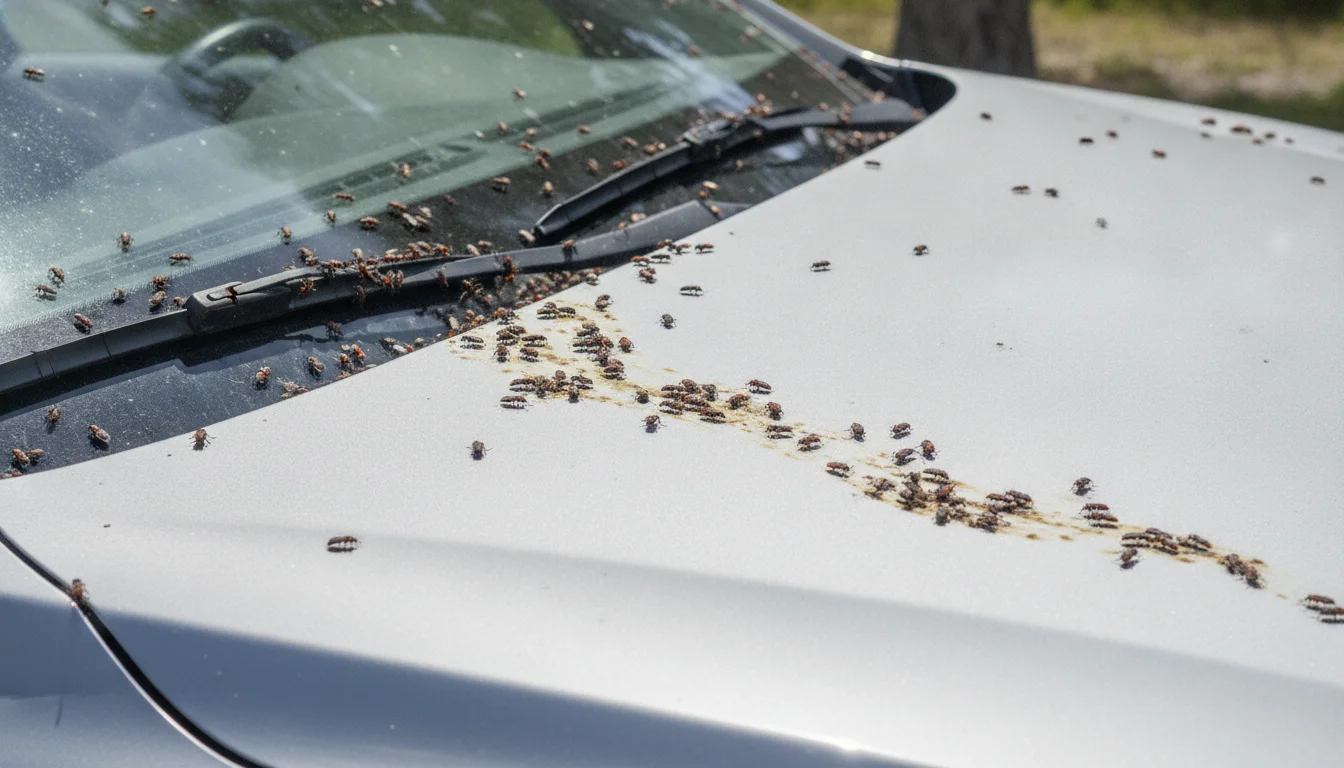
Twice a year, from Texas across the Gulf Coast to Florida, the air fills with lovebugs (Plecia nearctica, a small black fly with a red thorax that flies joined tail to tail). They don’t bite, they don’t sting, and they carry no disease. The trouble is mechanical: they splatter windshields, they pack into radiator grilles and can push an engine toward overheating, and their bodies turn acidic within about a day and can etch your car’s clear coat if you leave them on. The other thing worth knowing up front: insecticides and repellents don’t control them, so ignore anyone selling you a spray contract. Here’s how to get rid of lovebugs the way that actually works, across your yard, your home, and your car.
What causes lovebug swarms
Lovebugs breed in moist, decaying vegetation. The larvae spend most of the year underground in damp thatch, grass clippings, and leaf litter, feeding on rotting plant matter (they’re genuinely useful down there, breaking it back into soil). Twice a year the adults emerge to mate, and that’s when you notice them.
There are two flights: one in April and May, another in August and September. Each lasts about four to five weeks, heavier the closer you live to the Gulf. Adults fly only in daylight, only when it’s warm (above roughly 68°F, or 20°C), from mid-morning until dusk. They never fly at night. They’re drawn to heat, to sunlight, to light-colored and shiny surfaces, and to the exhaust from cars and lawnmowers, which is why highways and freshly painted walls take the worst of it.
1. Remove yard debris and leaf litter
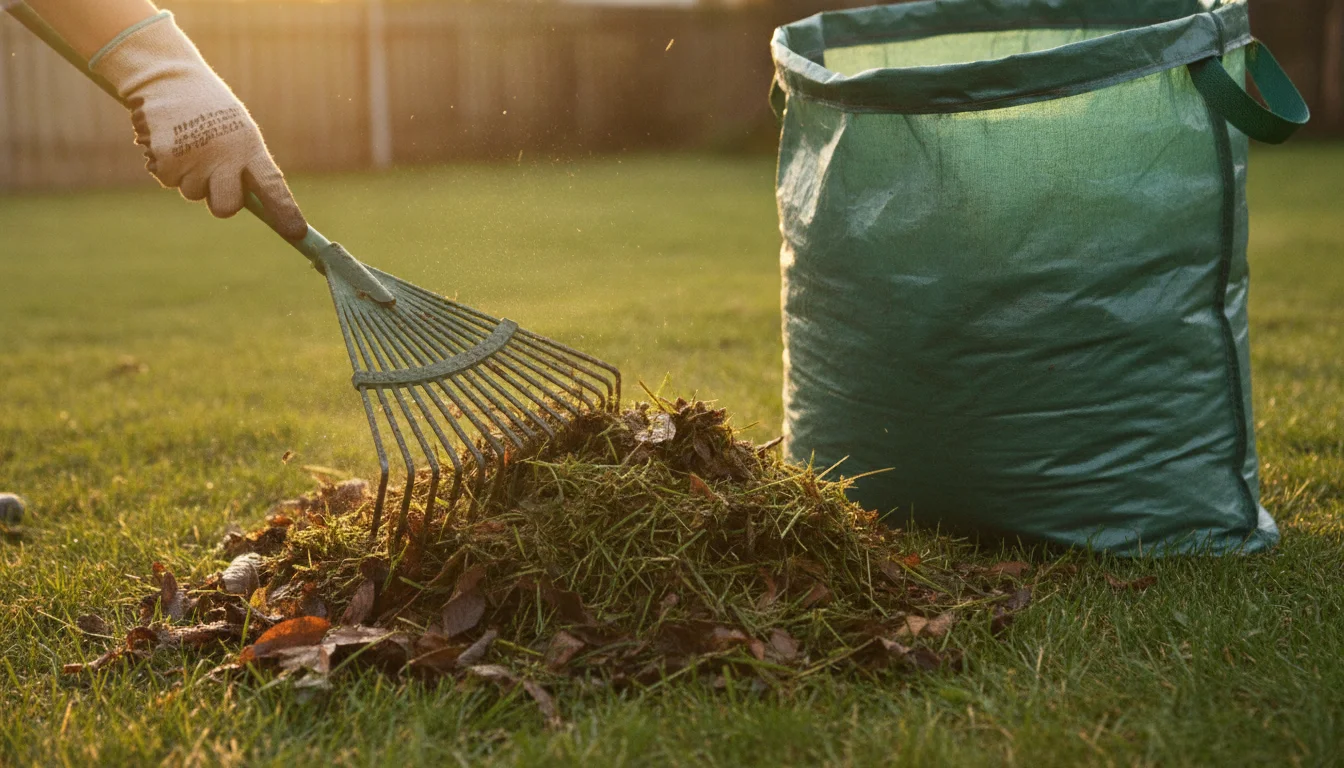
Start where they breed. Piles of leaves, fallen branches, and grass clippings stay damp underneath, and that moist, decaying matter is exactly what the larvae need. Rake up leaves, clear dead plants and wood piles, and don’t let clippings build into a mat. Bag the clippings during peak season instead of leaving them to rot. If you compost, keep the bin at least 30 ft (9 m) from the doors and patio you actually use. A clean yard gives the next generation nowhere to develop.
2. Use fans to create air barriers
Lovebugs are weak fliers, and that’s their weakness. A steady 2 to 3 mph (3 to 5 km/h) breeze stops them landing and stops them pushing through an open door. A box fan in the doorway pushes most of them back outside; ceiling fans on high keep a covered porch clear during the mid-morning peak. It costs nothing and works immediately.
3. Seal cracks, gaps, and install screens
The permanent fix for the ones trying to get indoors, but you have to get ahead of the flight. They gather on warm, sunny walls before working their way in, so seal up before the season starts. Weatherstrip the doors, caulk around window frames and where utility lines enter the house, and put screens on any vent or exhaust opening. A gap the width of a pencil is enough for them. Pay the most attention to the south and west-facing walls, where they congregate first.
4. Vacuum them up
For the lovebugs that get inside the house, use a vacuum, not your hand. Don’t squish them: crushed lovebugs leave a staining smear that turns acidic and marks paint, fabric, and wood. A handheld vacuum or a hose attachment draws them off windowsills and light fixtures before they scatter. Empty it straight into an outdoor bin, sealed in a bag, or they crawl back out.
5. Protect car paint with wax or oil
Put a barrier between the bugs and your paint before the flight starts. A fresh coat of car wax on the hood, bumper, and grille fills the pores in the clear coat so residue can’t bond, and it buys you time against the acidic fluids. Do it in the two weeks before the season. For a single trip through a heavy swarm, wipe a thin film of baby oil or cooking spray over the bumper and lower hood instead; the splatter sits on the film and hoses off later. Neither one replaces washing the car, they just make the wash far easier.
6. Fit a car grille screen or hood deflector
A mesh screen over the front grille keeps the bodies out of the radiator fins, where a thick mat chokes the airflow the cooling system needs and can drive coolant temperatures up on a long highway run. A hood deflector on the leading edge lifts the airstream up and over the car, carrying most of the swarm with it so far less ever reaches the glass and paint. Both come from automotive supply stores and clip on without permanent changes. Fit them before the season and rinse the screen after heavy drives.
7. Time drives to avoid swarms
Since they fly only in daylight and only above about 68°F (20°C), the simplest defense is scheduling. Drive at night or in the early morning and you miss the heaviest activity almost entirely. When you have to drive through them in daylight, slow down: fewer bugs splatter at lower speed, and each one hits with less force, so you clean off less and drive less residue into the paint.
8. Wash bug residue off the car promptly
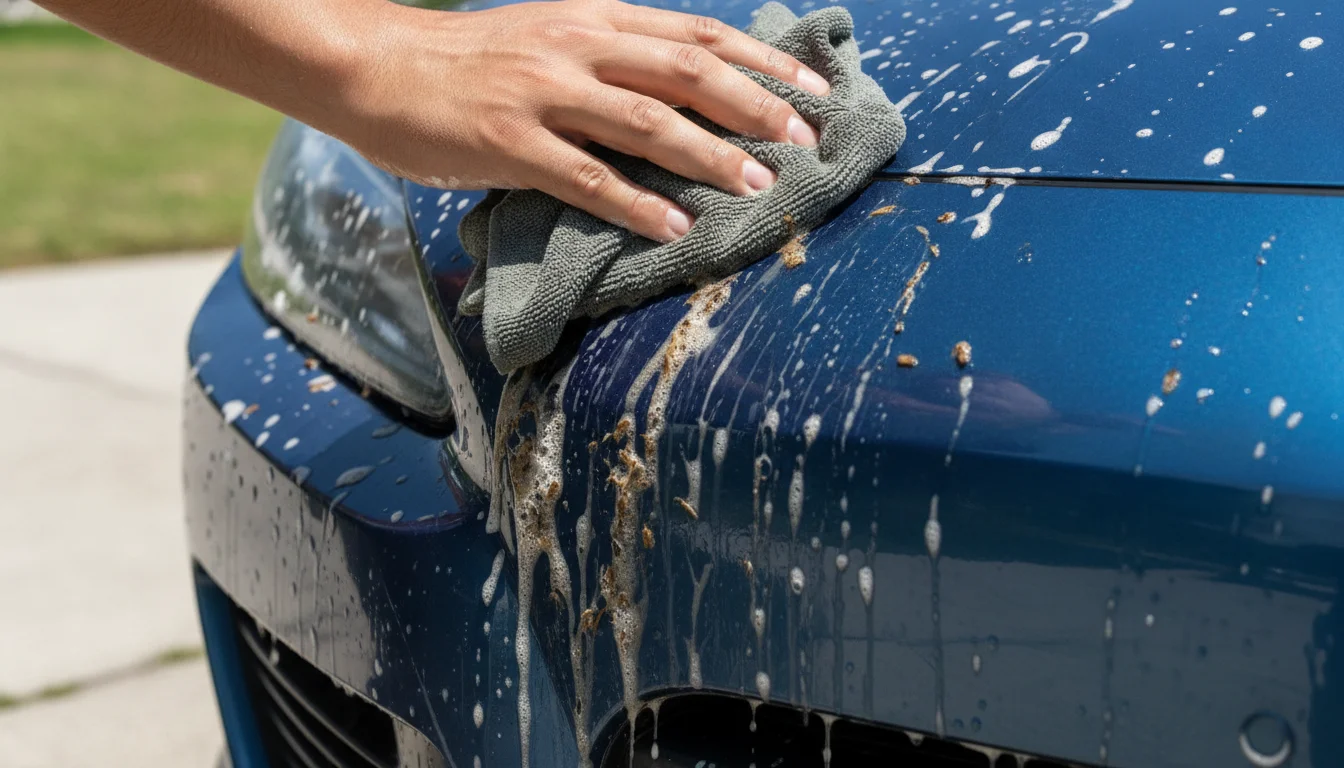
This is the one the service pages soften, so read it twice. Wash the car within about 24 hours of a hit, while the residue is still soft. The body fluids start out near neutral (pH 6.5) and turn acidic (pH 4.25) within a day, and a coating baked on in the sun can etch the clear coat. Soak the splattered areas for a few minutes to soften them, then wipe within the next 15 to 20 minutes before they re-harden. For patches that have already dried on, a wet dryer sheet lifts them without the scrubbing that scratches paint. Rinse well afterward and dry the glass so you’re not driving into the next swarm through a smear.
How to prevent lovebugs
Prevention is a calendar habit, not a year-round war, because the heavy flights only last four to five weeks each. In February and March, rake out the winter thatch, check your screens, and top up the car wax. In the two weeks before each flight (mid-April in Florida, early May further north, then again in August), mow short, bag the clippings, and wax the car. Keep shaded lawn patches from staying soggy, since damp thatch is where the next brood grows. Between the flights you’ll see far fewer, though UF/IFAS records small numbers of adults in almost every month in Florida, with a minor extra bump around December in the south. Outside the two main windows, though, there’s little worth doing beyond keeping the yard tidy.
When to call a professional
For lovebugs, a professional has little to offer, and it’s worth knowing why before you pay for one. University of Florida entomologists are blunt that lovebugs can’t be controlled with insecticides or repellents: adults keep flying in from surrounding land faster than any spray clears them, so a treated yard fills straight back up. Broadcast spraying also kills the bees and beneficial insects you want to keep, and it costs money for a nuisance that ends on its own within a few weeks. If a company promises to knock the swarm down for the season, that promise runs against the entomology. Put the money into prevention and prompt cleaning instead. The one call that makes sense is when you’re not sure the insect is a lovebug at all, and want it identified before you act.
Frequently asked questions
Do lovebugs bite or sting?
No. They’re harmless to people and pets. The damage is entirely mechanical: splattered windshields, clogged radiators, and acidic residue on paint.
Do lovebugs really damage car paint?
Yes, if you leave them on. Their fluids turn acidic within about a day, and a coating that bakes in the sun can etch the clear coat. Wash within 24 hours and the risk is small; a well-waxed car handles it better still.
When is lovebug season?
Two flights a year, April to May and August to September, each about four to five weeks. They’re heavier nearer the Gulf Coast and lighter toward the northern edge of their range.
What is the fastest way to get lovebugs off my car?
Wash within 24 hours while the residue is soft; water and a soft cloth handle fresh splatter. For dried-on bugs, a wet dryer sheet lifts them without scratching. Waxing before the season makes every wash quicker.
Do insecticides work on lovebugs?
No. University of Florida guidance is clear that poisons and repellents don’t control them, and spraying harms beneficial insects. Prevention, exclusion, and prompt cleaning do the real work.