Table of Contents
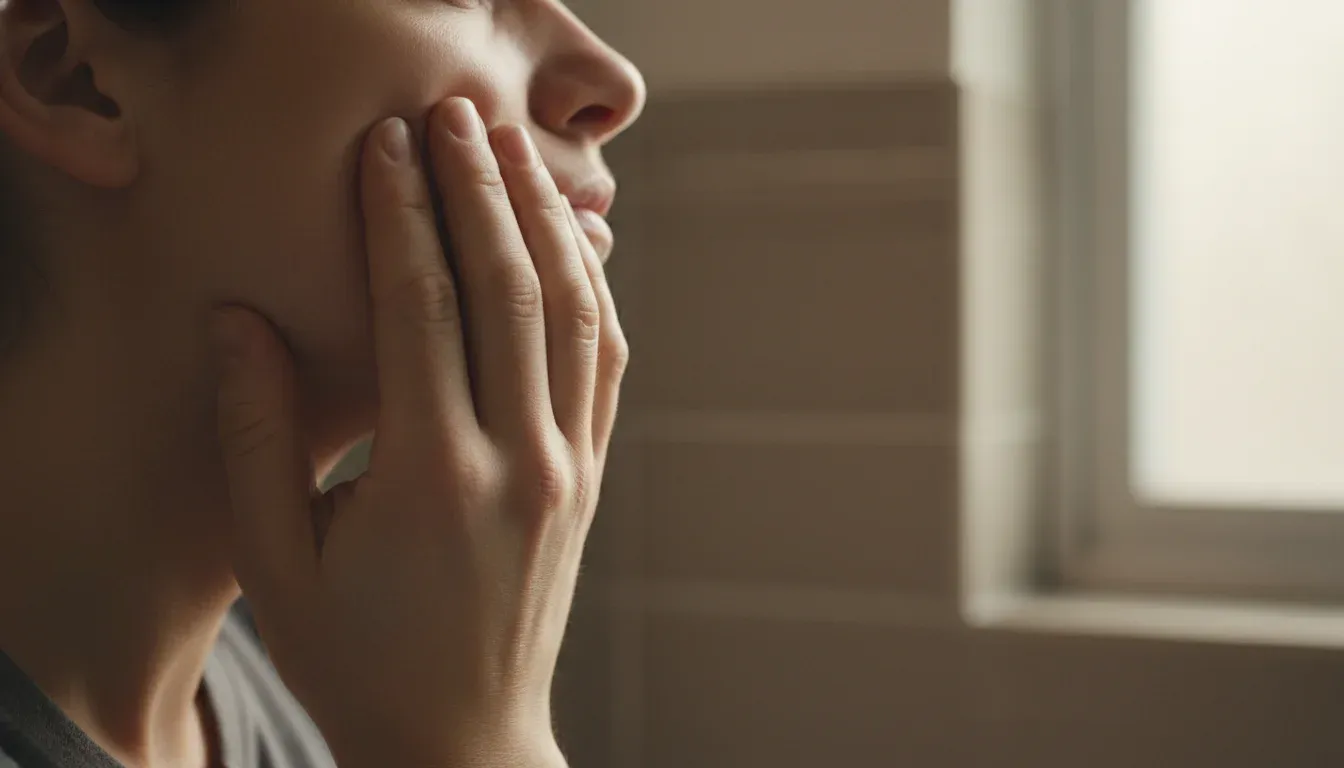
A toothache is a particular kind of hell: constant, distracting, and it makes you useless at everything else. There is plenty you can do tonight to take the edge off, and most of it uses things already in your kitchen or bathroom cabinet. Here is the honest part the remedy lists tend to skip, though: a toothache is your tooth telling you something is wrong. Every step below relieves the pain while you wait; none of them fixes the cause. So use these to get through the night, then get yourself to a dentist.
1. Clear out any trapped food
Start here, because it can end the pain outright. Meat fibers, popcorn hulls and other debris love wedging between a tooth and the gum, and that pressure alone hurts. Go to a mirror and rinse hard with warm water first; that shifts a surprising amount on its own. If something is still lodged, ease it out gently with floss, working slowly beside the sore tooth rather than snapping the floss down into the gum. If the wedge was the whole problem, the ache settles over the next few hours. If not, move down the list.
2. Rinse with warm salt water
A warm saltwater rinse is the mainstay, cheap and gentle enough to repeat all day. Dissolve about half a teaspoon of salt in a glass of warm water; the warmth helps it dissolve. Swish it around the sore area for 20 to 30 seconds, then spit it out. Do not swallow it. The rinse loosens trapped debris, cleans the area and calms inflammation, which takes some of the sting out. Repeat as often as you like. One caveat: young children should skip this in case they swallow the water.
3. Hold a cold compress to your cheek
If the side of your face is swollen or the tooth throbs, a cold compress on the outside of the cheek helps. The cold narrows the blood vessels in the area, which dulls the pain and eases swelling, and it is especially useful when a knock or a chip set the ache off. Wrap ice or a bag of frozen peas in a thin towel and hold it against your cheek for about 15 minutes at a time, with breaks in between. Never put ice straight on the skin or on the tooth itself.
4. Protect the tooth while you eat
What you eat can either set the tooth off or leave it in peace. Very hot, very cold and sugary foods and drinks are the usual triggers, so avoid them while it hurts. Stick to soft foods that need little chewing, such as yogurt, scrambled eggs or soup cooled to lukewarm, and chew on the opposite side of your mouth so the sore tooth is left alone. This cures nothing, but it stops you from jolting an already angry nerve every time you eat, which makes the wait for a dentist far more bearable.
5. Prop your head up at night
A toothache often feels worse once you lie down and try to sleep. Propping your head up with an extra pillow or two, or sleeping more upright, can take some of that edge off. Combined with pain relief before bed and no hot, cold or sweet food in the evening, it can be the difference between a rough night and a sleepless one.
6. Take over-the-counter pain relief
When the home measures are not enough, an over-the-counter painkiller is the reliable backstop. Common options such as ibuprofen or acetaminophen ease the pain and, in ibuprofen’s case, the inflammation behind it. Take it only as the product label directs, and do not put aspirin or any painkiller directly against the sore tooth or gum, which can burn the tissue; swallow it as intended instead. It will not fix the tooth, but it buys you some functional hours while you arrange to be seen.
What causes a toothache
Most toothaches come down to tooth decay: bacteria feed on sugars and starches, form plaque and produce acids that eat through the enamel, and the first sign is often pain on something sweet, hot or cold. But decay is not the only cause. Food trapped against the gum, a cracked or chipped tooth, a loose or broken filling, gum disease, grinding your teeth and a wisdom tooth pushing through can all do it. Pain in the upper back teeth on both sides is sometimes a sinus infection rather than a tooth at all, and a bad toothache can radiate into a headache of its own. A severe, throbbing ache with swelling can mean an abscess, which needs a dentist quickly.
How to prevent the next one
You cannot undo a cavity at home, but you can keep the next toothache from forming. Brush twice a day for two minutes with a fluoride toothpaste, and clean between your teeth daily with floss or an interdental brush to clear the plaque a brush misses (the same plaque behind most bad breath). Cut down on sugary foods and drinks, and keep them to mealtimes rather than sipping and snacking through the day, which gives the acids fewer chances to work. Do not skip your regular dental check-ups either; a dentist catches decay while it is still a small, painless spot, long before it becomes the ache that kept you up.
When to call a professional
Home care only ever buys time, so a toothache is a reason to see a dentist, not a substitute for one. Book an appointment promptly if your pain lasts more than a day or two, is severe or throbbing, does not settle with over-the-counter painkillers, or comes with swelling of the face, jaw or gum, a fever, or a bad taste in your mouth. Those can be signs of an abscess or a spreading infection, which will not clear on its own. A broken or knocked-out tooth also needs seeing quickly. Treat some signs as an emergency and get urgent care straight away: swelling around your eye or neck, or any trouble breathing or swallowing. If you cannot reach a dentist and you have swelling with a fever, go to an emergency department.
Frequently asked questions
How do you get rid of a toothache fast? The quickest wins are clearing any food trapped against the tooth and rinsing with warm salt water, followed by an over-the-counter painkiller taken as the label directs. None of it cures the tooth, but together they take the edge off.
How can I stop a toothache at night? Prop your head up with an extra pillow, avoid hot, cold and sugary food in the evening, and take pain relief as the label directs before bed. A cold compress on the cheek can help you settle.
What is the strongest home remedy for a toothache? Be honest with yourself here: nothing at home cures a toothache. Warm salt water and over-the-counter pain relief are the dependable mainstays. If one remedy is not enough, it is a sign the tooth needs a dentist.
When should I see a dentist for a toothache? See one promptly if the pain lasts more than a day or two, is severe, or comes with swelling, a fever or a bad taste. Trouble breathing or swallowing, or swelling around the eye or neck, is an emergency.
Does a toothache go away on its own? The pain may quiet down for a while, but the cause, usually decay or an infection, stays put and tends to come back worse. A toothache is a sign of a dental problem that needs treatment, so the lull is a chance to book, not a reason to relax.