Table of Contents
A stuffy nose is rarely serious, but it’s miserable. You can’t breathe, you can’t sleep, and everything tastes like cardboard. The block is mostly swelling in the lining of your nose, not just mucus, which is why blowing your nose over and over often does so little.
Most of these are things you can do right now with what’s already in the house. Some help within minutes, others work best as ongoing relief while you’re fighting a cold, allergies, or dry air. Pick what you’ve got and go. If nothing shifts after a week or so, skip to when to call a professional at the end.
1. Steam it out
Run a hot shower, let the bathroom fill with steam, and breathe it in for 5 to 10 minutes. A shower is the safe way to get steam, with no bowl of scalding water to tip over. Warm, moist air feels soothing and can loosen thick mucus, though the evidence that steam actually clears congestion is thin, so treat it as comfort rather than a cure.
2. Use a saline rinse
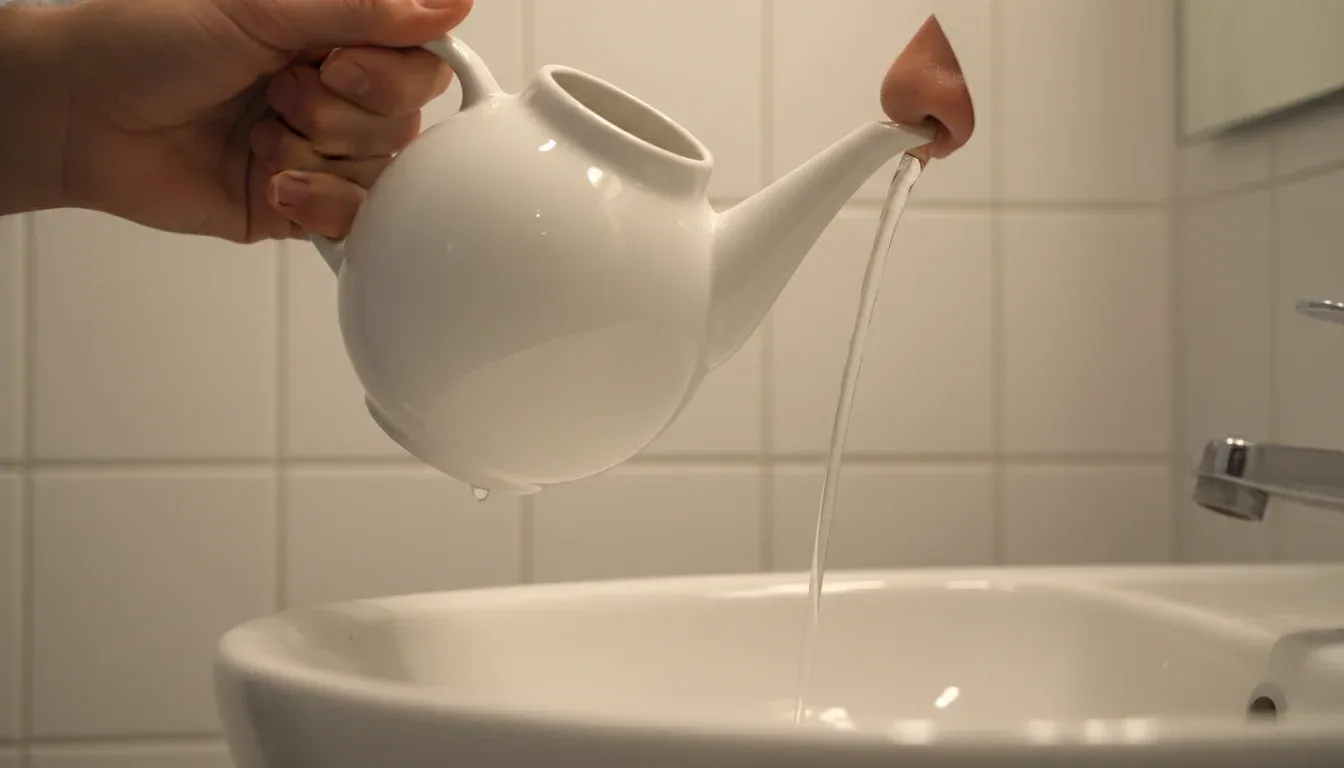
A neti pot or squeeze bottle floods your nasal passages with saltwater and physically flushes out mucus and irritants. Use the saline packet that comes with your device and follow its instructions. Fill it only with distilled or sterile water, or tap water that’s been boiled and cooled, never straight from the faucet, because rare but serious infections have been traced to tap water in nasal rinses. Lean over the sink, pour into one nostril, and let it drain out the other. Do one side, then the other. It feels strange the first time and works better than almost anything else here.
3. Run a humidifier
Dry air irritates an already-swollen nasal lining and makes congestion feel worse, especially overnight with the heating on. A cool-mist humidifier in the bedroom keeps humidity up while you sleep. Keep it clean, though: a neglected humidifier grows mold and bacteria and then mists them straight into the air you’re breathing, which defeats the point. Empty it daily and clean it the way the manufacturer directs.
4. Apply a warm compress
Soak a washcloth in warm water, wring it out, and lay it across your nose and forehead. The warmth feels good against the ache and pressure, and the moist heat can help loosen things up. Reheat and reapply as it cools. It’s low effort and pairs well with the other methods.

5. Drink more fluids
Staying hydrated keeps mucus thin so it drains instead of sitting there like concrete. Water does the job; warm drinks add a bit of soothing steam while you sip. Peppermint tea is a nice pick because menthol feels like it opens things up, and ginger tea is another easy option. Go easy on alcohol and caffeine when you’re really blocked, since both nudge you toward dehydration.
6. Elevate your head at night
Lying flat lets mucus pool in your nose overnight, so you wake up more blocked. Prop yourself up on an extra pillow or two so your head sits at a slight angle and gravity keeps things draining. It won’t fix much on its own, but with a humidifier and a saline rinse before bed it can be the difference between sleeping and staring at the ceiling.
7. Eat something spicy
Capsaicin, the heat compound in chili peppers, sets off a temporary flood of drainage. It’s not subtle: your nose runs, your eyes water, and then things clear for a while. A bowl of spicy soup or a few dashes of hot sauce does it. The relief is short-lived, but sometimes that’s all you need to get through a meal or fall asleep.
Most stuffy noses ease up on their own within a week or so. In the meantime, saline rinses and a humidifier handle the background congestion, and a warm compress or a hot shower takes the edge off when it peaks. Stack a couple together and you’ll breathe easier. If it drags on or you spot any of the warning signs below, get it checked.
When to call a professional
Most stuffy noses come from a cold or allergies and clear on their own, so a few rough days is normal. See a doctor if congestion lasts more than 10 days without improving, if you run a fever, or if your mucus turns green, yellow, or bloody, which can point to an infection that needs treatment. Congestion that keeps coming back through the year is also worth a look.
One caution specific to nasal rinsing: if you get a headache, fever, confusion, or vomiting after a saline rinse, seek medical care right away. It’s rare, but those can be signs of a serious infection.
And if you’re using a decongestant nasal spray, don’t run it more than three days in a row. Past that, it can rebound and leave you more blocked than before.
FAQ
How do I get rid of a stuffy nose fast?
The quickest relief usually comes from a hot, steamy shower or a saline rinse, both of which loosen and clear mucus in minutes, with a warm compress on your face for the pressure. None of them cures the underlying cold or allergy, but they buy you comfortable breathing while it clears.
Why is my nose blocked but nothing comes out when I blow it?
Because the block is mostly swelling in the nasal lining, not mucus sitting in the passage. Blowing harder does little when the tissue itself is inflamed. Steam, saline, and a humidifier target the swelling and dryness, which is why they tend to work better than blowing.
What’s the best sleeping position for a stuffy nose?
Propped up, not flat. Lying down lets mucus pool and congestion worsen overnight, so stacking an extra pillow or two to keep your head elevated helps you breathe and drain until morning.
How long should a stuffy nose last?
A stuffy nose from a cold usually eases within a week to 10 days. If it hangs on longer, keeps returning, or comes with a lasting fever or colored mucus, see a doctor, as it may be a sinus infection or an allergy that needs its own treatment.
Corrections
- 2026-09-26: The steam method previously told you to lean over a bowl of just-boiled water under a towel. That carries a real scald risk if the bowl tips (NHS guidance warns against bowls of boiling water for steam inhalation). The method now leads with a hot shower, which delivers the same steam without a container of scalding water to spill.
- 2026-09-26: Removed a “breath-hold trick” method that lacked authoritative support for its technique and claimed effect.