Table of Contents
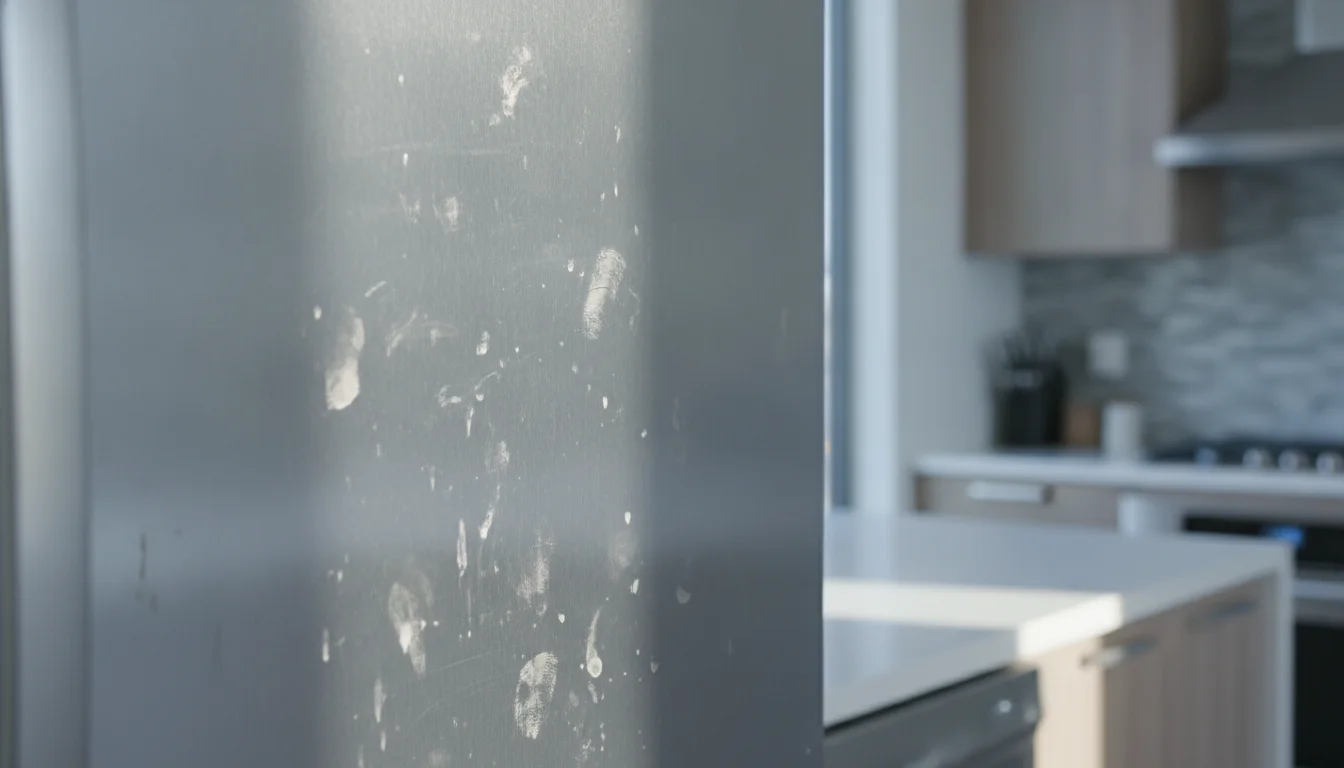
You wiped the fridge down and it somehow looks worse than before: cloudy, streaked, every pass of the cloth still catching the light. Streaks on stainless steel are almost never about how hard you scrub. They come down to two things – the direction you wipe and how you dry. Most guides cover how to clean stainless steel in general; this is the narrower fix for stainless steel streaks, smudges and water spots specifically. The five steps below go in order, from the change that fixes most streaking on its own to the barrier that keeps fingerprints from coming back.
What causes stainless steel streaks
Three things leave streaks, and each points to its own fix. Wiping across or in circles smears a thin film of water, soap or skin oil sideways across the surface’s directional grain, and the ridges of that smear are the streaks. Letting the surface air-dry leaves cloudy spots, because tap water carries minerals that stay behind as the water evaporates. And the wrong cleaner or cloth adds its own marks: paper towels shed lint, abrasive powders scratch a haze, and manufacturers put glass and ammonia sprays on their avoid list. Fingerprints are the same story – skin oil bonds to bare metal and shows every touch. Match the cause to the fix and the streaks stop.
1. Wipe with the grain
This is the single change that fixes most streaking. Stainless steel has a grain: faint parallel lines running one direction across the surface, like the grain in wood. Wipe across them or in circles and you drag residue over the surface and pack it into the microscopic grooves instead of lifting it out.
Find the grain first: look at the panel from a low angle in good light and turn your head until the fine lines show, then wipe only along them in straight passes, end to end. The grain often runs a different way on doors, handles and trim, so check each panel. Working with the grain lifts residue clear of the grooves and leaves nothing to catch the light. Use this rule for every step that follows.
2. Clean with warm soapy water and a microfiber cloth
For everyday fingerprints, smudges and greasy film, warm water with a single drop of dish soap is all you need. It cuts the skin oil and cooking grease that make marks, without any of the acids or chlorides that damage the finish.
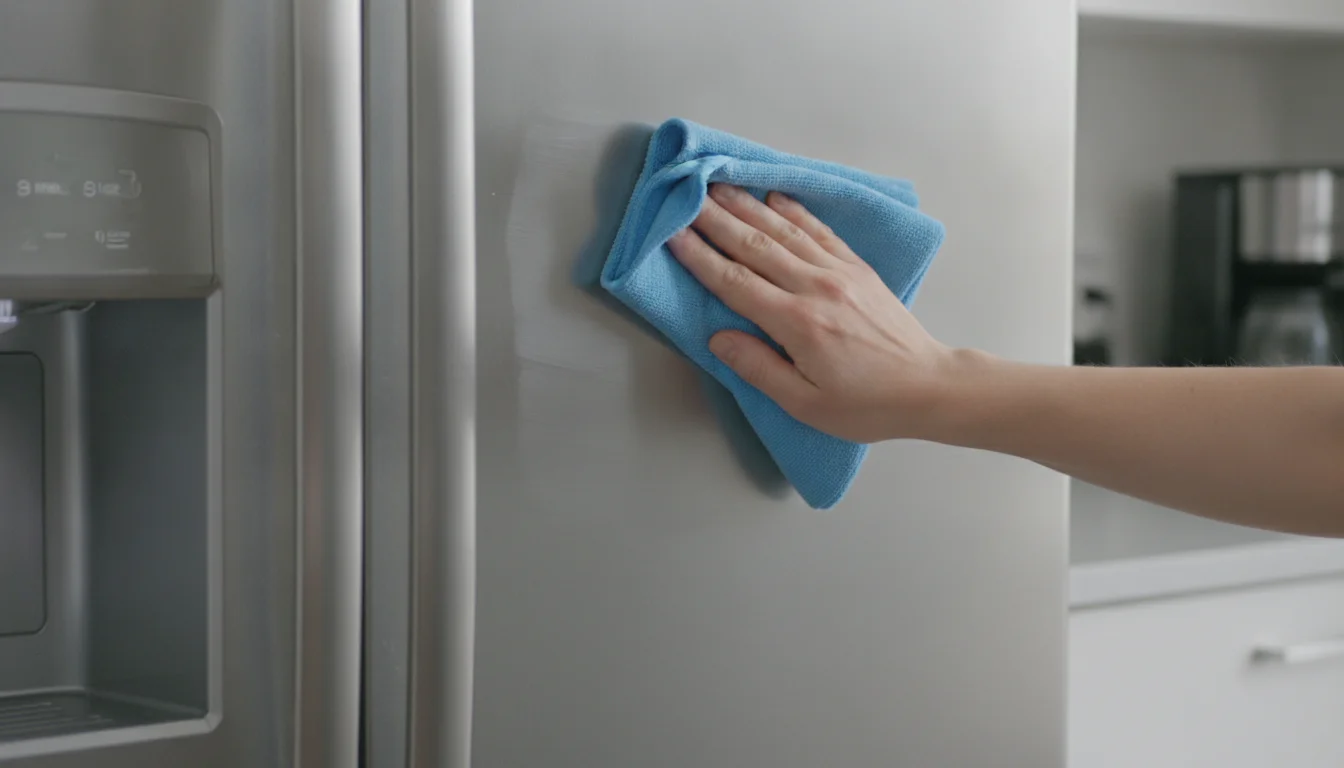
Add a small squeeze of dish soap to a bowl of warm water. Dampen a microfiber cloth, wring it so it is damp and not dripping, and wipe along the grain. Use microfiber, not paper towel or a terry rag, which shed lint. Keep it barely moist: a soaking cloth leaves puddles that dry into fresh spots. Then go over the surface with a second cloth wrung out in clean water to lift the soap off, since any soap left behind dries to its own faint haze.
3. Buff dry with a clean microfiber cloth
The step most people skip is the one that actually removes streaks. Water left to air-dry is the biggest single cause of spots, because the minerals in tap water settle on the surface as it evaporates.
Take a clean, dry microfiber cloth and go over the whole surface along the grain while it is still damp from cleaning. Light pressure, straight passes. As the last of the moisture lifts, the surface goes from cloudy to an even shine with no drag marks. Keep one cloth for washing and a second, always-dry cloth for this buff, so the dry one never smears soap or oil back on.
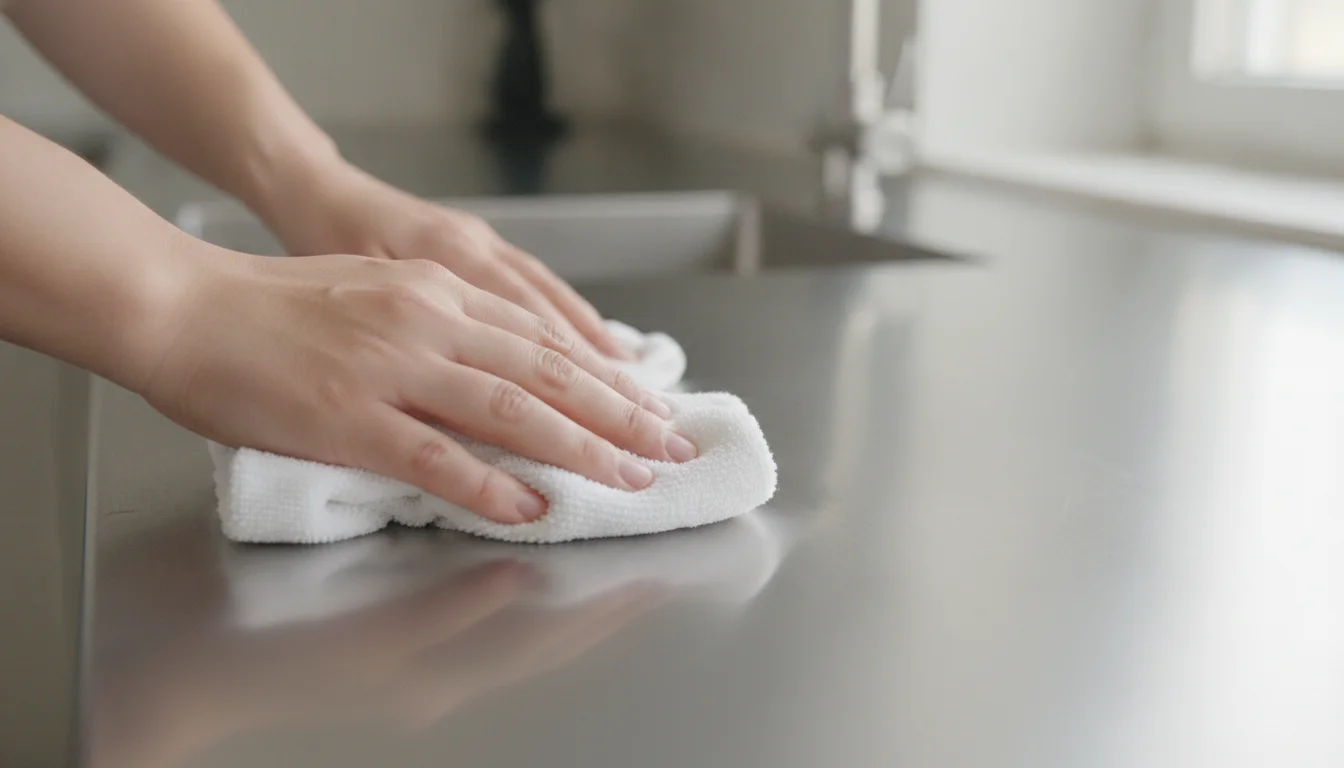
4. Lift hard-water spots with diluted vinegar
Cloudy white marks that soap will not shift are usually hard-water limescale, left behind when tap water dries. Soap does not dissolve minerals, but a mild acid does. Mix white vinegar with water, about one part to two, in a spray bottle. Dampen a cloth, lay it over the spot for a few minutes so the acid can dissolve the deposit rather than scrubbing at it, then wipe along the grain, rinse with clean water and buff dry.
Keep this occasional and diluted, and use it only on plain, uncoated stainless. Manufacturers and stainless steel authorities warn against vinegar, lemon or any acid as a routine cleaner, because acids slowly wear at the thin protective layer that keeps stainless from corroding. Fingerprint-resistant and other coated finishes are a different case: their makers say to clean with mild soap, warm water and microfiber only, and vinegar can damage the coating, so check your appliance manual before you put any acid on it. On bare stainless, treat a rinsed-off vinegar wipe as the exception for stubborn mineral marks, never a daily cleaner.
5. Polish with a thin coat of mineral oil
Once the surface is clean and dry, a whisper-thin coat of mineral oil is a common finishing trick to make the next round of fingerprints less obvious. The film leaves less bare metal for skin oil to grip, so new prints tend to wipe off more easily with a dry cloth.
Put a few drops of mineral oil on a clean microfiber cloth, never poured onto the surface, and wipe it over the panel along the grain. Buff it out with a second dry cloth until no oil is visible and the surface feels dry, not slick. The whole technique lives in the word thin: too much oil goes tacky and collects dust. Use mineral oil or a dedicated stainless polish, not olive or vegetable oil, which turn rancid. Reapply after each thorough wash. Do this only on plain, uncoated stainless. Fingerprint-resistant, coated and black finishes are a different case: their makers say to clean with mild soap, warm water and microfiber only and to skip oil and polish, so check your appliance manual before you use either.
Prevention
Prevention is just the habit version of the fixes above. Wipe with the grain every time, never in circles. Dry the surface straight after any contact with water, especially on sinks, so minerals never settle. And on plain, uncoated stainless, keep a thin oil or polish barrier on high-touch panels like fridge doors, reapplied after each wash – it helps fingerprints wipe off with a dry cloth and no cleaner. Coated and fingerprint-resistant finishes take mild soap, warm water and microfiber only, so check your appliance manual before you oil or polish those. Together these three habits keep the surface clean for days rather than an hour.
Frequently asked questions
What should I never use to clean stainless steel? Bleach and any chloride cleaner, which pit and stain it permanently; steel wool and abrasive powders, which scratch and can leave iron particles that rust; glass and ammonia sprays, which manufacturers put on their avoid list; and wiping against the grain.
How do I get a streak-free finish? Wipe with the grain using microfiber, then buff dry with a second, dry microfiber cloth immediately, before the surface air-dries.
What is the best streak-free cleaner? Warm water with a drop of dish soap for daily marks, a diluted-vinegar spot wipe for hard-water marks, and, on plain uncoated stainless, a commercial stainless polish if you want one. Skip oil and polish on coated and fingerprint-resistant finishes and check your appliance manual first. No single branded spray is essential.
Can stainless steel be permanently stained? Some damage is permanent, and it is not the same as a streak. Chloride pitting from bleach eats into the metal and cannot be wiped off. Heat tint, the blue or straw discoloration high heat leaves, is different: ordinary marks usually lift with a non-scratch stainless cream, and only heavy tint needs specialist treatment. Ordinary streaks, smudges and water spots come off; deep scratches and etched pitting do not.