Table of Contents
Scars don’t just show up on your skin – they stick around, sometimes for years, sometimes forever. That’s the honest version of what you’re dealing with. The good news is that scar tissue is living tissue. It remodels over time, and you can influence how that process goes, from fading a post-acne mark with kitchen staples to giving a raised scar months of consistent silicone.
What actually works depends on the scar type. Acne scars (the pitted, atrophic kind) respond to very different treatments than raised keloids or flat surgical scars. Burn scars are their own category entirely. And the age of the scar matters too – fresh scar tissue is far more responsive than something you’ve had for a decade.
This hub is about what you can do yourself, without a prescription: silicone sheets and gels, over-the-counter creams, compression, and the handful of natural remedies that earn their place. Some scars are beyond that – a raised scar that keeps growing, one that limits movement, one that stays painful – and those belong with a dermatologist, not a home routine. The “when to see a professional” section below tells you how to spot them.
For the full at-home breakdown – what’s worth buying and what’s hype – the home remedies article goes deep.
Topical treatments
Topical treatments are the right starting point before spending money on appointments, and several are genuinely effective, especially for newer scars.
Silicone gel sheets are the most evidence-backed option in this category. They work by maintaining hydration at the scar surface and regulating collagen production in healing tissue. You wear them over the scar for 12 or more hours per day – commitment is the catch, but studies back them for reducing raised scar height and improving texture, particularly in hypertrophic scars. Silicone gel (the spreadable version) works by the same mechanism if sheeting isn’t practical for your scar location. Start once the wound has fully closed, never on a scab or open wound.
Over-the-counter scar creams vary a lot in quality. The better ones contain silicone or onion extract as active ingredients. The ones that lean heavily on vitamin C and botanical extracts are mostly marketing. Read the label before spending $40 on something that won’t do much.
Onion extract gel (the best known brand is Mederma) has mixed evidence. Some studies show modest improvement in scar redness and texture; others show minimal effect versus plain moisturiser. One trial reported mild stinging in a small share of users, so patch-test it first. It’s worth a trial on newer scars, but don’t expect dramatic results.
Pressure therapy – sustained compression from an over-the-counter garment or a silicone pad – is used mainly on burn and raised scars. The catch is the same as silicone: it only works with consistent daily wear over weeks. For a large or movement-limiting scar, ask a professional whether a fitted garment is worth it before you buy.
Natural remedies
Most natural remedies work modestly, if at all. A few are worth using because they’re inexpensive, low-risk, and have some supporting evidence. Most of the rest are internet folklore.
Rosehip oil is the standout. It’s high in linoleic acid and vitamin A precursors, both of which support skin regeneration. There’s actual clinical data (not just anecdote) showing it reduces post-surgical scar discoloration and improves texture when applied twice daily. It’s not going to resurface a pitted acne scar, but for general scar fading it earns its reputation.
Aloe vera is soothing and moisturising, and it is cheap enough to be worth a try on a scar that has already healed over. Be honest about the evidence, though: the clinical trials that looked promising used formulated aloe creams, not the raw plant gel most people reach for. Treat it as a gentle moisturiser rather than a scar eraser, and keep it off open or still-healing wounds.
Honey has a long history in wound care, and one surgical trial found a honey dressing reduced scarring under a controlled protocol. That was a supervised medical dressing, not a spoonful from the cupboard on a healing wound, and the evidence does not crown one type over another. Worth knowing about, not a home method to run on an open wound yourself.
Vitamin E oil is one of the most repeated scar recommendations on the internet and one of the least supported by evidence. A controlled trial found no improvement in scar appearance from topical vitamin E, contact dermatitis in a third of the people who used it, and worse cosmetic results in some – the researchers concluded it should not be used on surgical wounds. Skip it.
Apple cider vinegar and lemon juice get passed around for fading dark marks, but both are acidic enough to burn healing skin – there is a documented case of a chemical burn from topical apple cider vinegar. No authority backs either as a scar treatment, and gentler options do the same job without the risk. Skip them.
Coconut oil is a decent moisturiser. As a scar treatment specifically, the evidence is thin. It keeps the skin supple, which isn’t nothing, but don’t expect it to fade or flatten anything.
Where it shows up
Scar type decides the approach, and two of the common ones have their own guides. For the pitted, post-acne marks that need type-specific treatment, read how to get rid of acne scars. For a raised scar that keeps growing past the original wound, a possible keloid, read how to get rid of keloids.
For the full home-based breakdown – silicone sheets, rosehip oil, onion extract gel, and what’s actually worth buying versus what’s hype – read How to Get Rid of Scars with Home Remedies.
How scars form
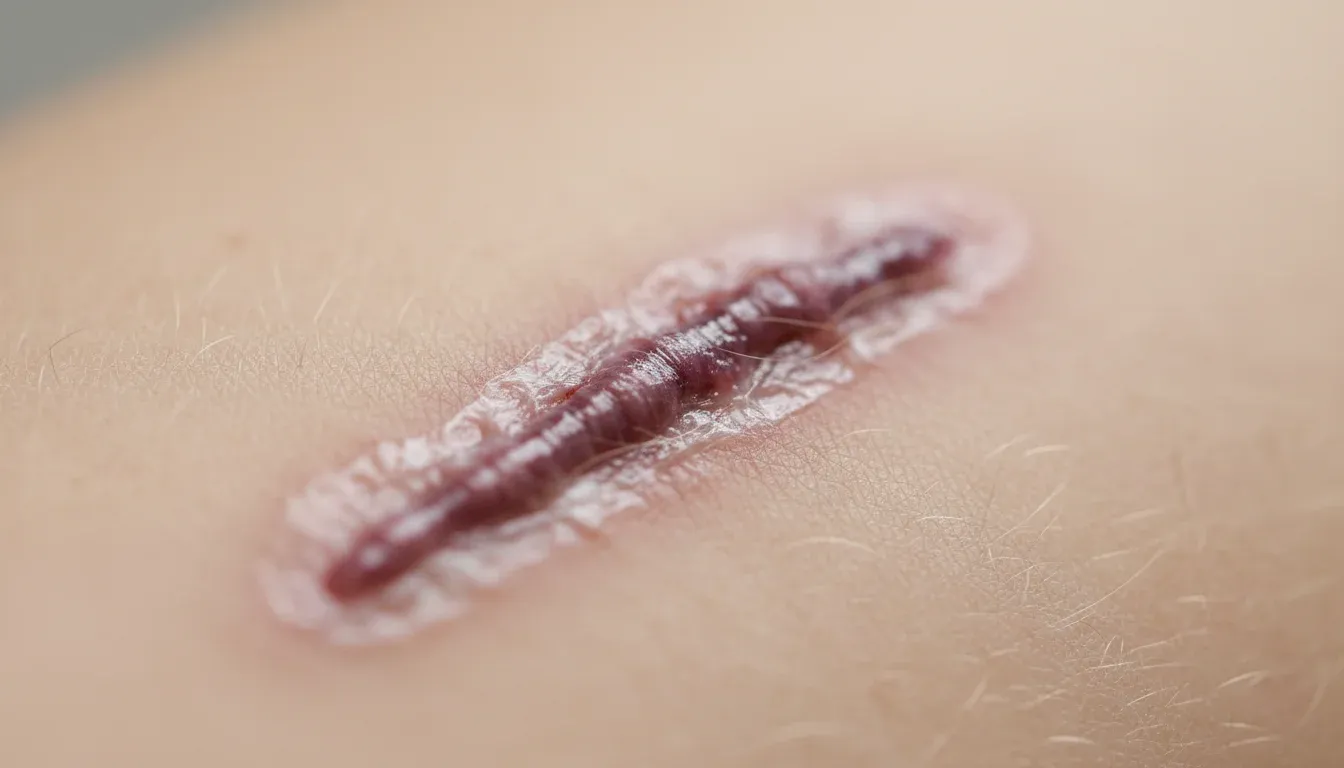
Scars are the skin’s repair mechanism. When the dermis (the deeper layer of skin) is damaged – by injury, surgery, acne, or burns – the body fills the wound with collagen fibres to close it. The problem is that repair collagen is laid down fast and in a disorganised way, not in the structured pattern of normal skin. That difference in collagen organisation is what makes a scar visible.
The outcome varies by person and by wound type. Genetics play a large role – some people scar minimally from significant injuries, others form keloids from small cuts. Darker skin tones are more prone to keloids and post-inflammatory hyperpigmentation. Age matters: younger skin heals faster but can also produce more robust scar tissue. The first several weeks after a wound closes are the most important window for influencing what the scar becomes, which is where prevention does its work.
Prevention
You can’t prevent scarring entirely, but you can reduce severity. The basics:
Keep wounds clean and moist during healing. Dry scabs are not the goal – they increase scar formation. Cover healing wounds with a non-stick dressing and apply petroleum jelly or a wound-healing ointment.
Sun protection matters. UV exposure causes hyperpigmentation in healing scars that can persist for years. SPF 30 or above on any healing scar that’s exposed to sunlight, every day, until the skin has fully matured (which takes up to 12 months for surgical scars).
Don’t pick. Picking isn’t the only way an acne scar forms – deep, inflamed acne can scar on its own – but every time you pick at a healing spot you restart the wound-healing clock and raise the chance of a textural scar.
If you’re prone to keloids, tell your surgeon before any elective procedure. A surgeon can put preventive measures in place for people who scar badly, so raise your history early and let them plan around it.
When to see a professional
Home care handles most scars, but some need a dermatologist. See one if:
- The scar is raised, thickened, or growing beyond the original wound boundary – a scar behaving this way may be a keloid, which rarely resolves on its own and gets harder to manage the longer it’s left
- The scar is restricting movement (common in burn scar contractures near joints)
- Scar tissue is painful or itchy long after the wound has healed
- The scar is significantly affecting your appearance and consistent home treatment hasn’t moved the needle
A dermatologist can assess the scar type and tell you what’s realistic, whether that’s continuing at home or something done in a clinic. For keloids especially, ask sooner rather than later – they’re much harder to settle once they’re established.
Frequently asked questions
Do scars ever go away completely?
Most don’t, but they improve significantly over time. The first 12 to 18 months of healing bring the most visible change – redness fades, texture smooths somewhat, and raised scars flatten. After that, improvement slows. Consistent home treatment can push it further, but complete erasure isn’t something a cream or a sheet delivers. If that’s the goal, a dermatologist is the person to ask about what’s possible.
How long does it take for a scar to fully form?
Skin continues to remodel for up to two years after a wound. The scar is considered “mature” at that point. Treatment tends to do the most while the scar is still maturing, though older scars still respond to consistent care.
Are OTC scar treatments worth the money?
Silicone-based products: yes, if you’re consistent. Most other scar creams: probably not. The marketing is far ahead of the evidence for vitamin-C-heavy scar gels and most herbal formulas. If you’re going to spend money, spend it on silicone sheeting or a tube of silicone gel – they have the best evidence base for at-home use.
Can I treat a scar while it’s still healing?
While the wound is still open, stick to basic wound care: keep it clean, moist, and covered. Save the active treatments – silicone sheeting, retinol, chemical exfoliants – until the skin has fully closed over. Authority guidance says silicone sheeting can begin once the wound is closed, so there is no fixed extra waiting period. Starting aggressive treatment on an open wound can damage healing tissue and make the final scar worse.