Table of Contents
A fleet manager asked a pest control forum about it: rats chewing the coolant lines on their electric delivery vans, every weekend, four times now, $20,000 in repairs. Traps and spray weren’t working. Every weekend is the clue, and it’s the first thing to know about how to get rid of rodents in car engines and cabins: the vans stand still for two days, and two quiet days is all it takes.
Sprays, plug-in boxes and a few traps are what failed. University of California pest specialists say no rat repellent has solved a problem for more than a very short time. What works is physical: take away the reason to stay, close the way in, protect what they chew, and stop letting the car sit.
Why rodents pick your car
A parked car is warm, dark and sheltered, and full of things to chew. Rodent teeth never stop growing, so they gnaw constantly, and wiring and hood insulation make good nest material.
The big factor is stillness. An auto repair chain says even a few days without use can be enough to invite a nearby rat in. Stored cars, project cars and fleet vans parked over a weekend get hit. Grass, shrubs, dumpsters and pet food near the parking spot keep a population close. Mice get through openings smaller than a dime, around cables, pedal shafts, the steering column and the vents.
1. Clear every crumb and wrapper out of the car
Nothing else holds while the car is a pantry. Rodents eat almost anything we do, paper included. Pull everything out, empty the bags on the floor, and check cup holders, door pockets, the console and the trunk. Public health guidance for vehicles is blunt about it: don’t leave any kind of food anywhere in the car. Keep the junk down too. A trunk full of clutter is a ready-made nest site.
2. Trap around the car, with rat-sized traps
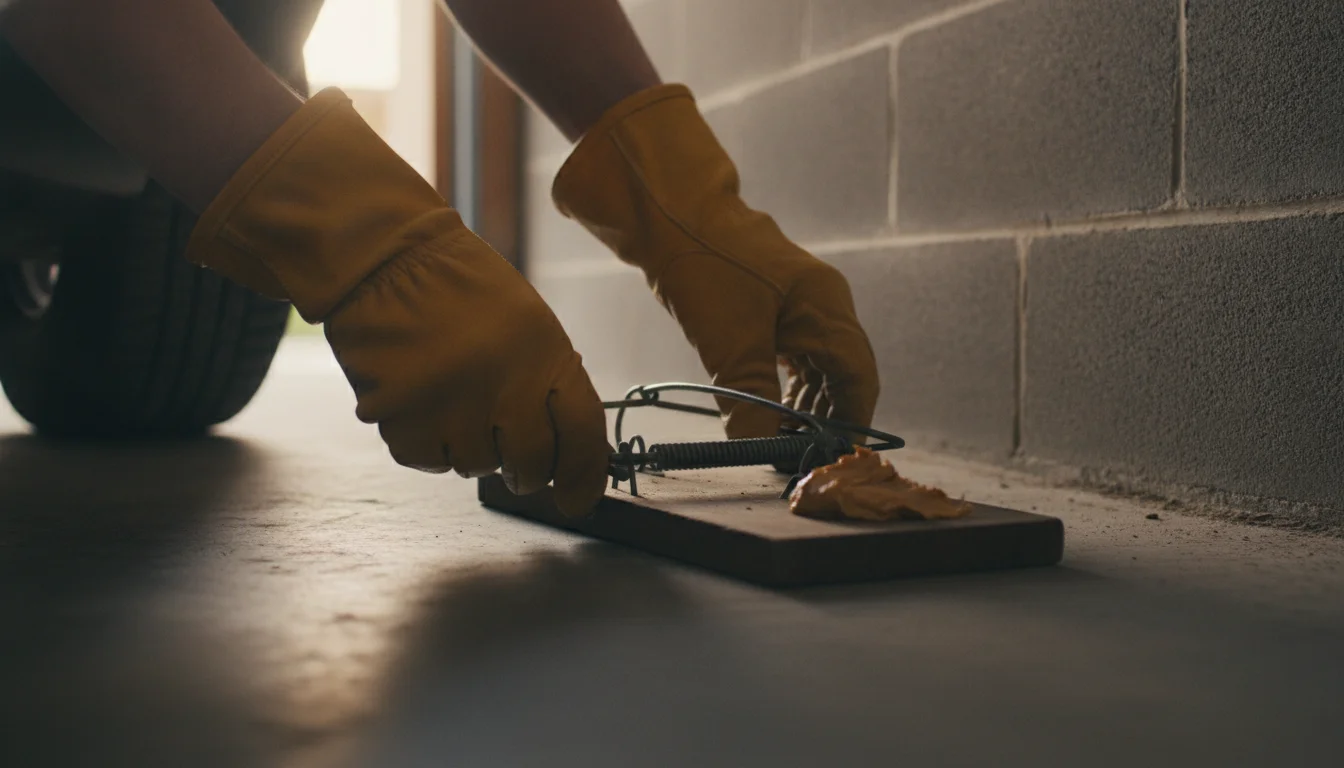
Use rat-sized traps for rats (mouse traps are too small) and set them where the animals travel: along the garage wall, beside the wheels, on the route they use to climb into the bay. Set them at right angles to the wall with the trigger end almost touching it. Bait each one with a pea-sized dab of peanut butter, nuts, dried fruit, bacon or dry pet food.
Here’s the bit most people skip. Rats are wary of new objects. Leave the traps baited but unset for a few days until the bait gets taken, then set them all at once. A rat that springs a trap and escapes is very hard to catch again. Box the traps or put them behind a barrier wherever kids, pets or birds can reach. Check them every day.
Traps catch the individual, not the reason it came. That’s why the fleet manager was still paying for repairs.
3. Clean up nests and droppings wet, never with a vacuum
Plenty of guides say to vacuum the car. The CDC says not to use a vacuum or a high-pressure sprayer on droppings, urine or nests until they’ve been disinfected, because dried material stirred into the air can carry viruses you then breathe in.
The CDC’s steps for a vehicle:
- Open the hood, doors and trunk and let it air out for 20 minutes.
- Disconnect the battery before you work in the engine bay.
- Put on plastic gloves and a long-sleeved shirt.
- Spray droppings and nest material until they’re soaked, and leave them for 5 minutes (or as the disinfectant label says). A fresh mix of 1.5 cups of bleach in 1 gallon (3.8 L) of water works.
- Pick it up with paper towels and put it in the garbage. Wipe the area again with disinfectant.
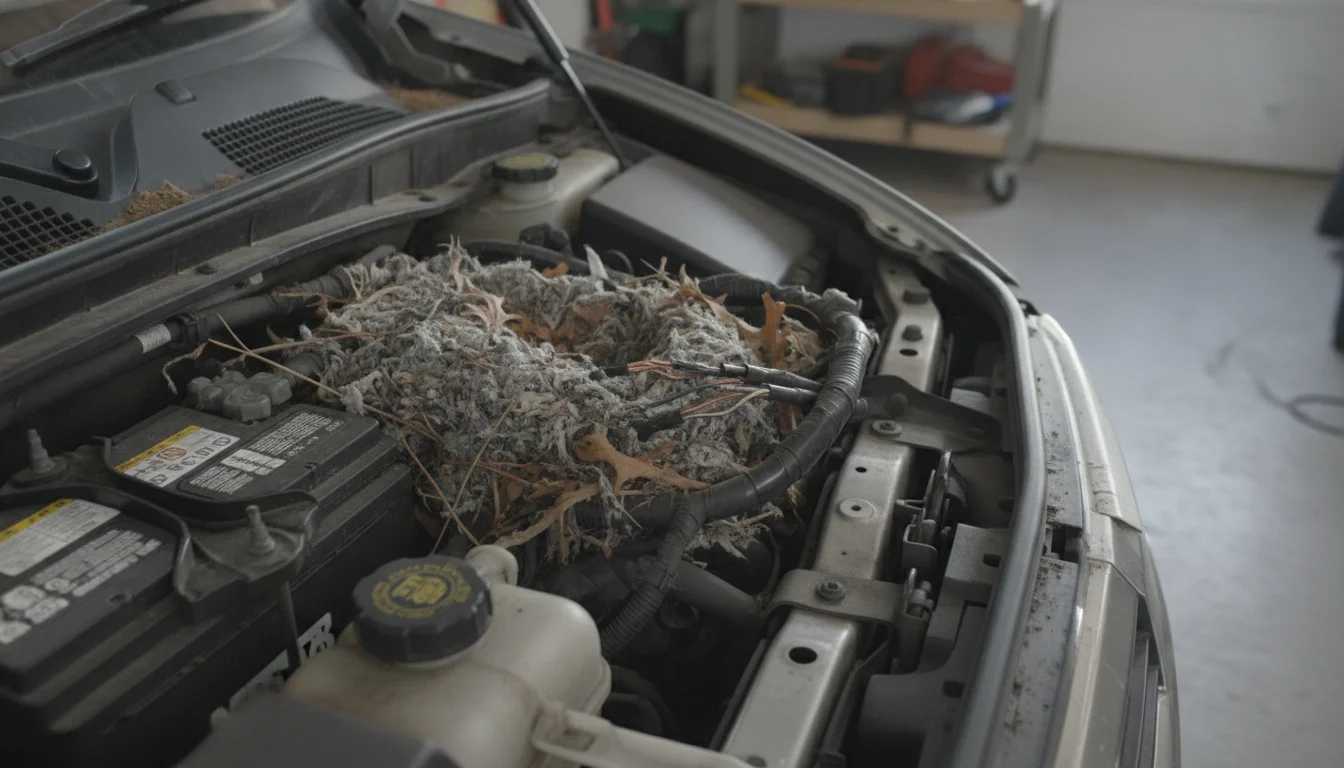
- If there’s nesting in the air intake, take out the nest and the air filter and fit a new filter.
- Reconnect the battery once everything’s dry.
Wash your gloved hands, take the gloves off, and wash again with soap and warm water.
4. Have the engine bay professionally washed to strip the scent
Urine marks territory. A motoring columnist who gets this question often recommends having the bay detailed to get rid of that scent. The German motoring club ADAC goes further after a marten attack: get a professional engine wash, because the animals react aggressively to the scent marks of others of their kind and bite all the harder. ADAC wrote that about martens, not rats.
Book it with a shop or a detailer rather than hosing down the bay yourself.
5. Have a shop screen the cabin air intake
On many vehicles the heater’s fresh-air intake sits in the cowl under the wipers. One Prius owner cleaned a nest out of the cabin filter, replaced the filter, pulled the blower motor to clean it, drove the car and parked it somewhere else. When the replacement filter tray arrived, there was a new nest in it.
Cleaning doesn’t last until the route is closed. How the cowl comes apart, and what sits near the intake, depends on the model, so ask a mechanic whether yours can take a screen and have them fit it. University pest guidance says rodents get through gaps over 1/4 inch (6 mm) and that the fix is metal hardware cloth, never chicken wire. Whatever goes in, replace the cabin filter if anything nested on it.
6. Sleeve the wiring they keep going back to
When a mechanic has already repaired a chewed harness, ask them to protect that same stretch. Honda has made a wiring tape treated with capsaicin, the hot compound in chili peppers. ADAC lists hard plastic sleeves for ignition cables, sold by car accessory shops, routed and secured so they can’t reach hot or moving parts. It also points out what they don’t do: protect hoses and rubber boots, which get bitten too.
It’s a patch for a known spot, not a coolant line fix. On an electric vehicle, leave the high-voltage harness alone (see below).
7. Drive it every few days
The weekend is the problem, so break it up. The repair chain suggests taking a rarely used car out at least once a week. A car that’s started and moved isn’t a quiet shelter, and opening the hood when you do means you spot droppings before the next repair bill. For a fleet, rotate which vans stand idle.
Driving won’t clear an established problem on its own. If a car that’s used daily still gets chewed, the rodents are living near where it parks.
8. Park somewhere else
Move the car away from shrubs, tall grass, dumpsters, compost and pet feeding spots. One TopGear reader went through three electrician visits and a full rewire before writing in, and the answer started with the surroundings: keep the area around the car clear of clutter, food and junk. A garage helps if its door gaps are sealed.
9. Use a cover that seals to the ground
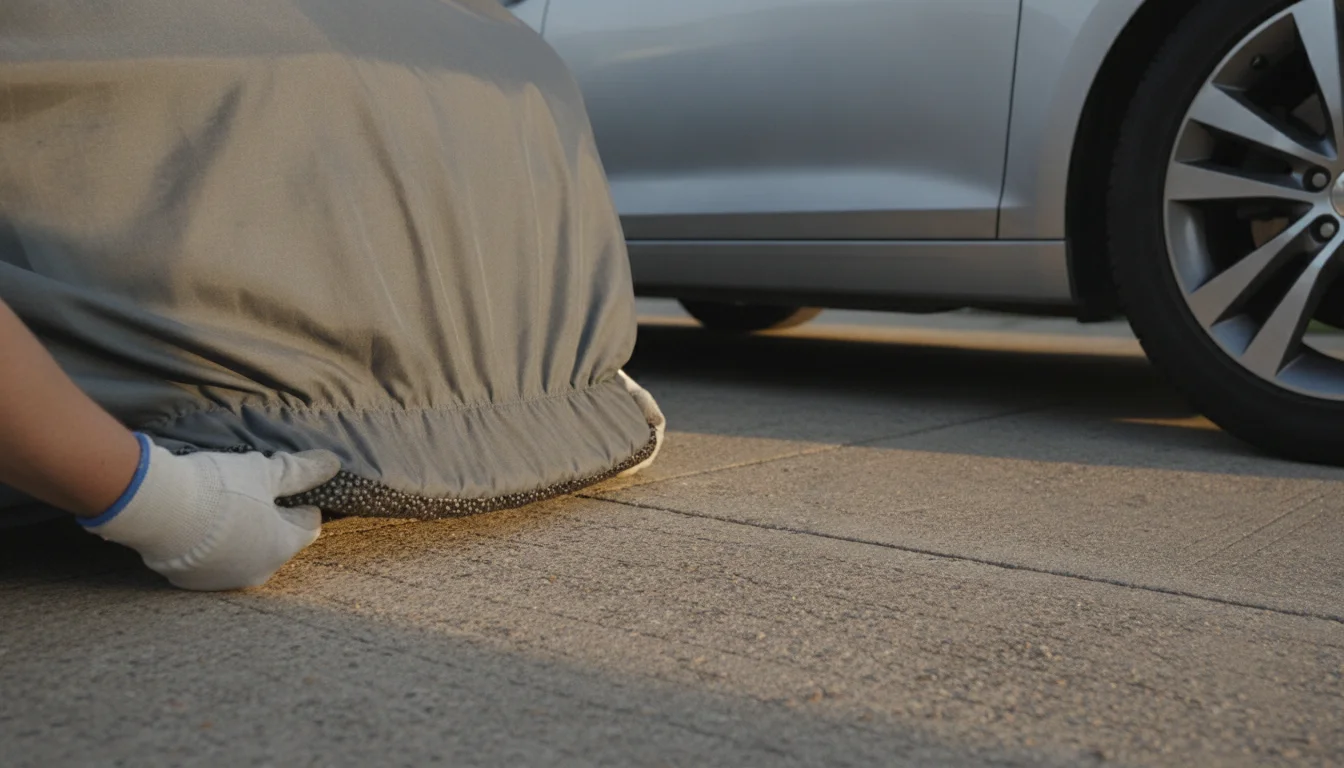
A normal cover stops at the bumpers and leaves the underside open. University of California guidance recommends a weighted cover that touches the ground and forms a seal all around the vehicle. It suits a car that stands for days. Close any gap at the hem.
10. Have a pro run bait stations around the lot
For a depot, a yard or a block where the population lives next door, this deals with the source rather than the car. In the US, products sold to the public are limited to wax block, gel or paste baits, and tamper-resistant bait stations are required wherever children, pets, other mammals or birds could get to the bait. Licensed pest control operators can get more formulations and know the placement rules. Stations go around the perimeter, never in the car, and the label rules. Rodenticides can poison pets and wildlife, so on a fleet lot let a licensed operator run them.
11. Fit an under-hood shock deterrent (as a last layer)
Two kinds of under-hood gadget get sold together. Ultrasonic boxes don’t work: university guidance says rats get used to repeated sounds quickly. The TopGear reader tried plug-in repellers with no luck.
Shock deterrents are different. Metal plates go where animals climb into the bay, and a control unit puts a high-voltage pulse on them, like a small electric fence. ADAC says they’ve proved themselves against martens, the animal Europeans fight under their hoods, and that fitting one should be done properly by someone qualified. Nobody has published a test on rats. Worth it only on a vehicle that keeps getting chewed after the other layers are in place.
Skip these
Mothballs. The National Pesticide Information Center says don’t use them as a repellent unless the label allows it, and adds they have little or no repellent effect anyway. In the open, the vapor causes headaches, nausea and eye and nose irritation, and labels limit them to airtight containers. Peppermint oil, dryer sheets and pepper sprays give inconsistent results and need constant reapplying.
When to call a professional
- Chewed wiring, a dashboard warning light, a burning smell or a coolant leak. Get a mechanic to inspect it. The TopGear reader smelled smoke while driving.
- Bite damage on an electric car’s high-voltage cables. ADAC says those cables must not be repaired and have to be replaced, and the bill runs to thousands of euros.
- A nest in the blower or ducts you can’t reach.
- Repeat damage across several vehicles, or new damage after you’ve done the basics. That’s a rodent population nearby, and a licensed pest control operator needs to work the whole site.
FAQ
What keeps rodents out of your car?
Layers, not a smell: a clean cabin, a screened intake, a better parking spot, regular driving and a ground-sealed cover for long stays.
Will insurance cover rodent damage to a car?
Often, if you carry comprehensive coverage. GEICO and Liberty Mutual both list rodent-chewed wiring as typically covered under comprehensive, minus your deductible. A liability-only policy won’t pay. GEICO adds that damage that happened gradually, or that preventive care could have avoided, may not be covered. Photograph the damage, report it promptly, and check your own policy wording.
What should you do if a rodent is living in your car?
Clear out the food, set traps around the car, and clean up the nest wet with disinfectant (never vacuum). Then have a mechanic check the wiring and hoses before you rely on the car.