Table of Contents
You scrubbed the shelves, put baking soda in, and it still stinks. That’s the clue. How to get rid of kitchen cabinet smell depends on where it lives, and a smell that survives a proper clean isn’t living in the dirt. It’s in the plumbing, in the board the cabinet is made of, or in something that moved in.
Kitchen cabinets smell for five main reasons, each with a different fix: sewer gas under the sink, a slow leak, mice, old cooking oil near the stove, and new cabinets giving off the smell of their glue. Baking soda fixes none of them. Work out which one you’ve got (the cabinet tells you most of it), deal with the source, then the leftover smell.
How to get rid of kitchen cabinet smell: find the cause first
Sewer or rotten-egg smell, sink cabinet only. That’s drain gas getting past the water seal in the trap, a loose joint in the drain pipes, or dirty sink water backing into the dishwasher hose. Methods 2 to 4.
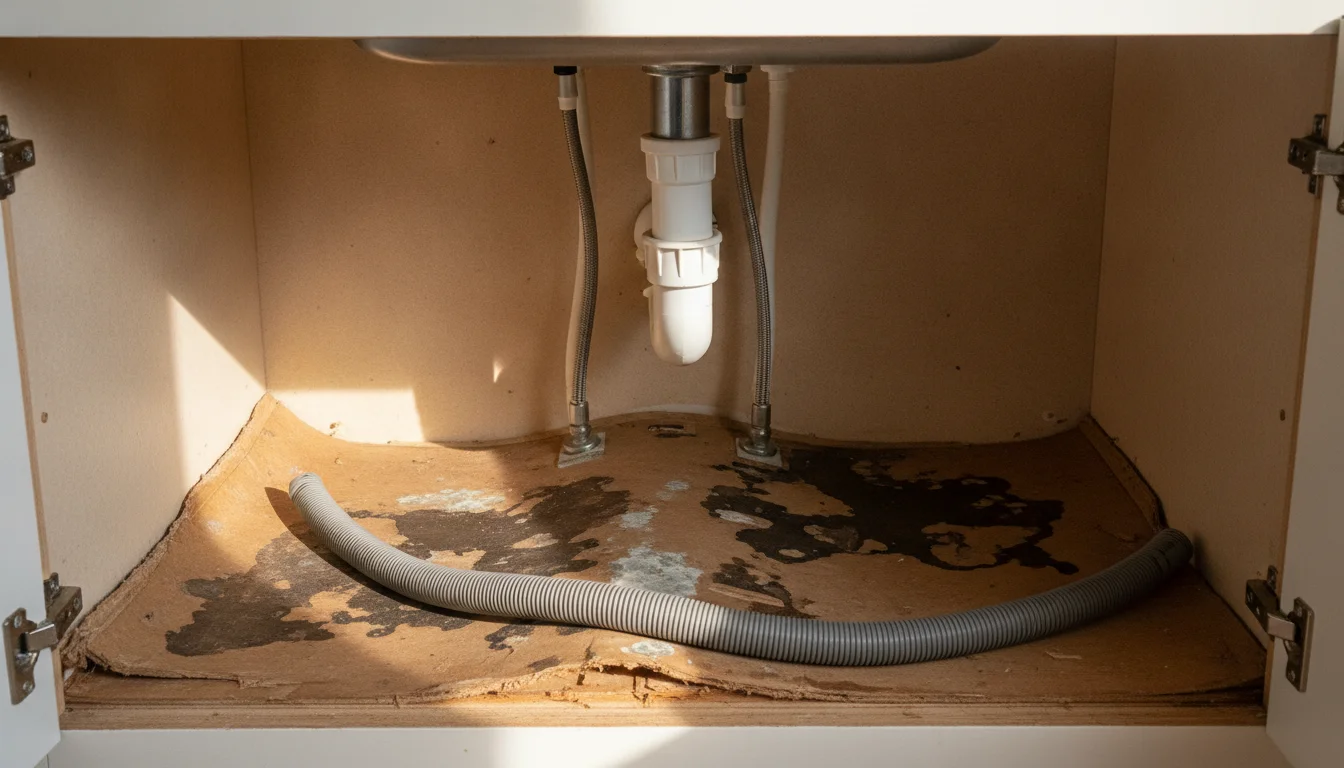
Musty, damp, wet-wood smell, usually the sink base. A drip has soaked the cabinet floor. Most sink base floors are particleboard, and particleboard holds water like a sponge. Check whether the floor is firm or swollen and soft. Methods 3 and 5 to 7.
Musky smell plus droppings or chewed packets, any lower cabinet. Mice. The University of California’s pest program says a musky odor is commonly associated with mice, especially in long-term infestations. Methods 8 and 9.
Stale, sticky, old-oil smell, cabinets beside and above the stove. Cooking steam carries grease that settles on the cabinets and builds up into a film. Method 10.
Sharp, chemical smell, cabinets less than a few months old. Particleboard, MDF and hardwood plywood are bonded with resins that release formaldehyde, and the EPA describes it as a gas with “a strong odor.” Method 11.
1. Empty and wash the cabinet interior
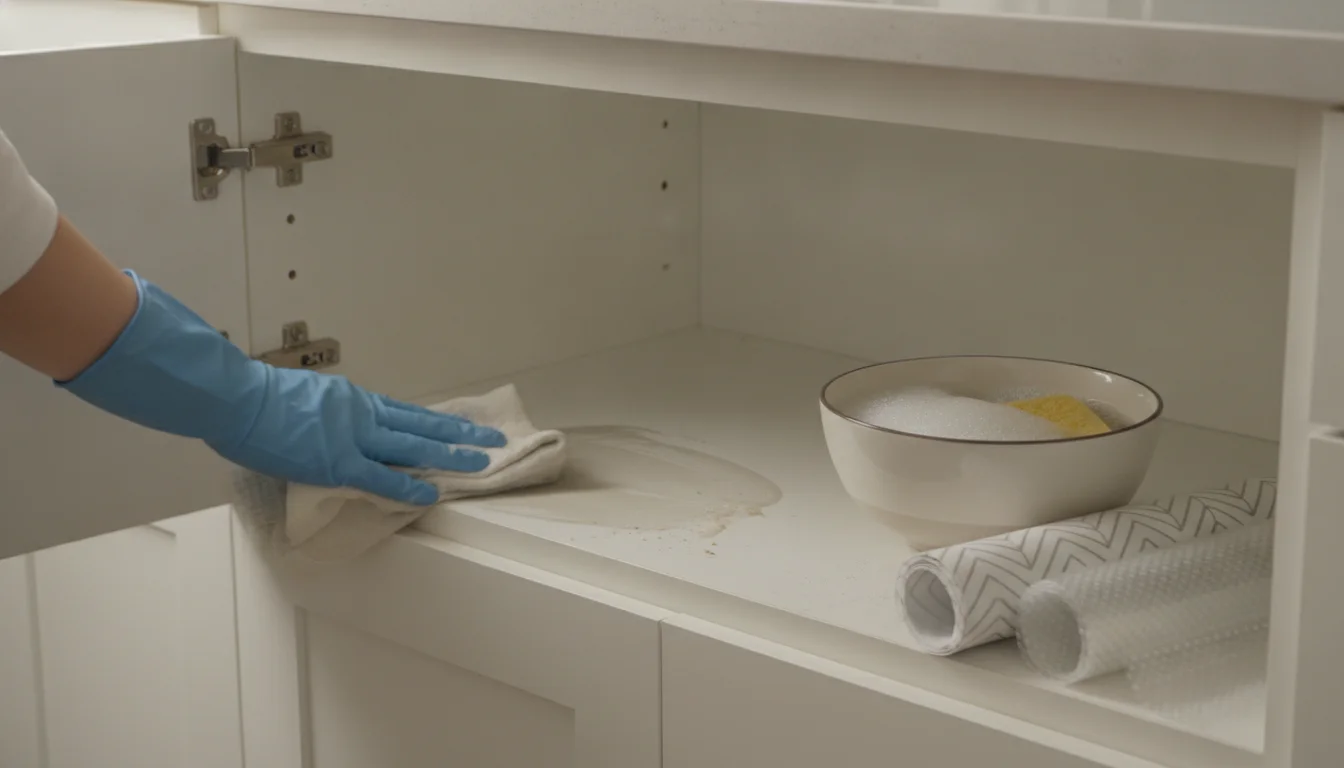
Do this first: it’s how you find out what you’re dealing with. Take everything out, shelf liners included. Paper liners trap damp and smell underneath them, and they’re often the whole problem, so throw them out. Vacuum the corners and the seams where the shelves meet the walls, where crumbs and spills collect.
Wash every inside surface with warm soapy water: floor, back, sides, the underside of each shelf, the hinges. Wipe with clean water. On particleboard, wring the cloth until it’s damp, not wet, because water that runs into an unsealed edge makes the board swell. While you’re in there, look for wet patches, mold spots, droppings and swollen board. Then leave the doors open with a fan running until it’s bone dry, and wash the dishes before they go back.
2. Run water to refill a dry trap
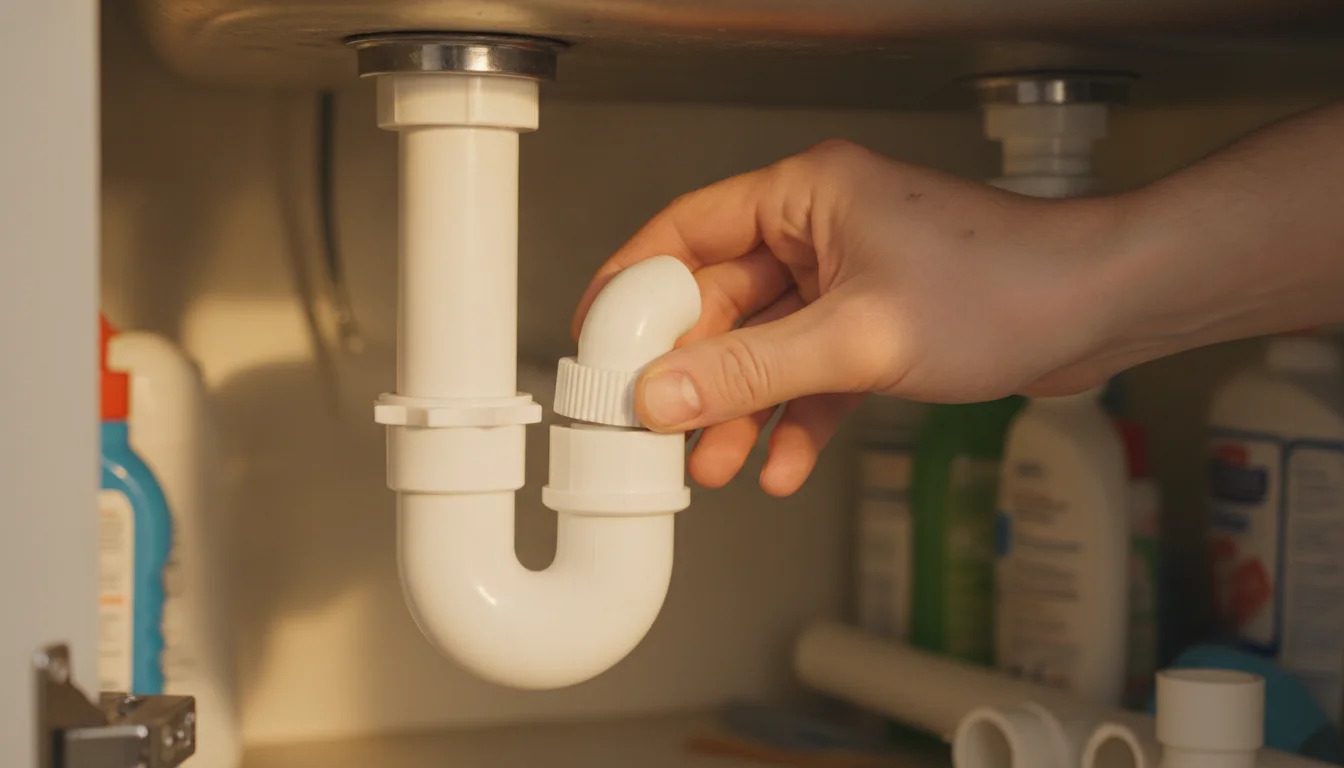
The U-shaped pipe under the sink holds a plug of water that keeps sewer gas out of your kitchen. If that sink doesn’t get used for weeks (a second bowl, a prep sink, a kitchen you’ve been away from), the water evaporates and the gas comes straight up. Run the faucet for a minute, or pour about a quart (1 L) of water down the drain. The smell should clear within the hour. For a drain that smells even when the trap is full, see how to get rid of drain smell.
3. Tighten slip nuts and fix leaks
A sewer smell from a sink you use every day isn’t a dry trap. Look at the joints instead. The big plastic nuts on the trap (slip nuts) work loose, and a loose one lets gas out and drips into the cabinet. Run the water, then feel every joint and the cabinet floor for damp. Tighten a loose slip nut by hand. Replace worn washers. Cold pipes that sweat count too: foam pipe insulation stops it. A drip keeps feeding the musty smell whatever else you do.
4. Raise the dishwasher hose into a high loop
Almost nobody checks this. Follow the dishwasher’s drain hose from where it comes through the cabinet wall to the sink drain or disposal. If it lies low across the cabinet floor, dirty sink water can be pushed back up it. A plumbing supplier says that brings “foul odors” into the dishwasher, and Bosch says odors back up into the dishwasher without the loop.
Lift the middle of the hose as high as it’ll go under the countertop (right under the sink deck is typical), then let it drop to the drain. Strap or screw it to the underside of the counter or the cabinet wall. A loop held up by nothing sags back down. If your sink has a small chrome cap on the deck, that’s an air gap, which is the stronger option and required by code in some places (Minnesota since 2016). If the dishwasher itself smells, that’s its own job: dishwasher smell.
5. Replace a swollen sink base floor
The other guides skip this. If the cabinet floor is swollen, soft or spongy anywhere, deodorizing can’t work. One DIYer on Reddit put it well: stop the drip and dry the surface, and the panel is still wet all the way through, with no air under it to dry it out. It keeps growing mold and keeps smelling.
You don’t need a new cabinet. If there’s a garbage disposal, switch its power off at the circuit breaker or fuse box first, then take it out following the disposal maker’s instructions, or have a plumber or electrician do it. Then Family Handyman’s method: take out the trap and drain lines, cut out the middle of the old floor about 3 inches (7.5 cm) in from each edge, and drop in 1/2-inch (12 mm) exterior-grade plywood cut to the inside size. Seal the plywood’s face and edges with urethane varnish first, screw it to the old floor around the edge with 1-1/4-inch screws, and caulk the edges and pipe holes so the next spill sits on top.
6. Seal firm wood that still smells
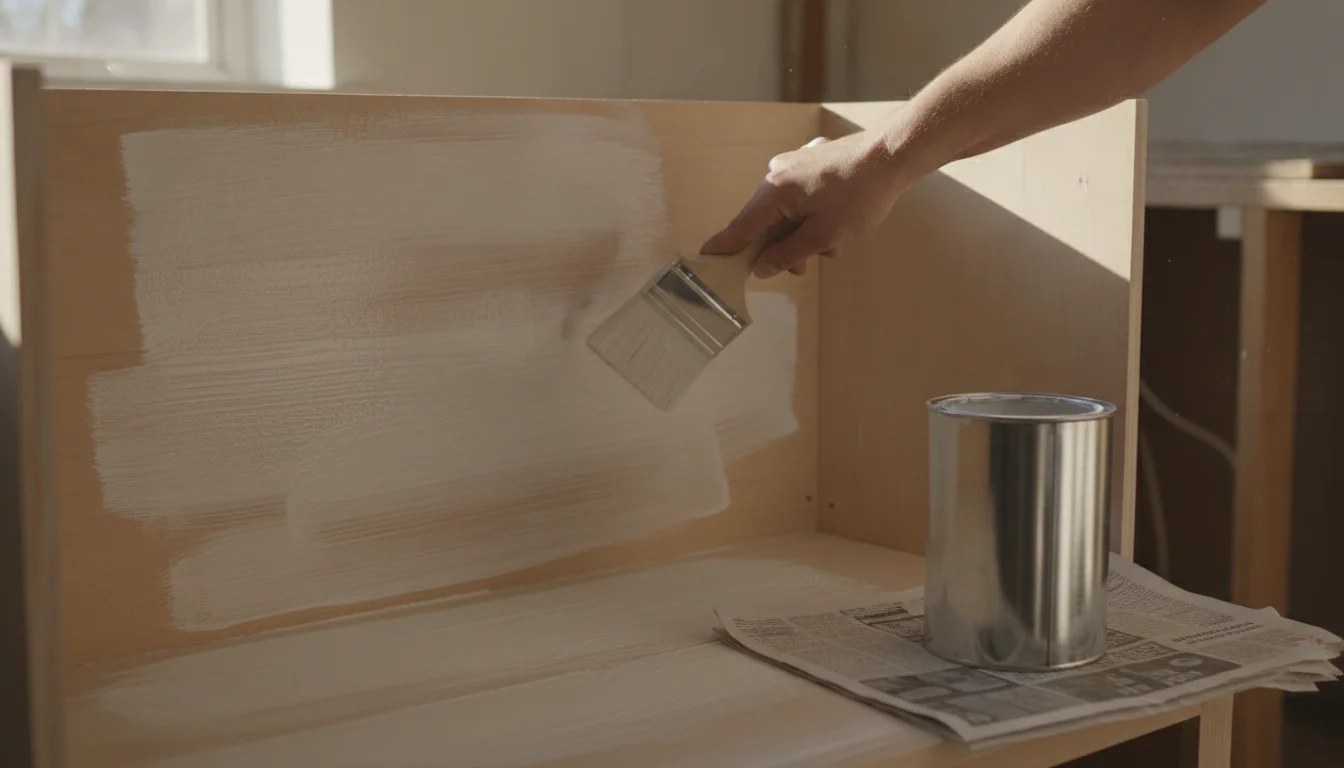
Floor solid, leak fixed, cabinet dry, and there’s still a musty or stale smell in the bare wood? Seal it in. A shellac-based primer forms a barrier that stops porous wood giving off the smell. Two coats, 30 to 45 minutes’ drying between them, and cover every surface in the cabinet, not just the stain, because smell spreads sideways through the wood. This works on sound wood. It’s a cover-up on swollen board.
7. Put a moisture absorber in damp cabinets
For a cabinet that smells musty with no leak at all (a humid house, or dishes put away damp), pull the moisture out. Moisture absorber tubs are crystals that collect water out of the air into the tub, no power needed. Put one in each closed cabinet that smells. In very humid kitchens, one cleaner reports calcium chloride tubs filling within three to four weeks. One Reddit user’s tip: a tub that isn’t filling after two weeks is only pulling room humidity, so keep looking for the source.
8. Disinfect droppings and urine before you wipe them up
Never sweep or vacuum mouse droppings, urine or nesting material. The CDC says that can put virus-carrying droplets into the air. Open the kitchen windows for 30 minutes first and put on rubber or plastic gloves. Spray the droppings and any stained spots with a household disinfectant, or 1.5 cups of bleach in 1 gallon of water (about 350 ml in 3.8 L), until they’re soaked. Leave it 5 minutes. Pick it up with paper towels into a covered trash can, then wipe the whole cabinet with disinfectant. If the smell is strong but you can’t see anything, pull off the toe-kick board under the cabinets and look for a nest. If something has died back there, dead mouse smell covers it.
9. Seal the gaps they’re getting in through
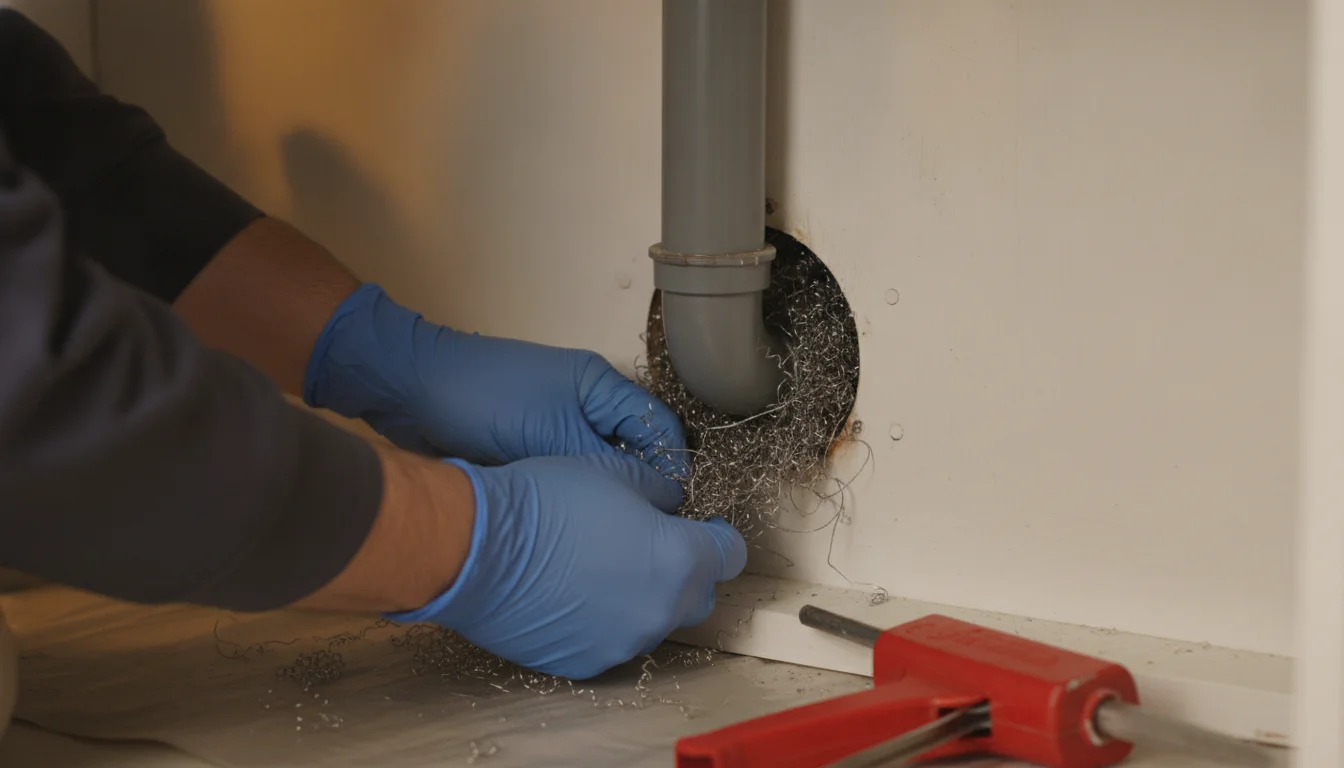
Clean all you like; if the gap is still there, they’ll be back. Start with the holes where the pipes come through the back or floor of the sink cabinet. Mice get through openings as small as 1/4 inch (6 mm). Pack small gaps with steel wool and seal over it, and screw a patch of 1/4-inch hardware cloth over bigger holes, then caulk or cement the edges. UC’s pest program warns that foam, plastic, rubber and wood on their own get chewed through, and steel wool alone can rust. For a wider problem, see how to get rid of mice.
10. Degrease cabinets near the stove
Old-oil smell, tacky doors, shelves that feel greasy? Spray a grease-cutting dish spray over the sticky areas and leave it. Five minutes helps. Thick, dark buildup can need 30 minutes or more before it goes soft. Wipe off what’s loosened, spray again where it’s still tacky, then wipe with a cloth wrung out in clean water so no cleaner is left. Do the inside of the doors too, and dry everything.
11. Air out new cabinets (and every cabinet you’ve just cleaned)
New cabinets smelling of chemicals need air, not deodorizer. The EPA’s advice for formaldehyde from pressed wood is to increase ventilation, especially after bringing new sources into the home, and to keep temperature and humidity moderate, because heat speeds up the release. Leave the doors open, run the range hood and open the windows whenever the weather lets you. Buying again? The EPA suggests composite wood certified to California’s (CARB) formaldehyde standard.
12. Put activated charcoal in for the leftover smell
Once the source is gone, a faint smell can hang around in the wood. Put a mesh bag or open dish of activated charcoal on the shelf and leave it. A bowl of baking soda overnight is the cheaper option for a light smell. Replace the charcoal when the smell starts to come back. Before you’ve found the source, it’s just a way to ignore the problem.
Prevention
Never put dishes, pots or containers away damp. That’s how most musty cabinets start. Wipe up spills in the cabinets right away, and dry anything wet under the sink within 24 to 48 hours, the window the EPA gives before mold sets in. Every few months, open the sink cabinet and feel the floor and the trap joints. Run any sink you rarely use once a month.
When to call a professional
Call a plumber if the sewer smell comes back within a day of refilling the trap and tightening the joints, or the sink gurgles when it drains: a blocked or broken drain vent pulls the water out of the trap, and that’s not a DIY fix. Call one too if you can’t find or stop the leak that soaked the cabinet floor. If mold has spread beyond the cabinet, or covers more than about 10 square feet (1 m²), the EPA says to follow its professional cleanup guidance. And if mice keep coming back after you’ve sealed the gaps, bring in pest control.
Frequently asked questions
Does a mildew smell in a cabinet eventually go away? Not while the wood is still wet. Fix the leak, dry the cabinet, and test the floor. Soft or swollen board keeps smelling until it’s replaced.
How long does it take for new cabinets to stop smelling? There’s no reliable number. It depends on the materials, the temperature and the humidity, since heat speeds up the release. Ventilation is the thing you control.
Why didn’t baking soda or vinegar work? Because they only soak up smell in the air. If the source is a dry trap, a wet board, mice or grease, the smell keeps coming back faster than the bowl can take it up.
Can I just paint over a swollen cabinet floor? No. Paint or sanding hides the bump and leaves wet, moldy board underneath. Once particleboard swells, cut it out and replace it.