Table of Contents
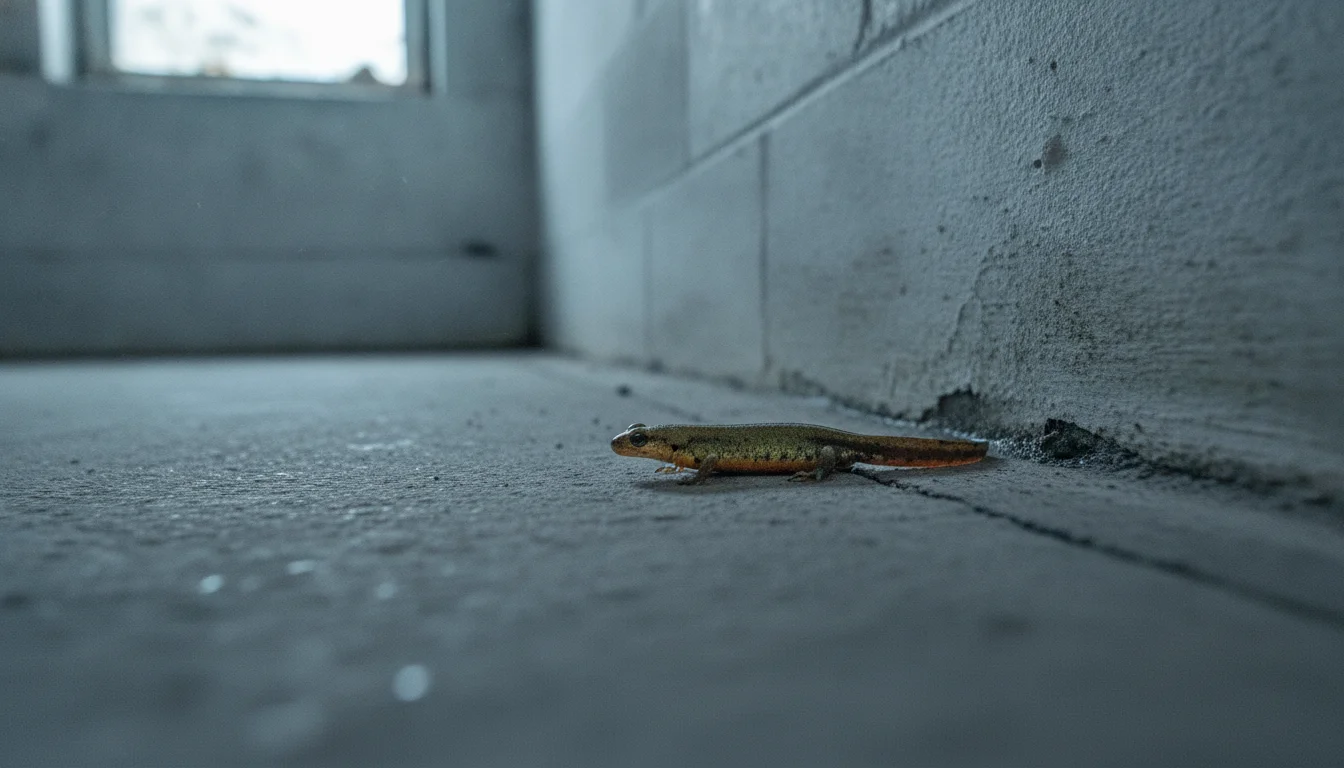
A newt on the kitchen floor in October isn’t an infestation. It’s a lost animal looking for somewhere damp and frost-free to spend the winter, and your basement looked close enough to a log pile. Getting it out is easy. Knowing how to get rid of newts in the house without hurting them, without breaking the law (in the UK, one species is strictly protected) and without your dog finding one first takes a little more thought.
So the order matters. Find out what it is, then decide whether you’re allowed to move it, then move it properly, then close the gap it came through.
1. Identify the species before you touch it
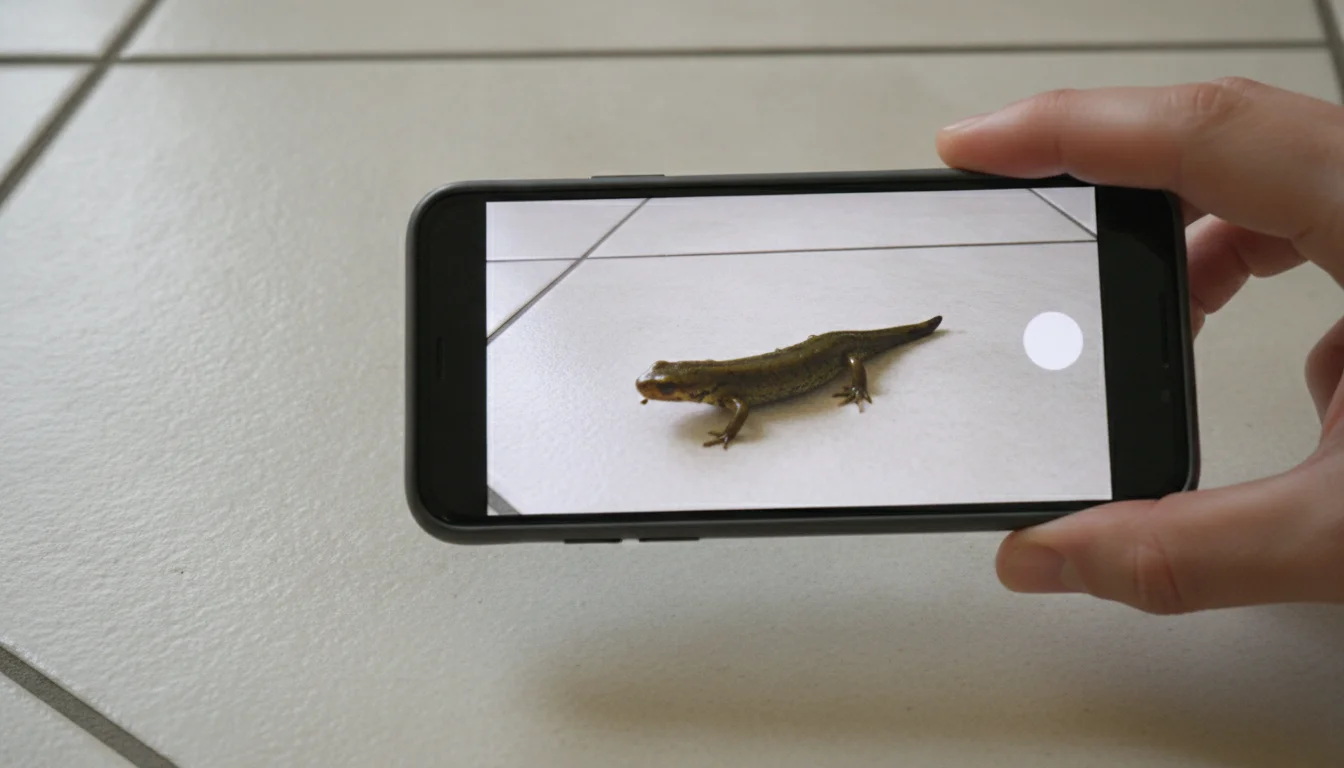
Look first, and take a photo. What it is decides everything else.
Rule out a lizard. Froglife’s rule of thumb is that lizards are scaly and very quick, so if you can catch it, it’s a newt. Newts have smooth or warty skin and four toes on each front foot, where a lizard has five. (Got a lizard after all? That’s a different job.)
In the UK there are three native newts. The smooth newt is the most common and the palmate newt looks very like it. The great crested newt is the one to watch for: the largest of the three, up to about 6 in (15 cm) long, with dark, rough, warty skin and an orange belly blotched with black. In North America the question is toxicity, not law. The rough-skinned newt of the Pacific coast and the red-spotted newt of the east both carry tetrodotoxin in their skin.
Can’t tell? Treat it as protected and send the photo to a local amphibian and reptile group.
2. Leave a great crested newt where it is and get advice
This one isn’t optional. Natural England’s standing advice lists great crested newts as a European protected species: it’s an offence to deliberately capture, disturb, injure or kill one, or to possess or transport one, and their resting places are protected even when they’re empty. Froglife puts it more bluntly. You must not do anything that will disturb them.
So don’t box it up and carry it outside. Keep pets and kids away, and contact Natural England (Natural Resources Wales or NatureScot outside England) with the photo and where you found it. A pest controller who found great crested newts under rotten timber did exactly this in 2017, and was advised to move them nearby in a container with some of their own leaf litter. Outside the UK, ask your state or national wildlife agency.
3. Pick it up with wet hands
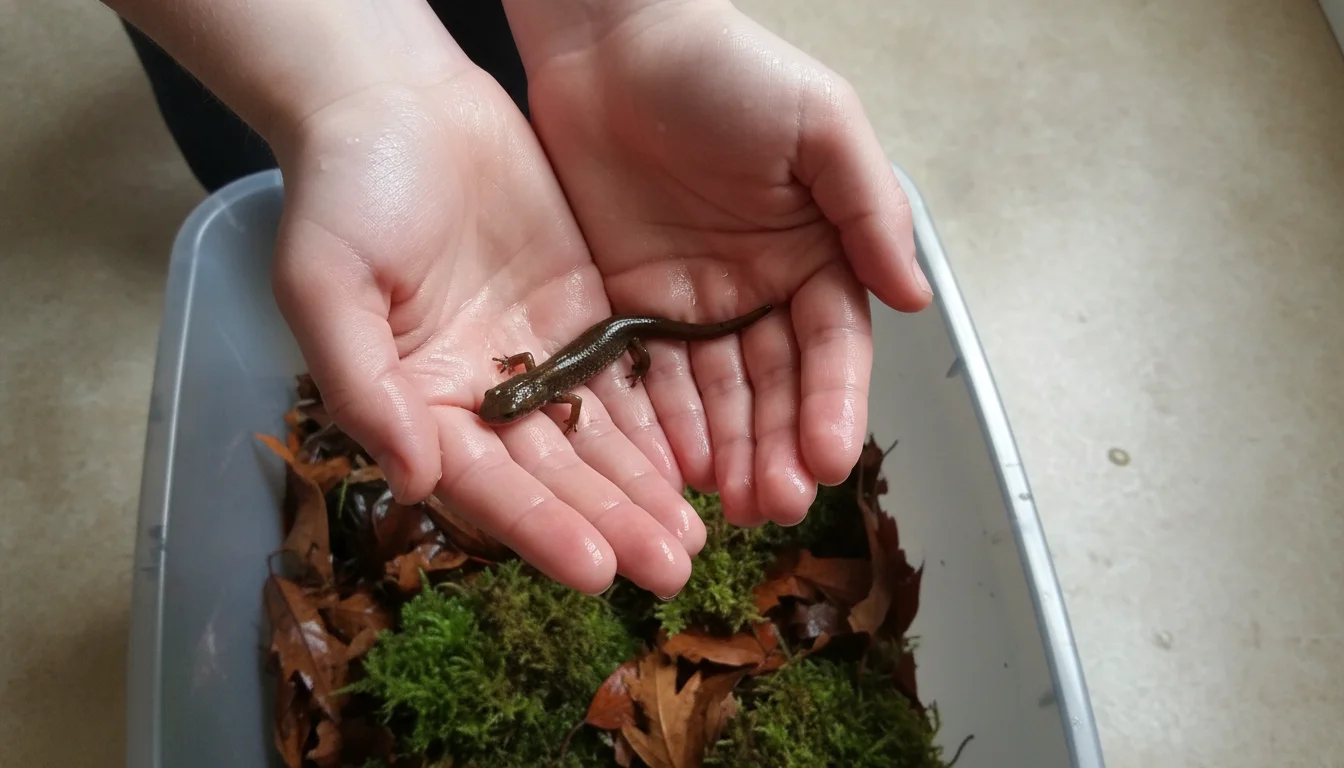
For a smooth or palmate newt, or any species you’re allowed to move, this is the quickest fix. Wet your hands with plain water first. Dry hands strip the protective mucus on a newt’s skin.
Cup both hands and scoop it from underneath. Don’t pinch. Hold it low over the floor, put it straight into a tub lined with damp leaves or moss, and wash your hands with soap and water. Skip this if you’ve got cuts on your hands. And keep your fingers away from your eyes until you’ve washed: the USGS amphibian handling guidance says to rinse your eyes with plenty of water and get medical care if they sting or your vision blurs after handling a newt.
4. Use a jar and a card
Don’t want to touch it? Fine. Put a clear jar or glass over it, slide a stiff card slowly underneath so it steps on, and lift both together. One caudata.org member in Spain moved the salamanders in their garden exactly this way, with a glass and a postcard, like catching a spider. Newts are slow, so this is easier than it sounds.
5. Release it into damp cover nearby
Not a pond, and not the river two towns over. Froglife’s advice is to put it into nearby cover that shelters it from predators and bad weather: a compost heap, a log pile, under a shed or decking, or dense planting. Try not to move it more than a mile (1.6 km) from where you found it, because moving amphibians further spreads disease.
In winter, pick somewhere frost-free but not warm, set it at the edge and tip the damp leaves in after it. The Orianne Society suggests waiting for a few days forecast above freezing with no snow on the ground. If it’s deep winter where you are, call a licensed wildlife rehabilitator rather than keeping it in a box until spring.
6. Seal the gaps it came through
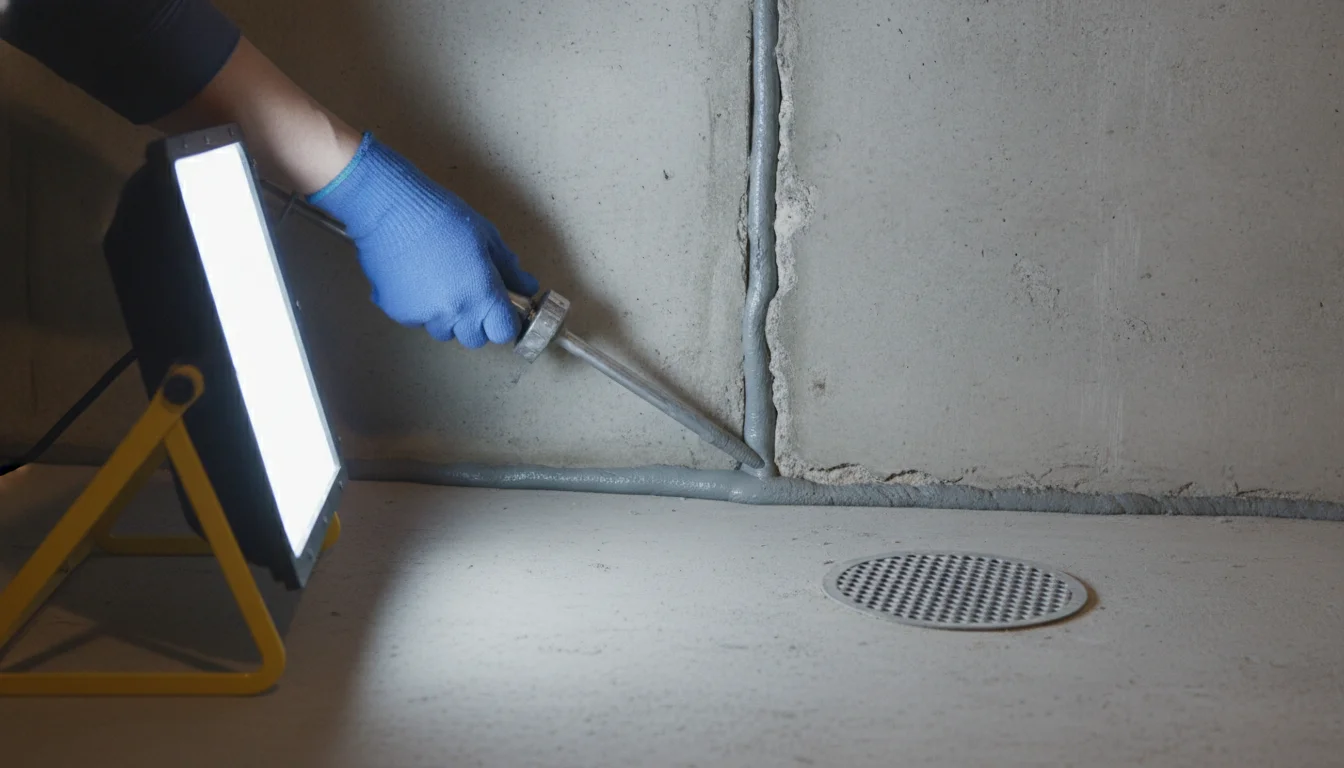
The Orianne Society names the main routes into basements: cracks, drain holes and gaps around basement doors. Walk the foundation and caulk the cracks, fit a door sweep to any door with daylight under it, and cover drain holes and wider openings with metal mesh before you caulk round the edges. One gap left open undoes the rest.
Do it before autumn, when they start hunting for winter shelter. Sealing later is still worth it, but check the basement corners first or you’ll shut one in.
7. Give window wells a ramp and a cover
Window wells are pits, and the Orianne Society says an amphibian that gets into one may not get back out unless you give it a way. Wildlife Illinois says to lean a rough board in the well at an angle so trapped animals can climb out, then fit a plastic or metal cover (fine grate if metal) sitting flush against the wall. Use untreated wood. A gardener writing for Gardening Know How put pre-treated lumber in a pond and found dead amphibians the next morning.
8. Move log piles and leaf heaps away from the walls
Newts winter in log piles, compost heaps and leaf litter, so a woodpile against the house parks them a few feet from your gaps. Move it to the far end of the yard, and rake leaf heaps away from the foundation. In the UK, check first that you’re not disturbing great crested newts: their resting places are protected too.
Why newts come into the house
Autumn. Froglife says newts spend it feeding up and hunting for winter shelter in log piles, compost heaps and under paving, and a cool, damp basement with cracks in the wall looks like more of the same. The Orianne Society says basements are where most people who see an amphibian in winter find it. Old stone-walled basements are damp enough for one to survive. Newer, dry ones are a trap with no way back out.
A pond nearby makes visits likelier, but not having one doesn’t rule them out. One caudata.org member found a common newt in their kitchen two years after they’d removed their garden pond. The nearest water was another pond about 550 yd (500 m) up the hill.
When to call a professional
Call Natural England, Natural Resources Wales or NatureScot before you touch a newt you think might be a great crested newt, or if you’re doing building or pond work where they live. That’s the law, not a courtesy.
Call a vet or a pet poison line straight away if your dog or cat has mouthed or eaten a newt. North American rough-skinned and red-spotted newts carry tetrodotoxin, and Pet Poison Helpline says eating one can cause progressive paralysis, breathing trouble and seizures. Its advice after contact with one is to get veterinary help immediately. In the UK, the Animal PoisonLine (01202 509000) answers around the clock. Don’t make your pet vomit yourself.
FAQ
Should you touch a newt?
Only if you’ve ruled out a protected species. Use wet hands, keep it brief and wash with soap and water afterward. Amphibians can carry Salmonella however clean they look.
What do you do if a salamander is in your house?
The same as a newt (newts are a kind of salamander). Identify it, move it in a damp-lined tub to cover near the house, and seal the basement gaps and window wells it used.
Can a newt live out of water?
Yes. Outside the breeding season most adult newts live on land, in damp cover. That’s why you release one under a log pile, not into a pond. A dry house is the problem, not the lack of water.
Will mothballs or repellents keep newts out?
No. The National Pesticide Information Center says mothballs aren’t meant to be used as animal repellents, may only be used the way the label describes, and have little or no effect as repellents anyway. Scattered in the open, they also give off vapors people breathe. Seal the gaps newts come through instead.