Table of Contents
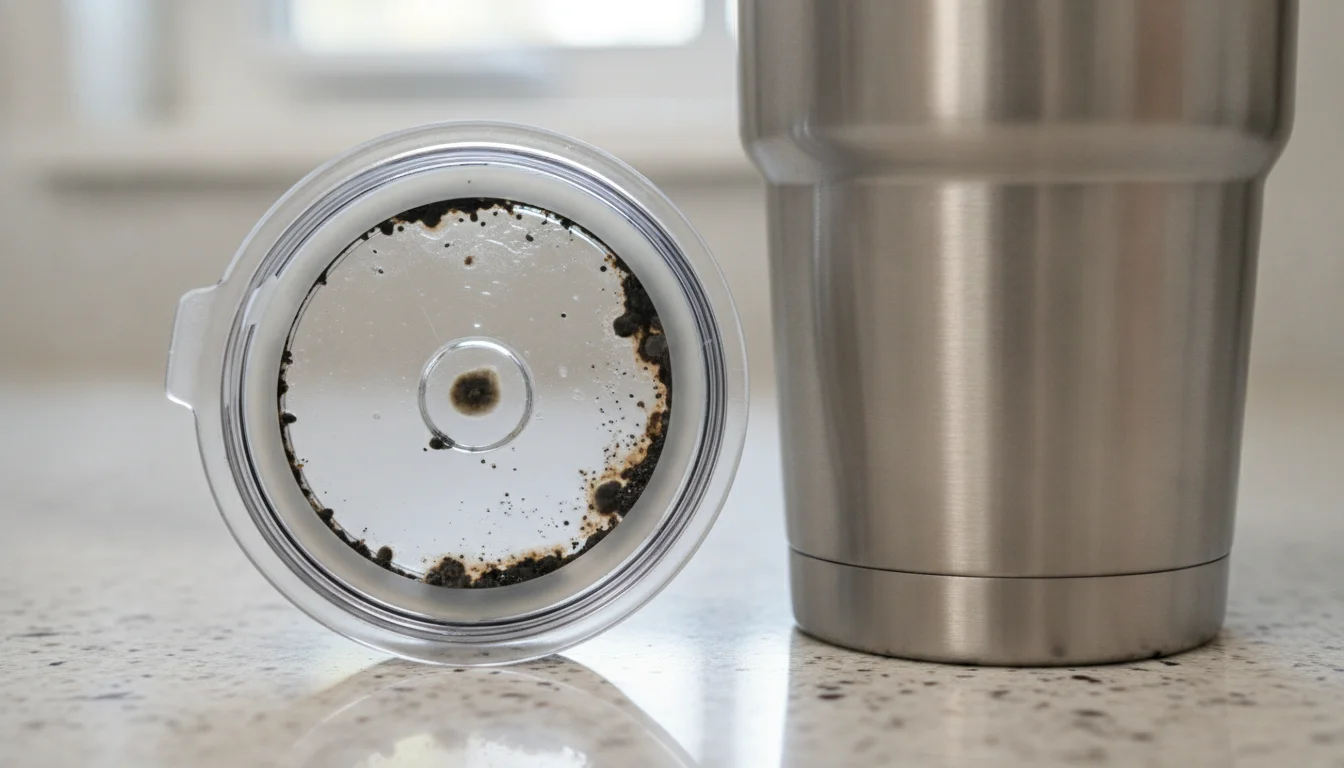
The black spots are almost never in the bottle. They’re in the lid, under a ring of silicone you’ve probably never taken out, or behind the little slider you flick open fifty times a day. So how to get rid of mold in water bottle lids starts with taking them apart, not with a stronger cleaner.
The steel or plastic body nearly always cleans up. The soft parts are the question: some come clean with a scrub and a soak, and some are stained for good and get replaced.
And skip the bleach. Stanley, YETI and Owala all tell owners not to use it on their drinkware: Stanley says bleach and chlorine can degrade the sealing parts, and Owala says bleach can discolor and corrode stainless steel. Everything below works without it.
Why mold grows in a water bottle
A bottle is dark, damp and warm inside, it rarely dries out, and every sip adds bacteria from your mouth and hands. And the worst spot is the crease between the lid and its removable seal: it never sees light, and if you never pull the seal out, water sits there between washes. America’s Test Kitchen found a dishwasher cycle usually can’t clear the gunk trapped under silicone gaskets or plastic tabs.
1. Take the lid apart and remove every gasket
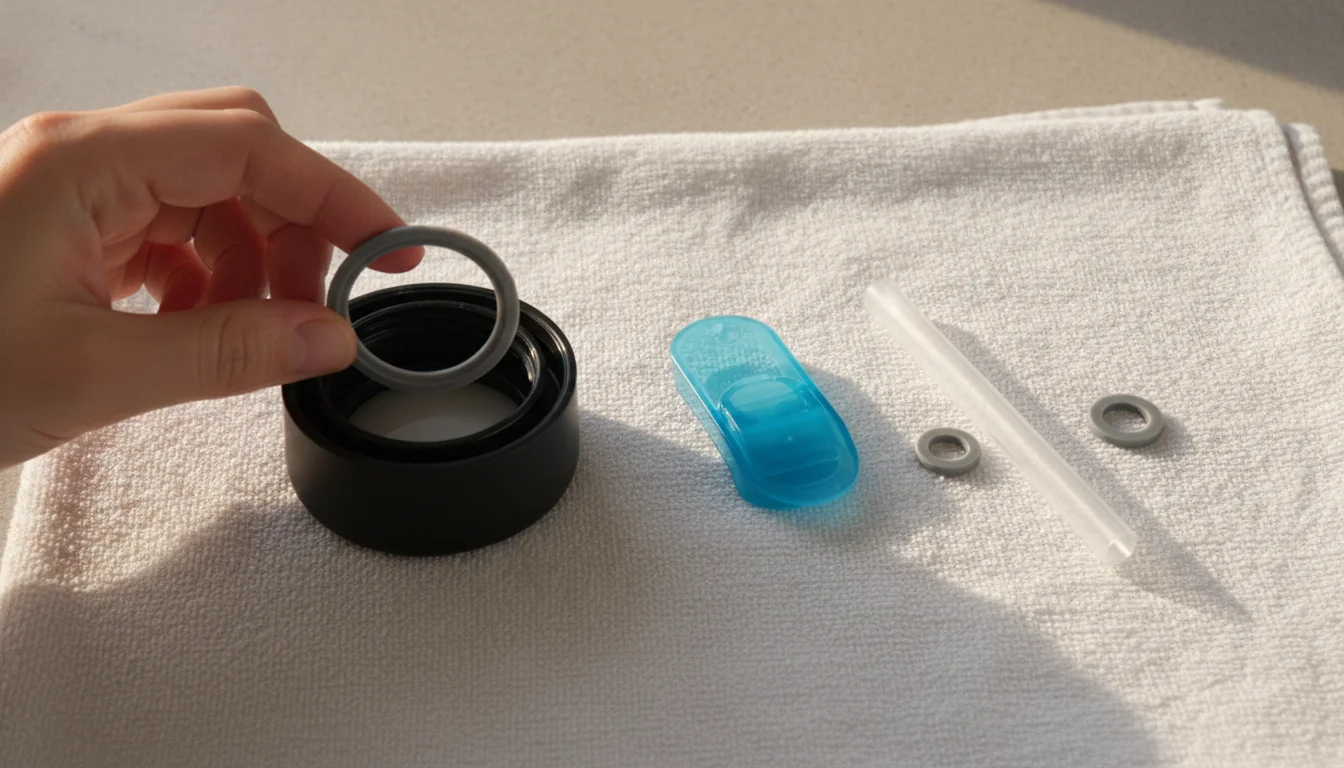
This step makes every other one work. Unscrew the lid, pull the straw, pop off any slider or flip cap, then pinch each silicone ring on opposite sides with two fingers until it lifts out of its groove. A stuck one? Slide the dull edge of a butter knife under it and work around the edge. Don’t use anything sharp, because a nicked seal leaks.
Most lids come apart further than you’d think, and the makers’ care guides say what comes out. A slider tumbler lid, like YETI’s MagSlider or Owala’s tumbler lid, gives up its slider and then the gasket under it. On a YETI StrongHold travel mug lid, lift off the upper magnet, give a half twist to free the lower magnet, then take off its rubber sleeve and the gasket. YETI’s screw and chug caps (TripleHaul, Chug Cap, HotShot) hide two gaskets, one below the threads and one above, so take both. Its Straw Cap releases the straw and the circular gasket, but leave the small pressure valve gasket in, because YETI says not to remove it.
Owala’s FreeSip Twist strips down furthest: carry loop, lid, spout, straw and the ring gasket around the spout, then twist and pull hard to free the key mechanism inside the lid and the gasket around it. Stanley’s Quencher and Flip Straw lids give up the straw, the spout section and the silicone parts inside. On a CamelBak eddy kids’ bottle, unscrew the cap, pop out the straw, then pull the bite valve out from underneath by its tab.
A Gear Diary writer found black sludge under a metal bottle cap’s gaskets. They popped out in seconds and came clean with soap and water.
2. Scrub every part with a bottle brush and straw brush
Hot water and a few drops of dish soap. Run a bottle brush to the bottom and around the neck, push a straw brush right through each straw and spout, and get into the gasket grooves, threads and slider track with a small brush, a pipe cleaner or a cotton swab. Keep going until nothing dark is left on any surface you can reach.
Soft bristles only: Owala warns metal brushes scratch stainless steel, and scratches can rust. And a knife doesn’t cut it: one Reddit user scraped spots off the bottom of their bottles with a knife and only got the visible patches.
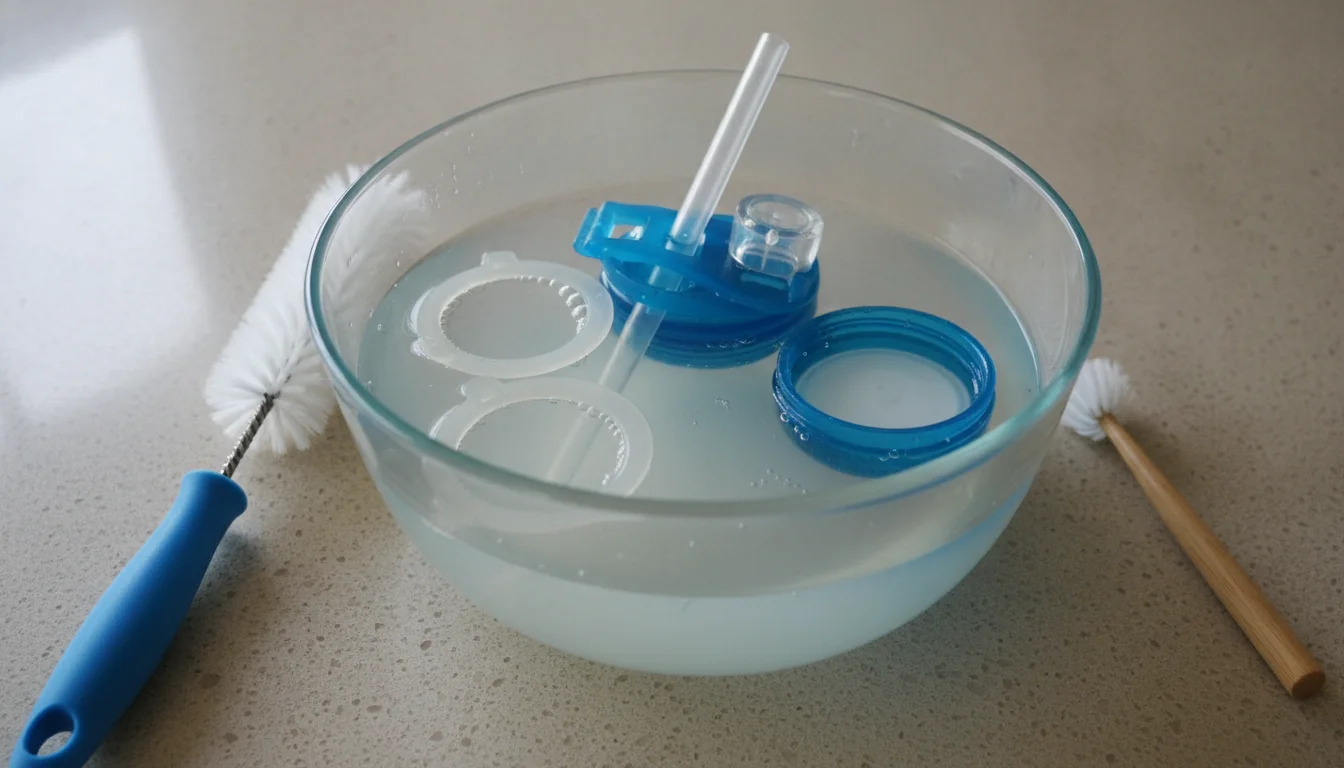
3. How to get rid of mold in water bottle parts with a vinegar soak
Vinegar is the soak, but it’s not the scrub. It kills a lot of common mold without lifting it off, which is why that same Reddit user’s overnight vinegar soak on unscrubbed bottles didn’t work. Scrub first.
Then submerge the clean parts in a 50-50 mix of distilled white vinegar and hot water for about an hour. For a lingering smell, Owala’s guides go longer: several hours or overnight. Rinse well, and never mix vinegar with bleach: together they release chlorine gas.
4. Scrub stains off the steel with baking soda paste
Spots gone but the inside of a steel bottle still looks dingy? Stir baking soda with just enough water to make a thick paste, put it on a bottle brush and scrub. It’s abrasive enough to lift stains and gentle enough not to scratch. For more fizz, Owala mixes 1 to 2 tbsp of baking soda with 2 to 3 tbsp of white vinegar and scrubs that in. Rinse until no grit is left.
5. Soak with a cleaning tablet
The lazy option, good for narrow bottles a brush won’t reach. YETI’s tablets go one per bottle, or two in a bottle over 30 oz (890 ml), for five minutes with no shaking, then rinse. Owala says 5 to 10 minutes, or overnight for a deeper clean. REI lists denture cleaning tablets as a stand-in. Check your care guide first, and don’t expect a soak to shift visible spots you haven’t scrubbed.
6. Wash the parts in the dishwasher
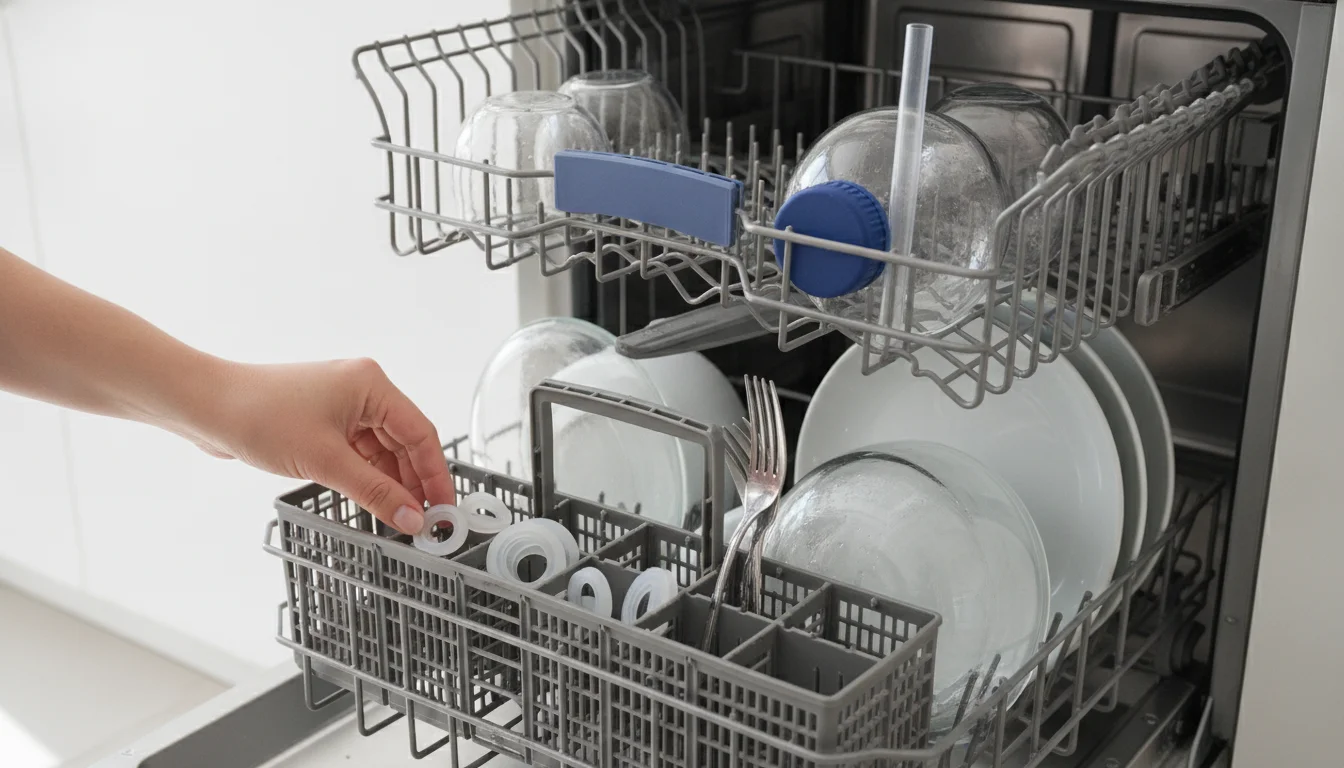
Fine as a weekly routine, but only for parts that are already apart, only if your maker allows it, and only if the dishwasher itself doesn’t smell. Gaskets go in the cutlery basket, lids, caps and straws on the top rack. YETI says every Rambler part is dishwasher safe. Owala wants its bottle and lid washed by hand but lets the straw, spout and gaskets go in. Stanley says check the care card or the base.
7. Replace a gasket or lid that stays black
Here’s what the other guides skip. Mold left long enough stains silicone black, the same way it blackens bathroom caulk. If a gasket, straw valve or bite valve is still black after you’ve taken it out, scrubbed it and soaked it, it isn’t coming back. Killing the mold doesn’t remove the discoloration, and growth you can’t reach can start again.
So stop scrubbing and buy the part. YETI sells its MagSlider lid separately in three sizes and the Chug Cap on its own. CamelBak sells replacement bite valves, drink tubes and Quick Link adapters, and replaces broken caps and damaged O-rings through its warranty department. Stanley offers a lifetime warranty and round-the-clock customer service. Order for your exact model and size, because lids are sold by capacity.
Replace the part too if spots come back within days of a full clean, or if it’s cracked, torn or leaking.
8. Dry every part before you put it back together
A spotless lid goes moldy again if you reassemble it wet. Shake each part, lay the gaskets out flat, stand straws on end and leave the lot overnight, or towel-dry and check every crease of every seal. Only reassemble when the gasket grooves and threads feel dry. YETI, Stanley and Owala all end their care instructions on this point.
How to keep mold out of your water bottle
Rinse the bottle with warm water after every use, and a quick soap wash is better still. Once a week, do the full job Cleveland Clinic recommends: lid apart, gaskets out, scrub, dry. Don’t leave drinks sitting in a sealed bottle for days, and store it with the lid off, which is what YETI recommends for its straw-cap bottles.
When to call the maker (or a doctor)
There’s no mold pro for a water bottle. The professional is the company that made it. Contact them when a part you can’t buy separately is stained, cracked or warped, or when rust in a steel bottle won’t come out (Hydro Flask says to file a warranty claim if you can’t remove rust).
If you drank from a moldy bottle and feel unwell, talk to a doctor, especially if you have a weakened immune system.
Frequently asked questions
What if I drank from a moldy water bottle?
Stop using it and clean it. According to Cleveland Clinic, a few sips likely won’t cause side effects, but people react differently, so see a doctor if you feel unwell.
Can a moldy water bottle be saved?
Almost always. The body cleans up with a scrub and a soak. The soft parts are what fail: replace any gasket, straw or lid that stays black after a full clean.
Why does my water bottle keep getting mold?
Usually because the gaskets never come out, so water sits under them between washes, or because the bottle goes back together wet or stays capped with water inside.