Table of Contents
Every guide on how to get rid of fiberglass wallpaper borrows the same paper advice: score it, soak it, scrape it. On fiberglass wallpaper (glass-fiber wallcovering, the woven stuff that’s made to be painted) that advice mostly does nothing. The weave doesn’t take up water, years of paint seal it, and it’s usually hung on a dispersion adhesive that isn’t water-soluble. Which is why the one forum thread that shows up for this search is someone warning that taking it down tore their wallboard.
So how to get rid of fiberglass wallpaper comes down to a two-minute test at one seam. If a sheet lets go, you strip it dry and you’re done in a few days. If it won’t, you’ve got two choices: fight it with stripper, steam and a sander, or keep the wall and lose the look by repainting or papering over it. The second choice is often the smart one.
1. How to get rid of fiberglass wallpaper in dry sheets
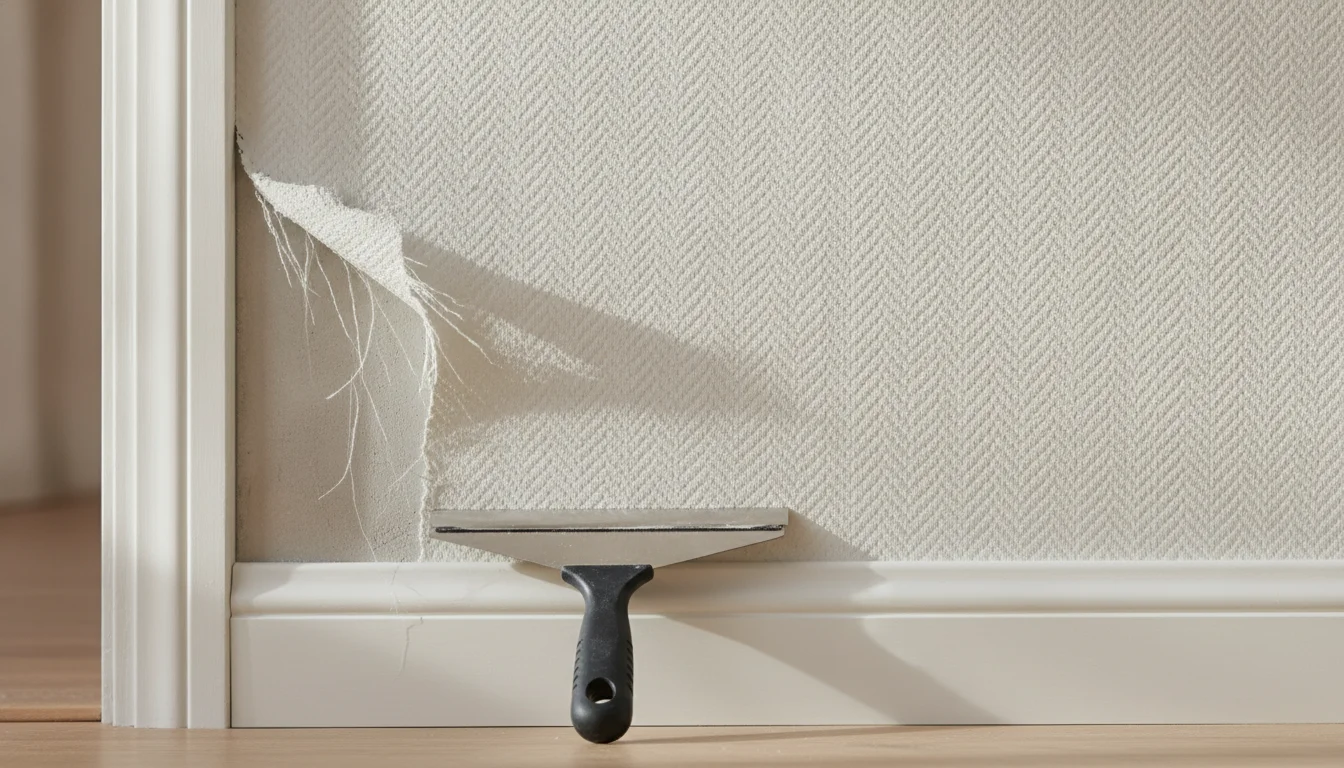
Start here, before anything gets wet. Find a seam near a corner or a door, slide a wide scraper under the bottom edge and lift a small flap. Then pull slowly, keep the sheet close to the wall and pull at a flat angle, not straight out. A flat pull spreads the load. A hard pull outward is how plaster and the paper face of drywall come off with it.
Watch what comes away:
- The sheet keeps coming. Good news. Work along the baseboards, doors and windows freeing the bottom edge, then peel the lengths off.
- Only a skin of paint lifts. There are several coats on top. Go to method 2.
- It tears into scraps, or plaster comes with it. Stop. Pulling harder only makes a bigger repair.
Be gentlest on drywall: one homeowner who pulled a covering off unplastered wallboard took chunks of the board with it. Tape the tops of the baseboards so the scraper doesn’t gouge them, bag pieces as they come off, and budget several days for a room if you’re working alone. Wear gloves and long sleeves the whole time, because loose glass fibers itch like crazy. And if the wall behind feels soft, looks stained or smells off, stop and look for damp or mold on the walls before you go further.
2. Score the paint and soak it with a glass-fiber remover
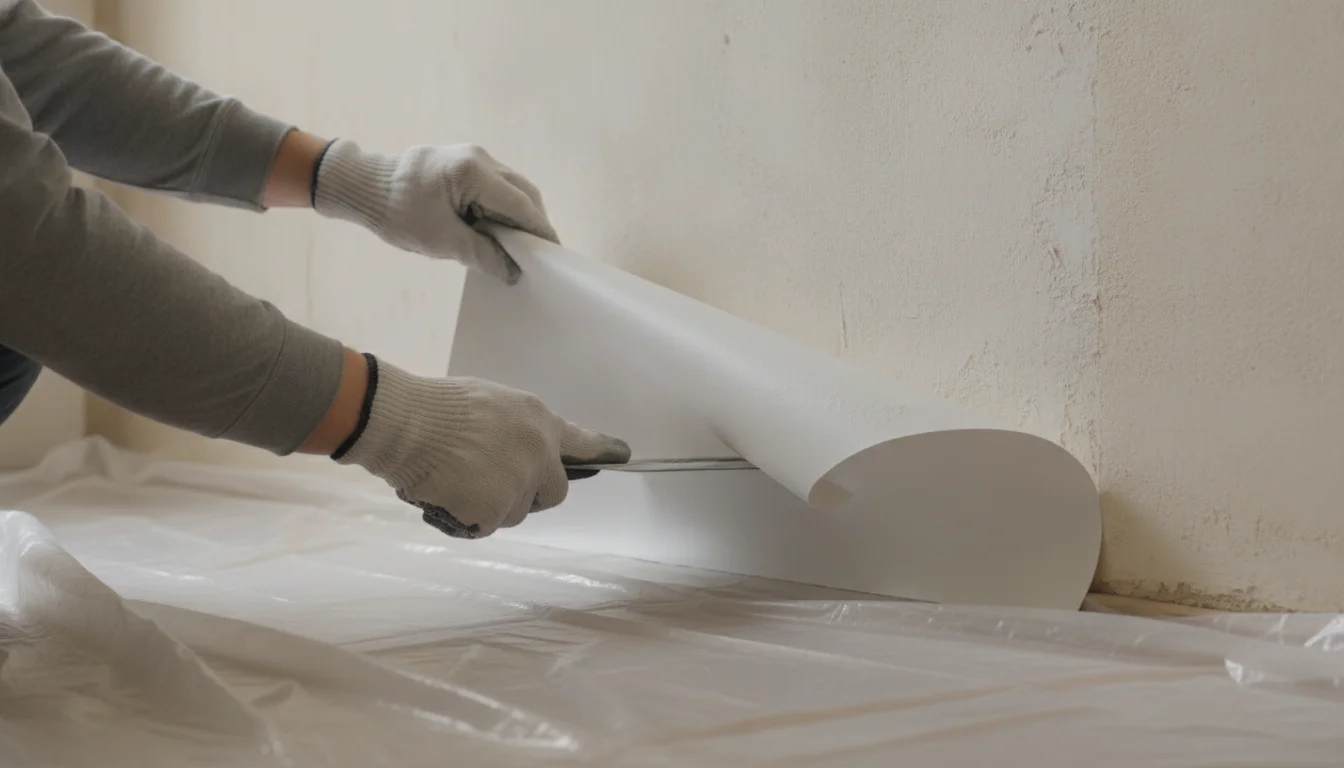
The paint is the barrier. Run a spiked scoring roller over it with light pressure so liquid can reach the glue, then use a remover sold for glass-fiber wallcovering. One such product tells you to test a small patch, check after about 20 minutes, give it a second coat if it hasn’t gotten through, and lightly sand the surface if it still won’t penetrate. When it does work, pull the lengths from top to bottom and scrape the adhesive off with a spatula.
Use several thin coats, not a flood. Cover outlets with painter’s tape, and switch the circuit off at the breaker before you take a cover plate off. A bucket of warm water with a little dish soap and a spiked roller is worth a test patch too. The vinegar and fabric-softener mixes in the big-box guides were written for paper and vinyl, so don’t expect much from them here.
3. Steam it
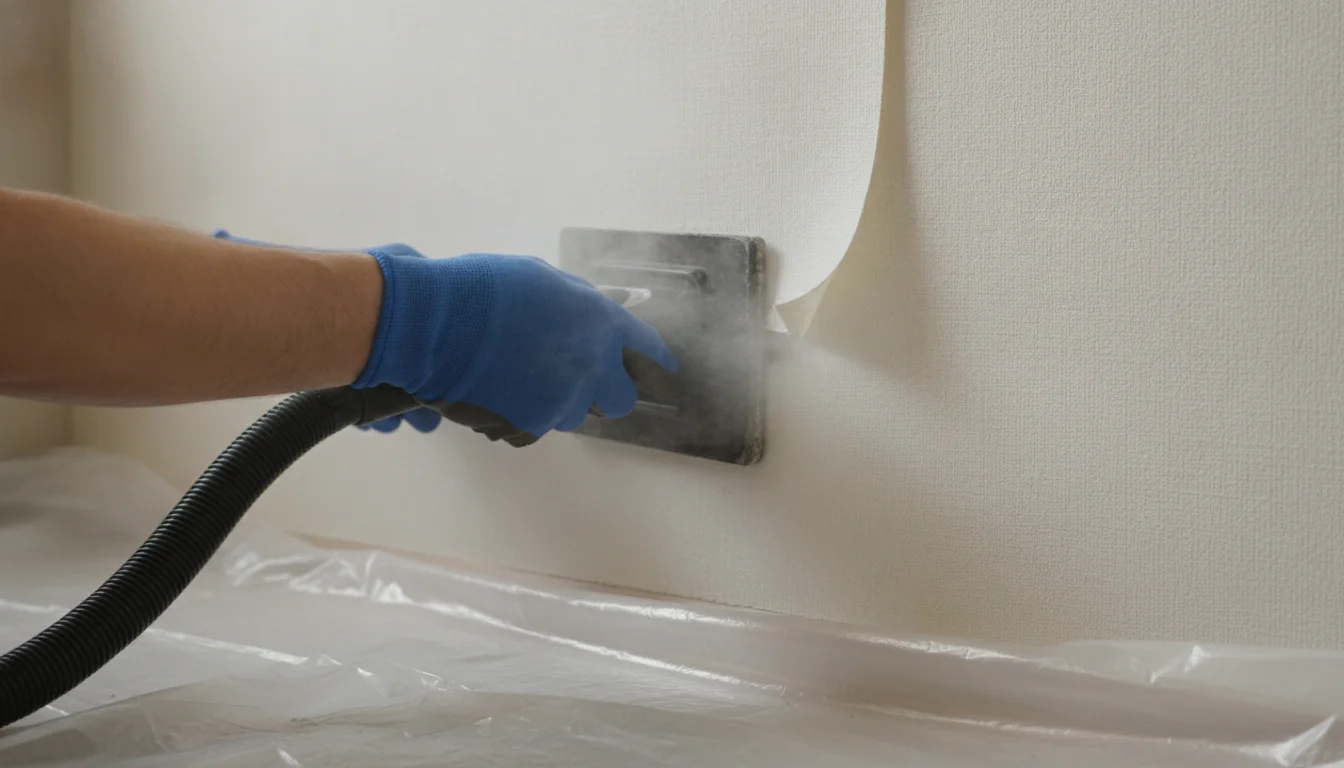
Mixed results. On r/Plastering one person said a similar covering came off “quite well after a good steaming/soaking” and peeled from the top down. Don’t count on it, though: dispersion glue holds far harder than paper paste, and in some cases it takes a commercial steamer to soften it. Hold the steamer plate on a small section until the adhesive softens, lift with an angled scraper, and keep the plate moving. Test somewhere hidden first, and quit the moment the wall surface starts lifting with the covering.
4. Sand off what’s left
When scraps and glue stay stuck, sanding is the last resort. A wall sander with coarse paper does the big areas; a scraper and sandpaper handle corners. Rental stores hire wall sanders by the day.
Sanding turns glass fiber into dust, and that dust irritates eyes, skin, nose and throat. German renovation guides are split on whether you should dry-sand a whole covering at all. Strip what you can first, then sand only the leftovers. Close the room off and wear a respirator with an N95, R95 or P95 filter (the filter class NIOSH lists for glass-fiber dust), goggles, gloves and long sleeves. Wash your skin and change your clothes at the end of the day, then clean up the room the way you’d get rid of dust anywhere. Expect gouges. Fill small ones with spackle; big damage means replastering.
5. Repaint it and call it a day
This stuff is built to be painted. Renovation guides say it takes ten to fifteen coats without losing its texture. If the color is the problem and every seam is tight (no bubbles, no loose corners), clean off the grease and dust, test a patch, and roll on latex or acrylic. Leftover cans afterward? Here’s how to get rid of old paint. Small cuts patch with joint compound. You keep the weave, though. If you hate the texture, read on.
6. Paper over it
A heavy covering paper (or lining paper, then your new paper) hides the weave and any stubborn scraps you couldn’t get off. Re-stick or cut out loose bits, clean the wall, and lightly sand the painted face so the new adhesive grips. Thin paper lets the pattern show through.
When to call a pro
Get a plasterer or decorator in when stripping is taking plaster or drywall face off across large areas, when a whole room needs skimming flat, or when the “fiberglass” is in an old house and you’re not sure what it actually is. One commenter in that r/Plastering thread asked the poster whether they were sure it was glass fiber and not asbestos. If you can’t rule that out, have it tested before you sand or scrape anything, the same rule that applies to old carpet adhesive.
Frequently asked questions
How do I know it’s fiberglass wallpaper and not regular wallpaper?
Free a corner and look at the back. A glass-fiber weave feels stiff and won’t give. Press it with the face of a hammer: glass fiber stays rigid, most other wallpapers dent. A fleece-backed glass-fiber covering shows a fleece layer on the back and soaks loose far more easily than a pure weave.
Can you plaster directly over fiberglass wallpaper?
Not as a DIY job. Plasterers on r/Plastering disagree on whether a skim coat holds on it, and some say take it off first. Get a plasterer to look at the wall. If you just want the weave gone, heavy lining paper (method 6) is the route you can do yourself.
There’s regular wallpaper on top of the fiberglass. How do I get just that off?
Try a small section dry first. Skip hard scraping and sanding (they shred the glass fiber underneath), go easy on water and steam, and test a wallpaper remover on a patch if the top paper won’t lift.