Table of Contents
Pale, wandering trails across your spinach or chard. Blotches that slowly turn brown. Columbine leaves that look like someone doodled on them. That’s leaf miners, and the reason they’re so annoying is right there in the name: the larva lives inside the leaf, between its top and bottom skin, where most sprays never touch it. Knowing how to get rid of leaf miners starts there.
So this guide runs in a different order from most. Your fingers first, because they reach the larva where a spray can’t. Then the soil, because that’s where the next generation is waiting. Sprays come last, and only the ones that actually get into the leaf. And the advice splits by plant: leaves you eat get handled differently from columbine, boxwood or a citrus tree.
What causes leaf miners
“Leaf miner” isn’t one bug. It’s the larva of a small fly, moth, sawfly or beetle that feeds inside a leaf. On most vegetables it’s a fly maggot. On citrus it’s a tiny moth.
The cycle is what makes them stick around. The adult lays eggs on or in the leaf. The larva feeds inside for two to three weeks, then chews its way out, drops to the ground and burrows an inch or two into the soil to pupate. University of California IPM puts the whole cycle at as little as two weeks in warm weather, with five to ten generations a year. Some pass the winter in the soil under the plants they fed on.
The hosts sort into three groups. Leafy crops (spinach, chard and beets, mostly in the cool season). Other vegetables and flowers, such as tomatoes, beans, columbine and chrysanthemums, where the damage is mostly cosmetic. And trees and shrubs: boxwood, birch and the new growth on citrus. Boxwood’s leaf miner breaks the pattern, by the way: Rutgers notes it spends the winter as a larva inside the leaf and has one generation a year, so the soil steps below don’t apply to it. Lush, nitrogen-heavy growth makes it worse, so go easy on the fertilizer.
1. Pinch the larva inside the mine
This is the one that works, and it costs nothing. University of Maryland Extension calls pinching mined leaves to crush the larvae inside the primary control for vegetable leaf miners.
Hold the leaf up to the light. One organic chard grower describes what you’ll see as “small, short, dark pellets against a pale green background.” The trail gets wider as the larva grows, so it’s at the wide end, not the thin start. Pinch that spot hard. Can’t find it? Squeeze firmly along the whole trail, the way one container spinach grower does.
Check every few days. (Not on boxwood: UF/IFAS says crushing infested leaves there isn’t practical, since there are too many small leaves to find. Prune the infested twigs instead, while the larvae are still inside, and bin them.)
Better still, turn the older leaves over. On beets, chard and spinach, Montana State University says the adults lay masses of white eggs on the undersides, and smashing those before they hatch means there’s no mine at all.

2. Remove heavily infested leaves
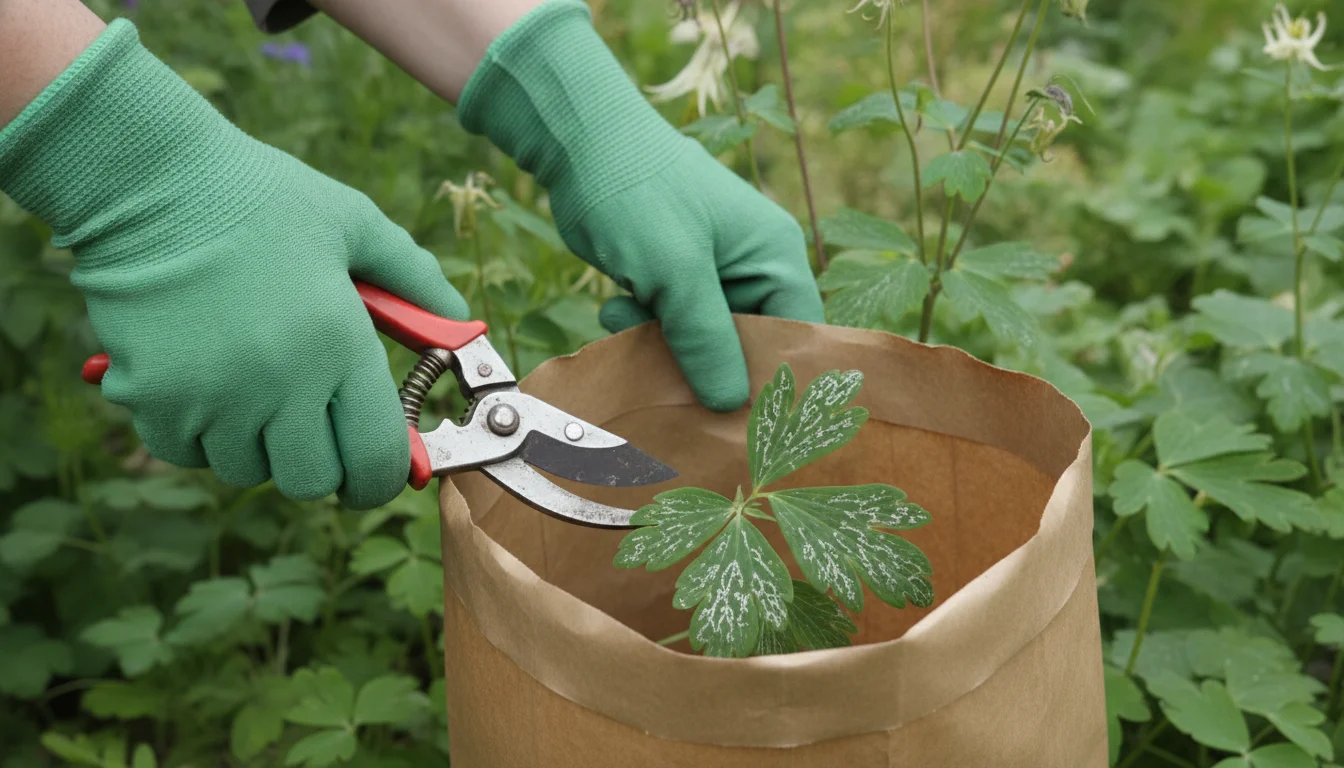
If a leaf is more tunnel than green, or the trail ends in a small exit hole (the larva’s already gone), pull it off. UC IPM’s advice for spinach, lettuce and cole crops is to clip off and remove the older infested leaves.
On greens you eat, there’s a second reason. Kansas State University’s extension points out it isn’t the tunnel or the larva that makes the leaf inedible, it’s the droppings left inside. Bag the leaves and put them in the trash. Never the compost.
3. Cut an infested perennial to the ground
Picking columbine clean leaf by leaf is a losing game. For a badly mined columbine, University of Illinois Extension says to cut all the foliage to the ground so the plant pushes a fresh flush. Bag the cuttings, then pull any new leaf that shows a trail as soon as you see it.
Replacing plants? Illinois notes that native wild columbine is generally less prone to the damage than the hybrids.
4. Cultivate the soil to expose pupae
Everything above deals with the larvae you can see. This deals with the ones you can’t, and it’s the step most guides skip.
Mature larvae drop into the top inch or two of soil to pupate, right under the plants they fed on. Work that layer. Maryland recommends tilling or cultivating the top 2 in (5 cm) in early spring for infestations that come back every year. Illinois suggests gently spading around affected plants in late fall, which leaves the pupae exposed to freezing weather.
Start by pulling spent plants right after harvest. Kansas State advises it so fewer larvae reach the soil, then working the ground where they grew. Growing in containers? One spinach grower pulled the crop and replaced the old potting soil rather than replant into it.
5. Practice crop rotation
Don’t plant spinach, chard or beets back into the bed that had leaf miners last year. The pupae in that soil are waiting for exactly that. Move them to a bed with no history of the pest, and keep a note of what grew where. It’s the same logic that beats flea beetles, which also wait in the soil.
This matters most because of the next method.
6. Row covers
A floating row cover keeps the adults off the leaves, so no eggs get laid. Put it on at planting, before egg-laying starts, and seal the edges with soil, pins or rocks. Spinach, chard and beets don’t need pollinators, so the cover can stay on all season.
The catch: a cover over last year’s infested bed traps the flies in with your crop, because they come up out of the soil underneath it. Maryland Extension gives the same warning for garlic. Cover a rotated or cultivated bed, not the old one.

7. Remove weeds from the garden
Weeds keep leaf miners going between crops. Maryland names chickweed, lambsquarters, nightshade and plantain as hosts to pull from around the garden. UC IPM describes the population moving from host to host as new plants become available, so a weedy edge is a nursery for your next crop.
8. Protect the natural predators
Here’s the part that sounds backward. Leaf miners often don’t need spraying, because tiny parasitic wasps (mostly in the genus Diglyphus) keep them down. UC IPM says broad-spectrum sprays aimed at other pests kill those wasps, and a fresh leaf miner outbreak afterward is common.
So skip the broad-spectrum insecticides, even when aphids or whiteflies show up on the same plants. Plant umbel flowers such as dill and fennel, which draw parasitic wasps in. You can buy Diglyphus, but the chard grower above priced it and called it prohibitively expensive. The free ones are better value.
9. Spinosad treatment
If you’re going to spray, this is the one. Spinosad soaks into leaf tissue, which is why University of Connecticut Extension’s T. Jude Boucher says it can reach larvae already inside the leaf.
Spray in the evening, when bees aren’t foraging, so it’s dry by morning. Coat both sides of the leaves and follow the label for repeat timing, which varies by crop. Don’t expect miracles: Montana State notes it can kill the larvae, but by then the damage is usually done.

10. Neem oil
Neem is prevention, not a cure. Illinois Extension says to apply it in early spring and again every few weeks to keep adults from laying eggs, and adds that once the larvae are in the leaf, it won’t work.
Citrus is where an oil spray earns its keep. The University of Georgia’s home advice is horticultural oil sprayed 10 to 14 days apart, starting as soon as new shoots begin to develop. Stop once the leaves harden off, and don’t spray above 85°F (29°C).
11. Systemic insecticide, host by host
A systemic gets into the plant and reaches the larva inside. Whether you can use one depends on what’s growing.
- Spinach, chard, beets and other leafy vegetables: no. Kansas State says a systemic is an option for ornamentals with severe damage, but not for vegetable crops. You’d be eating the leaf it went into.
- Young citrus trees (under about four years): yes, with a product whose label names citrus, used exactly as the label and your local rules say. Georgia rates a soil drench of imidacloprid as the best control there. Apply it after bloom, because bees take it up through nectar and pollen.
- Boxwood and other ornamentals: yes, where the damage is severe. On boxwood, UF/IFAS reports that imidacloprid applied as a soil drench has cut the number of larvae in the leaves. Its better long-term answer is resistant varieties when you replant: Japanese boxwood and English cultivars such as ‘Suffruticosa’ and ‘Vardar Valley’ are on its list. A mature citrus tree tolerates leaf miner damage far better than a young one, so it rarely needs this.
When to call a professional
Call your local extension office if you can’t tell which leaf miner you have. Advice depends on the host and species, and they can identify it from a sample.
Get help with citrus too. Young trees whose new growth is mined flush after flush need a proper plan. And if Asian citrus psyllid is in your area, Georgia’s advice is to aim your spray schedule at the psyllid rather than the leaf miner.
For a large tree or a hedge where a systemic soil drench is on the table, call a licensed applicator. On a citrus tree, the product has to be one labeled for citrus. Never use a systemic on leafy vegetables. UC IPM notes some of the insecticides used on leaf miners are sold only to licensed applicators.
Frequently asked questions
What’s the best organic spray for leaf miners?
Spinosad. It moves into the leaf and reaches larvae already feeding there. Neem only stops adults from laying eggs, so it’s a spring prevention spray. The soap and alcohol sprays that work on other plant insects can’t reach a larva inside the leaf. Either way, pinch the larvae and pull the worst leaves first.
Does Bt kill leaf miners?
Usually not. Bt isn’t one product. University of Tennessee Extension says the common garden kind, Bt kurstaki, is specific to caterpillars, and another strain, Bt tenebrionis, targets Colorado potato beetle and some leaf beetles. The leaf miners in spinach, chard and beets are fly maggots, which neither one is sold for. Tennessee also warns that not every Bt product is labeled for every pest, so read the label. If it doesn’t name leaf miners, don’t count on it. Spinosad, which does reach larvae inside the leaf, is the better buy.
How do I control leaf miners on tomatoes?
Mostly, you don’t need to. Kansas State says the damage on tomatoes usually only makes the leaf look bad, and UC IPM says damage isn’t serious on most plants older than seedlings. Pinch the larvae and remove badly mined lower leaves.
Can I still eat leaves with leaf miner damage?
Cut the mined part out first. Kansas State’s point is that the droppings left in the tunnels, not the larvae, are what make the leaf unfit to eat. The rest of the leaf is fine.
Will leaf miners kill my plants?
Rarely. Illinois Extension calls most leaf miner damage an aesthetic problem, though years of severe damage can weaken a plant. Seedlings and young citrus trees are the exceptions to watch, since heavy mining slows their growth.