Table of Contents
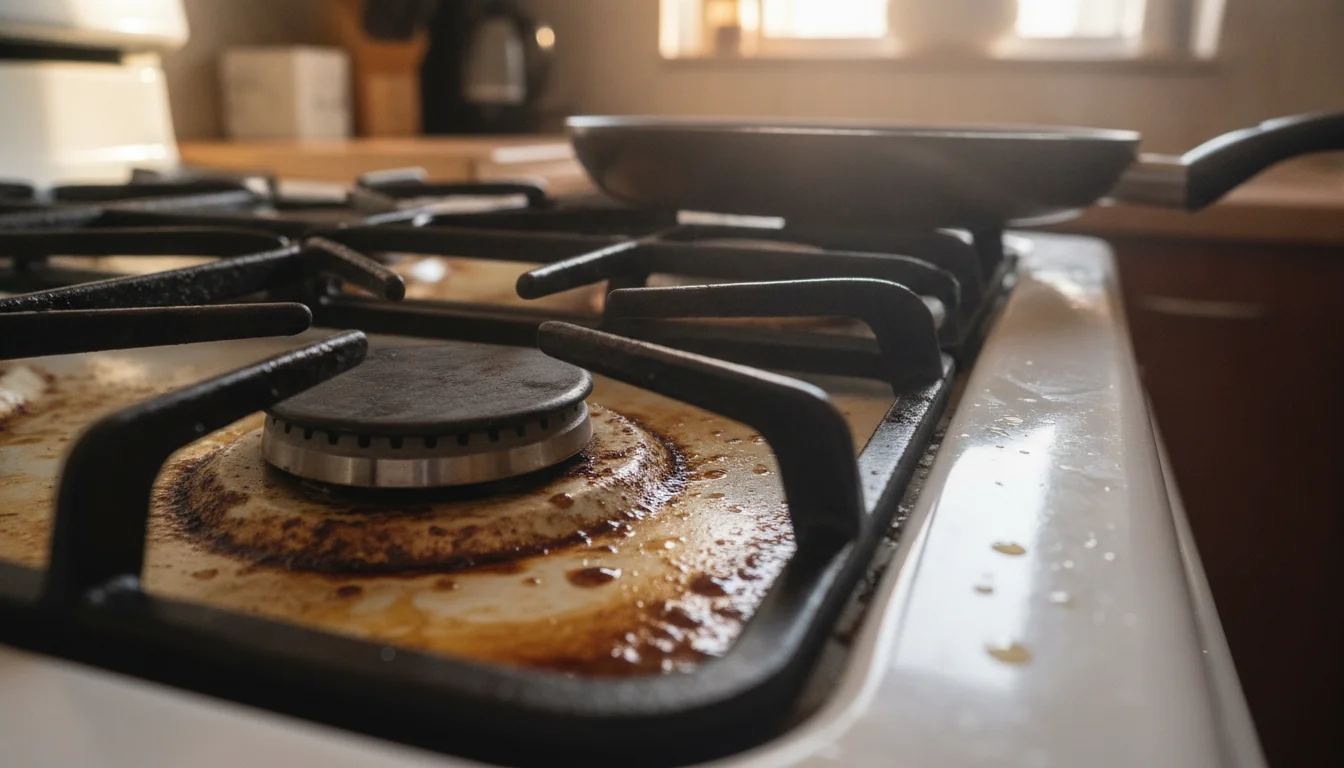
That brown, tacky film on your stove isn’t dirt. It’s cooking oil that got heated, splattered and heated again until it turned into something close to varnish. That’s why the sponge glides right over it, and why scrubbing harder mostly gets you tired. What works is time. Here’s how to get rid of grease on stove top surfaces of every kind: a cleaner left long enough to soften the layer, then the right tool for the material. Glass-ceramic, porcelain enamel, stainless steel and cast-iron grates each have one thing they can’t take, and most guides skip that part. Nine methods, gentlest first.
1. Wipe it while it’s fresh
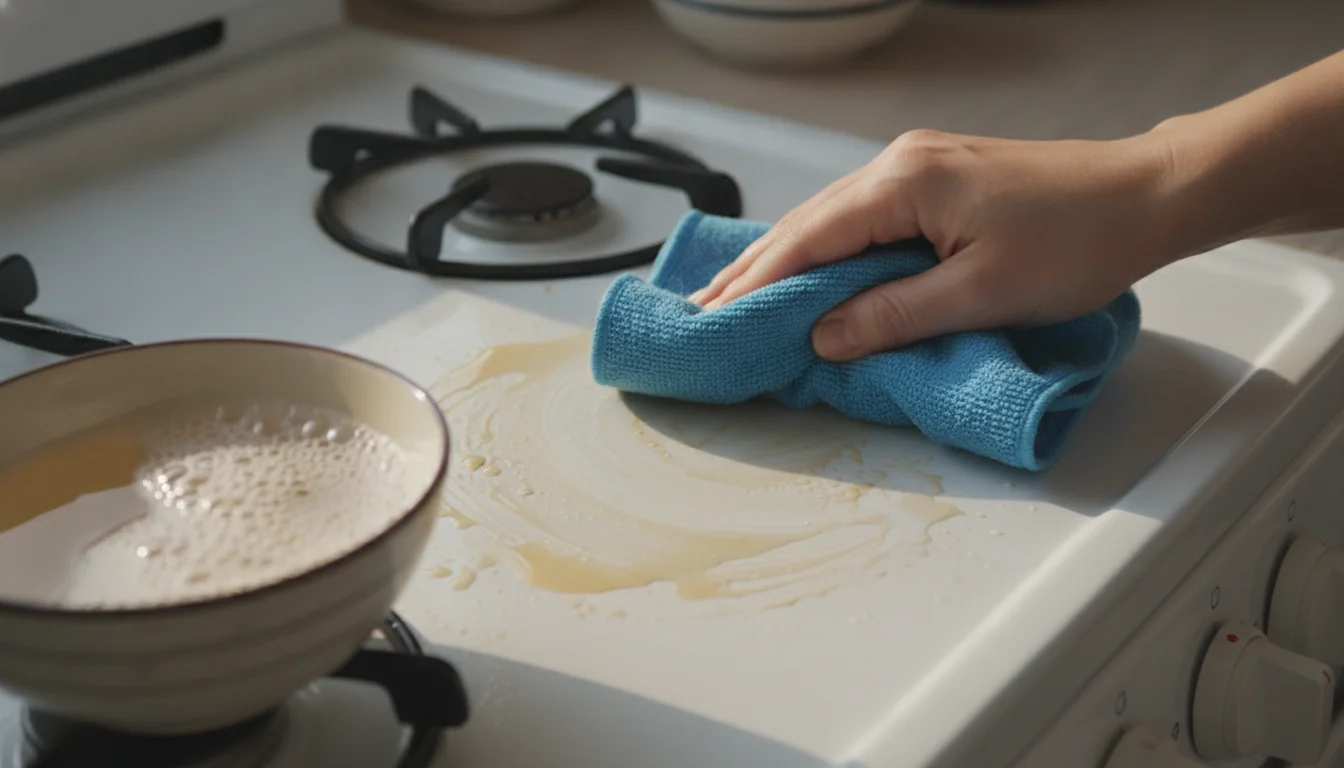
Fresh splatter is the easy kind. Once the stove is cool, a drop of dish soap in warm water and a microfiber cloth wrung out until it’s damp takes it off in one pass. Soap grabs oil in a way plain water can’t. Go over it again with a cloth rinsed in clean water so no soap film is left. On stainless, wipe along the grain.
Do this after every meal that spits.
2. Spray a degreaser and walk away
This is the step people skip. They spray, wipe straight away and decide the cleaner doesn’t work.
Wet the sticky area heavily with a grease-cutting spray on a cold stove and leave it. Five minutes for light film. On the thick brown layer, people on r/CleaningTips report half an hour or more, and you’ll watch the cleaner turn brown as it dissolves the grease. Wipe with paper towels, push soft lumps off with a plastic scraper, and spray again if it’s still tacky. Finish with a clean damp cloth. On porcelain enamel, a cream cleanser left five to 20 minutes does the same job.
3. Baking soda paste (and skip the vinegar)
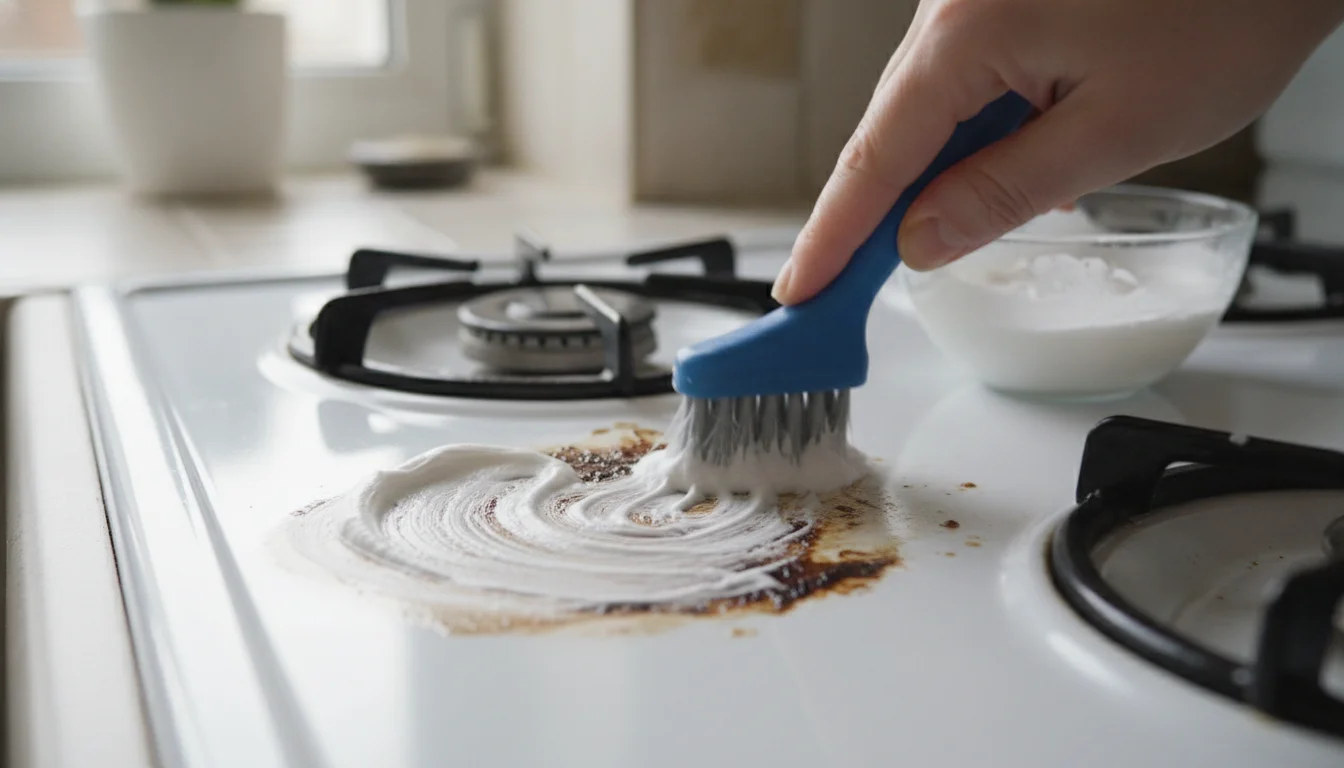
Mix about 3 parts baking soda to 1 part water into a thick paste, spread it on the stubborn spots, wait 15 minutes and scrub with a non-scratch sponge or nylon brush. It scours without the scratching you get from steel wool. Wipe it off and buff dry.
Don’t spray vinegar on top, whatever half the guides say. Vinegar is an acid and baking soda is a base. The fizz is them neutralizing each other into water, carbon dioxide and a little sodium acetate. When it stops, you’ve got a weaker cleaner than either one alone.
4. Lift softened grease with a plastic scraper
Once a degreaser or paste has softened the layer, a plastic scraper, an old gift card or a plastic spatula wrapped in a microfiber cloth lifts it off. Hold it at about 30 degrees and push in short strokes.
This is the scraper for porcelain enamel, stainless and painted panels. Whirlpool tells porcelain cooktop owners to avoid abrasive cleaners, steel wool and soap-filled scouring pads. A plastic edge gets you the lift without any of them.
5. A razor scraper, on glass-ceramic only
Smooth glass-ceramic is the one surface where a blade is the right tool. GE’s manual says to let the top cool, hold the razor scraper at about 45 degrees against the glass and press down while you scrape. Then spread ceramic cooktop cleaner over the spot and finish with a non-scratch pad.
Use a sharp blade, keep the spot wet with cleaner, and don’t let the corner dig in. If your manual says no blades, believe it. And never take a razor to enamel, stainless or paint.
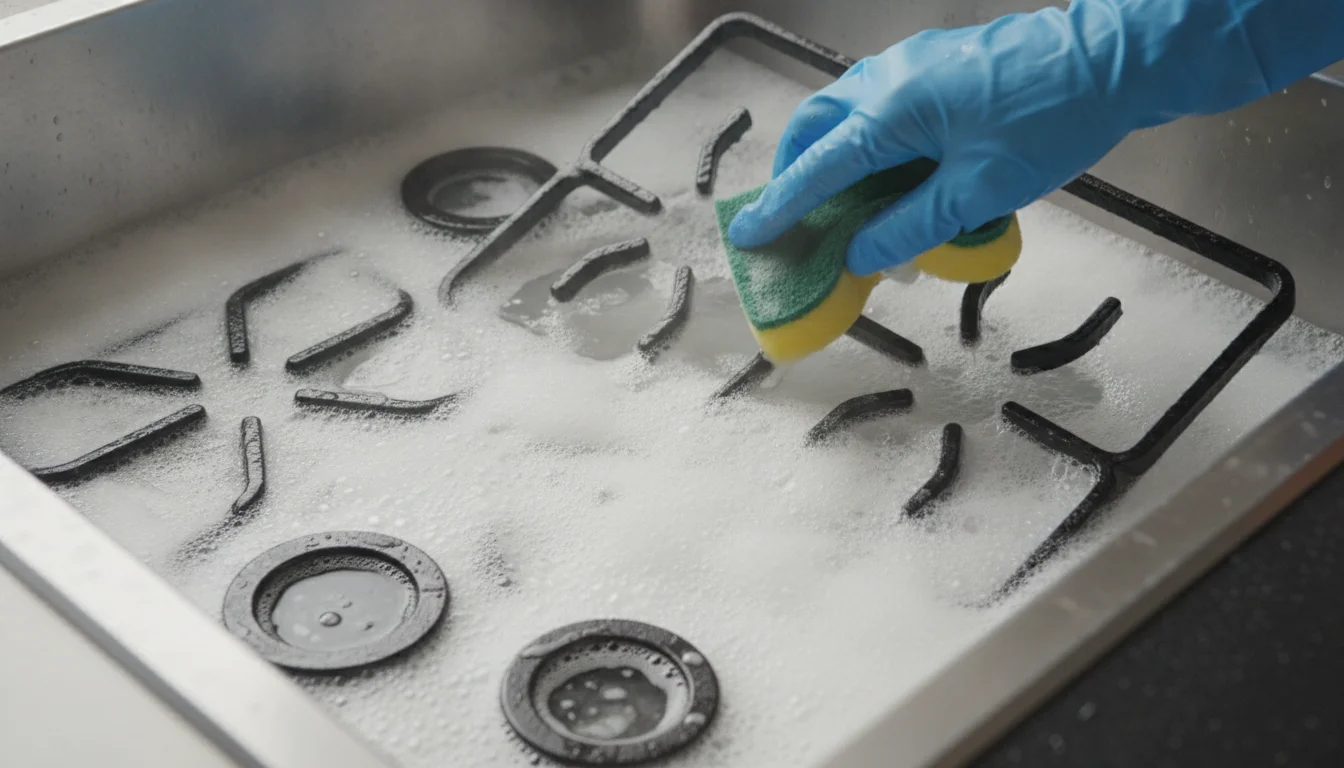
6. Soak the grates, caps and drip pans
Everything that lifts off goes into a sink of the hottest water you can work with and a good squirt of dish soap. Fifteen minutes handles a week of splatter; older buildup wants up to overnight. Then a non-scratch pad, a rinse and a thorough dry. Don’t refit burner caps wet.
Too gentle? America’s Test Kitchen burned oil onto steel pans, baked them at 500°F (260°C) for a few hours, then tried overnight treatments. Hot, soapy water beat baking soda paste and straight vinegar, though the worst bits still needed scouring powder.
Never soak electric coil elements, or bare cast iron that isn’t coated or seasoned.
7. Burn off the coils, then brush them
Electric coils mostly clean themselves. Clear the stove, turn each coil to high for a few minutes (guides say one to five) and let the splatter burn away. Wait until they’re completely cold.
If your coils plug in, pull each one straight out of its socket. Tilt-lock coils, the kind that lift up but stay fixed to the stove, stay attached unless your manual says they come out: clean those in place. Brush off what’s left with a soft brush or a soapy cloth, keeping water away from the prongs and connections. Soak the drip pans, and lift the top if your model allows it. Grease collects under there too.
8. Seal the grates in a bag with ammonia
For grates and burner caps with years of dark buildup, this works while you sleep. Put each cool, pre-washed grate in a heavy zip bag (or several in a trash bag), add about 1/4 cup (60 ml) of household ammonia, squeeze out the air and seal it. Leave it outside or in the garage overnight.
The parts don’t need to sit in the liquid. The trapped fumes soften the baked-on layer. Next morning, open the bag outdoors, rinse and wipe off what’s loosened.
Never use ammonia with bleach. Together they make chloramine gas. And keep it off the knobs: Martha Stewart’s advice, quoted by Real Homes, is that ammonia can strip the markings.
9. Oven cleaner, for the worst of it
When the grates wear a black, glassy crust nothing above has touched, heavy-duty oven cleaner is the strongest thing most homes have. It’s lye-based, and lye turns hardened fat into something soap-like that rinses away.
Wear long rubber gloves and eye protection, put the cold grates outside on newspaper, spray a full coat and wait. A restaurant dishwasher on Reddit puts the sweet spot at about 30 minutes. Scrub with a nylon brush, then rinse with lots of plain water.
Now the limits, because this is where people wreck things. A Maytag manual allows it on burned-on grates and burner caps, sprayed on newspaper away from the stove. But read your can’s “do not use on” list. A common heavy-duty label names aluminum, chrome, baked enamel and exterior oven surfaces, and some burner heads have aluminum sections. Never spray a hot surface, keep it out of the burner ports, and keep it off non-stick.
Why grease on a stove turns into varnish
Fresh splatter is just oil. But oil heated past its smoke point breaks down, and America’s Test Kitchen explains what happens next: the fats break into free fatty acids that polymerize into a resin that won’t dissolve in water. Every time you cook, the burner reheats whatever’s nearby and the resin gets harder and darker. That’s why a quick wipe stops working after a few weeks, and why waiting beats scrubbing.
How to keep grease off the stove
Wipe the cool stove after anything that splatters. A splash from tonight comes off in seconds; a month-old one has been baked dozens of times. Use a splatter screen when you fry, don’t let the pan smoke (smoking oil is what turns into resin), and get rid of used cooking oil instead of leaving it on the back burner. Wash the grates weekly. Leftover grease also feeds ants in the kitchen. And clean acidic spills (tomato sauce, vinegar, fruit juice) off porcelain once it’s cool. GE and Whirlpool both say acid left on enamel can affect the finish.
What about the air fryer?
Same grease, same chemistry, in a hotter, smaller box. The difference is that most baskets are non-stick, and Philips says no metal utensils or abrasive cleaning materials on its coated baskets. So soak the basket in hot, soapy water for 10 to 15 minutes and use a soft sponge. For heavier buildup, let a degreasing dish spray sit first, the way a house cleaner on r/CleaningTips does.
Keep oven cleaner away from coated baskets. One Reddit user said it ruined the pan. That same house cleaner’s real fix: wipe it out after every use.
FAQ
Do vinegar and baking soda clean stove grease?
Each does some good alone. Mixed, they neutralize each other into mostly water. Use the paste on its own, and keep vinegar off porcelain enamel.
Can I use a razor blade on my stove top?
Only on smooth glass-ceramic, at about 45 degrees with cooktop cleaner on the spot, and only if your manual allows it. On anything else, use plastic.
Can stove grates go in the dishwasher?
Some can. Whirlpool says some grates may go in on the most aggressive cycle after burned-on soil is soaked or scrubbed off, but burner caps aren’t dishwasher safe.