Table of Contents
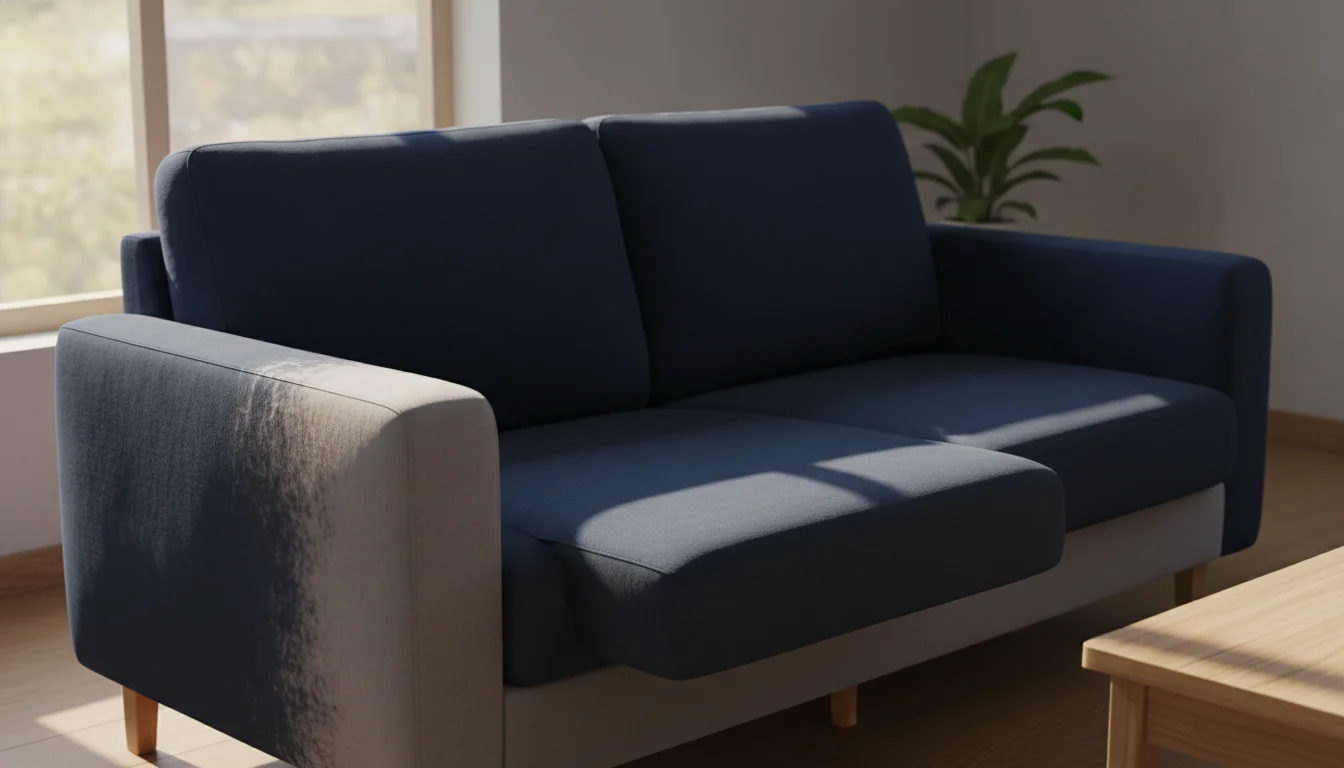
That pale stripe on the arm nearest the window isn’t dirt, and no cleaner will lift it. Sunlight has broken down the dye in the fabric, so how to get rid of sun fading on sofa fabric comes down to two things: put color back, or cover it. There’s no “restore” spray, whatever the listings promise.
Most faded sofas can be fixed. Which fix works depends on the tag under the cushions: the fiber content and the cleaning code. All-purpose dye that’s great on cotton does very little on polyester, olefin takes no home dye, and code X rules out spraying anything. Read the tag first.
Why sun fading on a sofa won’t clean out
UV rays break down the dyes inside a fabric, and window glass doesn’t stop the UVA part of sunlight. Rooms with big windows, glass doors, skylights or a south-facing wall get it worst. Velvet and chenille are among the most light-sensitive upholstery fabrics.
Sun fading follows the light. The side facing the window goes pale, and anything shaded keeps its full color: the underside of a cushion, the back of the sofa, the strip a throw covered.
A bleach or cleaner mark is a spot, drip or splash where the product landed, wherever the window is. If that’s yours, you want bleach stains on upholstery instead.
Now the tag:
| The tag says | What that means |
|---|---|
| Cotton, linen, rayon or another natural fiber | All-purpose dye works (methods 1 and 3) |
| Mostly polyester, acrylic or acetate | Synthetic dye on the stovetop (method 2), paint or a cover |
| Olefin or polypropylene | Takes no home dye; paint it or cover it |
| Code W or W/S | Water is allowed, so spray color is possible |
| Code S | Solvent cleaners only; test any water-based color on a hidden spot first |
| Code X | Vacuum and brush only: no dye, no paint, cover it |
1. Dye removable natural-fiber covers
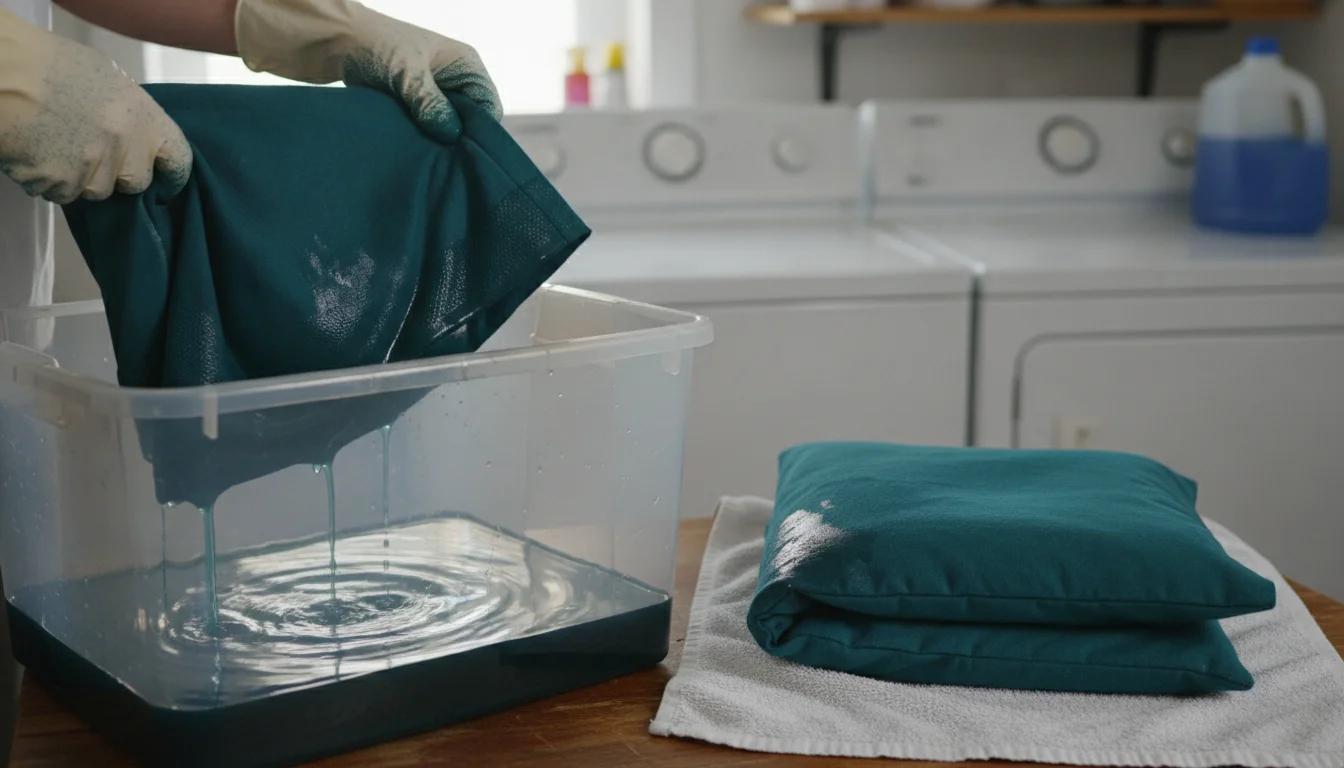
If the covers unzip and the label says cotton or linen, this is the best fix there is, and the only one that comes out factory-even. Dye every cover together, faded or not, so they match.
Use a washing machine or a big tub of hot water. For cotton, linen and rayon, add 1 cup (240 ml) of salt per bottle of dye and stir for 30 to 60 minutes. Go for the original shade or one a touch darker; the faded and unfaded parts start from different places, and a darker shade evens them out. Air-dry.
Two catches: a stain-resistant finish fights the dye, and a patterned fabric won’t come out solid. On a front-loader, wipe the plastic parts straight after, because dye can stain them.
2. Dye synthetic covers on the stovetop
All-purpose dye leaves polyester pale: one guide puts its limit at blends of no more than 40% polyester, and even those come out lighter. A mostly polyester, acrylic or acetate cover needs a synthetic-fiber dye, and that dye needs heat no washing machine reaches.
Rit’s instructions for its synthetic dye are stovetop only, at about 180°F (82°C), just under the boil. Use 3 gallons (11 L) of water in a big stainless pot, one bottle per 2 lb (0.9 kg) of dry fabric (two for a dark color on polyester) and a teaspoon of dish soap. Pre-wash the cover in warm soapy water to strip any finish, then put it in wet. Stir slowly for 30 minutes; the first 10 decide how even it comes out. Polyester stays in the full 30 even if it looks done, or the color rinses out. Rinse warm, then cooler, until clear.
The limit is your pot: seat cushion covers fit, a whole slipcover usually doesn’t. Wear gloves and use tongs.
3. Spray the color on
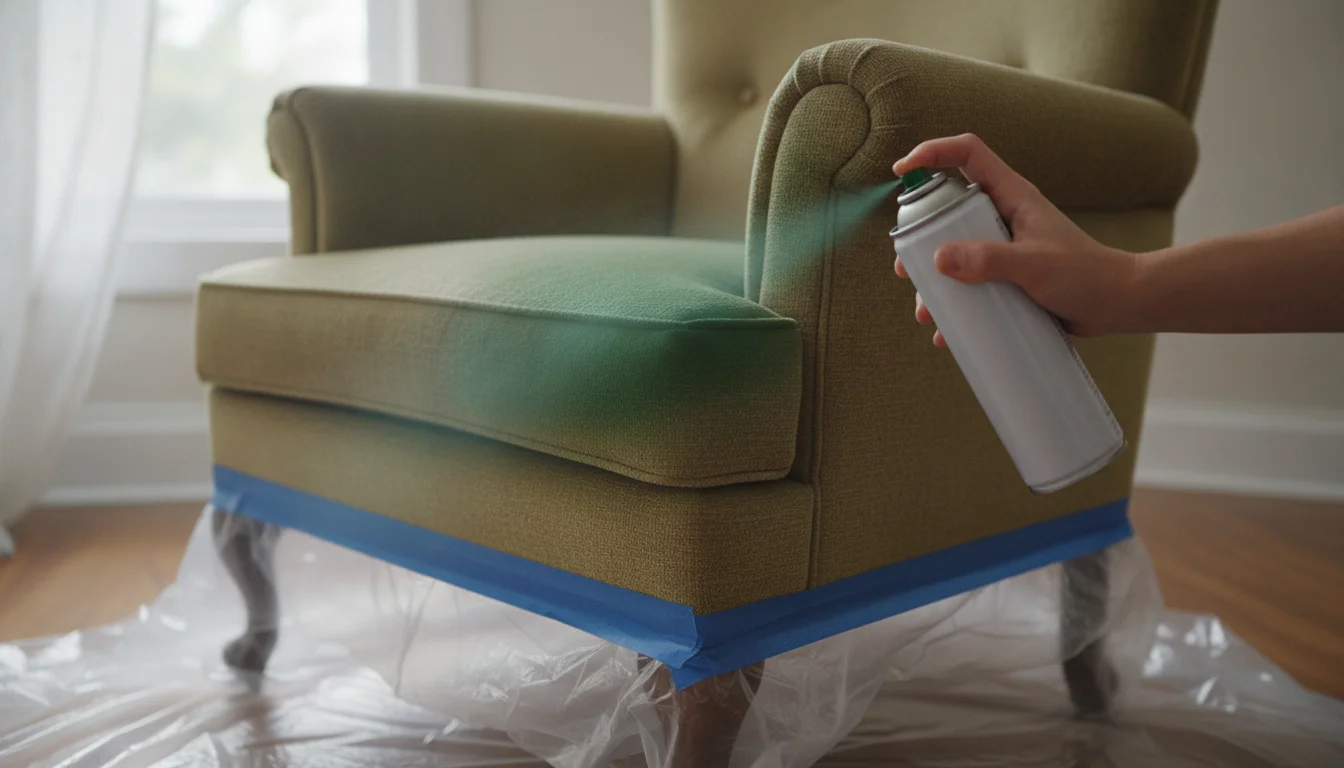
Covers don’t come off? Spray it. Aerosol upholstery paint soaks in and keeps the fabric soft. In Apartment Therapy’s test, the tester shook the can for a full minute, sprayed from 8 inches (20 cm) in long strokes and waited two hours between coats. Three coats used a whole can on one footstool, and the old green still showed through. It also left an oily-looking film on a wool blend. Pick a color at least one shade darker than the fabric and buy an extra can.
The other route is diluted dye in a spray bottle. One owner refreshed a faded chenille sofa with 1/4 cup (60 ml) of all-purpose dye in a bottle of hot water, tested the mix on swatches cut from the skirt, then soaked the fabric evenly. It took up to three days to dry, and water reactivates the dye, so keep anything wet off it.
Either way: W or W/S code only.
4. Fabric markers for small spots
Faded piping or one arm edge? Use a fabric marker. Cut a tiny scrap from somewhere nobody looks (under the deck works) and match it at a craft store. Dab in thin layers, letting each dry. Don’t drag the tip, or it streaks. It’s for an inch or two, not a cushion.
5. Flip the cushions, add a throw
Flip the seat cushions if both sides are upholstered. The underside never saw the sun. A throw over the faded arm hides it today and stops it getting worse. Make it colorfast, or it can bleed dye onto a pale sofa.
6. Slipcover the whole piece
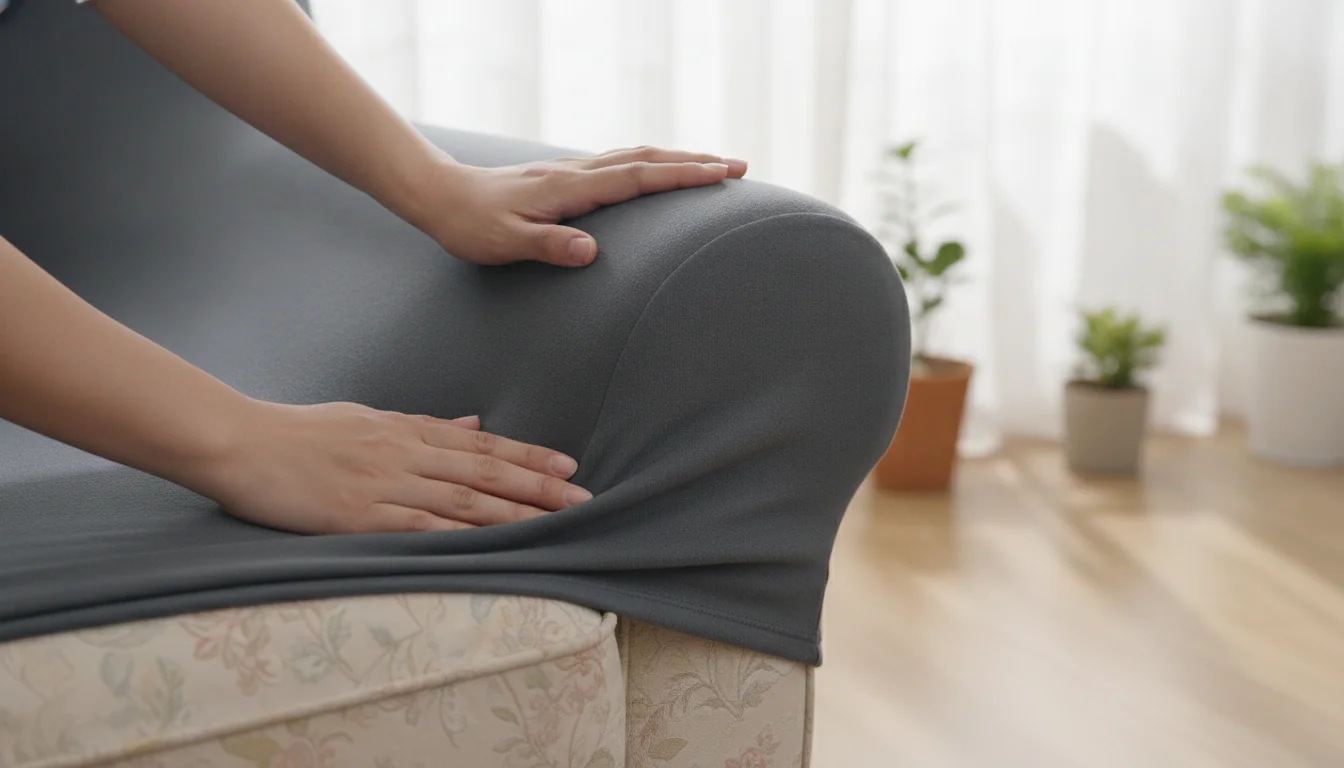
Whole sofa faded, or the tag says olefin or code X? A slipcover fixes it in an afternoon. A fitted one looks deliberate; a baggy one looks like you’re hiding something. Measure carefully before you buy, and for a sunny room pick a dark color or a fade-resistant fabric.
7. Brush fabric paint onto upholstery
Paint sits on the fibers, so it covers fabric dye won’t touch. The cost is comfort. Mix latex paint with textile medium at the ratio printed on the medium’s label, or thin chalk paint with two parts water. Mist a small section with water, brush the paint in with circular strokes, and sand lightly while it’s damp. Wait 2 to 4 hours between thin coats, then let it cure 24 to 48 hours before sealing with wax.
Apartment Therapy’s tester needed three thick coats of the latex mix on a tweedy footstool and called the result “hard and bendy like a stale taco shell.” Two out of five. Keep this for a piece you’d otherwise throw out.
8. Reupholster
If the frame and cushions are sound and the fading is everywhere, new fabric is the one fix that’s truly as good as new. Check the bones before paying for it. Carved wood, down cushions and coil springs are good signs; a wobbly frame means costly repairs. For a sunny room, ask for a solution-dyed fabric such as olefin. Its color goes in before the fiber is spun, which makes it highly fade-resistant.
Prevention
Draw curtains or blinds in the brightest part of the day, or layer sheers under heavier drapes. UV window film blocks more than 99% of UVA and UVB according to the Skin Cancer Foundation, and lasts up to a decade. Film handles the UV, but heat and light still reach the sofa, so keep the curtains in the plan. Rotate and flip cushions on a schedule, and shift the sofa out of the direct beam if the room allows.
Frequently asked questions
Can sun fading on a sofa be reversed? No. The dye is gone, so the color can only come back as new dye, paint or a new cover.
Will a color-reviving detergent bring the color back? No. Detergent can wash out grime that dulls fabric. It can’t put back dye the sun destroyed.
Can I dye a sofa without taking the covers off? Yes, with a spray (method 3) on a W or W/S fabric. Expect days of drying, and test a hidden spot first.
Do some fabrics fade faster? Yes. Velvet and chenille are especially light-sensitive. Solution-dyed olefin is among the most fade-resistant.