Table of Contents
The brown haze on an oven door is rarely in one place. Some is baked onto the inside face, some is splatter on the outside, and the streaks that won’t budge however hard you scrub are often between the panes, where no sponge reaches. So work the door in order: outer face, inner face, the gap through the vent slot at the bottom, and only then lift the door off by the hinge locks your manual describes. Here’s how to get rid of grease on oven door glass, gentlest first, with what each step can’t do. Do all of it on a cold oven.
Why grease ends up on (and inside) the door
Most oven doors have two or three panes of glass with an air gap between them. That gap keeps heat in and the outside pane cool enough to touch.
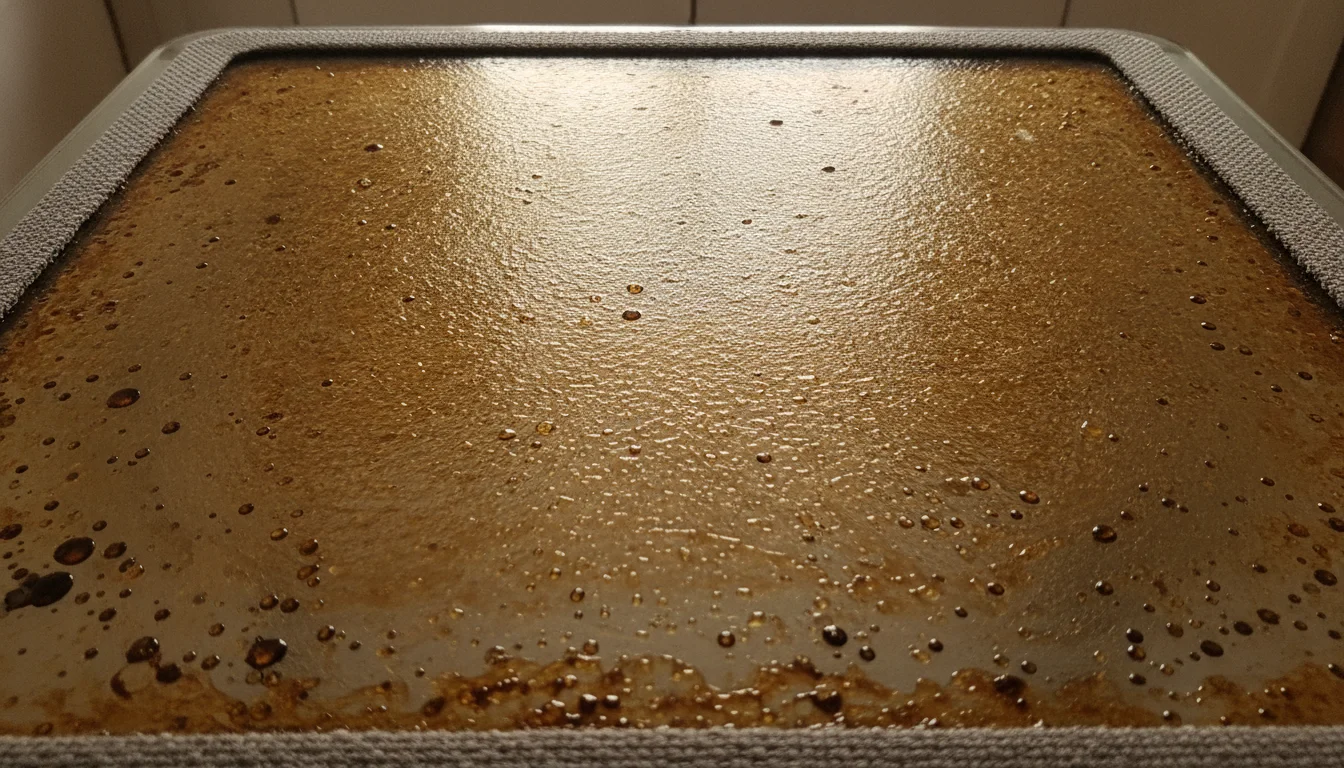
The inner face takes every splatter, and every bake reheats it. America’s Test Kitchen explains what that does: oil heated to its smoke point breaks into free fatty acids that polymerize into a resin that won’t dissolve in water.
The gap fills from its openings. Hunker says crumbs, liquids and grease slip in through the vents at the top of the door as food goes in and out. Reviewed.com found slots at the bottom too, there for venting if something boils over. An oven expert at AO.com told Ideal Home that inside the door is one of the places grease and steam build up fastest.
1. Wipe both faces with warm soapy water
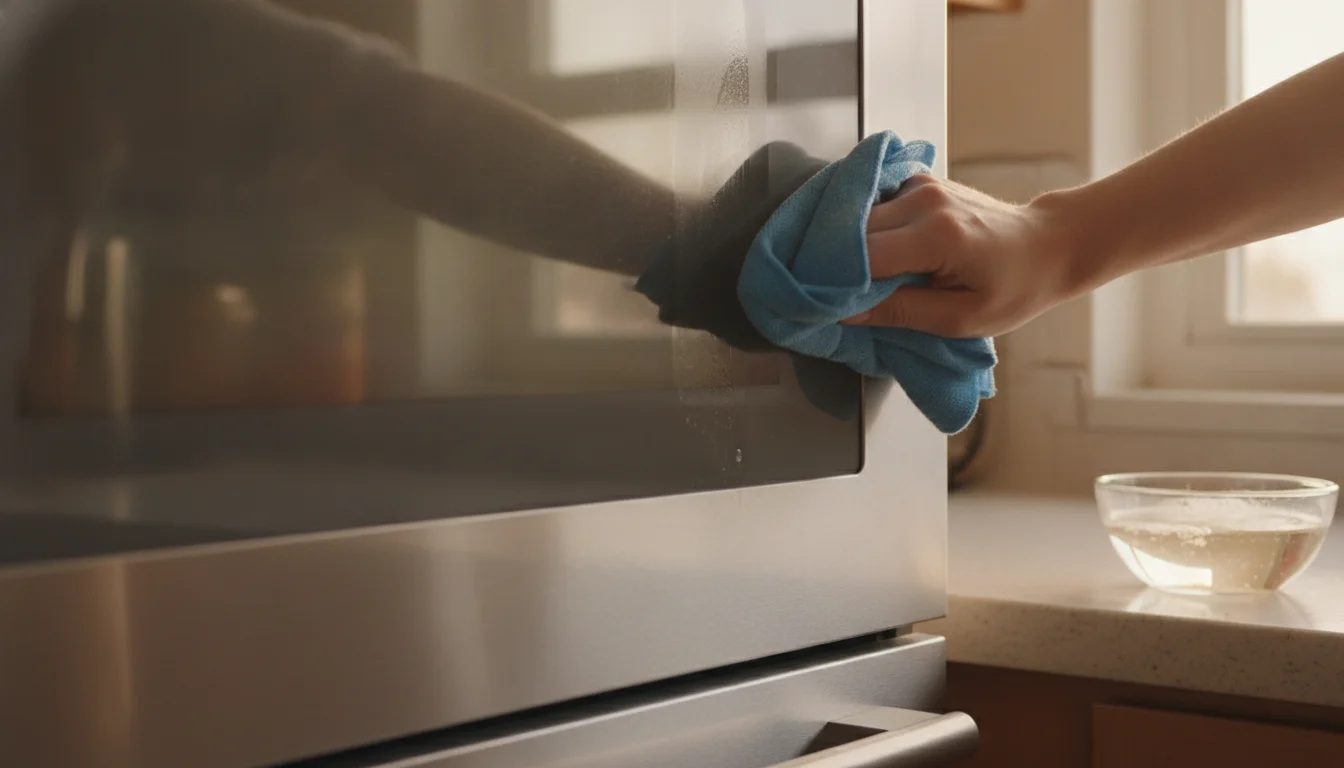
Start outside, because it’s the easy win. A squeeze of dish soap in a bowl of warm water and a microfiber cloth wrung out until it’s damp, not dripping. Go over it again with a cloth rinsed in clean water to take the soap off. On a stainless frame, wipe along the grain so it doesn’t streak.
Do the same on the inside face to see what’s actually stuck. Leave the woven seal around the door alone. GE’s manual says not to clean the gasket at all: it’s fiberglass, it can’t take abrasion, and the door needs it intact.
2. Steam the oven to soften the inside glass
Set an oven-safe pot of water on a rack and heat the oven. Real Homes quotes a cleaning company owner who runs it at 450°F (232°C) for 20 to 60 minutes. Turn it off, let it cool, then wipe the condensation off the inner glass and the grease comes with it.
Fine for a light film, not for years of buildup. One toaster-oven owner tried steam, then baking soda, then vinegar, then a Brillo pad, and the glass still wasn’t clean. Use it to soften, then go on.
3. Baking soda paste (and skip the vinegar)
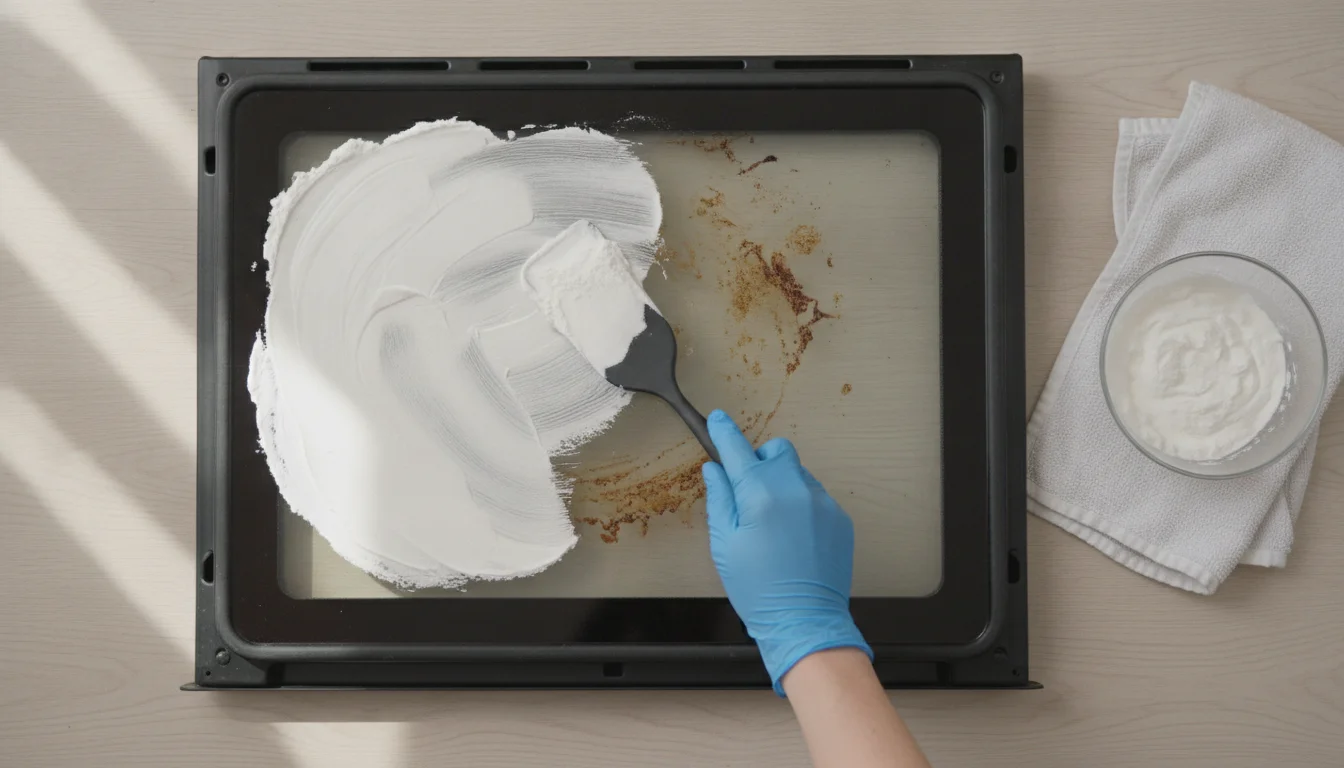
Arm & Hammer’s recipe is ½ cup (120 ml) of baking soda with 3 tablespoons (45 ml) of water, mixed to the thickness of pancake batter. Spread it over the inner glass and leave it 15 to 20 minutes, then wipe it off with a damp cloth and a non-scratch sponge. One r/CleaningTips commenter adds a small squirt of dish soap, gives it 20 minutes, and says lightly crumpled foil works as a scrubber.
Don’t spray vinegar over it, whatever Tasting Table and Ovenu tell you. Vinegar is an acid and baking soda is a base. The fizz is the two reacting into sodium acetate, water and carbon dioxide, and what’s left is weaker than either one alone. Wipe the paste off with water first. Vinegar afterward, for streaks, is fine.
4. Spray a degreaser and walk away
Spray a grease-cutting dish spray heavily over the brown patches, then leave it. Keep it wet by spraying again rather than letting it dry, wipe when the layer has gone soft, and finish with a cloth rinsed in clean water.
5. Lift soft lumps with a plastic scraper
Once a paste or degreaser has softened the layer, a plastic scraper or an old gift card at a shallow angle pushes the lumps off. It won’t scratch the glass, and it beats more scrubbing.
6. A razor scraper, flat edge only
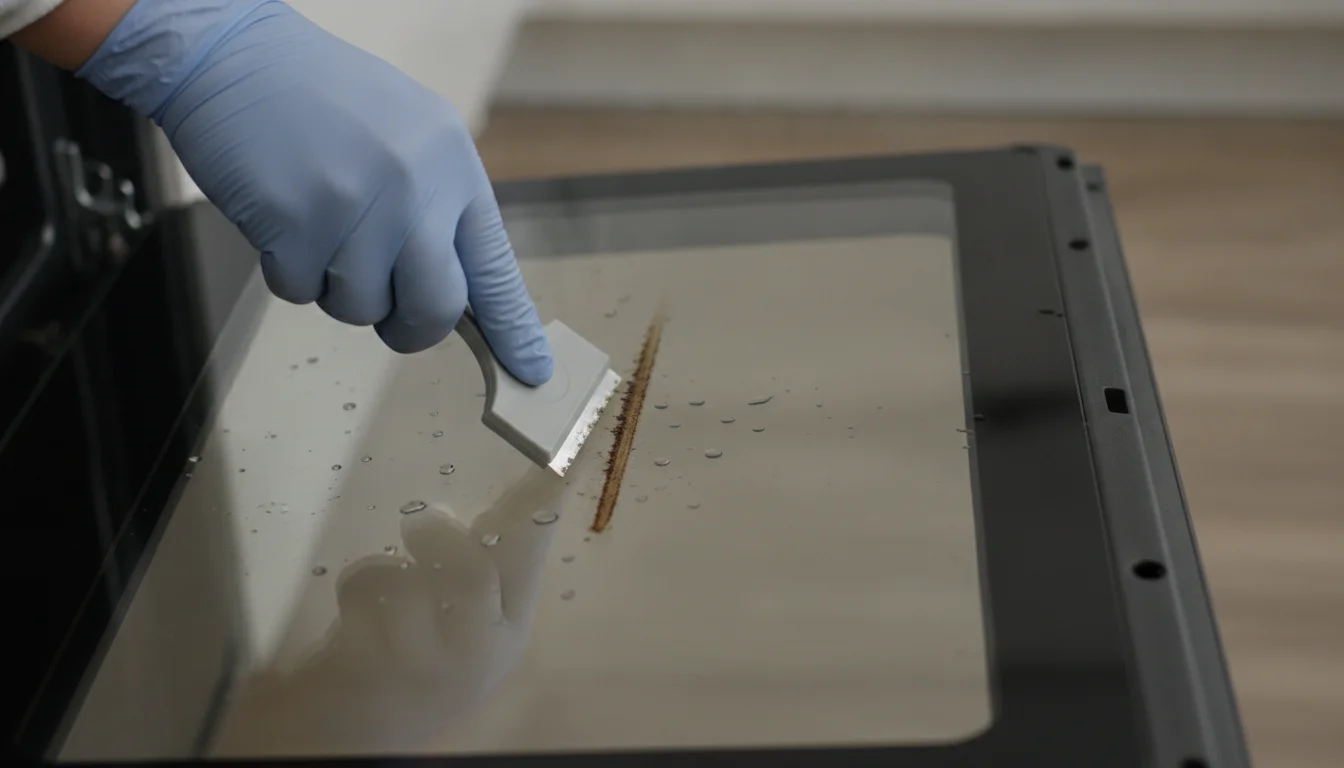
For the dark spots that survive everything, use a glass-safe razor scraper. Wet the spot first, as Bob Vila advises, then keep the blade low and push it in short strokes. Ovenu’s rule is the one to remember: use the flat edge of the blade and never the corner, which can badly scratch the glass. Glass only. Keep it off the painted frame and the gasket.
7. Oven cleaner, for the worst of it
The strongest option, with the most limits, so follow the label of the can you buy. Easy-Off Heavy Duty’s label is one that names both oven doors and glass, and this is what it says. It is not for self-cleaning or continuous-cleaning ovens, so check your manual first; if yours is one, skip this method. It is also not for exterior oven surfaces, aluminum, chrome or baked enamel, which rules out the outer face of the door. Use it on the inner glass only, and not too often: the label says to avoid excessive use on glass.
Wear long rubber gloves and keep the kitchen ventilated, because it is corrosive lye and burns skin and eyes. Keep the spray off the heating element, the thermostat and the light. The r/CleaningTips thread’s top answer lays towels or paper bags under the open door to catch drips.
For spots, spray the cold door from 9 to 12 inches (23 to 30 cm), leave it 30 seconds to a minute, and wipe it off with a wet sponge or cloth. For a deep clean, the label has you heat the oven to 200 F (93 C), turn it off, spray, wait 1 hour 15 minutes, then wipe it clean. Another brand’s label may give different times; use the one on your can.
8. Clean between the panes through the vent slot
Streaks that neither face will give up are in the gap. Pull out the bottom drawer if there is one and look up under the door for a slot between the panes. Bob Vila points out not every oven has one.
GE’s method: wrap a cloth around the end of a wooden yardstick, hold it with rubber bands, soak it in mild dish soap and warm water, and slide it in. Wet the stains, give them two to three minutes, scrub, then rinse with a clean wet cloth. Finish with a dry, lint-free cloth. Don’t force the stick; leave room so the glass doesn’t bend or break. Real Homes warns off the wire coat hanger version because bare wire scratches glass.
GE says not to clean between the glass on doors with a camera or on side-swing doors.
9. Take the door off its hinges
The last resort. Lay down a towel, wear work gloves and get a helper: the door is heavier than it looks.
The locks vary, so check the manual. GE’s sit in the lower corners and pull down toward the door frame. Whirlpool’s sit at the top corners and flip up toward the door, and if one isn’t flipped all the way, the door won’t come off. With the locks open, close the door to its removal position (about 3 inches (7.5 cm) open, roughly 75 degrees, on GE’s instructions), grip both sides, never the handle, and lift up and out. Lay it handle side down. Doors without locks usually lift off from the first stop, about 4 inches (10 cm) open on Whirlpool’s.
With the door flat, the slot is easier to work. Only take the panels apart if your manual says to; doing it against the instructions can void the warranty. One homeowner who did found the gap between the outer glass and the frame wider after reassembly. When you refit it, Whirlpool says a door hanging lower on one side has a hinge that isn’t seated, so lift it off and try again.
Why self-clean isn’t the shortcut
GE’s manual has a fire hazard warning: wipe grease and heavy soil off the oven bottom before self-cleaning, or risk an oven fire. The same manual says soil on the front frame and outside the door gasket has to be cleaned by hand anyway. Arm & Hammer adds that the cycle often makes a terrible smell and sets off smoke alarms, and can bake food on harder. If you do run it, wipe the grease out first, ventilate, and move pet birds to another room, as GE advises.
How to keep the door clean
Wipe spills once the oven has cooled, before the next bake turns them to resin (and feeds cooking smells on every preheat). Keep racks clean so they don’t drip and smoke, and Bob Vila suggests a proper clean of the glass every three to six months.
FAQ
Can you clean between oven glass without removing the door?
Often, yes. Look for a slot under the door, usually with the bottom drawer out, and work a cloth-wrapped yardstick through it. If there’s no slot, the door has to come off.
What will dissolve hardened grease?
Time, mostly. In America’s Test Kitchen’s tests, baking soda, vinegar and soap each helped dissolve the resin on burnt pans when left overnight. On a door, that means a paste or degreaser left to dwell, then oven cleaner if its label allows your oven.