Table of Contents
Put the vacuum down. The first rule of how to get rid of mouse droppings is that the obvious tool is the wrong one, because sweeping or vacuuming dry waste throws it into the air you’re breathing, and that’s how hantavirus gets from a mouse to a person. The fix is wet, not dry. Soak it, wait, wipe it up.
Most guides give you that much and quit at the kitchen floor. But droppings don’t quit at the kitchen floor. They’re in the garage, on the storage boxes, in the attic insulation and up in the car’s air intake. So here’s the wet method place by place, built on current CDC guidance, and the point where the job stops being yours and belongs to a professional.
Why the droppings are there
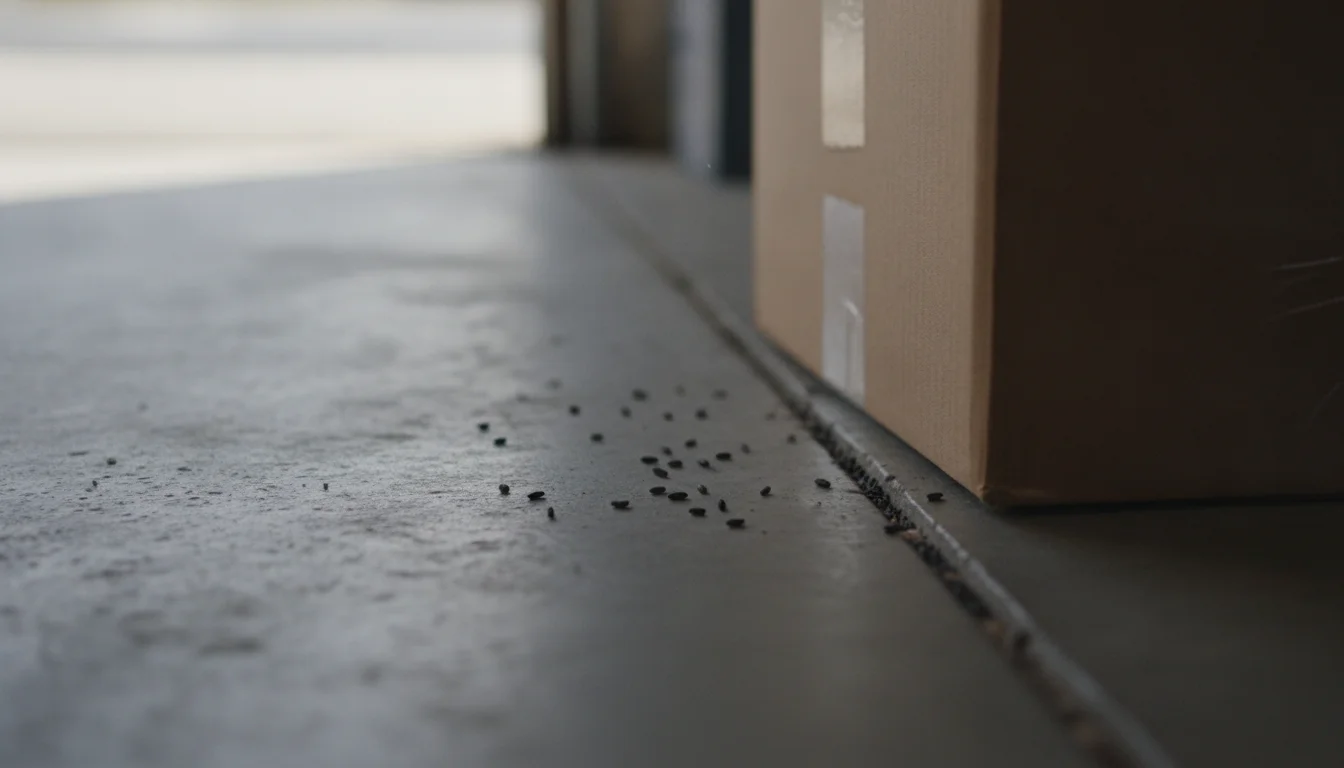
Mouse droppings look like dark grains of rice, about 1/8 to 1/4 inch (3 to 6 mm) long. Rat droppings run closer to 1/2 inch (12 mm). Fresh ones are shiny black, and they dry to a chalky brown. One mouse leaves 50 to 75 a day, so a scattering doesn’t mean an army. (And if your “droppings” move, you’ve got a bug problem. One Reddit poster found that out the funny way.)
They’re there because a mouse found a gap over 1/4 inch (6 mm) wide and something to eat.
1. Disinfect droppings before wiping them up
This is the method. Everything below is a version of it.
- Put on rubber or plastic gloves.
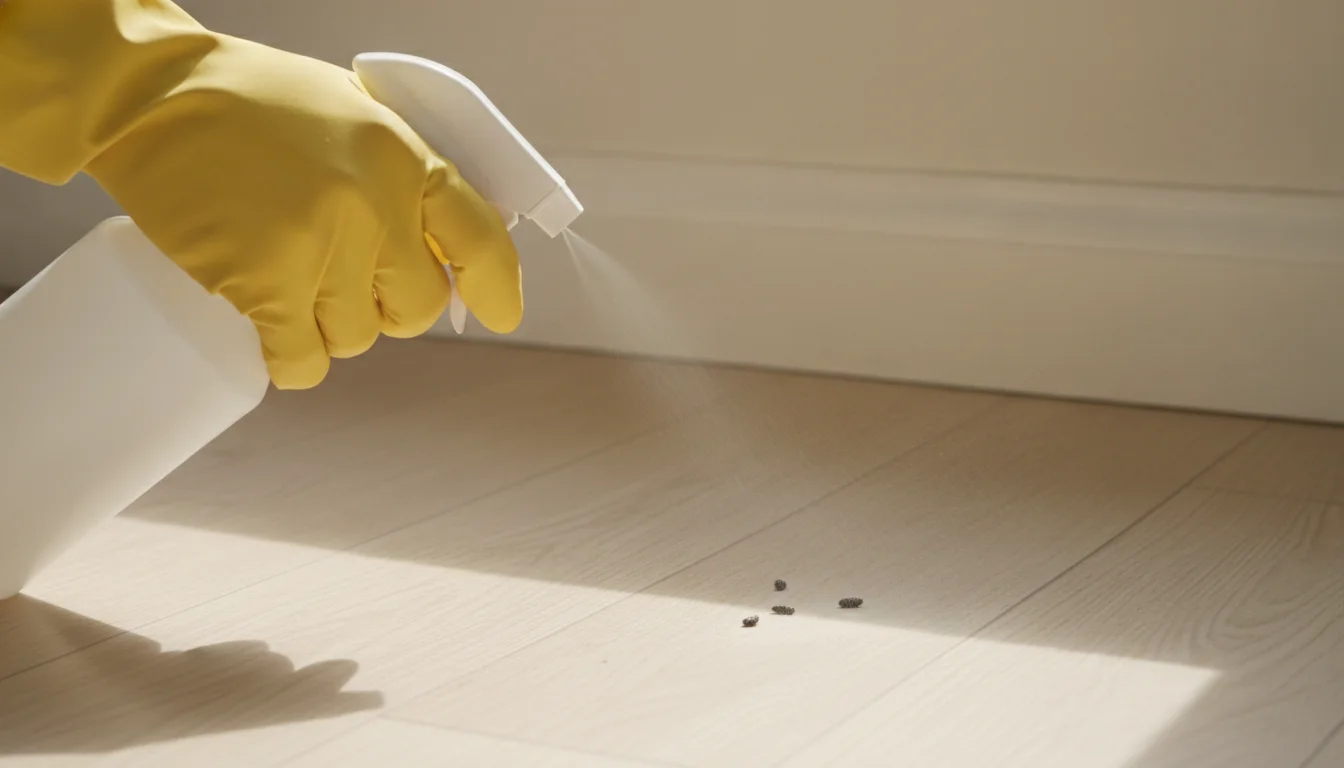
- Spray the droppings and any urine until they’re very wet. Use a household cleaner with the word “disinfectant” on the label, or a fresh mix of 1.5 cups of bleach in 1 gallon (3.8 L) of water. An enzyme cleaner without that word doesn’t count.
- Leave it for 5 minutes, or as long as the label says.
- Wipe it up with paper towels and put them in a covered garbage can.
- Mop or sponge the area with disinfectant, including nearby counters, cabinets and drawers.
- Wash your gloved hands, take the gloves off, and wash your hands with soap and warm water.
Never add ammonia, vinegar or any other cleaner to bleach. That makes a poisonous gas.
Found a nest or a dead mouse? Soak it for the same 5 minutes, then put it in a plastic bag, knot the bag, put that in a second bag and knot that too.
2. Air out the garage or shed for 30 minutes
A closed garage, shed or cabin gets aired before you touch anything. Open all the doors and windows, get across-the-building airflow if you can, and leave for 30 minutes. A fan in a window speeds it up. Keep kids and pets out. If the wind’s strong enough to blow droppings around, leave the doors shut until it drops.
Then go back in and run method 1. Concrete gets mopped. A dirt floor just gets sprayed.
3. Match your gear to the mess
Gloves are all the CDC asks for on a routine cleanup. Add long sleeves, and cover any cuts, because the virus can get in through broken skin.
A heavy mess is different: coveralls, rubber boots or shoe covers, goggles, gloves and a half-mask respirator with HEPA filters. A respirator needs a tight seal, so a beard defeats it. Utah State’s extension service suggests at least an N95 for a heavy infestation. A paper dust mask gives only some protection. Respirators can strain anyone with a lung or heart condition, so the CDC says to get medical clearance before you wear one.
4. Sort stored boxes outdoors
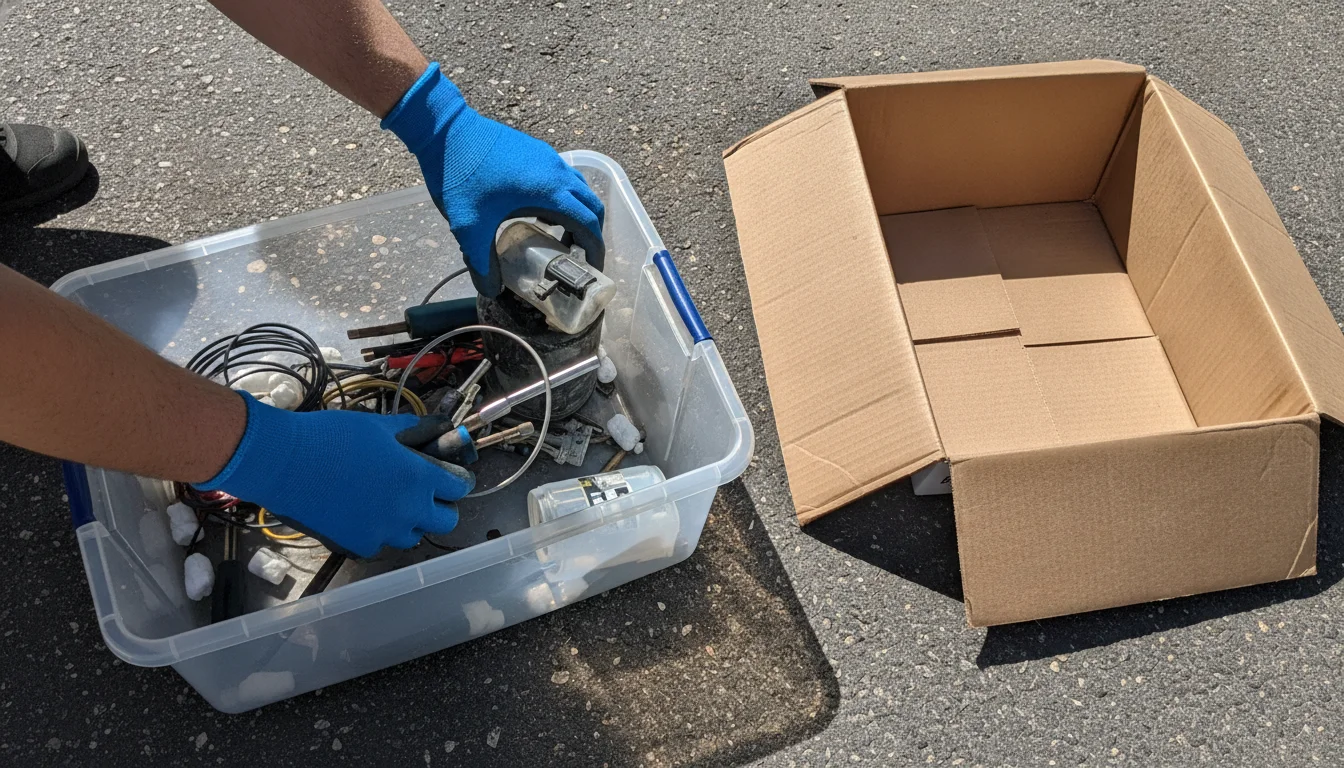
Don’t go through boxes where they sit. Carry them outside to an open spot in direct sunlight, stand upwind so the dust blows away from your face, and unpack there.
Cardboard with urine or droppings on it goes in the garbage. No appeals. Plastic, glass and metal containers can be saved with bleach solution or disinfectant, and so can any hard item inside. Throw out what you don’t need, and pile the cloth and paper separately.
5. Rest books and papers in the sun
You can’t spray a photo album. For anything a liquid would ruin, time does the job. Leave it outdoors in sunlight for several hours, or keep it in a room free of rodents for at least three weeks. The CDC strongly suggests six. (Older guidance said a week, so ignore pages that still quote it.) Put a date on the pile.
6. Wash clothes and bedding hot
Hot water, detergent, then a high dryer setting or a line in the sun. Stuffed animals too. Get any visible droppings off first, using the soak and wipe.
7. Steam or shampoo carpets and upholstery
Soak and wipe the droppings first, and skip the usual “vacuum before you steam” routine. Then shampoo the rug or sofa with a commercial disinfectant, or use a commercial-grade steam cleaner. Bleach can wreck rugs and fabric, so keep it for hard surfaces.
8. Bag soiled insulation
Most guides go quiet here. CDC guidance is short: if exposed insulation has urine and droppings on it, put it into plastic bags and take it out. So wear the heavy gear from method 3, wet the soiled patch, lift it into a bag and knot it. Don’t rake or vacuum it dry. Clean the surfaces beneath it with method 1.
That covers insulation you can see and reach, in a patch you can bag. Droppings spread through a whole attic, or insulation inside a wall, is a job for a pro. Replace what you pull out only after you’ve closed the way in, or you’ve just built the next nest.
9. Clear the car’s vents and replace the air filter
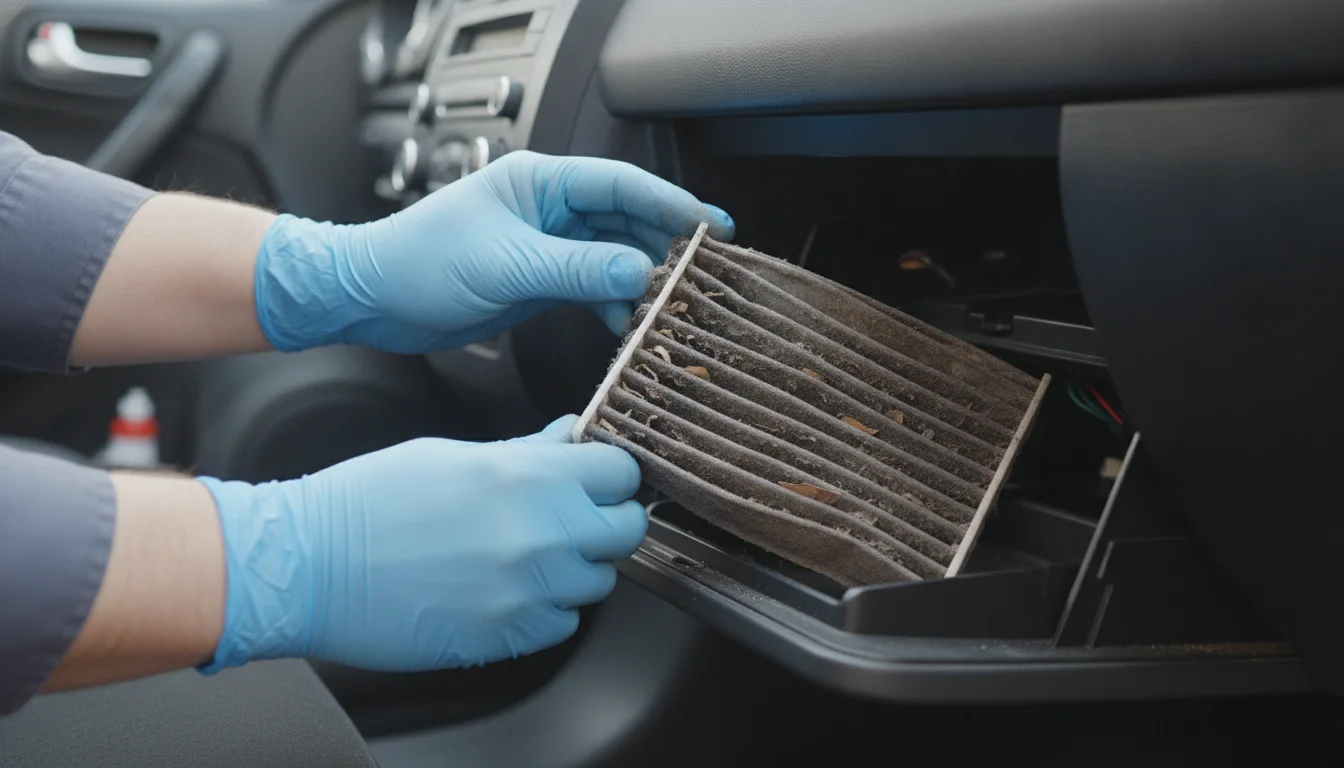
Don’t start a car that’s been sitting until you’ve looked. Infectious particles can blow onto passengers through the vents, and nests turn up in the air intake and filter, the ducting, and in or under the seats.
- Park somewhere well ventilated. Open the hood, doors and trunk for 20 minutes.
- Disconnect the battery before you work in the engine compartment.
- Wear plastic gloves and long sleeves.
- Spray droppings and nest material until they’re soaked, and leave them for 5 minutes. No vacuum and no pressure washer before that. Use a disinfectant rather than bleach near fabric seats.
- Pick it all up with paper towels, then disinfect the rest of the area.
- If there’s nesting in the air intake, take out the nest and the filter together, bag both, and fit a new filter. Your owner’s manual shows where the cabin filter sits.
- Reconnect the battery once everything’s dry.
One Prius owner cleaned out a filter nest and found a new one in the tray soon after. Cleaning doesn’t close the route.
When to call a professional
Hand it over if you’ve got any of these:
- Piles of droppings, or lots of nests or dead rodents. That’s the CDC’s definition of a heavy infestation. Call your local or state health department for advice first.
- Heavy contamination in a garage, shed or crawl space. Spokane’s health district sends these to a professional remediation firm.
- Signs of rodents in your home’s heating or cooling ducts. The CDC says to call a rodent exterminating service, and duct cleaners know the risks.
- Insulation you can’t reach and bag.
- Extensive nesting in a car. Hoses, ductwork, filters or fans may need replacing, so use a qualified mechanic and warn them about hantavirus.
How to stop new droppings
Check the spot you cleaned. Fresh droppings mean the mice are still active.
Seal every gap over 1/4 inch (6 mm), especially around pipes, wires and vents, with steel wool or copper mesh plus caulk. Keep food and pet food in rodent-proof containers, and don’t leave pet food out overnight. Put snap traps where you found the droppings, out of reach of kids and pets. One Reddit poster, after 25 years in an old farmhouse, swears by a corn-kernel-sized bit of cheese melted onto the trap’s bait pan with a lighter.
The full plan is in how to get rid of mice, with a separate guide for mice in the attic. If one died somewhere you can’t see, read the dead mouse smell fixes.
FAQ
Do all mouse droppings carry hantavirus?
No. In the US the carriers are mainly deer mice and white-footed mice, and human cases are rare. In Washington, about 14% of over 1,100 deer mice tested positive. But you can’t tell whose droppings you’ve got by looking, and house mice can carry other infections, so treat them all the same way.
Should I wear a mask when cleaning up mouse poop?
For a few droppings, wet them and wear gloves. For a heavy mess, wear a respirator with HEPA filters, per method 3.
I already vacuumed mouse droppings. What now?
Stop, and clean the rest the wet way. That’s the CDC’s whole advice. One Reddit poster spent eight weeks worrying after a cleanup and nothing came of it.
What’s the best disinfectant for mouse droppings?
Fresh bleach solution on hard surfaces. Anything with “disinfectant” on the label works too, and it’s the better pick around fabric.
What if I feel sick after cleaning?
Hantavirus symptoms usually start one to three weeks after exposure: fever, chills and severe muscle aches, then sudden shortness of breath. The CDC tells cleanup workers to get medical attention for any fever or breathing illness within 45 days. Do the same, and tell the doctor about the droppings.