Table of Contents
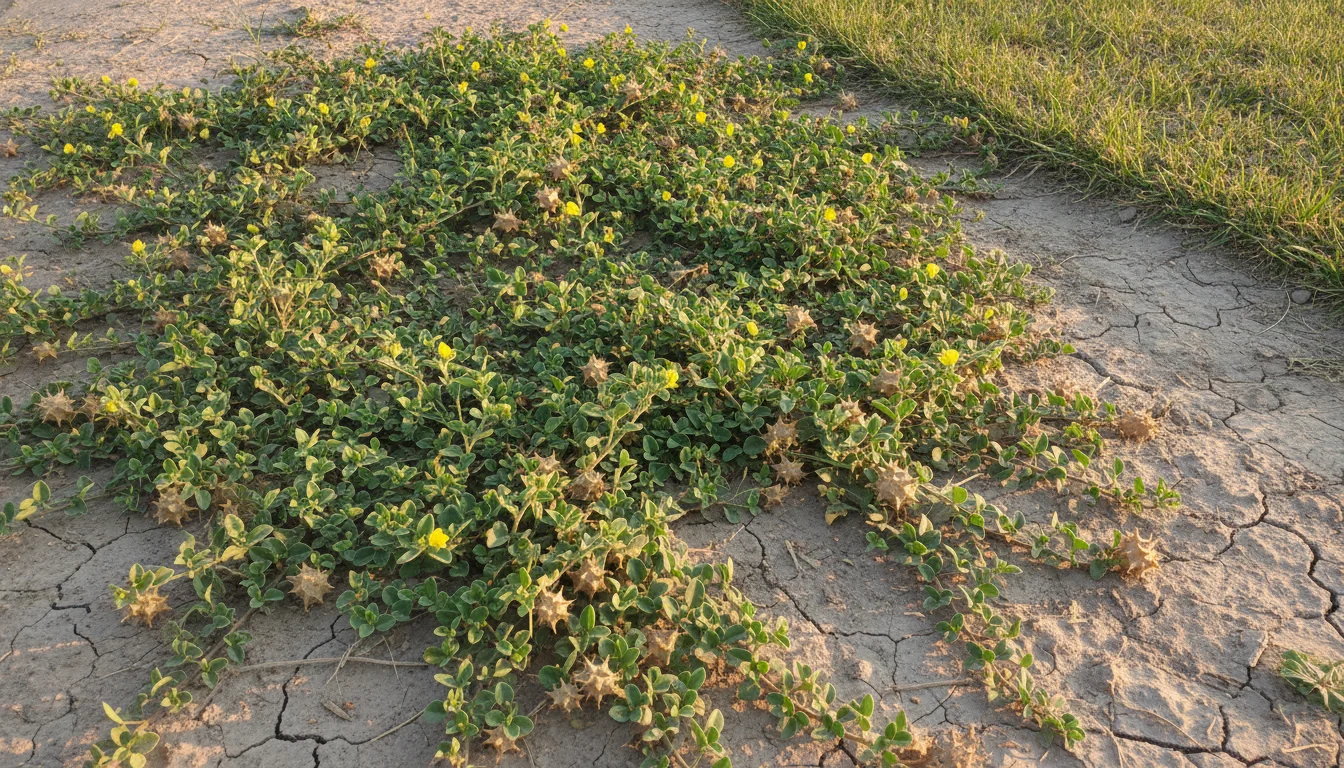
Step on a goathead barefoot and it feels like a rusty tack. Ride through a patch and you’re walking the bike home. Learning how to get rid of goatheads starts with the plant behind them. It’s puncturevine (Tribulus terrestris), a flat green mat 2 to 5 ft (0.6 to 1.5 m) across, with small five-petaled yellow flowers and seedpods that split into hard, spiny burs.
Here’s the bad news. One plant can drop 200 to 5,000 seeds in a season, it can start flowering within three weeks of sprouting, and the seeds can stay alive in the soil for up to five years. So pulling this summer’s plants is only round one.
The plan that works has three parts. Stop every plant from setting seed, pick up the burs already on the ground, and keep starving the seed bank for several years. Meanwhile, protect the bike tires and paws that keep finding them.
Why goatheads keep coming back
Goatheads are summer annuals. They die at the first hard freeze and spread only by seed, so every plant you meet this year grew from a bur dropped in an earlier one.
They win where nothing else grows well. Hot, dry, compacted ground, thin lawns, vacant lots and road edges suit them perfectly, because their deep taproot finds water that shallow-rooted plants can’t reach. A thick, healthy lawn has far fewer.
And people move them, on tires, shoe soles, mower wheels and dog paws. The classic mistake is pulling a bur out of a tire or a foot and flicking it aside, which plants a brand-new patch.
1. Pull them before they flower
This is the fix that actually works, and it’s free. A plant pulled before it flowers adds nothing to next year’s problem.
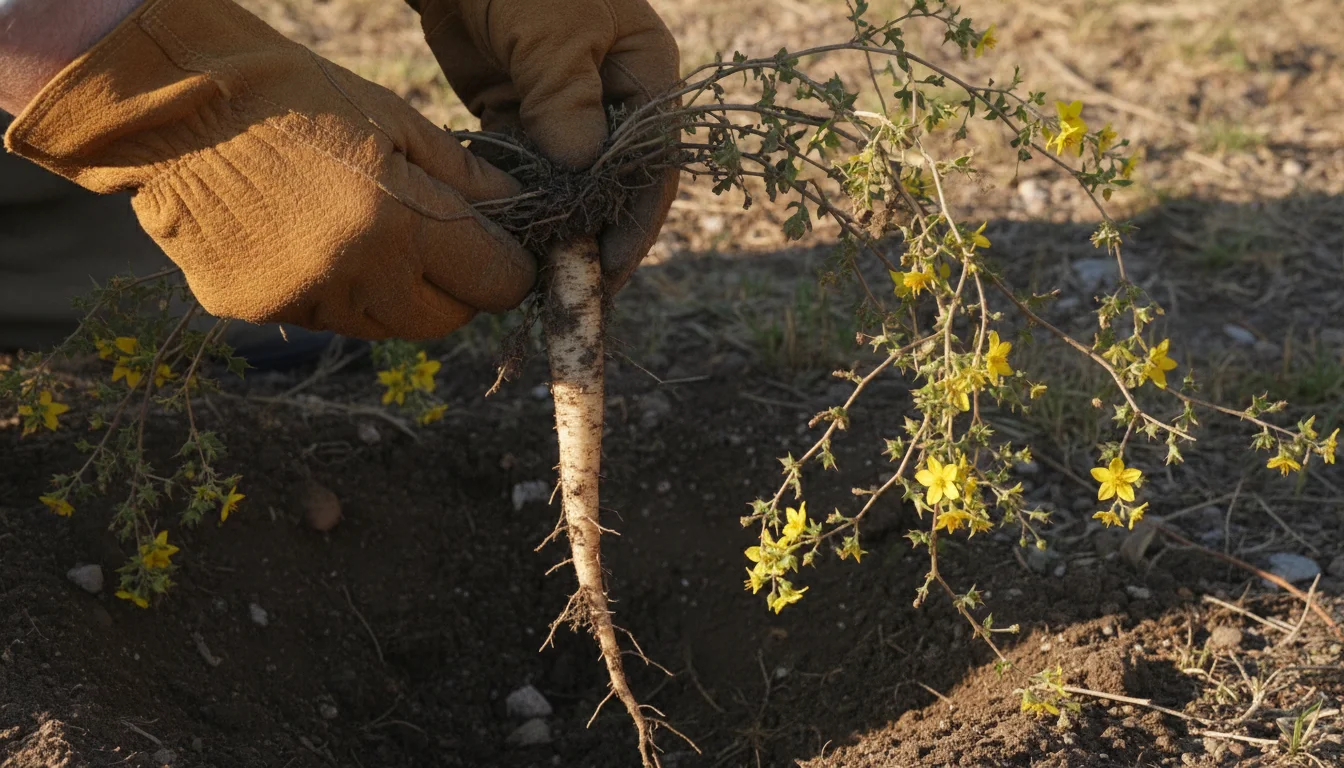
Water the patch a few hours ahead or go out after rain. Moist soil lets the taproot slide out; hard, dry ground snaps it, and you’ll need a shovel. Grab the plant at the center and pull slowly sideways rather than straight up, so the taproot comes out whole. Wear thick leather gloves, because thin ones won’t stop the spines.
Too late? Green burs mean pull now, before they turn brown. Late in the season the dried pods shatter the moment you touch the plant, so dig at the center and lift the whole mat straight into a bucket without shaking it. Bag it and trash it. Never compost it.
2. Hoe the seedlings every three weeks
On a bigger patch, a stirrup hoe (also sold as a hula or scuffle hoe) beats kneeling. Learn what the seedlings look like, then pop them out at the taproot while they’re small and leave them to fry in the sun.
Stay shallow, about 1 in (2.5 cm), because going deeper drags buried seed up to sprout. New seedlings keep coming all summer, so plan on a pass every three weeks until the first frost.
One warning. Once a plant has ripe burs, hacking at it just scatters them. Switch to digging and bagging at that point.
3. Drag a carpet scrap over the ground
Pulling the plants leaves their burs behind, and every bur is seed for the next few years. This is the step that lets you walk barefoot again.
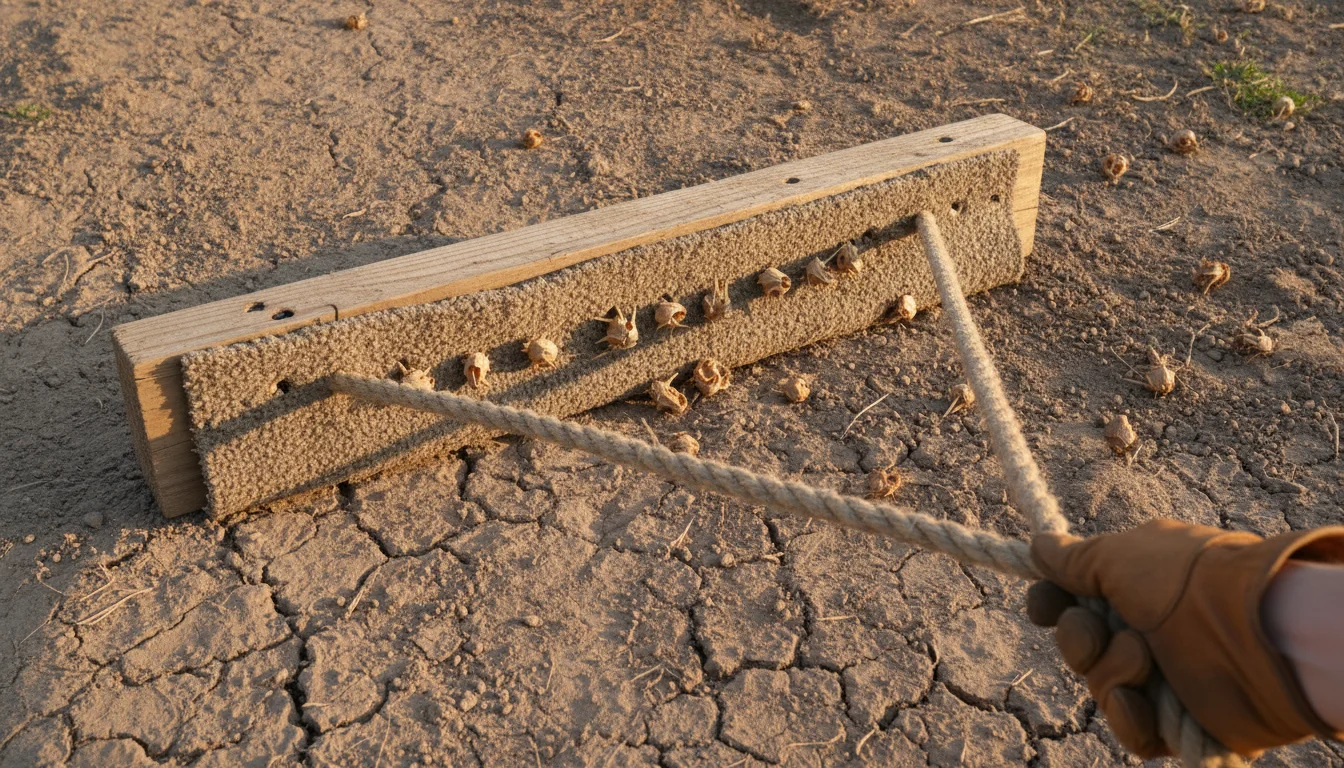
Staple a piece of old low-pile carpet (not shag), pile side down, to a 2×4 about 3 ft (1 m) long. Tie a rope to both ends, then drag it behind you across the yard. The spines hook into the loops. Expect to swap in fresh carpet a couple of times on a bad yard, and bag the used pieces.
Small patch? Press polystyrene foam onto the ground like a lint roller, slip an old sock over a long-handled paint roller, or rake into a metal dustpan. Skip the shop vac, though. People who tried it say the spines puncture the hose.
4. Time a pre-emergent for late winter
None of the top-ranking guides give you this schedule. A pre-emergent herbicide stops seeds as they sprout, so it hits the seed bank instead of this year’s plants. It has to go down before germination: late winter to mid-spring, and around April 1 in Colorado. Then repeat it every year for several years, because seed already in the soil keeps sprouting for years.
Look for oryzalin, benefin, trifluralin or pendimethalin, and check that the label names puncturevine. Crabgrass preventers often carry pendimethalin. Read the honest caveat, too. The University of California rates these as partial control only. Most home yards don’t need one at all. It’s for heavy, repeat infestations where hand work can’t keep up.
5. Spot-spray young plants
Already up? Post-emergent herbicides containing 2,4-D, dicamba or glyphosate all kill goatheads, and the smaller the plant, the better they work.
2,4-D and dicamba are safe on lawn grass but injure most other broadleaf plants, so keep them off flower beds and watch for drift. Glyphosate kills almost anything green, so use it only as a spot treatment or on a solid mat of weeds.
Spraying plants that have already set seed is wasted effort. As one gardener found, the spray kills the plant but not the seeds about to sprout.
6. Flame seedlings with a weed burner
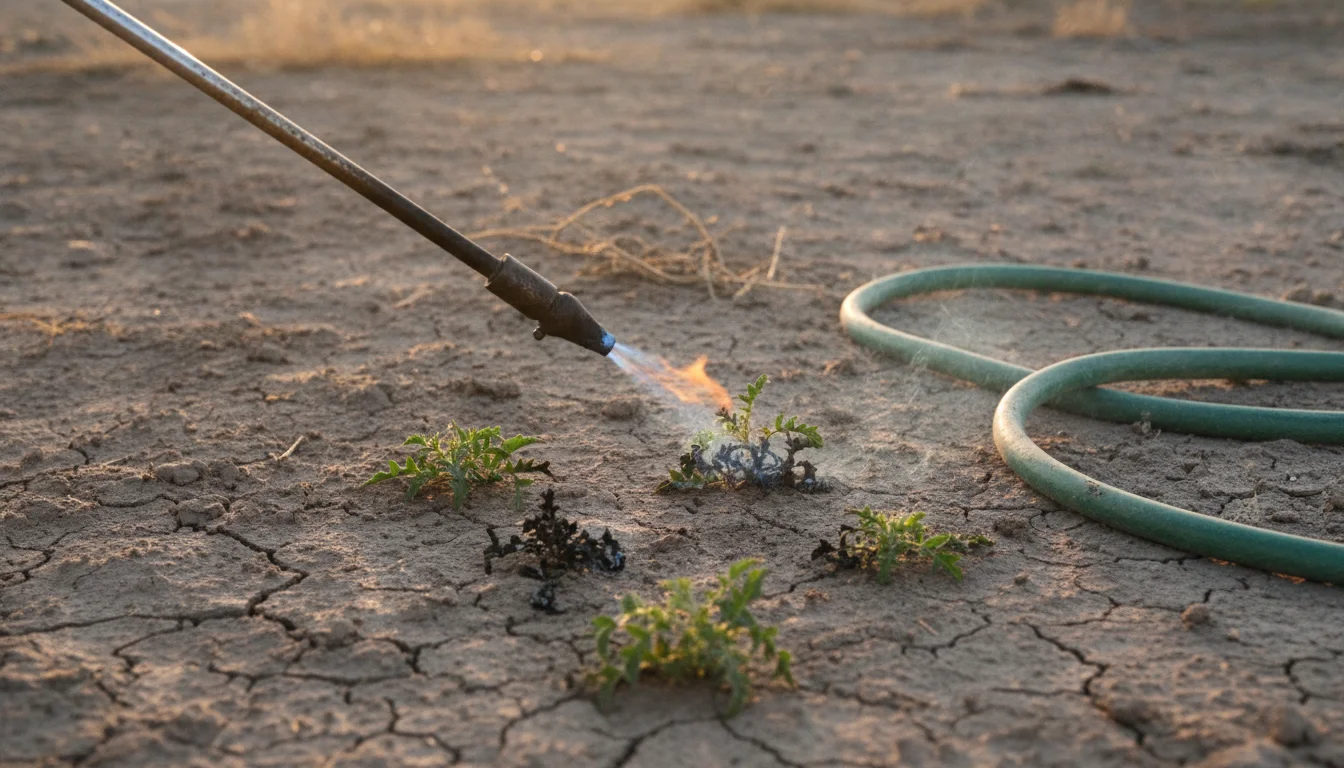
Heat works on young goatheads, but the aim is to cook the leaves, not to set the plant on fire. Pass a propane weed burner briefly over each plant and move on. It works best on seedlings under 3 in (7.5 cm) tall; larger plants may need repeat passes. To check your work, let a leaf cool, then press it between thumb and finger. If it keeps your fingerprint, the tissue is dead. One New Mexico gardener goes over them with a roofing burner every few weeks, timed for two to three weeks after rain, when the seedlings are everywhere but haven’t set seed yet.
Ask your local fire department whether flame weeding is legal where you live, and if a burn ban is in force, pick another method. Keep a hose or fire extinguisher within reach, stay clear of dry grass, wood chips and buildings, and never flame on a dry, windy day.
7. Smother bare ground with thick mulch
Mulch only works if it blocks all light. That means at least 3 in (7.5 cm) of organic mulch, and 4 to 6 in (10 to 15 cm) of wood chips over cardboard does better. Synthetic sheet mulches also stop seedlings.
The catch: burs that land on top of the mulch can still root down through it. So clear the burs first (method 3), then mulch, and pull anything that sprouts on the surface. Use this in garden beds and paths, not on the lawn.
8. Thicken the lawn so they can’t compete
Goatheads turn up in thin, unhealthy lawns where nothing crowds them out. A dense lawn shades the soil and takes the water and nutrients a seedling needs.
Aerate compacted ground, overseed thin spots, and water deeply but not often: about 1 to 1.5 in (2.5 to 4 cm) a week in one or two sessions. For a deeper lawn plan, see how to get rid of weeds in your lawn.
9. Let the weevils do the slow work
Two tiny weevils from India, France and Italy were released in the US in 1961. The seed weevil lays eggs in young burs and its larvae eat the seeds. The stem weevil tunnels through the stems and crown. They breed only on puncturevine and its close relatives.
In southern California, seed production fell 46% within five years of release, and plant cover dropped 70% to 100% in five of six regions over 15 years. They struggle in cold winters, though, and in California they don’t survive north of Sacramento. Neither one will wipe goatheads out.
Look for chewed holes in leaves and burs first; they may already be there. Otherwise ask your county agricultural office or extension service about local releases (in Colorado, the state insectary in Palisade supplies both kinds). Weevils bought from another climate may not survive. And don’t spray or burn the patch they’re working on in summer, or you kill them too.
10. Stop carrying them around
Every bur you move is a new patch. Don’t flick pulled burs aside; bag them. Clean mower decks and cart wheels before you leave an infested area, and check your shoe soles before you step onto clean ground.
Keep them out of the house too. Wipe your shoes on a rough mat outside, take them off on the porch after yard work, and check your pant legs. It’s far easier than picking burs out of the carpet later.
11. Armor your bike tires
No single fix stops every goathead flat. The riders who stopped getting them stacked two or three layers.
Start with sealant inside the tubes, or go tubeless with sealant if your wheels allow it. A small thorn hole plugs itself as the wheel turns. Add a tire liner (a strip of tough plastic between tube and tire that blunts the thorn’s tip), or fit thorn-resistant tubes, which run about four times thicker than standard. One New Mexico commuter reports no flats in more than four years with a liner plus sealant. Another rider got flats with both, especially late in the year when the burs are dry and hard.
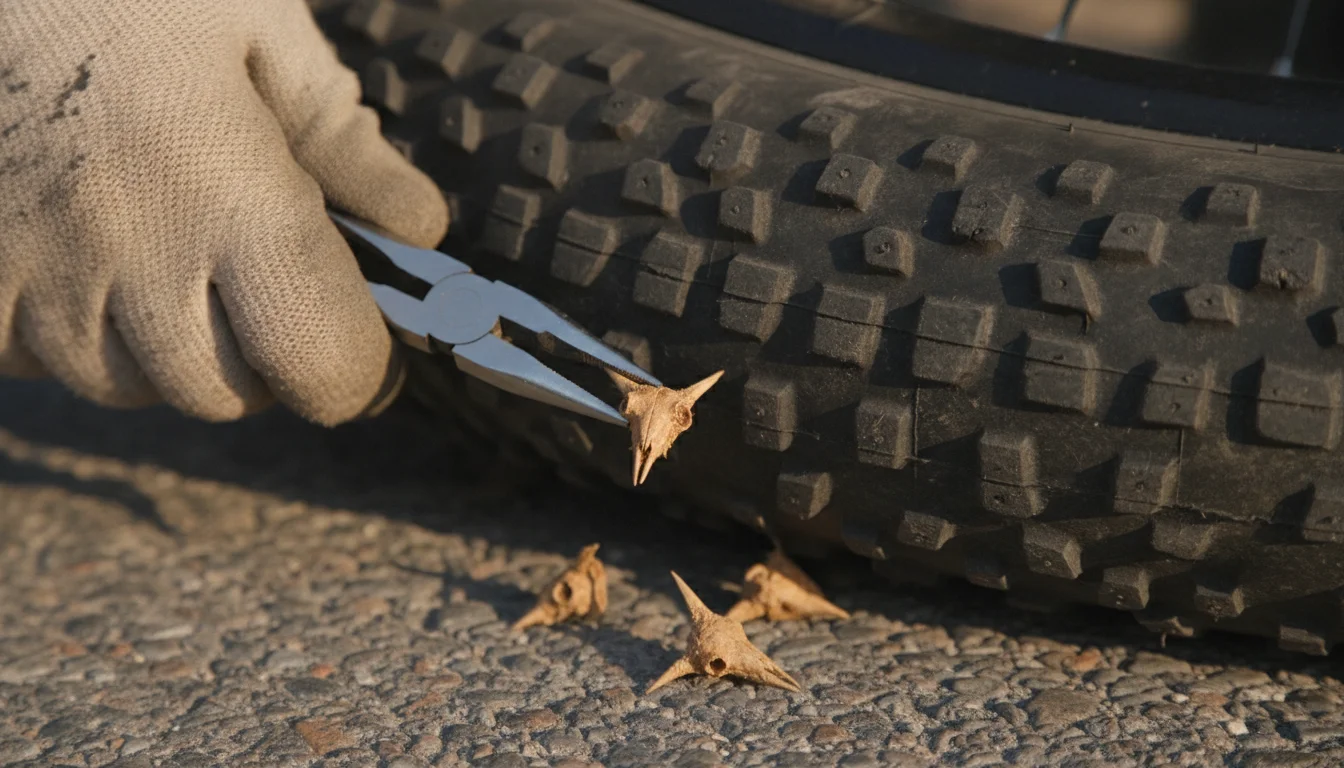
Keep tires at the pressure printed on the sidewall, because soft tires puncture more easily and tubes lose air every day. After a weedy ride, pull thorns out of the tread with needle-nose pliers. If one’s buried deep, scrape the top with a box-cutter blade until you can catch its side. With sealant in the tire, do this at home, not on the trail. The thorn may be what’s holding the air in. Spin the wheel so the sealant fills the hole, then top up the pressure. And before you patch or swap a tube, run a gloved hand around the inside of the tire, or the same thorn flats the new one.
12. Check paws before your dog comes inside
Goatheads lodge between the toes and pads, where fur hides them. Check every foot after a walk through weedy ground, before the dog hits the couch.
Wear gloves, and get a helper to hold the dog. Start with the loosest burs. Crush a big one with pliers and take out the pieces, then gently tease the fur away, keeping one hand between the skin and the bur so it can’t drop and catch again. Only use scissors if you can see light between the skin and the fur you’re cutting. Otherwise use clippers.
If a bur is buried in the skin, or the foot is swollen, red or leaking, that’s a vet visit. Vets often remove paw burs under mild sedation because they’re painful.
How to get rid of goatheads: FAQ
How long does it take to get rid of goatheads?
Several years. The seeds can stay alive in the soil for up to five years, so even a perfect season of pulling only drains part of the seed bank. Pull before flowering, collect the burs and keep it up. One gardener who did exactly that now gets the odd plant or two and can walk the yard barefoot.
Can you mow goatheads?
No. The plant grows flat against the ground, so the mower blade passes right over it. You’ll also spread the burs on the mower wheels.
How do I get goatheads out of my carpet?
Pick visible ones out by hand with gloves on, then sweep and vacuum often. But the real fix is at the door: take shoes off outside, check pant legs and pet fur before anyone comes in, and keep a rough mat on the step.
Do Epsom salt or vinegar kill goatheads?
Salts, no. Iron and Epsom salt sprays burn the leaves but leave the deep taproot alive, and it sends up new growth. Kitchen vinegar won’t do it either. It’s about 5% acetic acid, a quarter the strength of the 20% products registered as herbicides, and when an Oregon State University Extension agent sprayed thistle with a homemade 5% vinegar, Epsom salt and soap mix, the tops burned and the thistle came back as strong as ever. Even registered horticultural vinegar only kills the leaves it touches. If you use one, follow its label exactly, wear eye protection and chemical-resistant gloves, and keep it off anything you want to keep. On young goatheads, pulling is just as quick.