Table of Contents
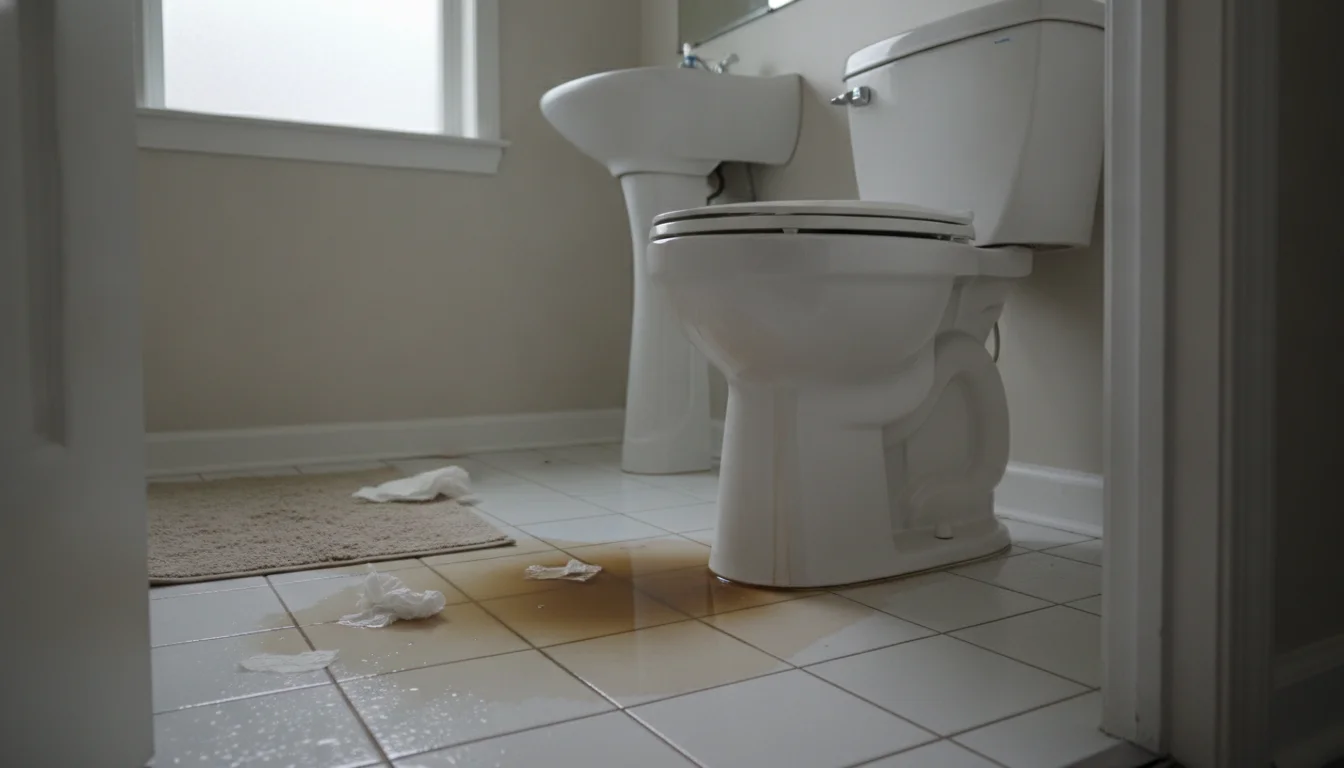
The toilet overflowed, or a drain burped something brown across the floor, and now there are splashes on the boards, the counter and the base of the toilet. Most of the advice out there boils down to two words: bleach everything. That’s how people end up with a floor that’s clean and also ruined. This is how to get rid of sewage spill in house messes like that one without the second disaster.
The order never changes: protect yourself, get the bulk off, wash, then disinfect. What changes is the disinfectant, because sealed wood, oiled wood, marble, granite, laminate and tile all want different things.
Small spill, one room? Read on. Sewage in carpet or under flooring? Skip to when to call a professional.
1. Gear up and kill the power if water’s near outlets
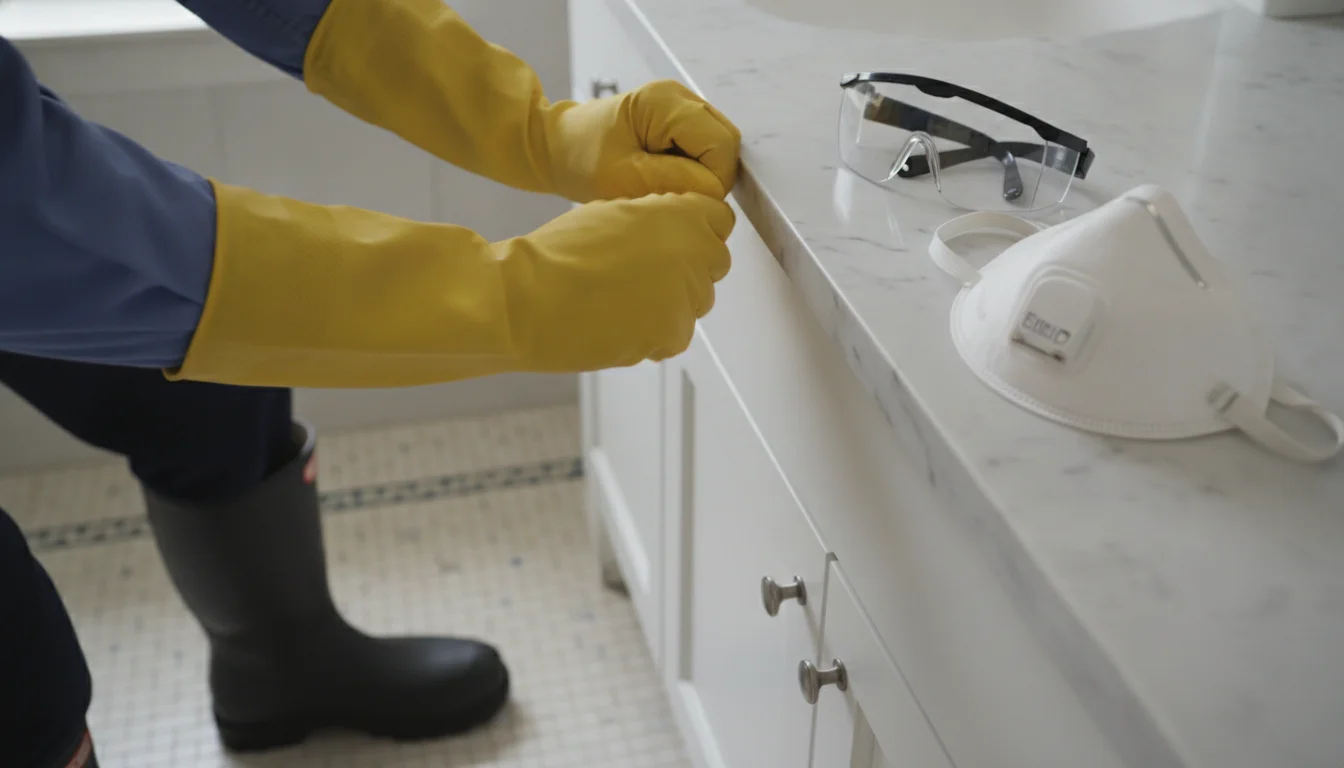
Rubber gloves, goggles, rubber boots, long sleeves and an N95 mask. Sewage carries germs that make people sick, so cover any cut with a waterproof dressing first.
If liquid has reached outlets, cords or appliances, switch that circuit off at the breaker panel. Keep kids and pets out until the room is clean and dry. Asthma or a weak immune system? Hand this job off.
2. How to get rid of sewage spill in house messes: solids and liquid first
Disinfectant doesn’t work through filth: organic matter uses it up before it reaches the germs.
Pick up solids with a dustpan or a thick wad of paper towels, straight into a heavy trash bag. Soak up liquid with paper towels, or a wet/dry vacuum if it’s pooling (then disinfect its tank and hose). Lift, don’t rub: rubbing pushes the mess into grain, grout and seams. Collected liquid goes down a working toilet, never a yard or street drain.
3. Wash every surface with hot water and detergent
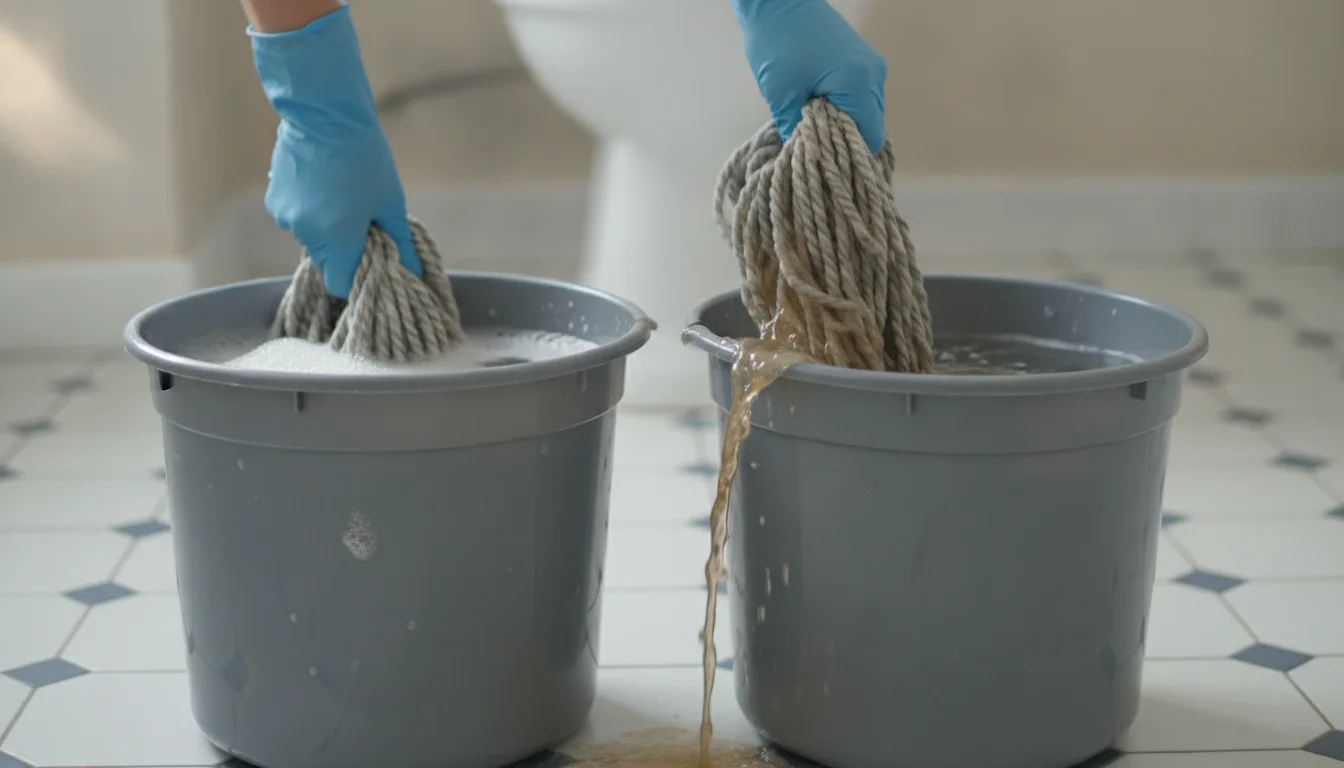
Wash everything the spill touched with hot water and a little dish detergent. This step removes the contamination; disinfecting comes after.
Use two buckets, soap and rinse: rinse the mop in one, wring it, re-dip in the other, and change the rinse water often. Dirty rags go straight in the trash, never across a clean surface.
4. Disinfect tile, vinyl, sinks and laminate with bleach
For hard surfaces that don’t soak anything up (tile, vinyl, linoleum, sinks, the tub), bleach is the right call. Plain, unscented, mixed fresh:
- Floors, sinks and other non-food surfaces: 1 cup (240 ml) of bleach to 5 gallons (18.9 L) of water, the CDC’s flood cleanup ratio.
- Food-contact surfaces (countertops, cutting boards, plates): 1 tablespoon (15 ml) to 1 gallon (3.8 L).
The order matters: wash with detergent, rinse with clean water, then wipe or mop the bleach solution on and let it air-dry. Don’t rinse it off. Never mix bleach with ammonia, vinegar or any other cleaner.
Laminate counters take bleach, but on a timer: laminate makers say no more than two minutes before a warm-water rinse and a wipe dry, or it discolors. No steel wool or scouring pads.
5. Wood floors: no bleach unless the finish can take it
This is the surface the “bleach everything” pages wreck. Bleach can break down a floor finish and discolor the wood underneath.
Sealed floors (polyurethane or a factory lacquer sitting on top of the wood): wash with a well-wrung mop and mild detergent, rinse with a damp cloth, then disinfect with a product labeled safe for finished wood floors. In the US, look for an EPA registration number and follow the contact time on the label. Bleach is possible only if the finish is intact everywhere: a bleach maker’s own guidance rules it out where any part is worn, and gives 1/3 cup (80 ml) per gallon (3.8 L), wet for 6 minutes, then rinsed, a small section at a time. Test inside a closet first.
Oiled or hard-wax floors (the finish soaked into the wood): no bleach, full stop. Use the floor maker’s disinfecting cleaner, applied damp, never soaking. At least one maker lists bleach among the products likely to cause severe discoloration.
Not sure which you’ve got? Treat it as oiled until you know. And check the gaps between boards: if liquid ran into them, a surface clean hasn’t reached it.
6. Stone counters: marble takes no bleach, granite only if sealed
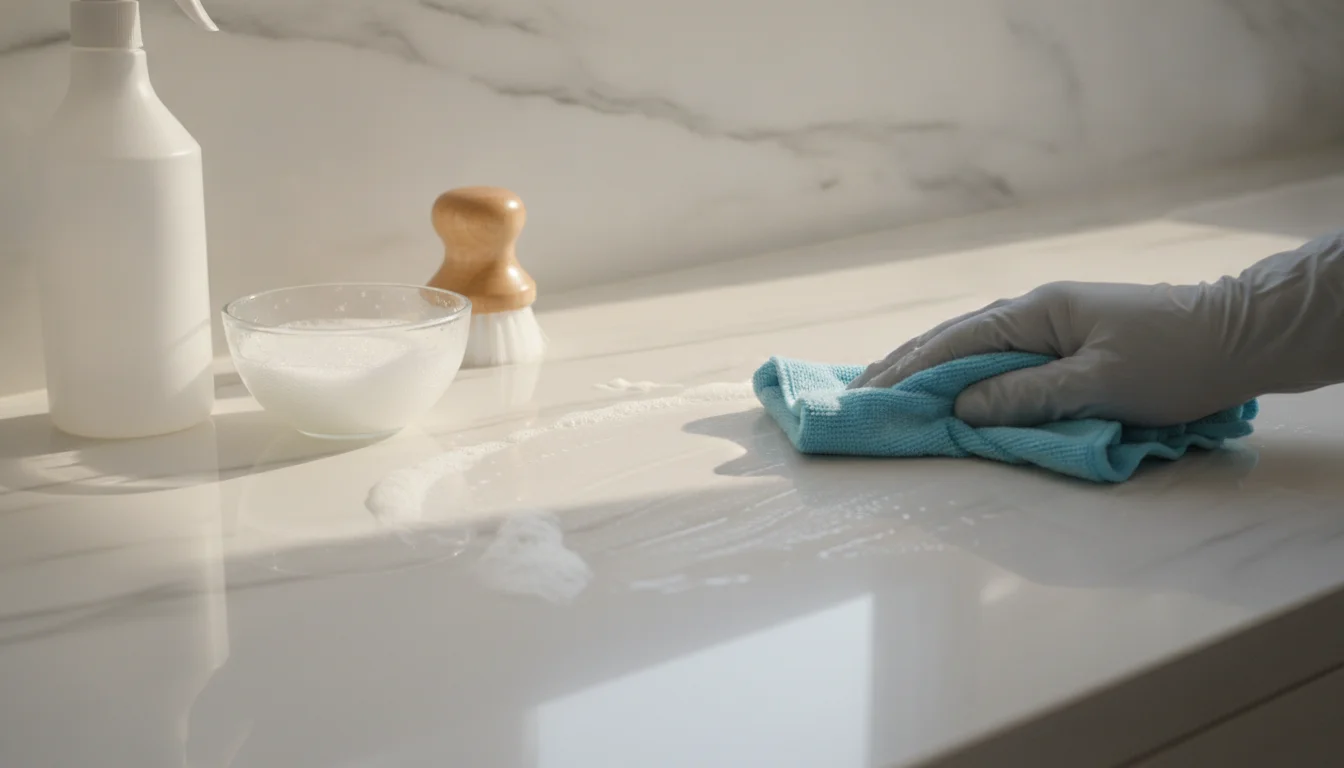
Wash with warm water, mild dish detergent and a soft cloth, then rinse. Same for every stone.
Marble, limestone and travertine: never bleach, vinegar or any acidic cleaner, and no wire brushes. Disinfect with a product labeled safe for natural stone, then rinse, because food goes here.
Granite: a properly diluted bleach solution is fine on sealed granite in good shape, then a thorough rinse. On unsealed, worn or damaged granite, use a stone-safe disinfectant instead. If you don’t know whether it’s sealed, assume it isn’t.
Get a soft brush into the backsplash seam.
7. Disinfect the whole toilet and check the base seal
An overflow runs down the outside of the bowl and pools at the base. Wash the whole toilet with hot water and detergent (seat, hinges, rim, outside of the bowl, tank, base) and rinse with clean water. Get a small brush into the gap where the base meets the floor. Then wipe everything with the non-food bleach mix from step 4, 1 cup (240 ml) to 5 gallons (18.9 L) of water, and let it air-dry.
Then check the seal. If the toilet rocks, the floor around it feels spongy, or wet floor and a smell show up at the base without an overflow, the wax ring has failed. A rocking toilet is the usual cause: it wears the ring until waste leaks out with every flush.
Resealing is DIY. Turn off the water, flush to empty, disconnect the supply line, unbolt and lift the toilet straight up. Scrape off the old wax, disinfect the flange and floor, and set a new wax ring (they’re inexpensive). Lower it, sit on it to settle it, and tighten the bolts gently: overtightening cracks porcelain. A cracked or cast iron flange, or a soft subfloor, is a plumber’s job. A ring left inside the bowl is a toilet stains problem for later.
8. Throw out what can’t be disinfected
Some things are cheaper to replace than to trust. In the trash, double-bagged:
- Rugs, bath mats you can’t hot-wash, upholstered cushions, mattresses and soft toys that got wet
- Sponges, cloths, scrubbing pads and paper towels used in the cleanup
- Food, opened packets, food containers and medicines that were on the counter when it happened (canned and packaged food included, by Australian health guidance)
Saturated wall-to-wall carpet usually can’t be cleaned well enough. The pad always goes; the carpet stays only if a professional cleans it.
9. Look under the flooring and baseboards
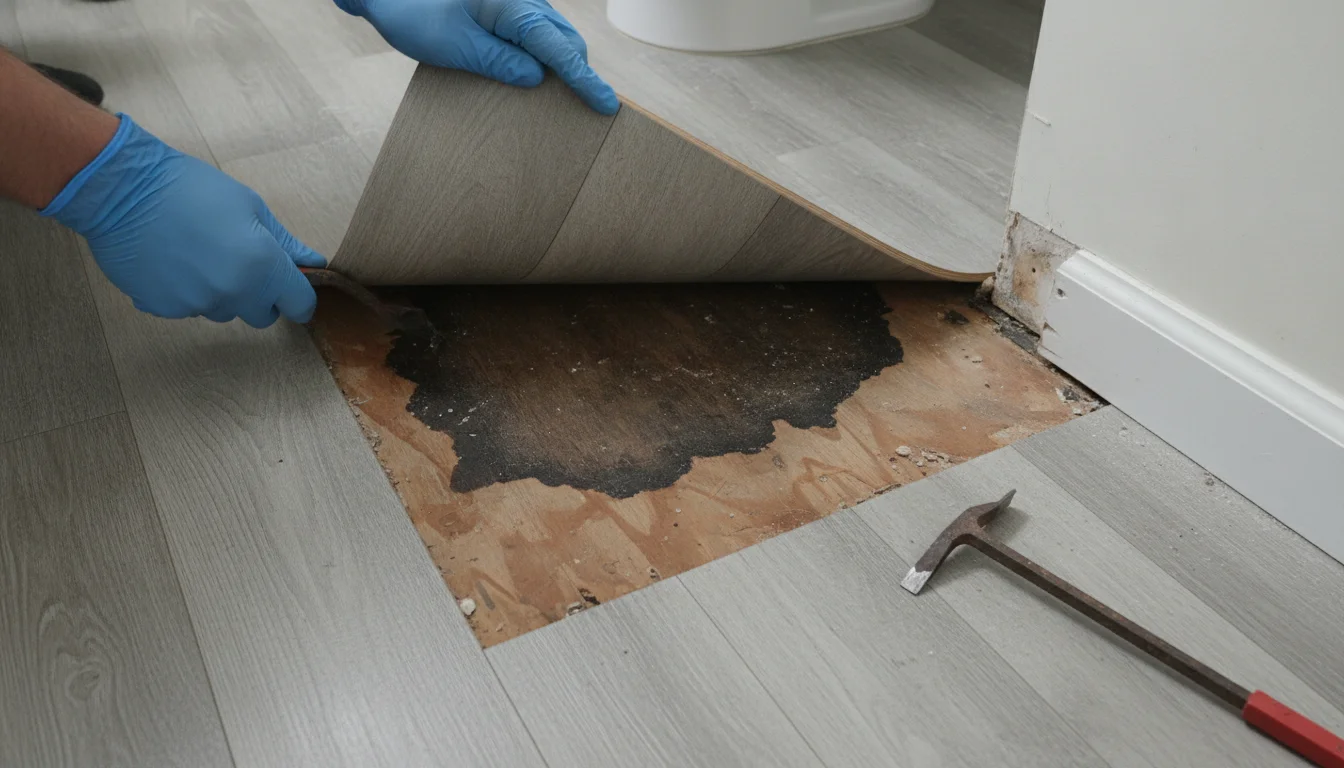
Vinyl and tile don’t absorb anything, but sewage creeps into cracks and runs to the edge of the room, then sits under the floor. Check the perimeter, the baseboards and any cracked tiles or lifted seams.
If sewage got under a floor covering, the covering has to come up, even if it’s vinyl. The subfloor then gets cleaned, dried and sealed before anything new goes down. Drywall that’s soaked and soft gets cut out and replaced. On wood, don’t rebuild until the wood is below 15 percent moisture, or whatever the flooring maker specifies.
10. Dry it out fast
Open windows and doors and put a box fan in a window blowing out, so it pulls damp air out instead of stirring it. A dehumidifier speeds it up. Anything left damp invites mold in the house, and wet subfloor keeps the smell going.
11. Disinfect your tools and wash your clothes on their own
Soak mops, brushes and buckets in the non-food mix from step 4 and let them air-dry. Disinfect boots and reusable gloves in 1/2 cup (120 ml) of bleach per gallon (3.8 L), then rinse.
Wash what you wore in hot water with detergent, in a load by itself. Then shower, and wash your hands before you touch food, gloves or no gloves.
What causes a sewage spill in the house
A toilet overflow comes over the rim from a blockage. A failed wax seal leaks under the base with every flush. And a main-line backup hits several fixtures at once: one homeowner’s toilets backed up and raised the water in the shower, and a plumber’s camera found the main drain pinched nearly halfway shut. If more than one drain is backing up, stop running water and call a plumber before you clean.
How to prevent another sewage spill
Get a plumber to camera the main line if backups repeat; tree roots and old clay pipes turned up again and again in the backup stories we read. One owner of a 90-year-old house had the line relined in PVC and a backwater valve fitted, a flap that stops sewage flowing back into the basement, for $9,000. Keep the toilet bolted firmly so the wax ring doesn’t wear. And check your insurance now: homeowner’s policies often don’t cover sewer backups without an extra endorsement. If a drain smell comes back after the cleanup, look at the toilet seal and the traps.
When to call a professional
Call a sewage cleanup or remediation company when:
- Sewage has soaked into wall-to-wall carpet, drywall or insulation
- It’s gone under flooring, or the floor feels soft after cleaning
- It covers more than one room, or it’s deep enough to need pumping out
- It’s a main-line backup, especially from a city sewer during a storm
- Anyone doing the cleanup has asthma or a weak immune system, or you just can’t do it safely
Call an electrician before you plug in any appliance that sat in sewage. If the city’s sewer caused the backup, call the utility: in some places the cleanup is theirs. And call your insurer before much goes in the trash: an assessor may need to see the damage.
If you get sick, or sewage gets in your eyes, mouth or a cut, wash it right away and see a doctor.
Frequently asked questions
How long does a sewage spill take to clear?
The cleaning is the quick part. The waiting is the drying: nothing goes back down on a floor until it’s dry, and wood has to be below 15 percent moisture before you rebuild. Keep kids and pets out until it’s cleaned, disinfected and dry.
How can I neutralize a sewage spill?
Indoors, you don’t. You remove it, wash, then disinfect with the right product for the surface. The lime you’ll see recommended is for spills on soil outdoors.
How long does it take for a sewage smell to go away?
As long as its source is still there. If the smell outlasts the cleanup, something is still wet or still dirty: carpet pad, subfloor, the gap under the toilet base, or a failed wax seal.
How long do sewage bacteria last on surfaces?
No single number covers every surface. Assume anything the spill touched is contaminated until it’s washed and disinfected. Outdoors, Australian health guidance treats a cleaned and disinfected area as safe to use 24 hours later.