Table of Contents
There’s fox poo in the salad bed, right next to the leaves you meant to pick tonight. Three questions follow. How do you get it out safely? Can you still eat what’s growing there? And how do you stop the fox using that bed as its signpost? Most pages only answer the last one.
Short answers: glove up, bag it and trash it, never compost it. Bin any crop the dropping touched and wash everything else you pick. The NHS says the roundworm infection foxes carry isn’t caught from fresh poo but from soil that’s held the eggs for weeks, so clearing it fast matters most. Stopping repeat visits takes persistence at the exact spots the fox marks, and it usually gets worse before it gets better.
1. Pick up the poo with gloves and bag it
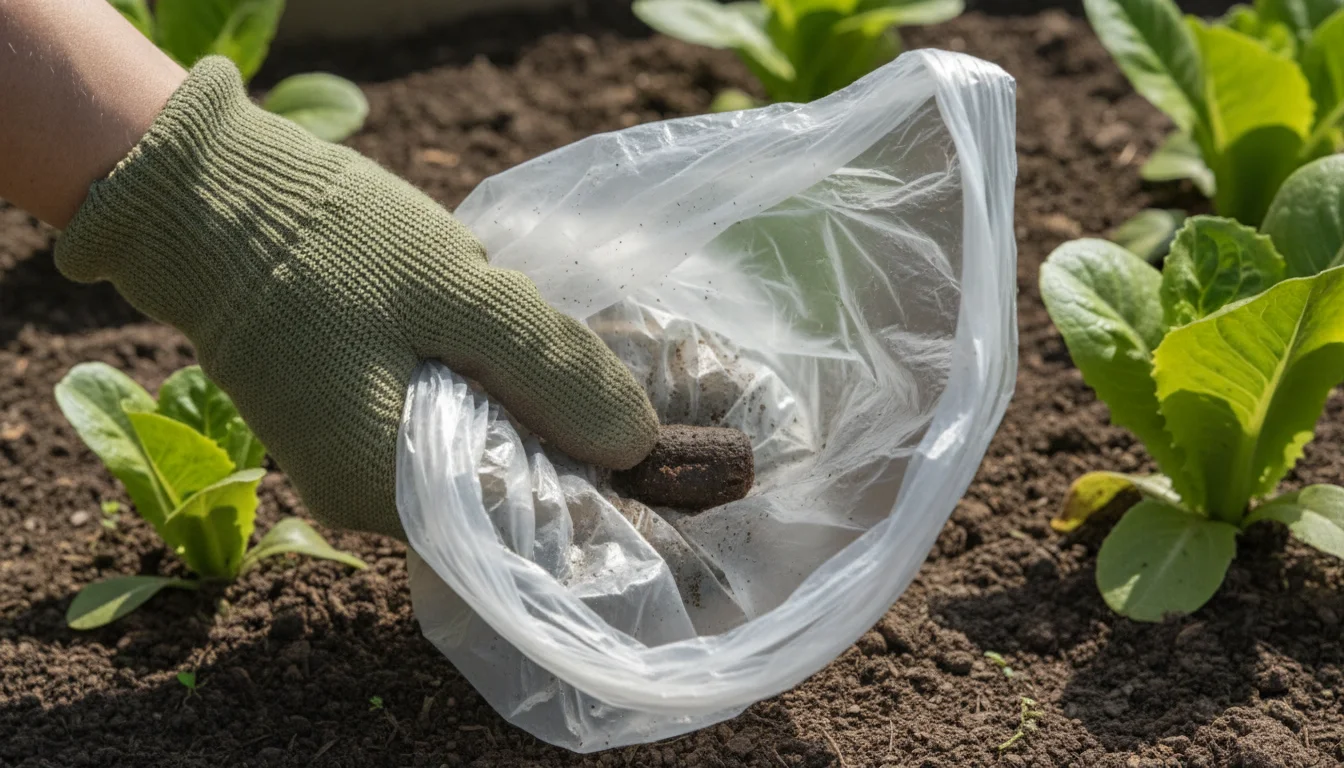
Do it the day you find it. Glove up, turn a bag inside out over your hand (or use a trowel), lift the dropping and seal the bag. It goes in the household trash, not the compost heap or the yard-waste bin. EPA guidance says waste from meat eaters shouldn’t be composted because composting doesn’t readily destroy the parasites, bacteria and viruses it carries. And that compost is heading back onto your vegetables.
Speed is the real point here. The NHS says toxocariasis, the roundworm infection people catch from dog, cat and fox poo, isn’t caught from fresh poo. It comes from soil or sand that has held the eggs for a few weeks or months. So a dropping cleared the morning after is a nuisance. One left to break down in a bed all spring is a problem. Wash your hands afterward, gloves or not.
On paving or a doorstep, lift it the same way, then scrub the spot with hot soapy water and rinse.
2. Wash everything you harvest
The question that sent you here. The NHS lists washing vegetables before you eat them as one of the simple ways to cut the risk of toxocariasis, alongside gardening in gloves and teaching small children not to eat soil.
The risk is real but small. In a 2022 study of 16 community gardens in southern England, researchers found Toxocara eggs on 2.4% of the vegetable samples they tested, and on 6.5% of the lettuce. Most people who swallow the eggs never get ill, according to the NHS, though in rare cases the larvae cause breathing problems or loss of sight. That’s the case for washing every harvest and clearing droppings fast.
Leafy crops need the most care: researchers testing spinach found eggs lodge in the folds of the leaves, which tend to be eaten raw. Pull the leaves apart and rinse each one under running water. Scrub root crops and peel them if soil is caked on. Anything the dropping actually touched goes in the trash, not the sink. And wash every harvest, droppings or not, because foxes visit at night and you won’t spot every one.
3. Spray a fox repellent on the marking spots
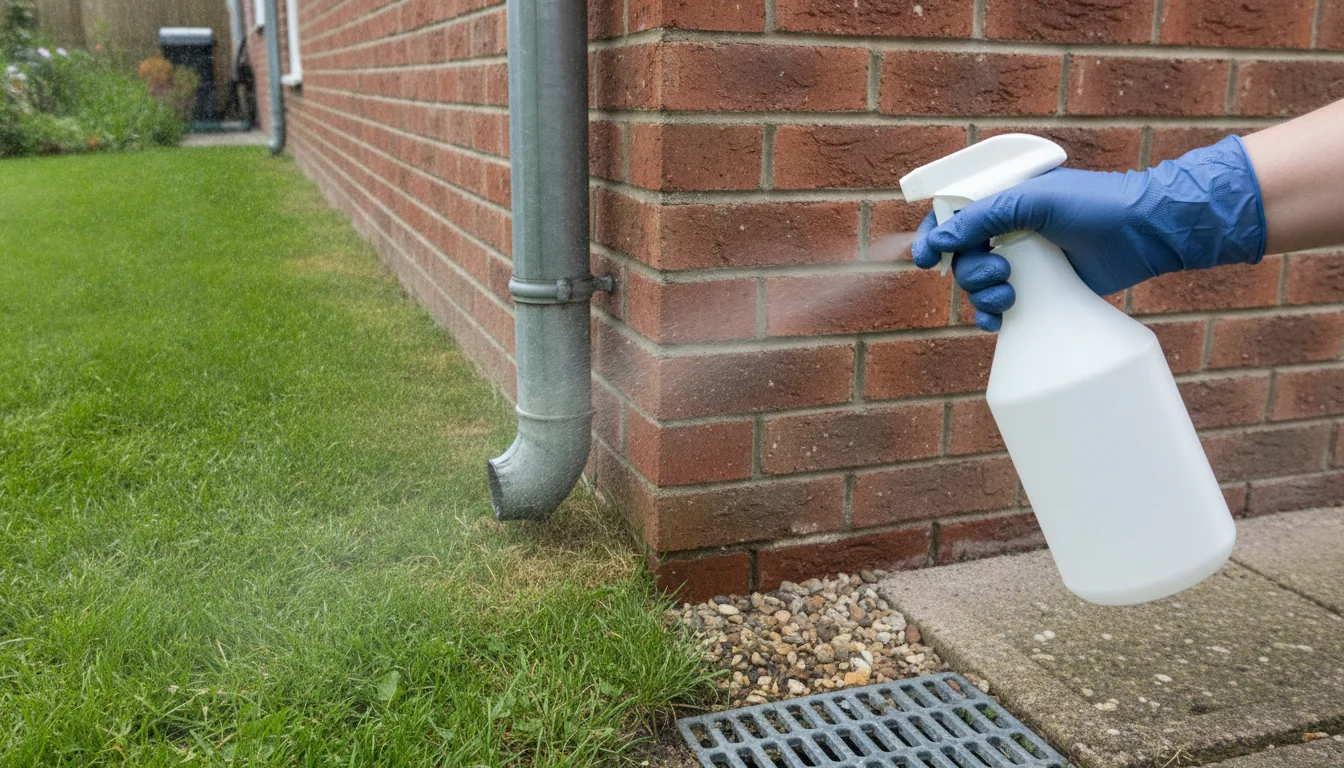
Fox poo is a message, not an accident, so answer it in kind. The Fox Project, a UK fox welfare charity that has tested every repellent on the market, rates Scoot and Fox Stop the most effective. Both work as a fake scent mark: a fox that can’t identify and contest the mark gets nervous and tends to avoid the area. Scoot goes on the lawn or foliage where the fouling happens. Fox Stop can be used at ground level and directly on growing plants.
Treat the spots the fox keeps returning to, not a random line around the edge. Then brace yourself. Richmond Council warns that scent marking may get worse before it gets better, because the fox fights back for its territory, and that you may need to keep reapplying for some considerable time. Runnymede Council puts it at weeks. Don’t quit in that first ugly stretch.
Never use rags soaked in creosote or gasoline. Both councils point out it’s illegal and dangerous.
4. Set up a motion-activated sprinkler
In trials The Fox Project ran with the University of Greenwich, a motion-activated water jet (the Scarecrow) proved very effective. Ultrasonic devices were broadly ineffective. That’s as clear a verdict as fox gadgets get.
Aim it across the fouled bed or lawn patch. Gardeners’ World notes foxes can get used to a single trick, so move the sprinkler now and then and pair it with the repellent.
5. Take away the food
The RSPCA says foxes in gardens eat fallen fruit, scraps from compost heaps and bird food. Collect windfalls, sweep up spilled seed under feeders, keep compost in a closed bin and put trash out in a lidded can. The same cleanup helps against rats. It won’t stop territorial marking, but a garden with nothing to eat gets fewer visits.
6. Switch to a plant-based fertilizer
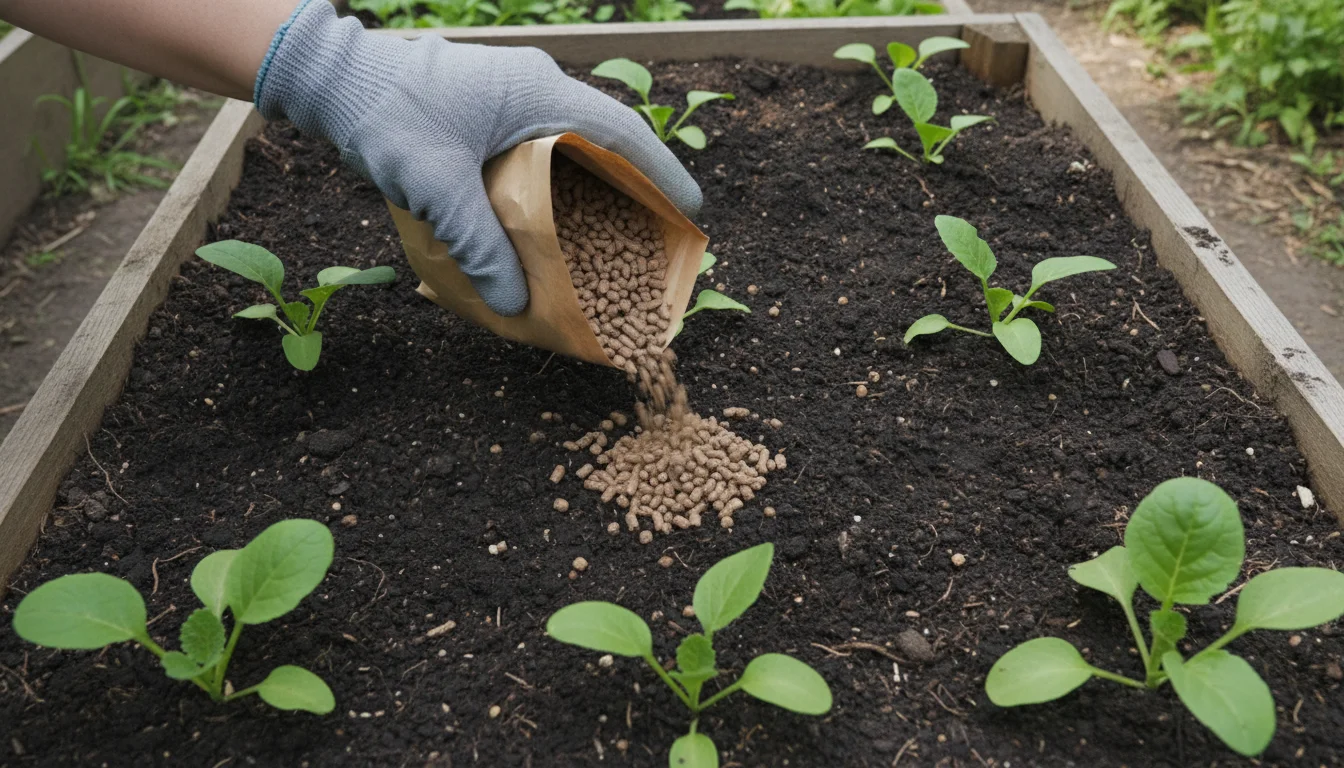
Bonemeal is a fox magnet. The RHS warns that foxes dig up new plants where bonemeal, dried blood or chicken manure pellets have been used, because they smell the stuff and dig for food. Richmond Council says the same of blood, fish and bone meal. Read the ingredients, not the front of the bag (“organic” can still mean bone, blood or fish), and switch across the whole garden.
7. Cage the beds you eat from
If the fouling is concentrated in one veg bed, cover it. It’s the same fix that keeps squirrels in the garden and stray cats out of a bed. Vivara’s Eric Michaels, talking to Ideal Home, recommends fruit cages for grow-your-own crops. The weak spot is bare soil: one gardener on the Charles Dowding forum noticed their fox chose the patches where they’d just harvested or where seed hadn’t come up yet, scuffing the soil before leaving its deposit.
Go for a full enclosure with a top. The RHS says standard netting and fencing rarely keep foxes out because they climb over or dig under. Use sturdy mesh, pin or bury the edges, and give it a lid you can open to harvest.
8. Try a garlic and chilli spray
The cheapest option, and the weakest. Gardeners’ World suggests steeping chilli or garlic in boiling water and spraying it around the garden. The Charles Dowding forum poster who tried it reported mixed success, and The Fox Project’s recommendations stop at the two commercial repellents. Use it as a stopgap while you get a proper repellent, and reapply after rain.
Why fox poo keeps turning up in your garden
It’s territory. The Fox Project says fouling doubles as scent marking, and foxes leave their droppings as signposts on prominent features: drainpipes, wall corners, even garden gnomes. The RHS adds that dog foxes do most of this, and a garden sitting on the boundary between two territories can get marked over and over. Gardeners’ World says a lot of droppings may mean two or more foxes are fighting over your patch. That’s why the same spot gets hit night after night, and why the repellent goes there.
When to call a professional
Call a humane wildlife deterrence consultant if a fox has a den in your garden or the fouling hasn’t eased after weeks of persistent repellent. The Fox Project recommends on-site help over trapping or killing. Never block a den until you’re sure it’s empty, and never trap foxes inside: Runnymede Council says it’s cruel and illegal. Poisoning is illegal too.
If someone who may have swallowed soil or animal poo develops a high temperature, cough, wheezing, stomach ache, an itchy rash, a red or painful eye, or changes to their sight, the NHS says to ask for an urgent GP appointment or call 111.
Frequently asked questions
Is it safe to eat vegetables where a fox has pooed?
Throw away anything the dropping touched. For the rest of the bed, the NHS says the roundworm infection foxes carry isn’t caught from fresh poo but from soil that’s held eggs for weeks or months, and it lists washing vegetables before you eat them as a way to cut the risk. So clear droppings the day you find them and wash every harvest leaf by leaf.
Can I put fox poo in the compost?
No. EPA guidance says waste from meat eaters shouldn’t be composted, because composting doesn’t readily destroy the parasites, bacteria and viruses in it. Bag it and put it in the household trash.
Do ultrasonic fox repellers work?
Not well. In The Fox Project’s trials with the University of Greenwich, ultrasonic devices were broadly ineffective. Spend the money on the sprinkler.
Will removing the fox stop the fouling?
No. Relocating or killing a fox leaves a vacant territory, and The Fox Project says another will move in within weeks. A deterred resident fox defends your garden against newcomers.