Table of Contents
Anyone who’s worked out how to get rid of squirrels in garden beds learned it the hard way. You bought the spray. It worked for a week. Then the squirrels came back and dug up your bulbs anyway. That’s the pattern in every gardening thread on the subject: someone finds the repellent that finally works, right up until it doesn’t. The honest truth is that no scent or taste keeps a squirrel out for good. They habituate, and the rain washes it off.
So stop chasing the next bottle. Rank your response by what actually holds. Physical exclusion first, because a squirrel that can’t reach the plant can’t eat it. Deterrents second, and only if you accept the reapplication schedule they really need. Food-source removal third, the slow play that makes the whole garden less worth raiding.
1. Enclose Beds in a Hardware Cloth Cage
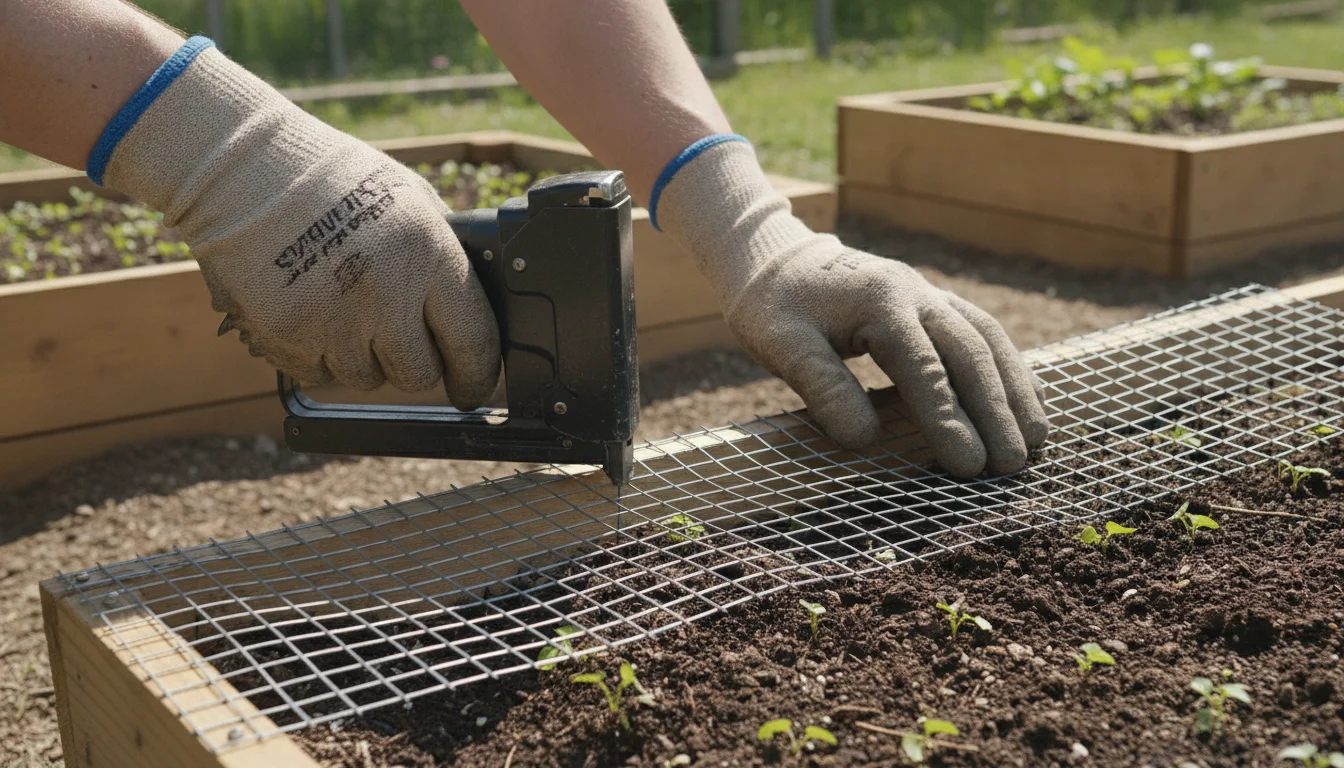
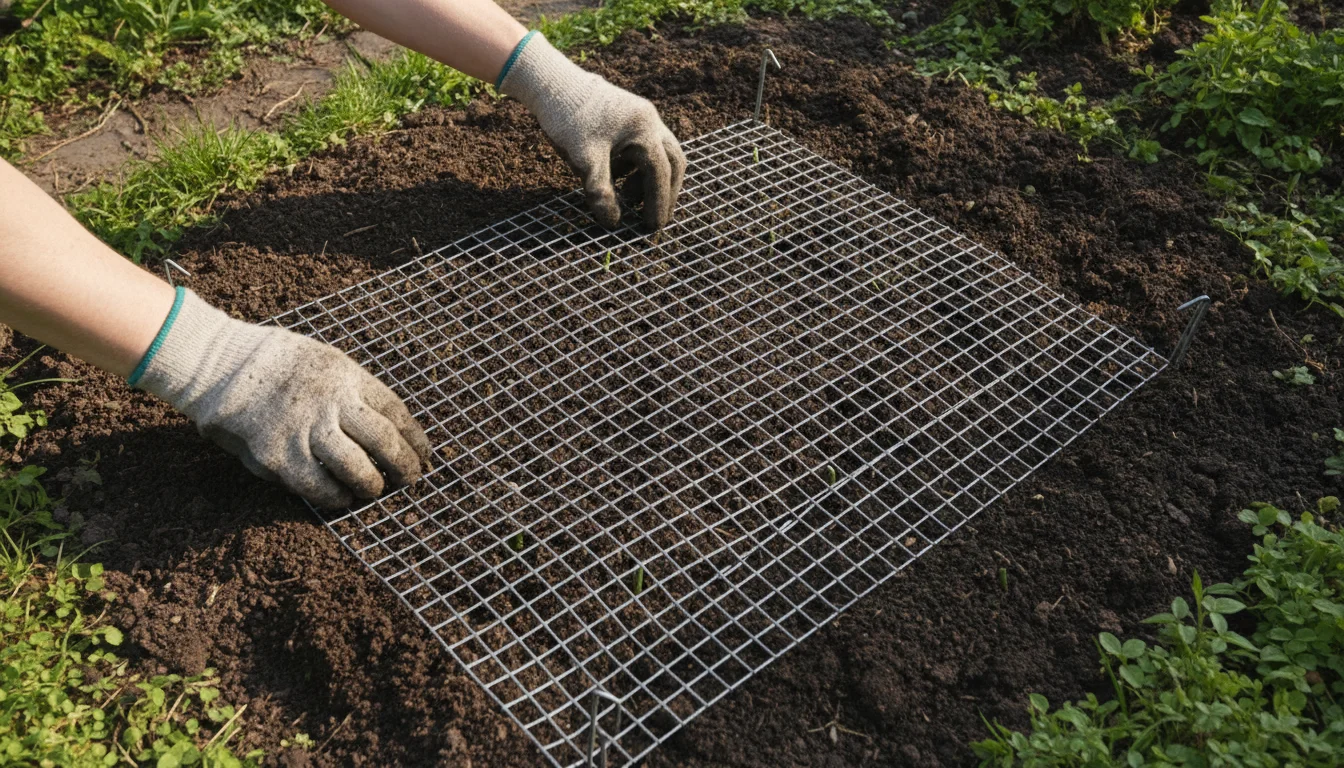
This is the only method that reliably stops a determined squirrel, and it works because it closes the top as well as the sides. An open fence just slows a climber down for an afternoon. Build a frame from wood, PVC or rebar hoops over the bed and wrap the whole thing, sides and top, in quarter-inch to one-inch (6-25 mm) hardware cloth. Gardeners who’ve watched chicken wire fail tend to prefer hardware cloth: the wider hexagons let a paw reach through, and the thinner wire gives way to a season of gnawing. Bury the bottom edge 6 inches (15 cm) or fold it outward in an L so they can’t dig under.
The catch is access. A cage you have to unscrew is a cage you stop closing. Build in a hinged lid or a lift-off panel from the start. It’s the highest-effort option here, and the one gardeners reach for after everything cheaper has failed. For a bed that gets hit every single year, it’s the fix that lasts.
2. Cover Vulnerable Plants with Row Covers
For seedlings and low crops you don’t want to build a rigid cage over, drape floating row cover or fine mesh netting and pin the edges down with soil, stakes or clips so nothing crawls under. Gardeners who’ve fought this out report the same arc: the cover holds through the vulnerable weeks, and once the plants are big and established the squirrels lose interest and move on. Pull covers off flowering vegetables during bloom so pollinators can get in, then put them back once fruit has set.
3. Protect Specific Plants and Bulbs
When caging a whole bed isn’t practical, go plant by plant. Hardware cloth cylinders around individual plants, wire mesh baskets around bulbs at planting: roots grow through, squirrels can’t dig in. It’s worth the fuss for tulips and crocuses, the same bulbs chipmunks will dig up before they touch anything else. Lay a sheet of mesh over a newly planted bulb bed and pin it down until the shoots come up. And plant deep: growers find a bulb set at about twice its height, with the planting debris cleared off the surface, doesn’t advertise itself.
4. Install a Baffle on Poles and Feeders
A baffle is a wide, smooth dome or cylinder around a pole or hanging line that a squirrel can’t grip or get past. On a feeder pole, fit one at least 15 inches (38 cm) across, mounted 4-5 feet (1.2-1.5 m) up so they can’t jump clean over it. Then get the siting right, because this is where most people go wrong: stand the pole 8-10 feet (2.5-3 m) clear of fences, walls, sheds and overhanging branches. A squirrel launches sideways off anything within reach and skips the baffle entirely. On a hanging feeder, thread a dome above the seed so anything coming down the wire just slides off.
5. Use a Squirrel-Proof Bird Feeder
The bird feeder is usually what invited the squirrels in the first place. A caged feeder, which wraps the seed tube in wire that lets small songbirds through and keeps everything bigger out, is the design extension sources back. A weight-triggered feeder, with a spring-loaded perch that drops and shuts the seed ports under anything heavier than a bird, is the other common option. Neither stops a squirrel arriving, only feeding, so pair one with a baffle and clean siting. Buyers report the cheap weight-triggered models jam and freeze open, and a heavy pigeon can set them off anyway.
6. Use Motion-Activated Sprinklers
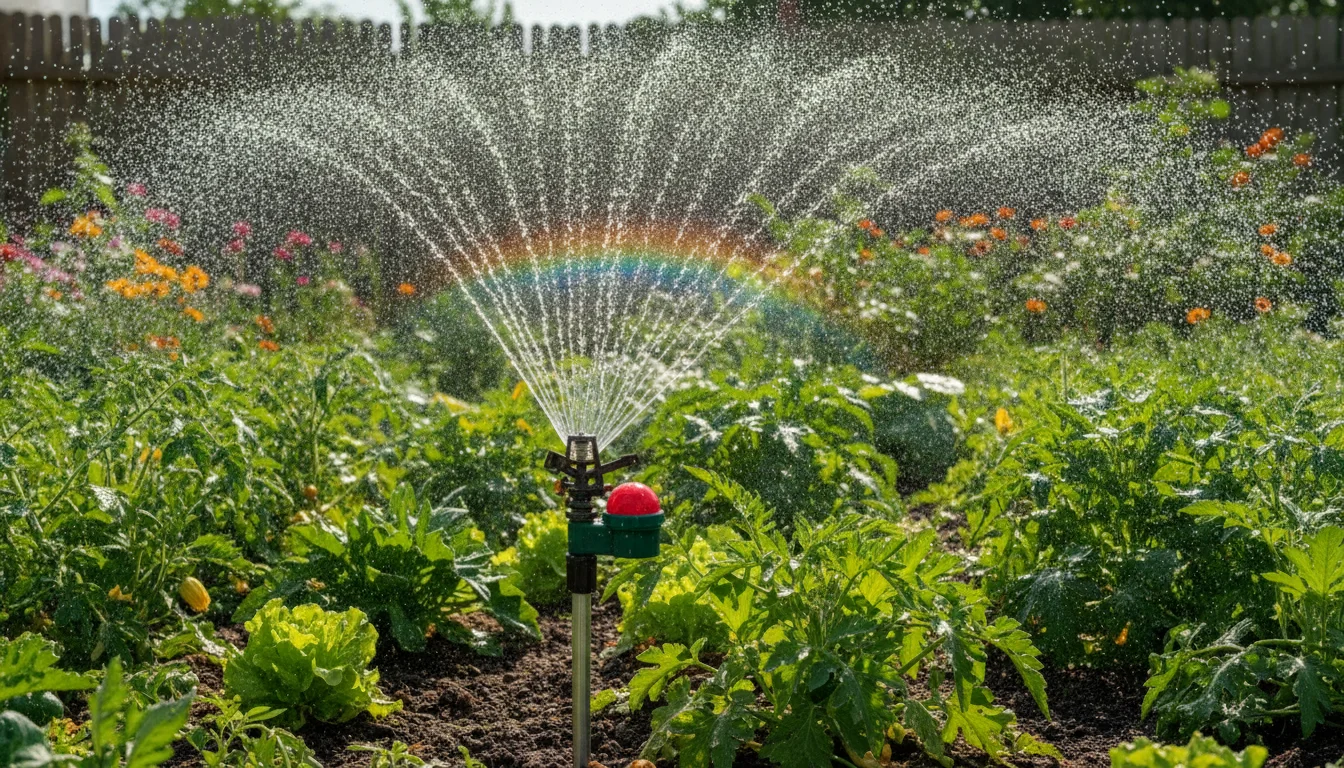
A motion-activated sprinkler startles a squirrel with a burst of water when it crosses the detection zone, and after a few soakings it decides your yard isn’t worth it. It’s the same trick that moves groundhogs along. Put them along the beds and known runs. They work best early, before a squirrel has a routine, and you have to move them weekly because they find the blind spots fast. Better for warning off newcomers than evicting a resident that’s already dug in.
7. Deploy Cayenne Pepper Spray
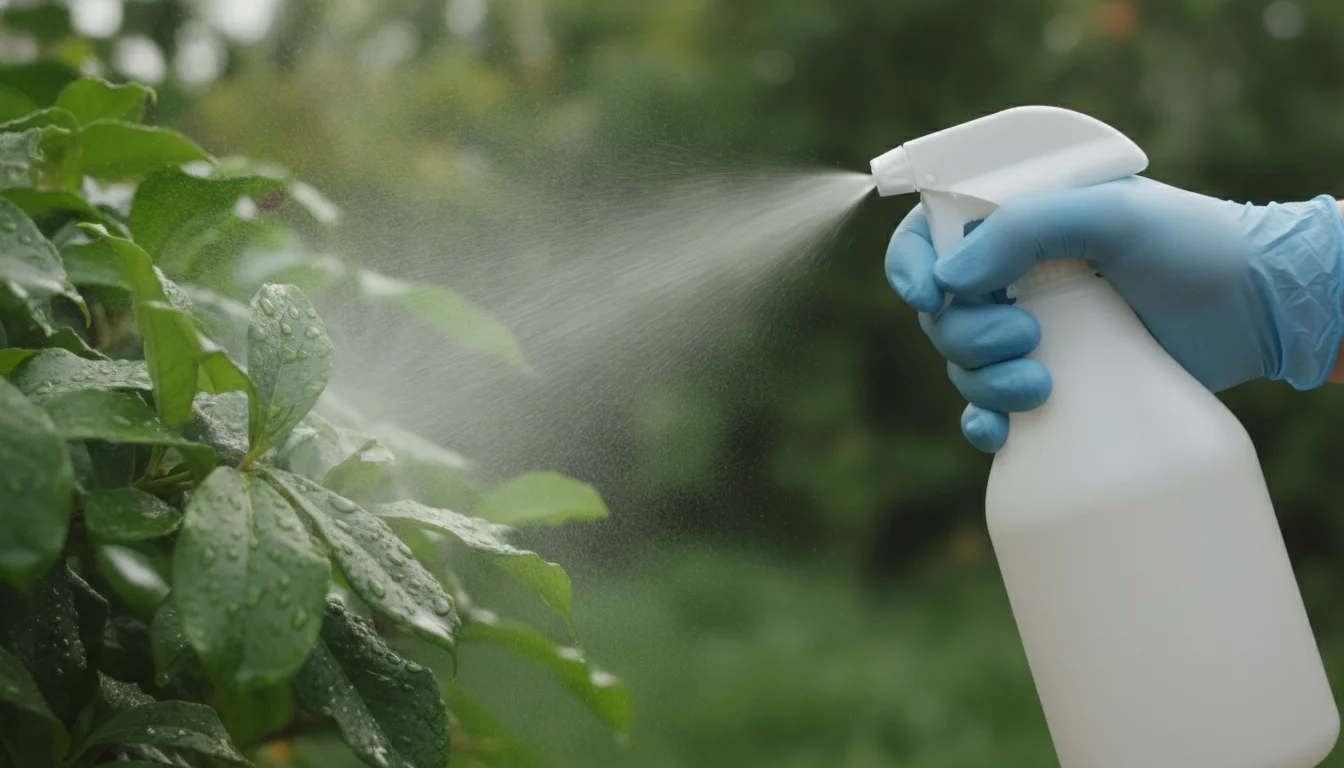
Here’s the taste deterrent everyone reaches for. Capsaicin, the heat compound in chilli, irritates a squirrel and can make treated leaves unappealing. If you go this route, use a capsaicin-based repellent labeled for the plants you’re treating and follow that label for how to mix and how often to reapply, because homemade chilli brews have no tested rate and on anything you’ll eat the label is what keeps it safe. Either way, be honest about the upkeep: capsaicin washes off in the first rain and needs reapplying, and squirrels habituate to it, so it works until, one day, it simply doesn’t. Keep it off your own eyes and skin.
8. Predator Urine Spray
Fox or coyote urine, sold at garden centres and hunting suppliers as a spray or scent granules, triggers a prey animal’s instinct to avoid the area. Apply around the perimeter and where the squirrels are getting in. Same honesty as any scent: reapply after rain, and know it’s far better at keeping a squirrel from settling in than at evicting one that’s already adapted to the local smells. It also smells to you, so keep it away from the patio and the back door.
9. Apply Peppermint Oil Deterrent
Squirrels dislike strong aromatics, and peppermint is the one most guides push. If you try it, a peppermint-oil repellent applied to the surfaces and edges they travel is the usual form; follow the product label for how much and how often, because there’s no tested homemade rate. It’s cheap and it smells good to you, which is most of its appeal. What it won’t do is clear an established squirrel, and the scent fades fast, so it’s a frequent top-up at best. Treat it as a top-up on real exclusion, not a plan on its own.
10. Remove Food Sources and Attractants
The slow fix that makes everything else work. Clean up fallen fruit and nuts promptly, because a yard with free food draws squirrels from streets away. Keep the bird-feeding area tidy: spilled seed feeds squirrels as well as birds, so use a catch tray or sweep daily and store seed in a metal bin, not the paper sack. Lock down compost and bins. If you want to keep feeding the squirrels anyway, put peanuts or corn out in one spot far from the beds; just know a well-fed squirrel often buries the surplus in your borders, so it can backfire.
What attracts squirrels to your garden
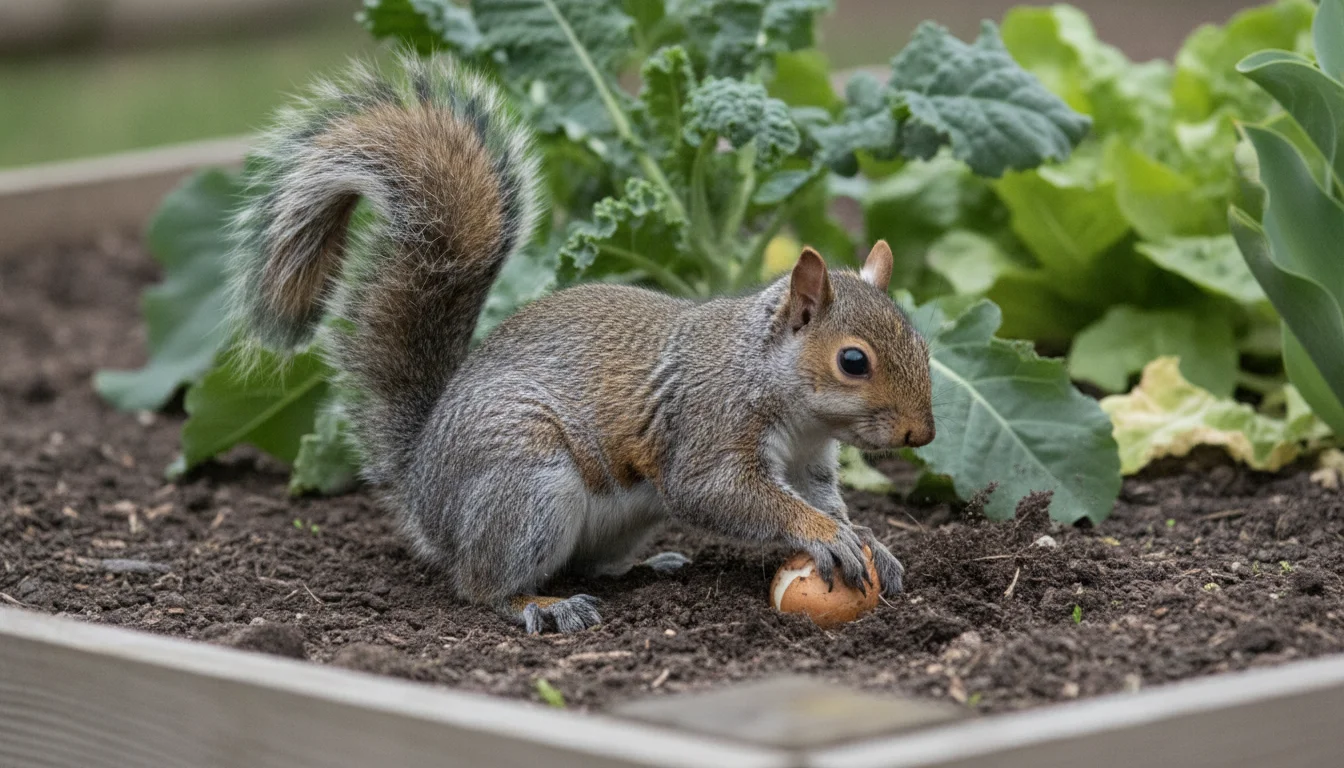
Squirrels aren’t targeting you. They’re after food, water and freshly dug soil. A newly planted pot or bed is irresistible: they dig it to bury a find or hunt for one, and gardeners find the interest fades once the soil loses that fresh-turned smell and texture, often within about three weeks, once transplants are growing hard. Bird feeders and fallen fruit are the two biggest magnets. Bulbs like tulips and crocus read as buried snacks, and voles will finish off the roots the squirrels leave behind. And in a dry spell some of the tomato damage people blame on hunger is actually a thirsty squirrel after the water inside.
Prevention
Timing beats spraying. Protect large seeds and new transplants through their first few weeks, when a squirrel will strip every pea or sunflower you plant; gardeners find the pressure eases within about three, once they’re established. Plant bulbs deep and clear the planting debris so the spot isn’t obvious. Keep the feeder baffled and the spilled seed swept. And accept the core rule the extension guides all repeat: no single tactic holds for long, so run two or three at once and rotate the deterrents before the squirrels get used to any one of them.
When to call a professional
Outdoors, this is a job you can win yourself. Call someone the moment squirrels move from the garden into the structure: a nest in the loft, roof or wall cavity, or gnawing on wiring, which is a genuine fire risk. In the UK, grey squirrels are a controlled non-native species, so it is illegal to catch and release one, and a licensed wildlife controller handles trapping and dispatch legally and humanely. For a persistent nesting problem in the building, that’s the call to make.
Frequently asked questions
How do I permanently get rid of squirrels?
You don’t, not with a repellent. The only near-permanent fix is exclusion: a closed-top cage over the beds and baffled, squirrel-proof feeders. Every spray, scent and gadget buys you time, not a solution, and needs upkeep to keep working.
What is the 5-7-9 rule for squirrels?
It’s a feeder-siting phrase that circulates online, but the exact 5, 7 and 9 foot figures aren’t ones the extension research backs, so don’t treat them as gospel. What the sources do support: a squirrel’s standing jump is roughly 4 feet (1.2 m) straight up, and it can leap 8-10 feet (2.5-3 m) across from a launch point. So mount a baffle at least 4 feet off the ground and stand the pole 8-10 feet clear of any fence, wall, shed or overhanging branch. Get that clearance wrong and the feeder height barely matters.
What do squirrels hate the most in the garden?
There’s no single thing they hate above all else. Extension guides list capsaicin, predator scent such as fox or coyote urine, and strong aromatics like peppermint as ingredients that may put a squirrel off, not a ranked top three. All of them fade: squirrels habituate and rain washes them off, so any of them needs reapplying on a schedule or it does nothing.
Do coffee grounds keep squirrels away?
There’s no good evidence they do. Coffee grounds turn up in plenty of garden advice, but the extension sources don’t back them as a squirrel deterrent. They won’t hurt your soil if you have grounds to spare, but don’t count on them to protect anything.