Table of Contents
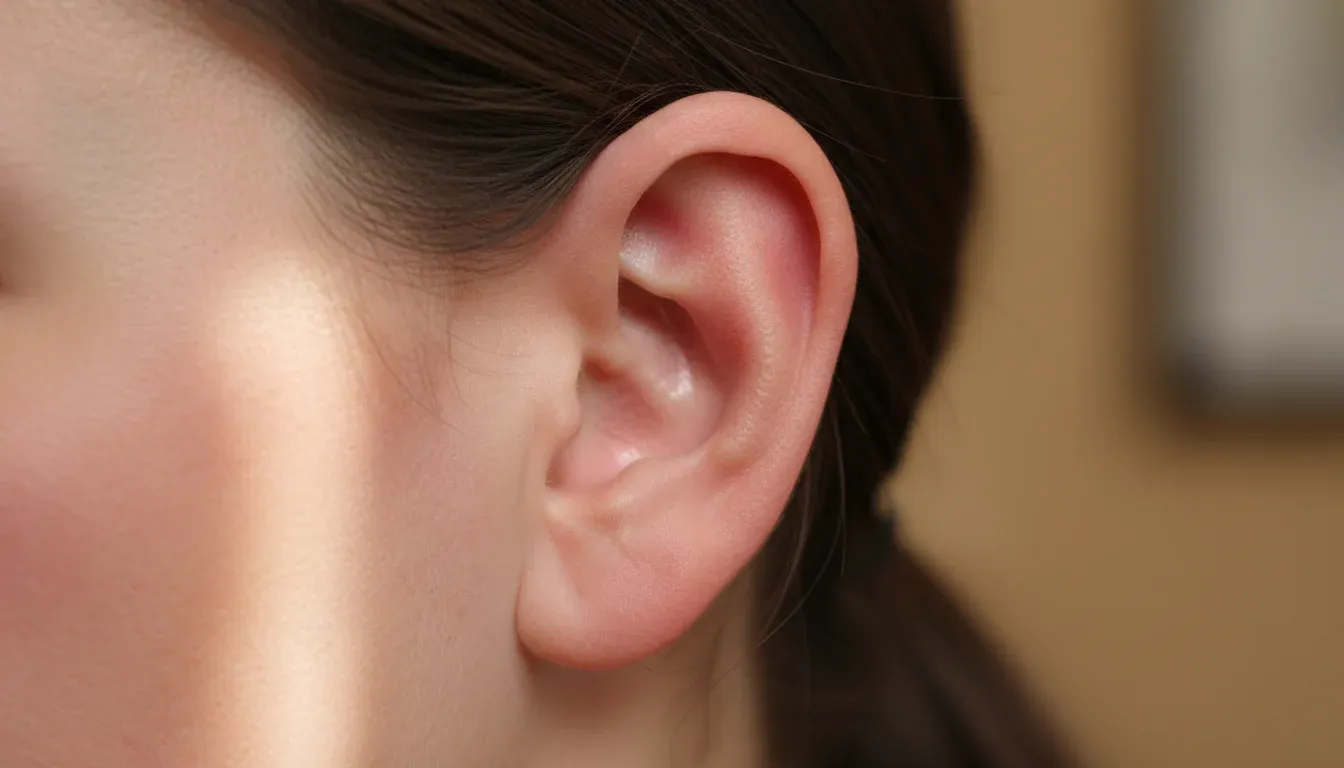
That muffled, underwater feeling in your ears is annoying at best and distracting at worst. Most ear congestion comes from blocked eustachian tubes (the tiny passages that connect your middle ear to the back of your throat). When these get clogged with mucus or don’t equalize pressure properly, you get that plugged-up sensation. Here’s how to clear it.
What causes ear congestion
The eustachian tubes are supposed to open now and then to drain fluid and even out the pressure behind your eardrum. When they swell shut or fill with mucus, the pressure gets stuck and your ear feels blocked.
The usual culprits are a cold or other virus, allergies, and sinus trouble, all of which inflame the tubes and pump out extra mucus. Pressure changes do it too, which is why ears plug up on a plane or driving down a mountain. Earwax buildup can block the outer ear and cause the same muffled feeling from the other side. Work out which one you’ve got and you’ll pick the right fix faster: pressure calls for equalizing tricks, while a cold or allergy calls for thinning and clearing the mucus.
1. Yawning to open Eustachian tubes
Your body already knows how to fix this. Yawning naturally opens the eustachian tubes and lets trapped air escape. The trick is forcing yourself to yawn on demand, which is harder than it sounds.
Try the fake-it-till-you-make-it approach. Open your mouth wide like you’re yawning, take a deep breath, and stretch your jaw. Even if it starts fake, you’ll often trigger a real yawn. Repeat this every few minutes until you feel (or hear) that satisfying pop.
Works best for pressure-related congestion, like after flying or driving through mountains. Less effective if you’ve got thick mucus blocking things.
2. Chewing gum
Chewing activates your jaw muscles, which helps open and close the eustachian tubes repeatedly. Each chew creates a tiny pressure change that can gradually work things loose.
Any gum works, but go sugar-free if you’re going to be chewing for a while. The constant jaw motion is what matters, not the flavor. Keep chewing for at least 10-15 minutes. You’re not just passing time, you’re mechanically pumping those tubes.
Great for airplane pressure issues. Start chewing during descent and keep going until you land. Also useful during long car trips through changing elevations.
3. Valsalva maneuver
This is the “plug your nose and blow” technique. Close your mouth, pinch your nostrils shut, and gently blow air through your nose. You should feel your ears pop.
Key word: gently. Use about the same pressure you’d use to blow out birthday candles, not like you’re inflating a tire. If it hurts, stop.
Do it a few times if the first attempt doesn’t work, but space them out by a minute or two. If it’s painful or nothing happens after three tries, move on to something else.
4. Staying hydrated to thin mucus
Thick mucus is harder to clear, and staying well hydrated helps keep it thin and moving. This isn’t a quick fix, but it makes everything else you’re doing work a little easier.
Drink fluids across the day, whatever you’ll actually reach for. Warm ones like tea or broth double as a bit of soothing steam while you sip. Go easy on alcohol and caffeine, which nudge you toward dehydration right when you don’t want it.

5. Steam inhalation
Warm, moist air feels soothing when your head and ears are stuffed up, even if the evidence that steam actually clears congestion is thin. The safe way to try it is a hot shower: run it hot, let the bathroom fill with steam, and breathe it in for a few minutes. Skip leaning over a bowl of hot water, which can scald badly if it tips.
Some people add a few drops of eucalyptus or peppermint oil to the shower floor for the scent. Plain steam is fine either way, so treat this as comfort rather than a cure, and reach for the mucus-clearing steps below if you want to actually shift the blockage.
6. Hot compress on ear
A warm compress on the ear is an old comfort trick for the ache and pressure of a blocked ear. Soak a washcloth in warm (not hot) water, test it on your wrist so you don’t burn your face, wring it out, and hold it against the ear for a few minutes.
It won’t unclog anything on its own, but the warmth can take the edge off while the mucus-clearing steps do the real work. Works well right before bed if the pressure is keeping you up. Stop if the skin gets uncomfortable.
7. Saline nasal spray
Your nose and ears are connected, so clearing one helps the other. Plain saline spray moistens your nasal passages and loosens dried mucus that can be feeding a eustachian tube blockage.
Follow the directions on the label for how often to use it. Plain saline is just salt water with no medicine in it, so unlike a medicated decongestant spray it doesn’t carry a rebound risk, which makes it a fine one for regular use. Buy the multi-use bottles rather than single-shot packets unless you’re traveling.
8. Nasal irrigation with saline rinse
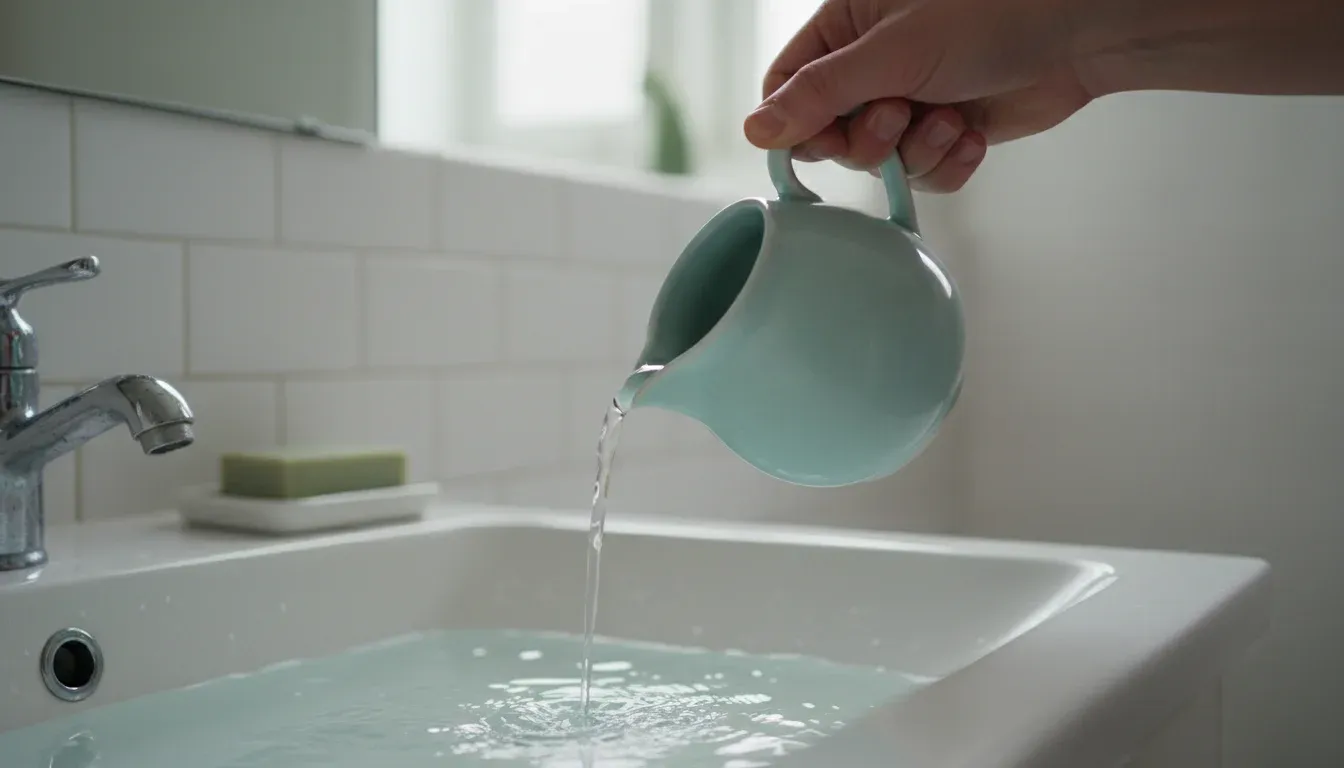
This is the nuclear option for nasal congestion. A neti pot or squeeze bottle floods your sinuses with saline solution, physically flushing out mucus, allergens, and anything else clogging the works.
Use distilled, sterile, or previously boiled water. Never use straight tap water (rare but serious infection risk). Mix in the saline packet that comes with your device. Lean over the sink, tilt your head sideways, and pour the solution into your upper nostril. It’ll drain out the lower one, taking congestion with it.
Feels weird the first time. You’ll get used to it. Do one nostril, then the other. Blow your nose gently afterward (no aggressive honking, you just cleared everything out).
9. Nasal decongestant sprays
Medicated decongestant sprays such as oxymetazoline shrink swollen blood vessels in your nasal passages, which eases congestion and can help open the eustachian tubes. Follow the Drug Facts label for how many sprays and how often.
The one rule to burn into your memory: don’t use them for more than 3 days in a row. Longer than that brings rebound congestion, where your nose swells up worse once you stop. Set a phone reminder if you need to. These work well for short-term congestion from a cold or allergies, not for a long-running problem.
10. Oral decongestant tablets
A pseudoephedrine tablet works from the inside to ease congestion across your sinuses and eustachian tubes. It’s the one to reach for: in 2024 the FDA concluded that the oral phenylephrine in many “PE” cold pills doesn’t actually work as a decongestant, so if a pill only lists phenylephrine, it’s not worth your money. (Phenylephrine nasal sprays are a separate thing and aren’t part of that finding.) Pseudoephedrine sits behind the pharmacy counter in many places, so you may have to ask for it.
Follow the directions on the label for dose and timing. It can make you jittery or keep you up, so don’t take it late in the day. Check with a pharmacist first if you’re on blood pressure medicine or have heart trouble, since pseudoephedrine can raise blood pressure.
When to call a professional
Most ear congestion eases as the cold, allergy or pressure change behind it settles. Some doesn’t, and a few signs mean it’s worth a doctor’s time rather than another home remedy.
Book an appointment if the blockage persists for days without easing, if your ears won’t open, if the pressure keeps coming back, or if it comes with ear pain, drainage from the ear, hearing loss, ringing, or a fever. Ears that simply won’t open, or pain that hangs around, are the classic reasons an ear, nose and throat (ENT) specialist wants to take a look.
Treat these as urgent, same-day care: severe ear pain, bleeding from the ear, sudden hearing loss, severe dizziness, or weakness in your face. And skip the DIY on earwax if you suspect it: no cotton swabs or ear candles, which push wax deeper or cause burns. Let a clinician clear it.
Corrections
- 2026-09-26: The steam method previously told you to fill a bowl with hot water and lean over it under a towel. That setup can scald badly if it tips, so it has been replaced with the safer hot-shower method. The same round removed unsupported efficacy claims for steam and hot compresses, replaced universal drug dosing with follow-the-label wording, dropped oral phenylephrine (which the FDA found ineffective as a decongestant), and added a “When to call a professional” section.