Table of Contents
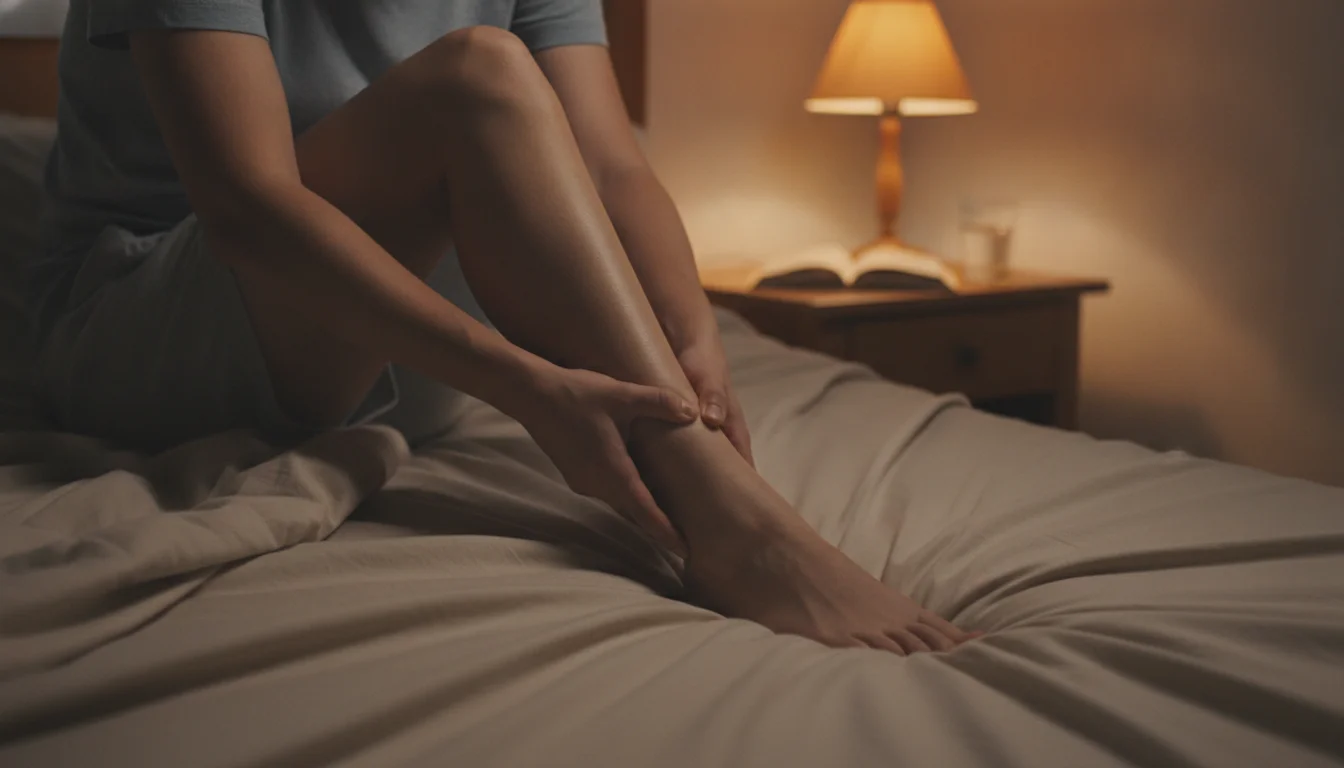
A muscle cramp hits with no warning. The calf, foot or thigh clamps into a hard knot, the leg feels briefly locked, and no amount of willing it makes the muscle let go. Most cramps pass in seconds to a few minutes, but a bad one leaves the muscle sore for the rest of the day, and a night cramp will yank you straight out of sleep.
You can usually break a cramp faster than you think, and a few plain habits cut how often they come back. This covers muscle cramps in the leg, calf, foot and thigh, including exercise and night cramps. For period cramps, see period pain; for the cramp-like stitch that grabs your side mid-run, see side stitch.
What causes muscle cramps
Most muscle cramps have no single, findable cause. A muscle fires when it should stay relaxed, and it clenches. Blood tests on people who cramp during hard exercise usually come back normal, which is why researchers now point more at muscle fatigue and mixed-up nerve signals than at any one deficiency.
That said, some things make a cramp more likely: working a muscle hard or holding it in one position too long, sitting or standing for hours, getting older (tendons shorten with age), pregnancy, and going short on fluids or on potassium, magnesium and calcium. Night cramps are often tied to foot position, since sleeping with your toes pointed keeps the calf shortened and primed to seize. A few medicines, such as water pills and some blood-pressure drugs, list cramps as a side effect. A cramp is not the same as restless legs, which is an urge to move rather than a hard, painful spasm.
1. Stretch the cramped muscle
This is the fastest way to shut down a cramp, and it works on the muscle that is actually seizing. For a calf cramp, straighten your leg and pull your toes and the top of your foot back toward your shin. If you can stand, step the cramping leg back into a short lunge, keep the heel flat on the floor, and lean forward until you feel the calf lengthen. Hold it for 20 to 30 seconds and repeat until the muscle softens.
For a foot cramp, pull your toes up and back with your hand, or stand and press the ball of your foot into the floor. For a cramp in the front of the thigh, hold a wall and pull that heel toward your backside. Stretch, don’t yank: a slow, steady pull relaxes the muscle where a hard jerk can strain it.
2. Massage the muscle
Once you have the muscle stretched, knead it. Press your thumbs into the knot and work it in slow circles, or roll the muscle over a foam roller, a tennis ball or even the edge of a stair. The pressure and the extra blood flow help the fibers unclench and stay unclenched.
Keep going for a minute or two after the cramp eases. A muscle that has just cramped is twitchy and can grab again, and a little more massage settles it down.
3. Apply heat or cold
Heat and cold do different jobs, so use them at different moments. While the muscle is still tight, warmth relaxes it and brings blood to the area: a heating pad, a warm towel, or a few minutes under a hot shower all work. Keep it to 15 to 20 minutes, and never fall asleep on a heating pad.
Once the cramp has passed and the muscle is just sore, switch to cold to dull the ache. Wrap an ice pack or a bag of frozen peas in a thin towel, hold it on for 15 to 20 minutes, and keep ice off bare skin. Some people alternate the two; try both and keep whatever gives you more relief. The same heat-or-cold approach works for the everyday aches in your back, joints and legs that are not cramps.
4. Stand up and walk it off
For a calf or foot cramp, getting upright often breaks it. Put your weight on the cramping leg and press the heel down, then walk around slowly and let the muscle work through its normal range. Gentle jiggling and shaking of the leg helps too.
Keep the movement easy. This is about coaxing the muscle to release, not powering through pain, so if a step brings a sharp stab rather than the familiar cramp ache, stop and go back to stretching.
5. Stay hydrated
Running low on fluid is one of the triggers that tips a tired muscle into cramping, so keep water going in across the day rather than gulping a bottle once. Steady sips are enough for most people; drink more when it is hot or when you have been sweating through exercise or work.
Water alone will not break a cramp that already has hold of you. Think of hydration as one of the levers that makes the next cramp less likely, not a cure for the one in front of you.
6. Eat foods with potassium, magnesium and calcium
Muscles rely on potassium, magnesium and calcium to contract and let go cleanly, and food is the easiest way to keep those topped up. Reach for bananas, oranges, potatoes and beans for potassium; nuts, seeds, oats and leafy greens for magnesium; and dairy, tinned fish with the bones, and greens for calcium. Spread them through normal meals instead of loading up in one sitting.
This is prevention, not a rescue: eating a banana mid-cramp does nothing for the spasm you have now. And keep it to food. High-dose mineral supplements can interact with medicines or strain the kidneys, so leave those to a pharmacist or doctor, especially if you take blood-pressure or water pills.
7. Set up your bed against night cramps
If cramps mostly hit you asleep, the fix is often the bedding. Tightly tucked sheets and heavy blankets press your feet into a toes-pointed position all night, which keeps the calf shortened and ready to cramp. Loosen the covers at the foot of the bed so your feet can rest in a neutral, flat position.
A few minutes of gentle calf stretching before you turn in helps for the same reason. If you tend to sleep on your front with your feet hanging off the mattress, try a side or back position that lets your ankles sit relaxed rather than stretched long.
8. Take over-the-counter pain relief for the soreness
A cramp itself is over too fast for a painkiller to touch it, but a hard cramp can leave a muscle aching and tender for a day. If that soreness is getting in your way, an over-the-counter pain reliever such as ibuprofen or acetaminophen can take the edge off. Follow the directions on the label, and don’t double up thinking it will work faster.
This is for the leftover ache, not the spasm. If you are reaching for pain relief night after night because cramps keep waking you, that is a sign to get checked rather than to keep medicating.
When to call a professional
Muscle cramps are usually harmless, but some patterns are worth a doctor’s time. Book an appointment if your cramps are frequent or severe, do not ease with the self-care above, or keep disrupting your sleep. Get checked sooner if a cramp comes with muscle weakness, numbness, or a change in the skin, or if it seems to start after a new medicine or alongside a condition such as diabetes or a thyroid problem. A deep ache, or pain that lingers or spreads rather than passing in a few minutes, is also worth a professional’s look rather than being treated as a cramp.
One pattern needs prompt care rather than a wait-and-see: a painful, hard calf that also has swelling, redness or warmth in the limb can point to a blood clot in the leg rather than an ordinary cramp. If that is joined by shortness of breath or chest pain, treat it as an emergency and call your local emergency number. When in doubt about a cramp that does not behave like your usual ones, ask a professional.
Frequently asked questions
What is the fastest way to stop a muscle cramp?
Stretch the muscle that is cramping and press on it. For a calf cramp, straighten the leg and pull your toes back toward your shin, or stand and put weight on the leg. Massaging the knot at the same time speeds up the release.
What deficiency causes muscle cramps?
Low potassium, magnesium or calcium can all leave a muscle quicker to cramp, but many people who cramp have normal mineral levels. Muscle fatigue and nerve signals play a big part too, so treat food minerals as one helpful habit rather than the whole answer.
Why do I get leg cramps at night?
Night cramps are often linked to foot position: sleeping with your toes pointed keeps the calf shortened and ready to seize. Inactivity and tight bedding add to it. In many cases there is no clear cause at all, which is normal and usually harmless.
Does drinking water stop a cramp?
Staying hydrated makes cramps less likely, but water will not break a cramp that is already gripping. For that, stretch and massage the muscle. Keep the fluids up through the day for prevention, especially in heat or after exercise.