Table of Contents
Getting rid of bees outside starts with knowing what you’re dealing with, because how to get rid of bees outside depends entirely on the species. Honeybees, bumblebees, yellow jackets, and hornets all read as “bees outside” to most people, but the response differs. Honeybees are best relocated live by a beekeeper rather than killed. Yellow jackets and hornets can be killed when a nest is a real sting risk, though a nest tucked well out of the way is often best left alone. Bumblebees, unless they’re a direct hazard, are best left alone or deterred.
And a lot of “bee problems” aren’t a nest at all – they’re foragers pulled in by food, water, or scent, and you can keep those away without killing anything. Work through the no-kill options first and reach for a spray only when there’s a real nest to remove.
1. Contact a Beekeeper for Live Removal
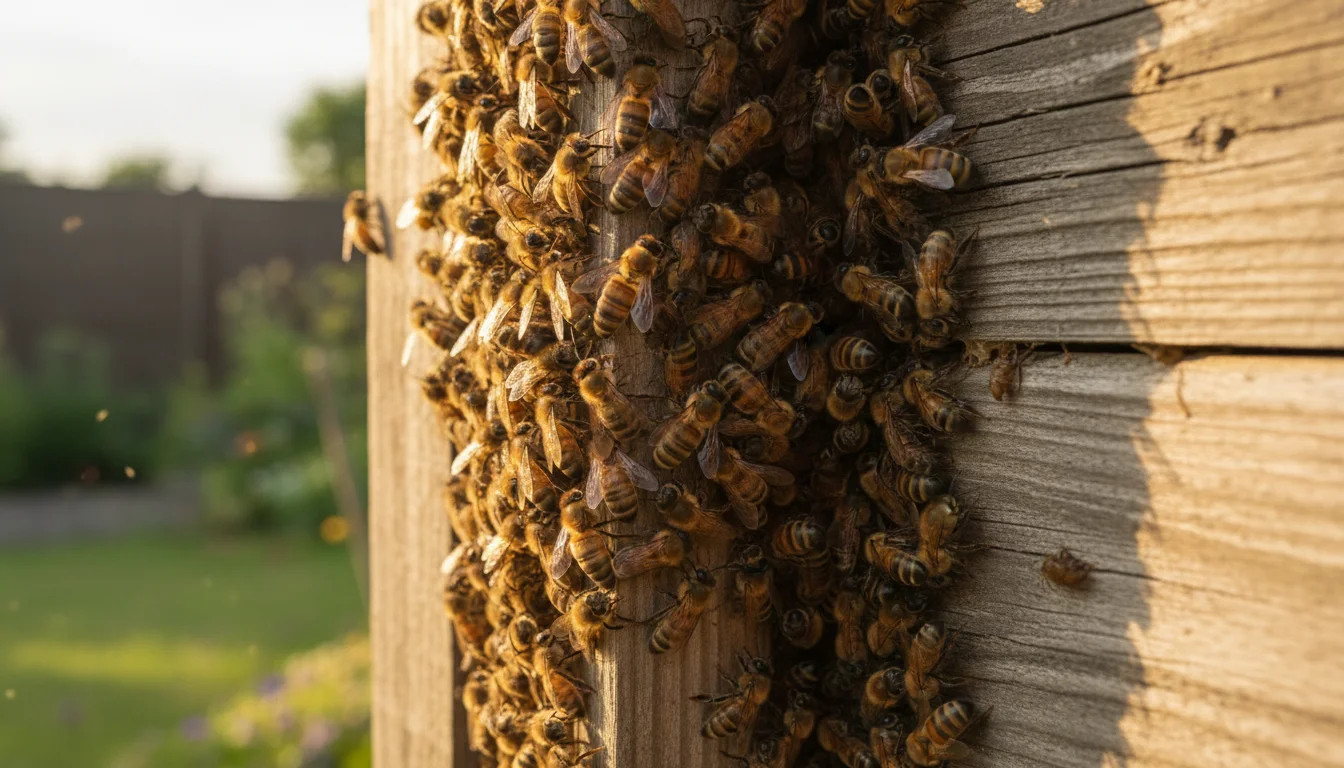
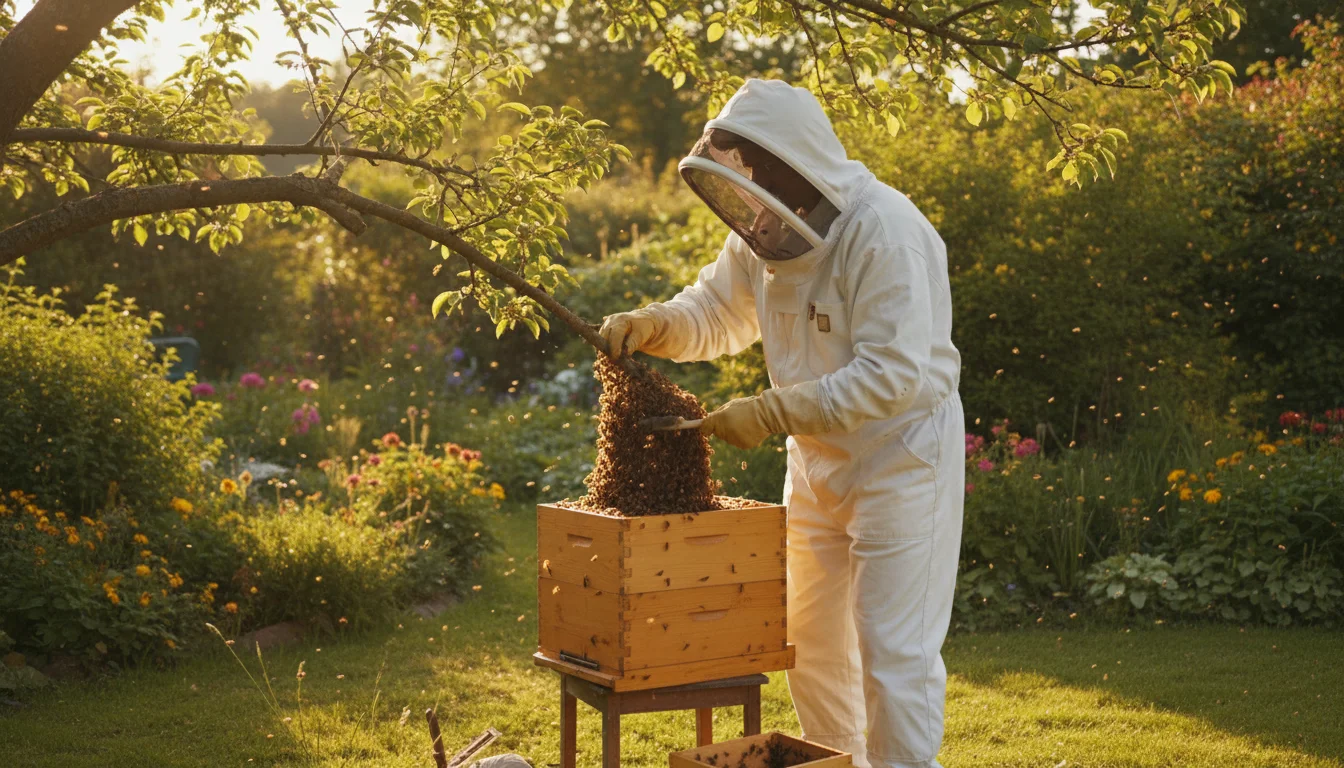
If it’s honeybees, this is the right call before you try anything else. Swarms – that ball of bees hanging from a branch or fence post – are usually docile because they have no nest to defend. Most spring honeybee swarms are extremely gentle, but a food-depleted or Africanized swarm can be unpredictable and will sting if provoked, so keep your distance and let the beekeeper do the handling.
Many beekeepers collect a swarm at no charge because they gain a new colony, though not all keepers take swarms and some do charge, especially for an established colony inside a wall or under eaves. Those cavity colonies are more work. The reason to bother: kill a honeybee colony inside a wall and the abandoned wax comb melts in summer heat, leaks honey through the wall, and its leftover beeswax odor draws a new colony next spring. Live removal fixes it for good.
To find a local volunteer, search your county beekeeping association website, or search “swarm removal” plus your zip code.
2. Remove Food and Water Attractants
Cut off what draws foragers in and most of them lose interest and move on. This is the single most effective no-kill step, and it’s the one people skip.
Clear fallen fruit from under trees before it rots, keep sweet food and drinks covered while you eat outside, and wipe up sticky spills on tables, rails, and decking straight away – a sugar film brings foragers straight back. Rinse cans and bottles before they go in the recycling, and keep bin and compost lids shut.
Water counts too. Bees drink, and a dripping tap, a birdbath, or a saucer under a plant pot can turn your patio into their watering hole. Fix leaks and tip out standing water near where you sit.
3. Grow Bee-Repelling Plants
Bees navigate by smell, and home and garden sources widely suggest strongly aromatic plants to make a spot less inviting. Mint, lemongrass, marigold, geranium, and eucalyptus are the usual picks. Group a few pots around a patio, doorway, or seating area to build a scent barrier, and keep bee-magnet flowers away from the tables you actually use.
Be honest about what this does: it’s an unproven deterrent, not a cure. No extension research backs a planted barrier against bees, it won’t move an established nest, and a determined forager will push through it. But for a patio you use every evening, a ring of aromatic pots costs little to try, and unlike a spray you plant it once.
4. Spray a Scent Deterrent
When you want something faster than a potted plant, a scent spray is the common home-remedy answer. Peppermint, citronella, and eucalyptus oils are the usual essential oils, and household items like a white vinegar spray or sprinkled ground cinnamon get suggested for fence rails, deck rafters, and the surfaces where you’ve seen steady traffic.
Treat these as anecdotal. They come from home-remedy and pest-blog sources rather than extension research, and they are deterrents at best, not killers, so expect to reapply often and after rain. Two cautions are not anecdotal: Cornell’s veterinary guidance lists peppermint and other essential oils as toxic to cats, and garlic as toxic to both cats and dogs, so keep any of these away from where pets spend time.
5. Cover Up and Stay Calm Outdoors
When the bee is circling you rather than nesting on the house, the fix is your own behavior, not a chemical. Most are foragers after sugar or scent, and a few habits keep them off you.
Keep sweet drinks covered and check the rim of an open can before you sip – a scavenging yellow jacket crawls inside for the sugar and stings when your lip presses it. Don’t swat. Crushing a bee or wasp or flailing at it releases an alarm scent that draws and provokes others, so hold still or walk away slowly with your hands down. Skip floral perfume, scented sunscreen, and bright or floral-print clothing, which all read as flowers. Plain, light colors and unscented products keep you off a forager’s radar.
6. Spray Nest Killer on Exposed Wasp Nests
When there’s an active wasp or yellow jacket nest out in the open – hanging under an eave or in a shrub – an aerosol “wasp and hornet” jet spray lets you treat it from a distance rather than up close. Apply at dusk or in the late evening, when foragers are back inside and both activity and sting risk are lowest. Read and follow the product label: it sets the spray distance, the amount, the sites the product is cleared for, and the protective clothing to wear.
Don’t seal the entrance after spraying. Leave it open so returning insects walk through the treated residue, and check back over the following days – if they’re still active, treat again. With a honeybee colony, live relocation by a beekeeper is the first choice rather than a nest killer; extension guidance allows insecticide only when the colony can’t be saved.
For a nest hidden in a wall void, spray is the wrong tool – use dust (see method 7). Extension guidance also favors dust over liquid for a ground nest, because a liquid poured into the tunnel may not reach the nest.
7. Apply Insecticide Dust to Wall and Cavity Nests
For a nest you can’t see directly – inside a wall void, a soffit cavity, or a gap behind siding – dust reaches where a liquid spray can’t. Extension entomologists call an insecticide dust such as deltamethrin the most effective treatment for these hidden nests, and warn that an aerosol can drive yellow jackets deeper into the structure or into the living space instead.
Use a bulb duster to puff the dust into the entrance hole, following the label for the product, the amount, and the sites it’s cleared for. Leave the entrance open afterward so returning colony members carry the residue in, and don’t seal it until activity has stopped completely. If you can’t safely reach or locate the nest, that’s a job for a professional (see method 9).
8. Wait for the Colony to Die Off and Seal
For a nest in a spot you can’t safely treat, doing nothing and sealing afterward is a legitimate strategy for the annual species. Yellow jacket and paper wasp workers die off at freezing temperatures, usually in the mid-to-upper 20s Fahrenheit, and bumblebee workers die with the first hard freeze, leaving only mated queens to overwinter elsewhere. After a sustained hard freeze, once you watch the entrance and see no activity at all, the colony is gone for the season; in mild or coastal climates some colonies persist longer, so confirm inactivity rather than assume a date.
Don’t rush the seal. Watch the entrance until you see no flight activity at all and are confident every insect is dead – sealing early traps live insects that then chew or push their way into the living space. Then close the opening with caulk, expanding foam, or hardware cloth to suit the surface, and knock down any reachable nest material first. Most old wasp and yellow jacket nests aren’t reused, but honeybee comb is different: its leftover beeswax odor can draw future scout bees, so clear it out.
One exception: honeybees overwinter as a full colony and won’t die off, so this method doesn’t apply to them.
9. Call a Professional
Worth calling if the nest is inside a structural wall, you’re allergic to stings, you’ve treated twice with no reduction in activity, or you can’t locate the entry point. A professional identifies the species correctly, brings commercial-grade products they’re licensed to apply, and handles the protective gear. Costs and any retreatment guarantee vary by region and by the job, so get the price and the terms up front.
Prevention
Once things are calm, a few habits keep bees from making your yard a regular stop. Seal gaps in soffits, fascia boards, and siding in late winter, before queens start scouting for nest sites. Keep food and water out of reach with lidded bins, cleared fruit, fixed drips, and no sugary drinks left standing. And refresh whatever deterrent you’re using around eaves and seating areas through the season, remembering it nudges casual traffic rather than clearing a nest.
When to Call a Pro
If you’re allergic to bee or wasp stings, don’t attempt any nest treatment yourself – even a small colony is a serious risk during treatment. Call a professional.
Also call if the colony is inside a wall and you can’t locate all entry points. Sealing one hole when another exists means the pests find their way into the living space instead.
FAQ
What is the quickest way to get rid of bees outside? For an active wasp or yellow jacket nest out in the open, an aerosol jet spray applied at dusk is the fastest fix – follow the label and give it a few days to work. For a honeybee swarm, call a beekeeper, who can often collect it free. If it’s loose foragers and no nest, removing food and water attractants beats any spray.
What smell do bees hate? Strong aromatics get suggested most: peppermint, citronella, and eucalyptus oils, plus household items like white vinegar and ground cinnamon. Treat these as anecdotal home remedies rather than proven repellents – they’re deterrents at best and need reapplying often. Keep essential oils away from cats: Cornell’s veterinary guidance lists them as toxic to cats.
How do you force bees to leave without killing them? Take away the reasons they’re there: cover food and drinks, clear fallen fruit, and remove standing water. For a colony in a spot you can’t treat, waiting for the annual die-off and then sealing works without chemicals. For honeybees, a beekeeper relocates the whole colony live.
Does Dawn dish soap get rid of bees? It’s not a method we’d recommend. Colorado State Extension says homemade dish-soap sprays are untested and not advised, and that adult bees are generally not affected by them anyway. Soap can kill some soft-bodied insects by breaking down their cell membranes, but for bees outside you’re better off with the no-kill options above, or a beekeeper for a honeybee colony.