Table of Contents
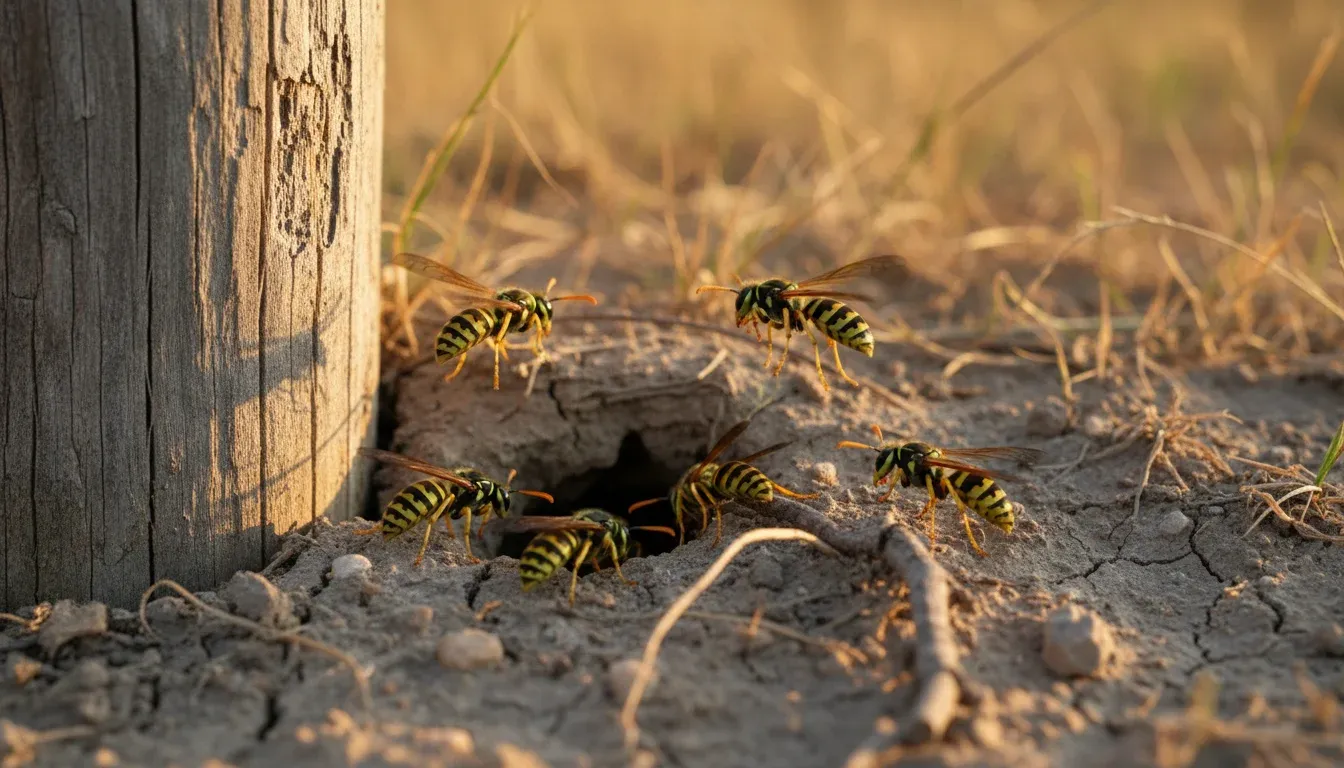
What kind of nest do you have? A ground nest (you see them going in and out of a hole in the soil)? An exposed papery nest hanging under an eave or in a tree? Mystery buzzing from inside a wall? Yellow jackets are an aggressive, ground- and cavity-nesting wasp, and the method that works depends almost entirely on which nest type you have – so figure that out first, then pick from the list below.
One thing worth knowing before you start: yellow jacket colonies are annual. The workers die off at the first hard freeze and only newly mated queens survive the winter, and the old nest is never reused. So if it’s late in the fall and the nest is somewhere you can keep clear of, waiting it out is often the lowest-risk option.
1. Labeled wasp and hornet spray
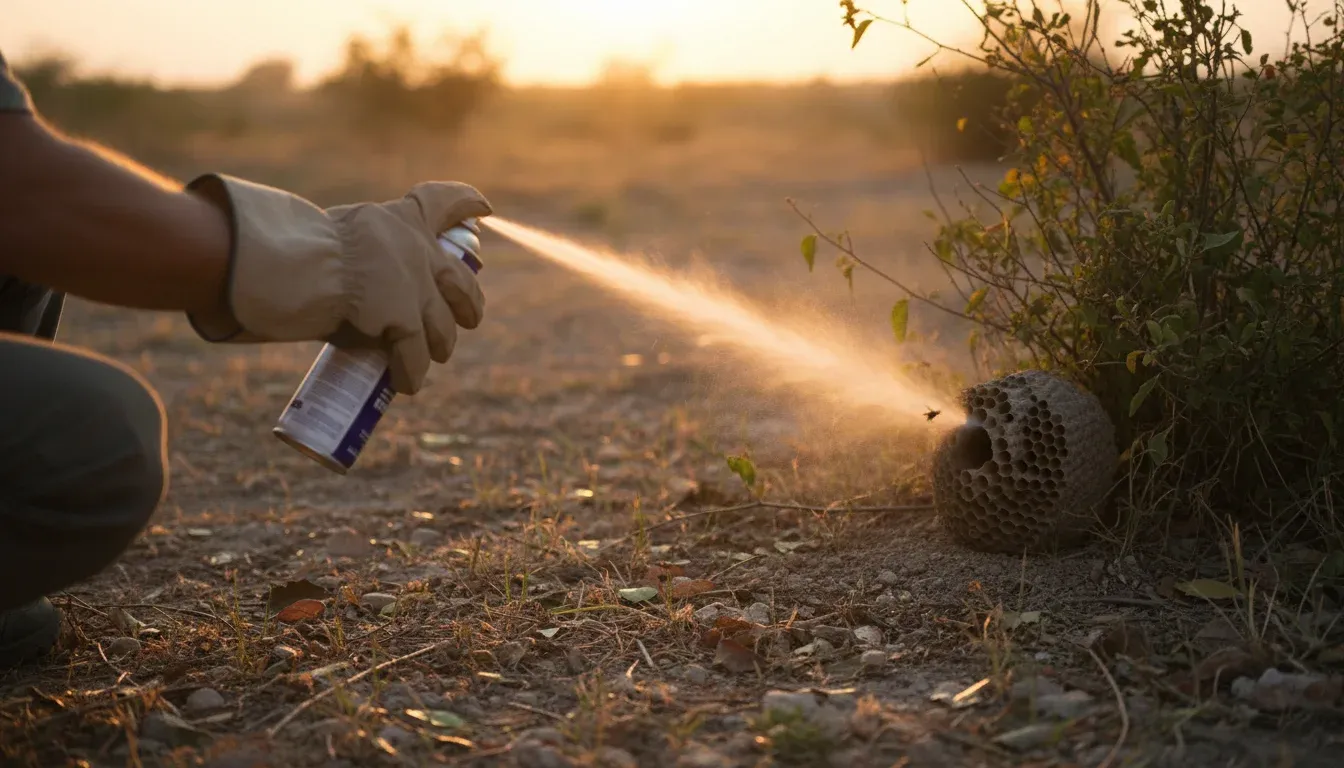
The best do-it-yourself option for an exposed nest – the papery, football-shaped kind hanging under an eave, in a shrub, or in a tree. It is the same job as clearing any exposed wasp nest. Buy a can that is labeled for wasp and hornet nests and that fires a jet several feet, so you can stand well back rather than up close. Wait until after dark or right at dusk, when yellow jackets are least active and most of the colony is home. Aim into the nest entrance, drench it, and follow the label’s directions. Check the next morning and treat again if there is still traffic.
Wear long sleeves, long trousers, and closed shoes even from a distance, and protect your face – yellow jackets move fast when the nest is disturbed. A nest hidden inside a wall is harder: an aerosol may or may not reach it, depending on how far the nest sits from the opening, and you should not plug the opening until all activity has stopped. If the nest is inside a wall or near where people spend time, the safest option is a professional.
2. Insecticide dust for a ground nest
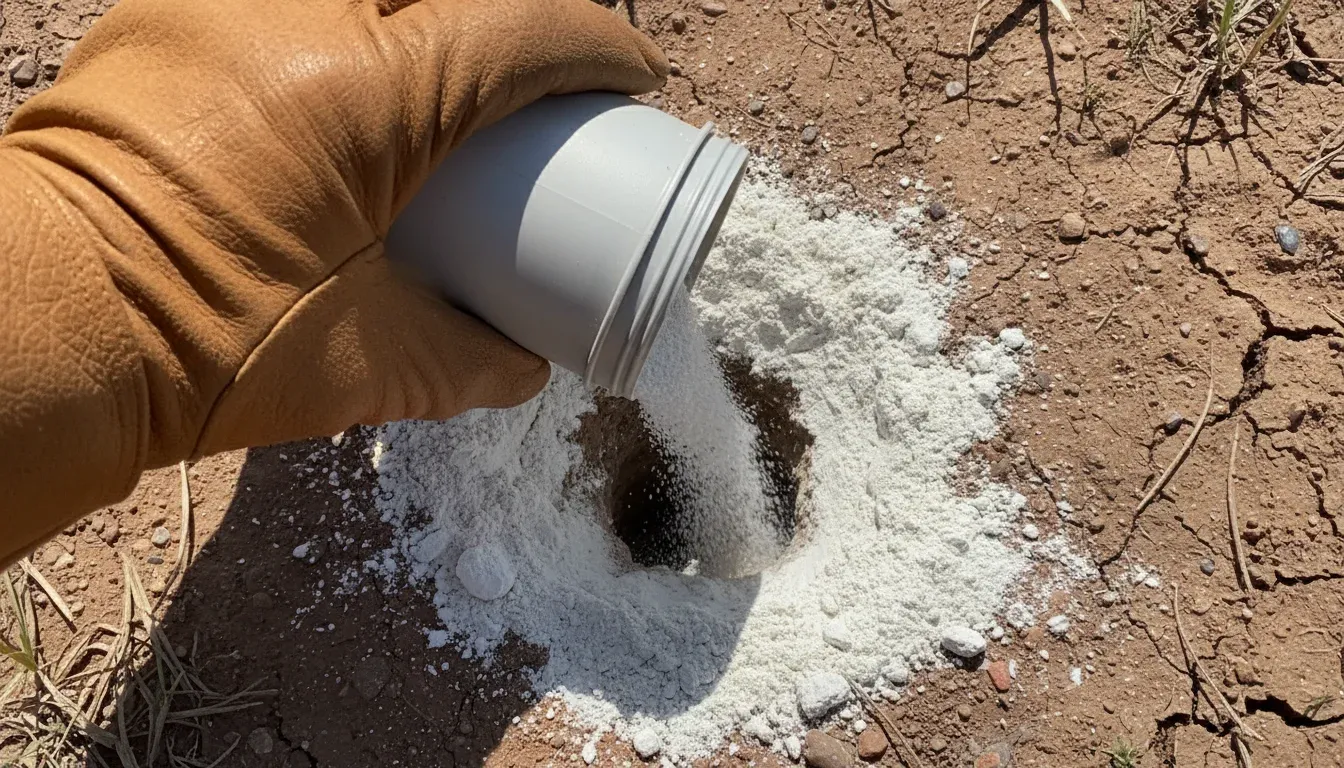
For a confirmed ground nest, a puff of insecticide dust into the entrance is the method extension offices actually recommend. After dark, when most of the colony is inside, apply a dust labeled for wasps (permethrin-based dusts are common) into the nest opening. A hand duster, or a squeeze-bottle applicator on the end of an extension pole, lets you treat from a step back. Workers pick the dust up as they come and go and carry it inside, and the colony usually dies within a couple of days. The same approach works for other ground-nesting wasps and hornets.
Wear the protective clothing and safety devices the product’s label requires, and treat at night rather than crouching over the nest in daylight. If the nest is under a structure, inside a wall, or you react badly to stings, stop and call a professional instead.
3. Soapy-water lure trap for foragers
A trap won’t wipe out a nest, but it thins the foragers bothering your patio while you deal with the source. You can buy a lure trap (some use a chemical attractant such as heptyl butyrate) or make one: hang a small piece of meat 1 to 2 inches (2.5 to 5 cm) above a bucket of soapy water. Foragers tugging at the bait fall in and drown. Late in the season, when they switch from protein to sweets, a sugary bait works better.
Place the trap at the edge of your property, as far from where people sit as you can – a trap draws yellow jackets toward the bait, so you don’t want it next to the table. Traps cut local forager numbers, but they won’t clear a large, established colony on their own.
4. Professional pest control
Call a pro for the nest you shouldn’t tackle yourself: one inside a wall, soffit, or other cavity (extension guidance is clear that these are impractical and risky to treat blind), a nest that needs drilling and injection, more than one nest to deal with, or any nest at all if you or someone in the house reacts badly to stings. It is also the sensible call if you have treated a nest twice and the activity hasn’t dropped.
A professional brings the right protective gear, products labeled for the job, and species identification. Cost varies by region and by how hard the nest is to reach, so get a quote. Many companies will re-treat within a set window if the colony comes back, so ask about that when you book.
FAQ
What will keep yellow jackets away?
The measures that work are physical and about food, not scent. Keep garbage cans tightly covered, clean up spilled food and drinks, and clear fallen fruit, so foragers have less reason to hang around. No spray or scent is shown to reliably stop them nesting, so put the effort into sealing gaps and removing food sources rather than into deterrents.
Why should you not kill yellow jackets?
They are beneficial predators – they hunt caterpillars and other insects to feed their young – so they earn their keep in a garden. The colony is also annual: the workers die at the first freeze and the nest is never reused. A nest that is well away from where people go is often best left alone to die off on its own, so it is worth saving the treatment for the nests that actually put people at risk.
Does Dawn dish soap kill yellow jackets?
In a trap, yes: foragers that fall into soapy water drown, which is exactly how the homemade meat-over-soapy-water trap works. For the nest itself, use a product labeled for wasp nests.
Corrections
- 2026-09-26: Removed the gasoline pour for ground nests. Pouring gasoline into a nest is a fire, exposure, and groundwater hazard and is not an approved or safe control method (Penn State Extension). Ground nests now use an insecticide dust labeled for wasps, applied down the entrance after dark, per extension guidance.
- 2026-09-26: Removed the food-grade diatomaceous earth method and its “non-toxic around pets and kids” claim. NPIC notes food-grade DE is not evaluated for pest-control use, its effectiveness and risks are unknown, and children and pets should be kept away during application.
- 2026-09-26: Removed the bag-and-seal and shop-vac nest procedures. No accessible primary source supports their safety or effectiveness for a live yellow jacket nest; exposed nests now route to a labeled spray and hidden or wall-void nests to a professional (UC IPM; University of Minnesota Extension).
- 2026-09-26: Reframed the trap to match extension guidance – a lure or soapy-water trap reduces foragers but does not eliminate a colony (UC IPM) – and removed the unsupported “soap clogs their breathing pores” mechanism and the exact 20-foot placement figure.
- 2026-09-26: Removed the peppermint oil spray method. It was framed as prevention and deterrence that keeps yellow jackets from nesting in a treated area, but no scent is shown to reliably deter nesting. Prevention here is physical: seal gaps in eaves, fascia, and walls, and clear food sources.