Table of Contents
You can’t spot-reduce fat. Anyone who tells you otherwise is selling something, usually liposuction. Back fat comes off when your overall body fat drops, and nothing you do targets the roll under your bra strap or the love handles over your waistband on its own. So the plan runs on two tracks: burn fat everywhere, and build the muscle underneath your back and shoulders so the area looks tighter as the fat goes.
Back fat is just fat that has settled across your upper back, bra line and lower back. Where your body stores it, and where it comes off first, is mostly down to genetics, hormones and age. You do not get a vote on the order. What you do get a vote on is the total, and that is the whole game.
1. Resistance training for your back
Rows, pull-ups and lat pulldowns. These hit the muscles under the fat, your lats, rhomboids and rear delts, so when the fat comes off you have shape instead of a smaller version of the same flat back.
Train them three times a week, 3 to 4 sets of 8 to 12 reps per exercise. Form matters more than load. Pull your shoulders down and back, squeeze your shoulder blades together at the top, and control the weight on the way back instead of letting it snap your arms straight. The common mistake is yanking with your arms and shrugging your traps up toward your ears. Drive the movement from your back, not your hands.
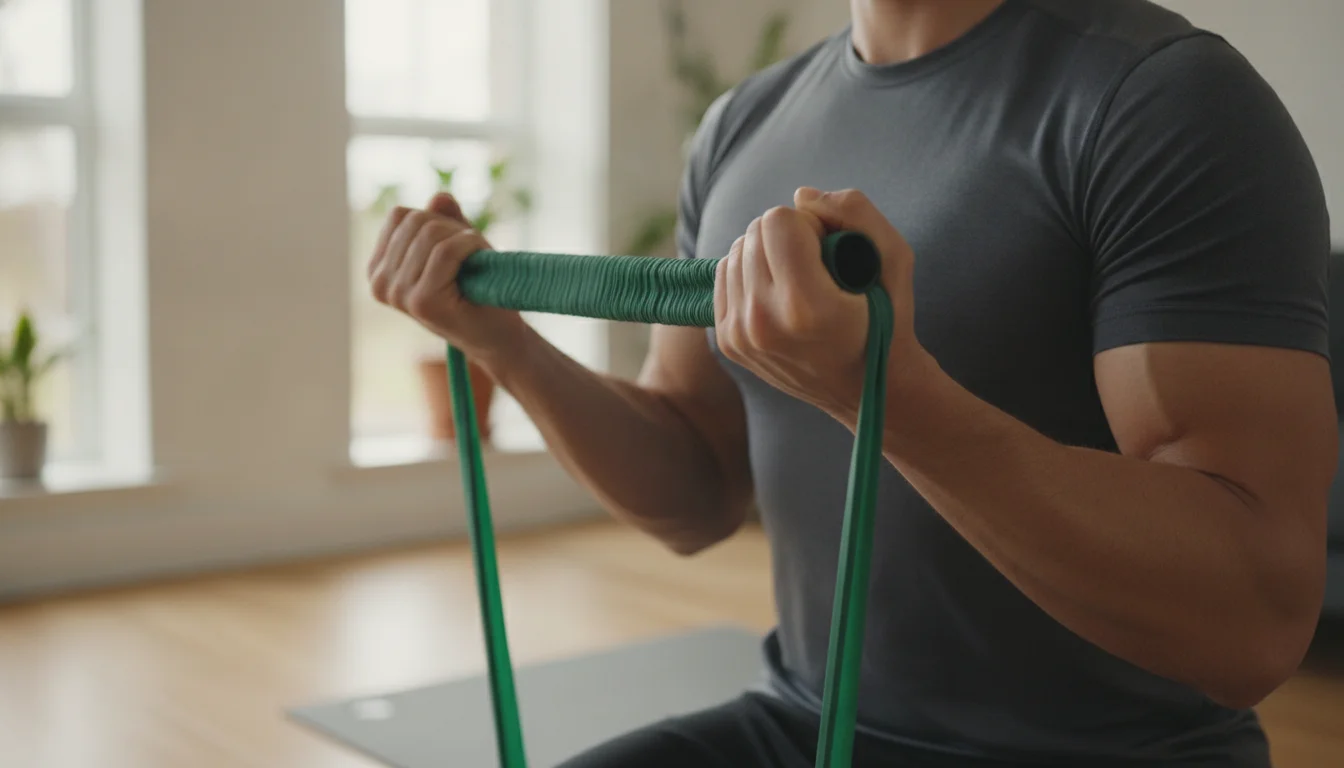
No gym? A resistance band gives you rows and pull-aparts at home, worked against the band’s own tension rather than your body weight. For bodyweight rows, use only a fixed pull-up or row bar rated to hold your weight, not a table, a door or other furniture you are guessing at. Start with what you can control for all your reps, and progress by slowing the lowering phase before you add resistance rather than piling on weight you cannot handle cleanly.
2. Add cardio to burn calories
Running, swimming, cycling, brisk walking. Pick something you will actually repeat, because consistency beats intensity you quit in a week. The federal guideline is at least 150 minutes of moderate aerobic activity a week, and up to 300 minutes a week gives more benefit. Cardio matters because a calorie deficit is what drives fat loss, and moving more is one honest way to widen it.
Swimming earns its place twice: it burns calories and works your back and shoulders while it does. If your knees or lower back complain about running, swimming or cycling gets you the minutes without the pounding.
3. Fix your posture
This one will not burn a gram of fat, so be clear about what it does: it changes how the area looks right now. Slouching rounds your shoulders forward and folds everything into a roll. Stand tall, pull your shoulders back and down, and brace your core, and the same body reads leaner in a shirt.
Strengthening the muscles that hold that posture makes it automatic. Planks, dead bugs, bird dogs, and the same rows and pull-aparts from method one. Do them consistently and you stop having to think about standing up straight.

4. Drop your body fat percentage through diet
You cannot out-train a bad diet. Fat loss lives and dies on the calorie deficit, and the kitchen moves it faster than the gym.
Start by seeing what you actually eat. Track it honestly for two weeks, weekends included, because most people eat more than they think and that gap is where the plan leaks. A common, sustainable pace is a deficit of about 500 calories a day, which for many people works out to roughly a pound (0.45 kg) a week. Bigger cuts are not automatically better and can backfire with lost muscle, stalls and misery. Very low calorie or crash diets belong with a professional who knows your health, not a guess off a blog.
Make protein a priority at each meal. It helps you hold on to muscle while you are losing and keeps you full between meals. If you want a specific gram target for your body and your goal, ask a dietitian rather than trusting a one-size number. Fill the rest of the plate with vegetables, fruit and whole foods, and keep the processed snacks and sugary drinks to the edges.
5. Be patient
Back fat is stubborn for a lot of people, and you do not control the order your body sheds it. You might see your face and belly change first while your back holds on. That is normal, and it is not a sign the plan is failing.
Give it weeks to months, not days, and expect longer if you have more to lose. Take progress photos every couple of weeks and watch how your clothes fit, because day to day the mirror lies. Keep going.
When to call a professional
For most healthy adults, none of this needs a doctor’s sign-off. But talk to a health professional before you start if you have heart disease, high blood pressure or type 2 diabetes, or if you are pregnant or well out of shape. A plan matched to your health beats a generic one.
See someone, rather than pushing through, if:
- a lump or patch of back fat is new, one-sided, growing or painful, or the skin over it changes. That is not ordinary fat and needs looking at.
- exercise brings on chest pain, unusual breathlessness, dizziness or a racing heart.
- you feel pulled toward very low calorie or crash diets, or eating starts to feel out of control.
- your weight is climbing fast with no clear reason, which can point to a medical cause.
Getting rid of back fat is a slow, whole-body job. Do the boring things consistently and it comes off.